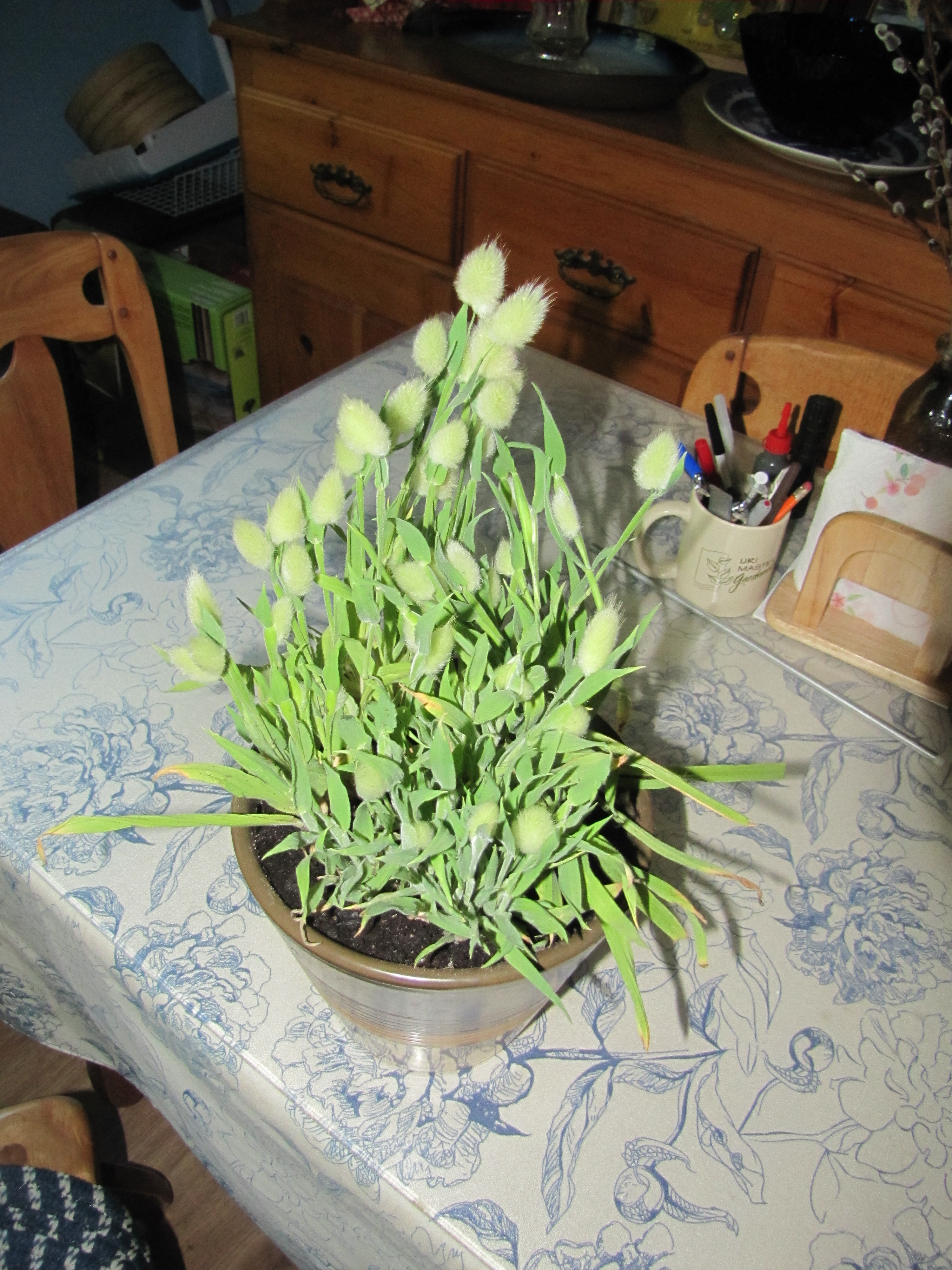
So Cute!

july 2013 017

Here’s HerbDoc with some cute overload – this time with a plant!

Because I like to replicate the plants that grew in my grandmother’s gardens, I searched for a while before I happened on this one.  It’s bunny tails, Lagurus ovatus, and old-fashioned grass that looks adorable in planters and garden edging.  The grass itself is small and clumping with thin foliage, but the softness of its tails is absolutely irresistible to small and big hands!

A plus for this little annual is that it is easy to grow, even in sandy soil.  It would be a good addition to a xeriscape.  After assessing its growth this season I think it would be a perfect fit for a fairy garden too.

The seeds were started in April, and the plants began to show their soft white tails in June.  I’ve read that they self-sow, even in pots, and that the seed can be saved.  Another plus for this little guy is that the stems can be used like everlasting if fresh or dried arrangements.

Next year, pink pussy toes is on the list to plant among the creeping thyme plants!

Posted in Uncategorized | Leave a comment

A marvelous monarda

DSCN0504

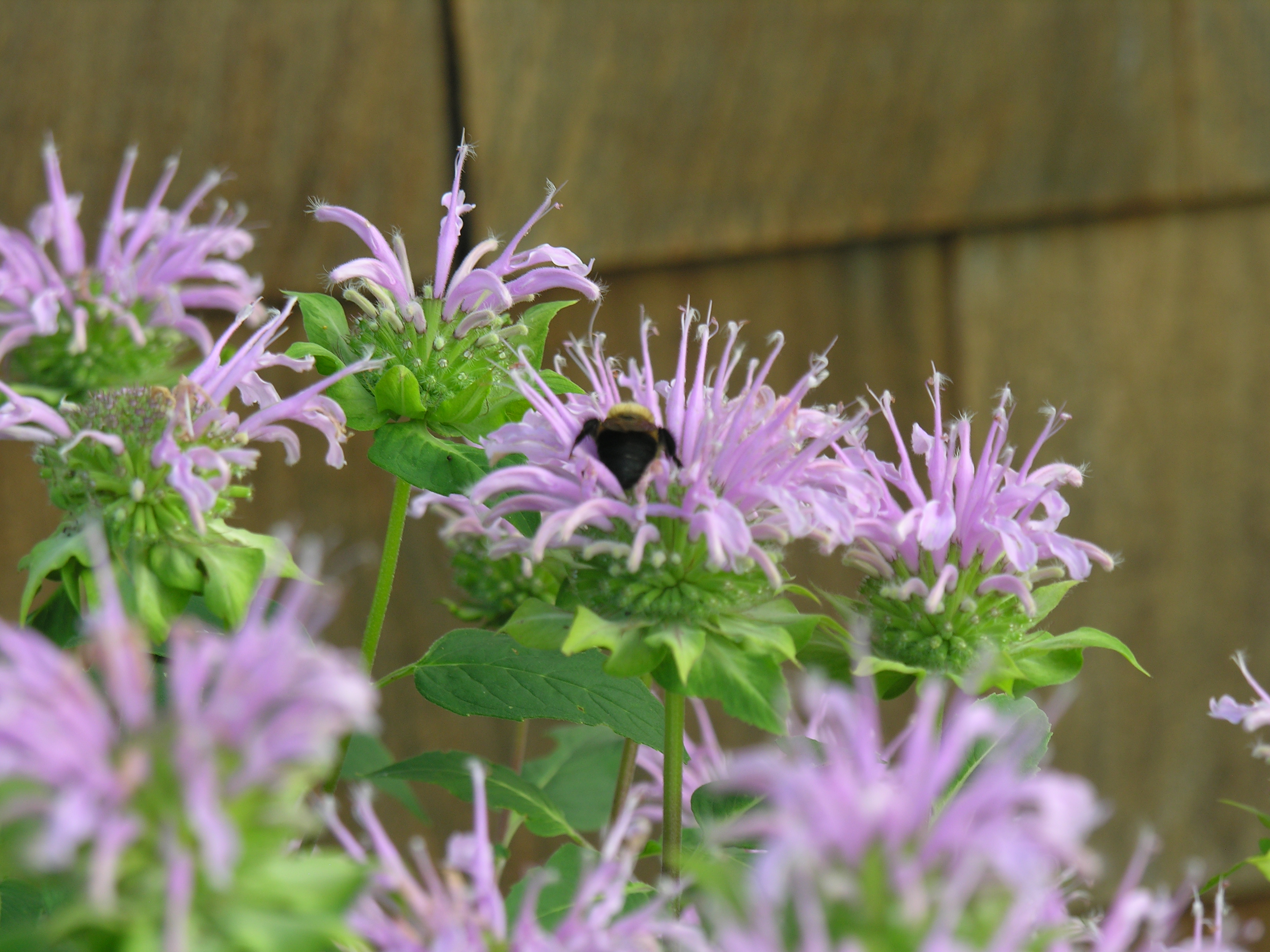
This is Monarda fistulosa “Claire Grace,” also known as wild bergamot. Lovely, isn’t she? I bought this plant last year, and it is now about three feet high. It is reported to be aggressive (it’s a member of that horrible mint family) but it hasn’t tried anything funny in my garden yet.

Here’s a view of it in the perennial bed, so you can get an idea of its size.

DSCN0506

The plant is native to most of the United States. It’s a butterfly and native bee magnet and the hummingbirds love it, too.

The leaves have medicinal properties, and are brewed into teas to treat ulcers and cuts, and even indigestion. In the photo below, taken early in the morning, a sleepy bee is chilling on one of the flowers.

DSCN0505

You can grow this plant just about anywhere in the country in a sunny, well-drained location. It is hardy from Zone 3b to Zone 9b, and it’s quite resistant to powdery mildew. I cut a couple of stems to test its vase-worthiness and the flowers hold up really well.

In my garden, it has proven to be a fine plant indeed.

Posted in Uncategorized | 2 Comments

I spoke too soon

DSCN0500

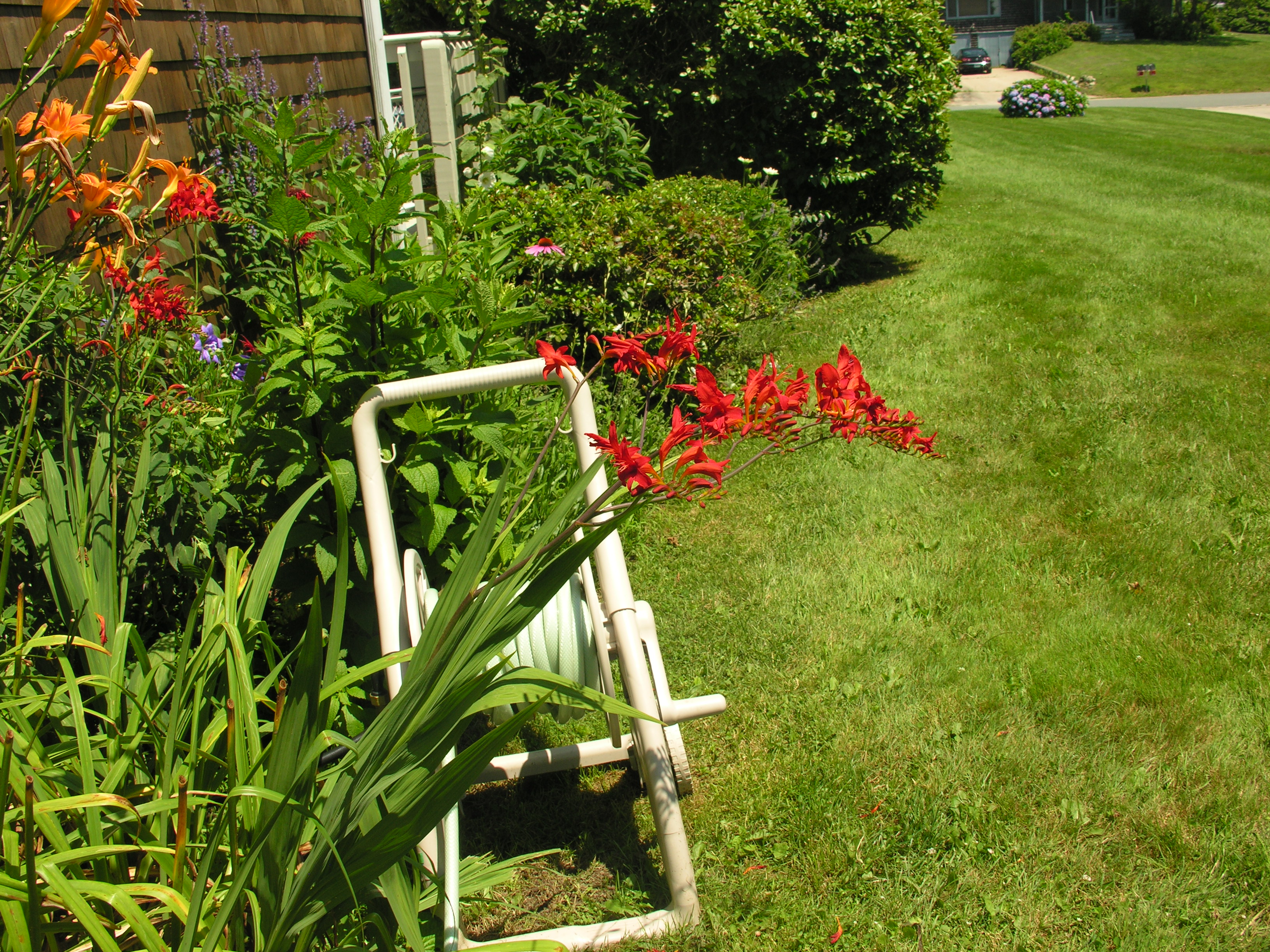
These impossibly red flowers belong to crocosmia Lucifer. They are the reddest and supposedly, the most winter-hardy of the crocosmias, and after seeing an entire yard ablaze with them on a garden tour, I had to have some.

I planted the corms two summers ago, and last summer they did nothing. Well, to be fair, they did put out a couple of green leaves but that was it. I thought I had purchased duds.

DSCN0496

Recently I was rooting around in the lily bed and all of a sudden, there they were. Crocosmia buds ready to open! And they did. And I was glad, very glad. (Please excuse the hose thing in the shot. I wanted to give you an idea of how striking the flowers are.)

So if you try these, be prepared for a first season of nothingness, and don’t forget  you planted them like I did! I must buy more of these. The hummingbirds agree.

Posted in Uncategorized | 10 Comments

BOLO Alert: Viburnum Leaf Beetle

viburnumleafbeetle 

Here’s HerbDoc with another nasty pest to look out for:

For gardeners like me who love their viburnums, a warning is out regarding the Viburnum Leaf Beetle, Pyrrhalta viburni.  The native range of this beetle includes most of Europe, and it was first found in North America in Ontario, Canada.  In 1996 it was discovered in New York State when native plantings of arrowwood (viburnum) were heavily damaged.

The beetle adults are about a quarter inch long.  Their dorsal surface has small dense punctures and they look somewhat wrinkled in appearance.  The larvae are also less than a half inch long and feed voraciously on leaves in May and June, skeletonizing them.  In July to September leaves are heavily chewed and terminal twigs with have egg “caps” arranged in straight rows.

Heavy infestations can defoliate shrubs and cause dieback.  Eventually the shrubs will be killed.  According to the research this beetle prefers the popular arrowwood (V. dentatum complex), European cranberrybush viburnum (V. opulus), American cranberry bush viburnum (V. trilobum), and Rafinesque viburnum (V. rafinesquianum).

Luckily my favorite Korean spice viburnum (V. carlessi) is said to be resistant as are leatherleaf (V. rhytidiophyllum), doublefile (V. plicatum var. tormentosum), Judd (V. x juddi) and Burkwood (V. burkwoodi).

I’m keeping a very close on the native viburnums that checker my woods though.  Management guidelines include pruning and destroying infested twigs after egg laying ceases in the fall (October to April).  Pesticides may be effective in controlling larvae or adults; be sure the product is labeled for leaf beetles.

Posted in Uncategorized | Leave a comment

At least someone’s enjoying the heat

I promised you updates on my tomato experiment, so here’s one. If this gets too scary, just cover your eyes….

DSCN0492

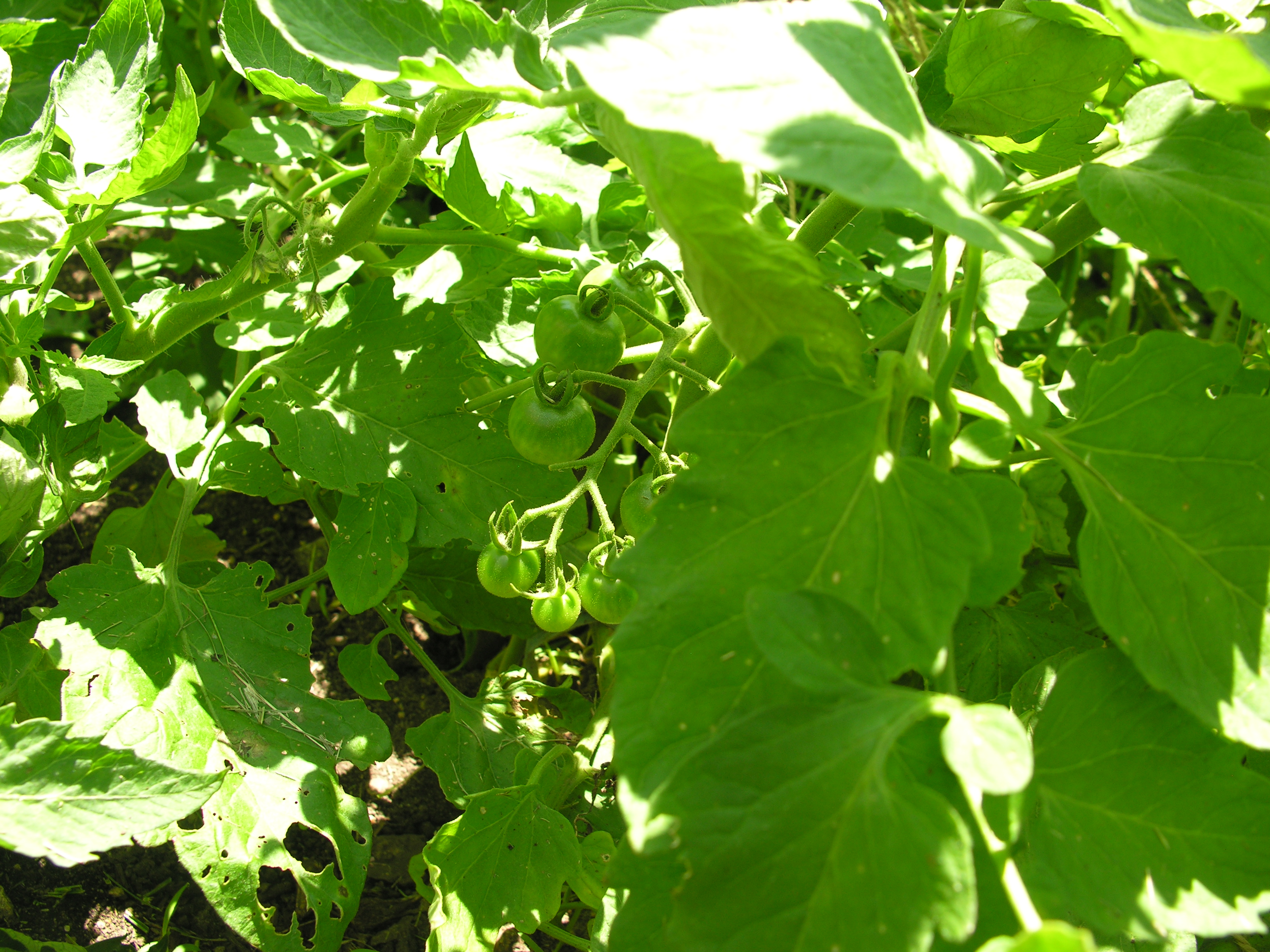
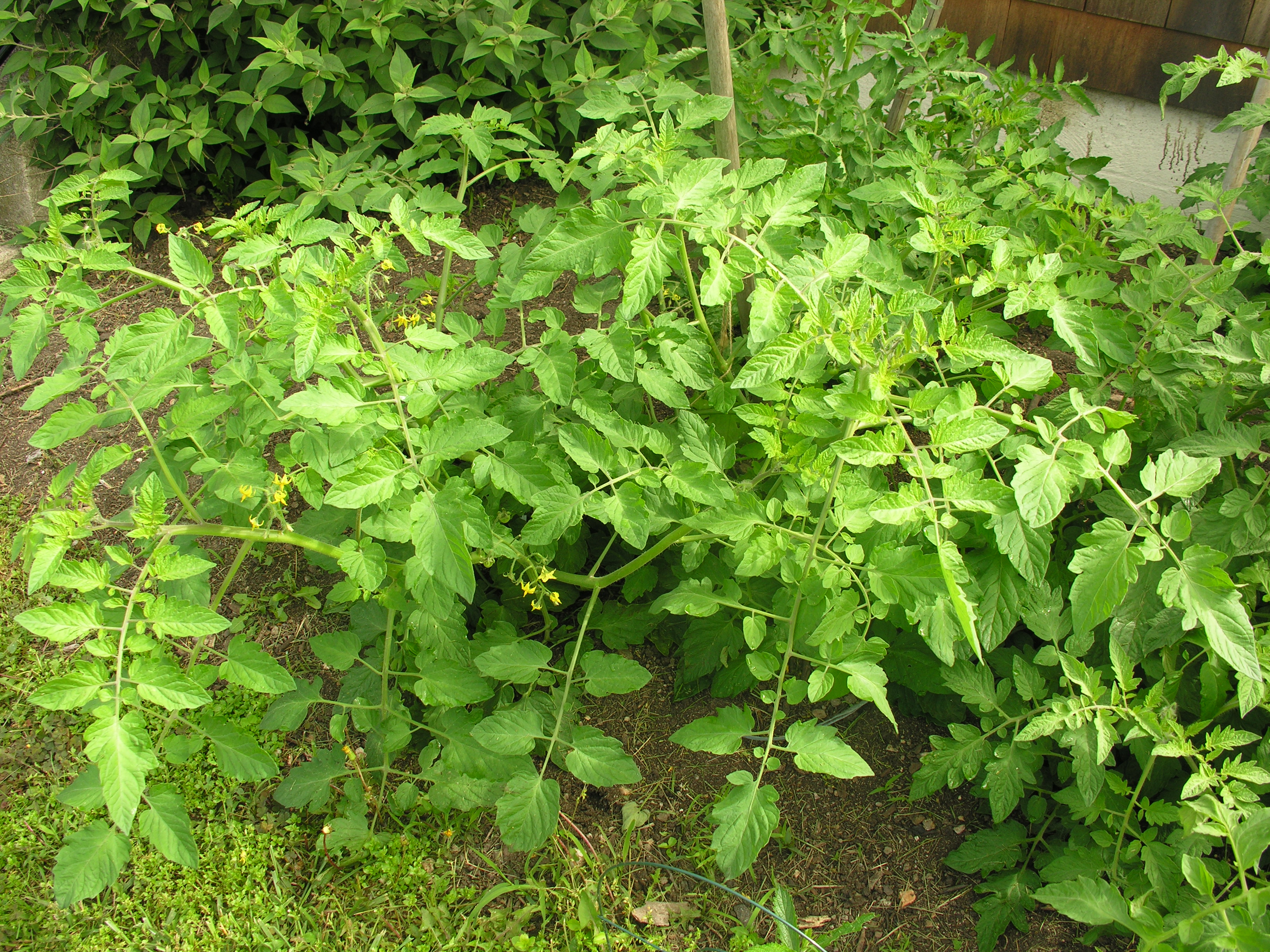
Here’s my giant “Sungold,” busily making fruits.

DSCN0493

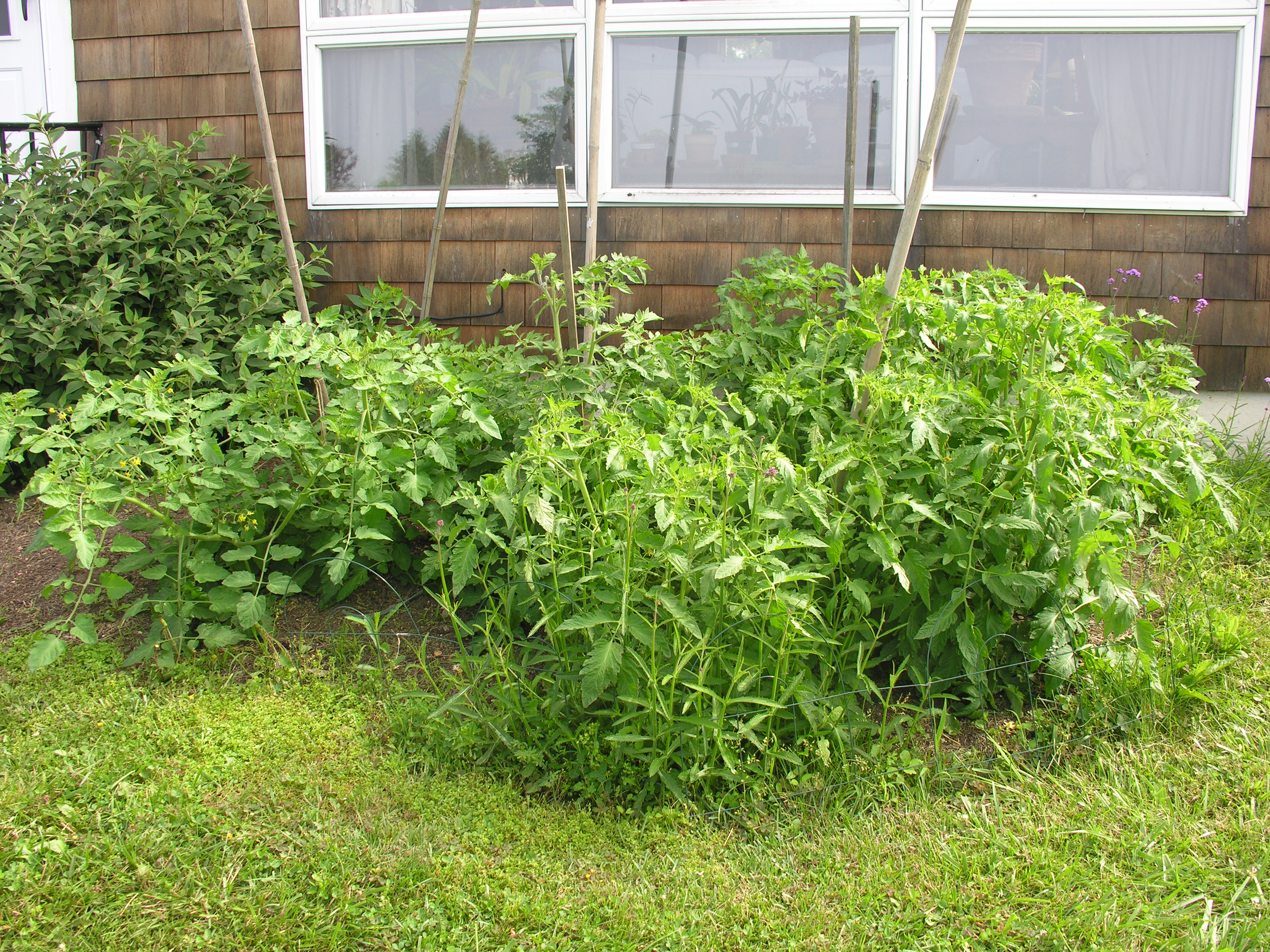
And here, graced by some verbena bonariensis, are the other tomato plants, so tall they’re beginning to obscure our living room windows!

DSCN0491

Are these awesome or what???? I am feeding them, whenever I remember, with seaweed-fish emulsion.

DSCN0495

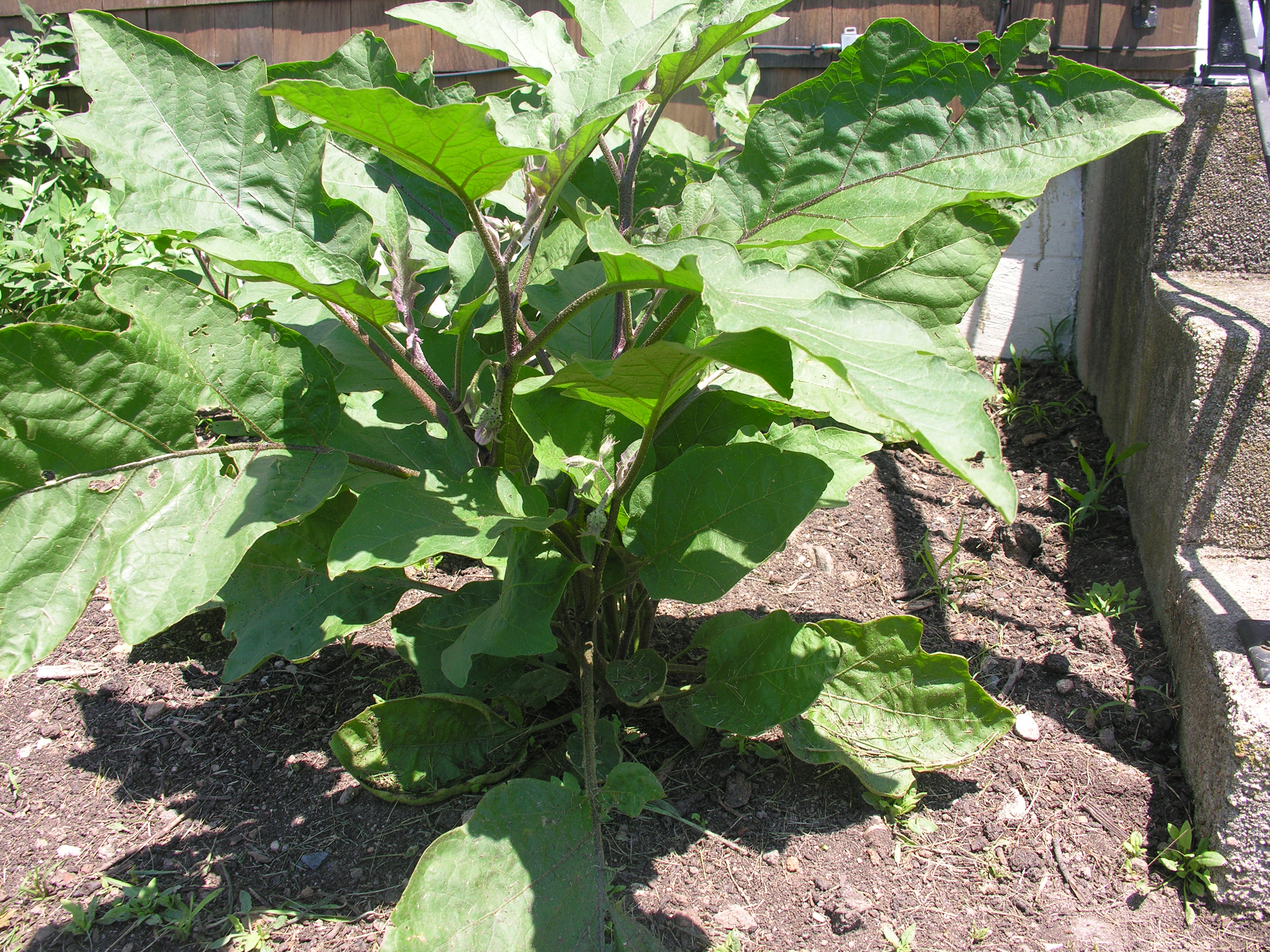
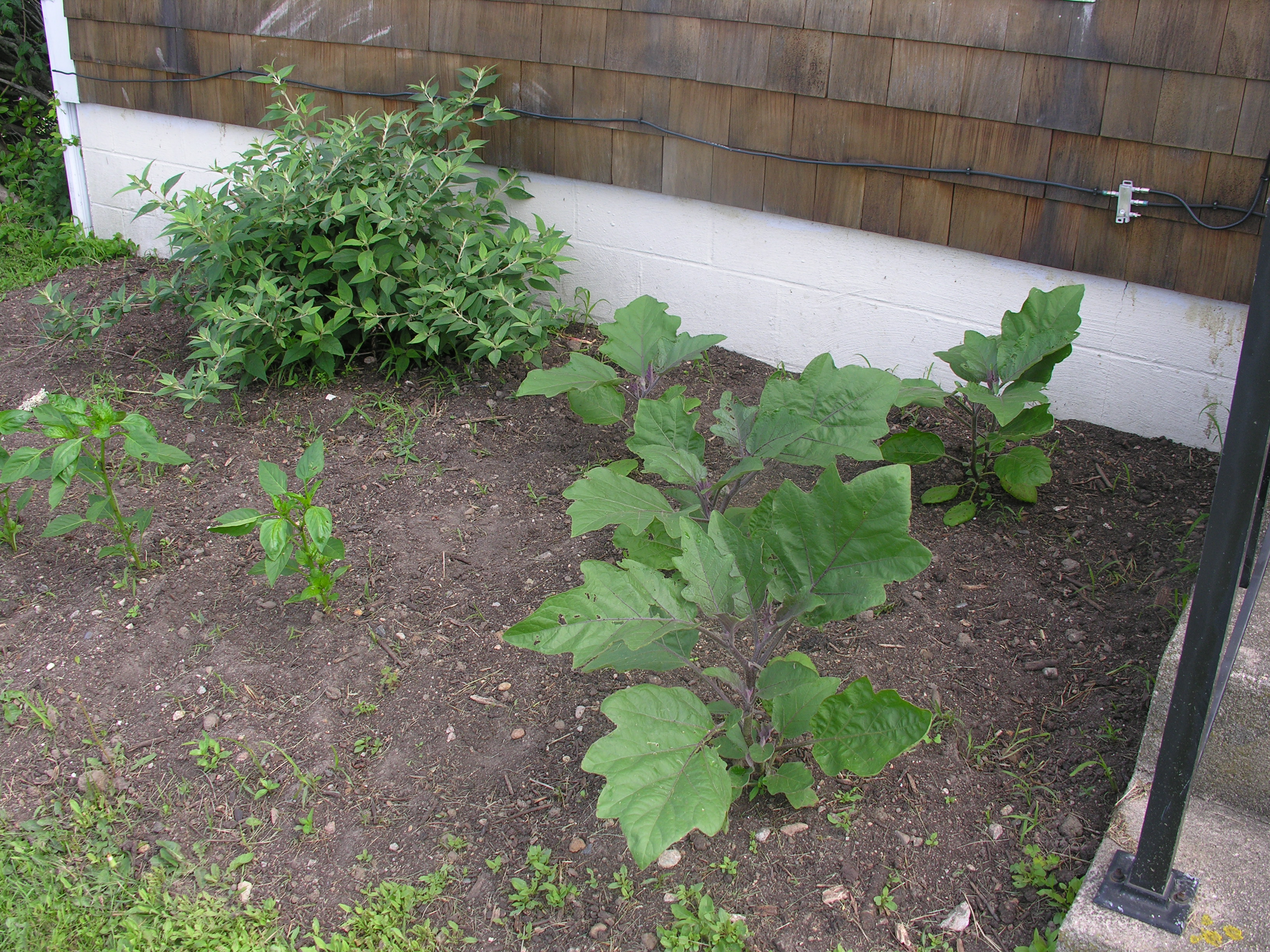
Here’s the eggplant. Also huge. In fact, these are the largest plants I have ever seen – at least in my garden.

So things are looking rather robust in my new veggie beds, no? Here’s how they looked not even a month ago, shortly after I had the useless shrubs removed.

Almost scary – in a good way.

Posted in Uncategorized | 12 Comments

How hot is it?

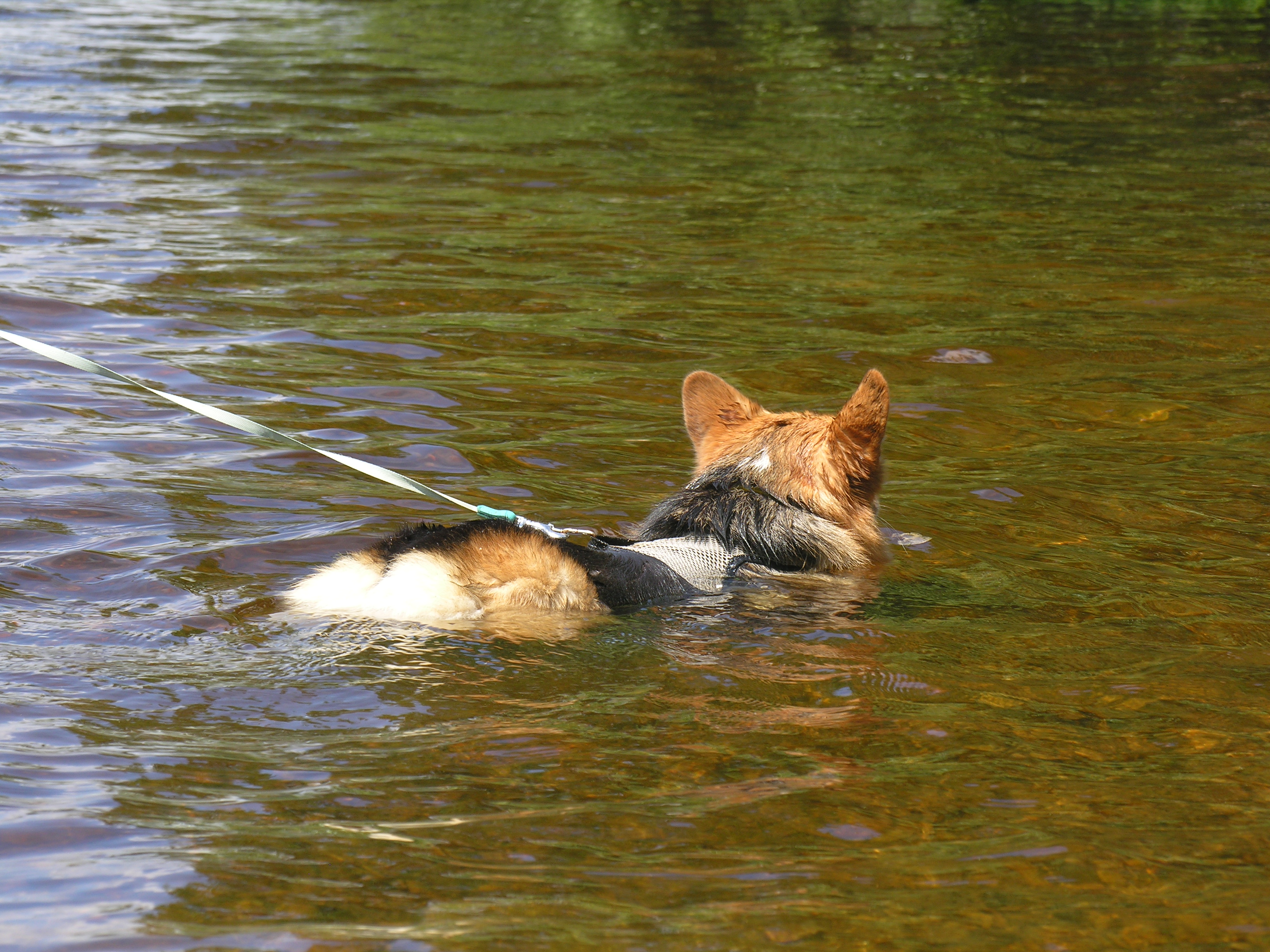
It’s so hot and humid here in RI that Fidgit, our corgi, is spending as much time as possible in the water. We often bring her to a local freshwater pond for a change of pace from the ocean.

DSCN0474

DSCN0471

Sometimes she swims, and other times she finds a shallow spot and just lies on the bottom.

DSCN0464

I love to watch her cruising around. Funny and cute.

We still keep her leashed because we’ve had her for less than three months. She just turned 3!

DSCN0480

Yep. Our corgi is definitely badass.

Posted in Uncategorized | 8 Comments

Probably the last garage update

DSCN0457

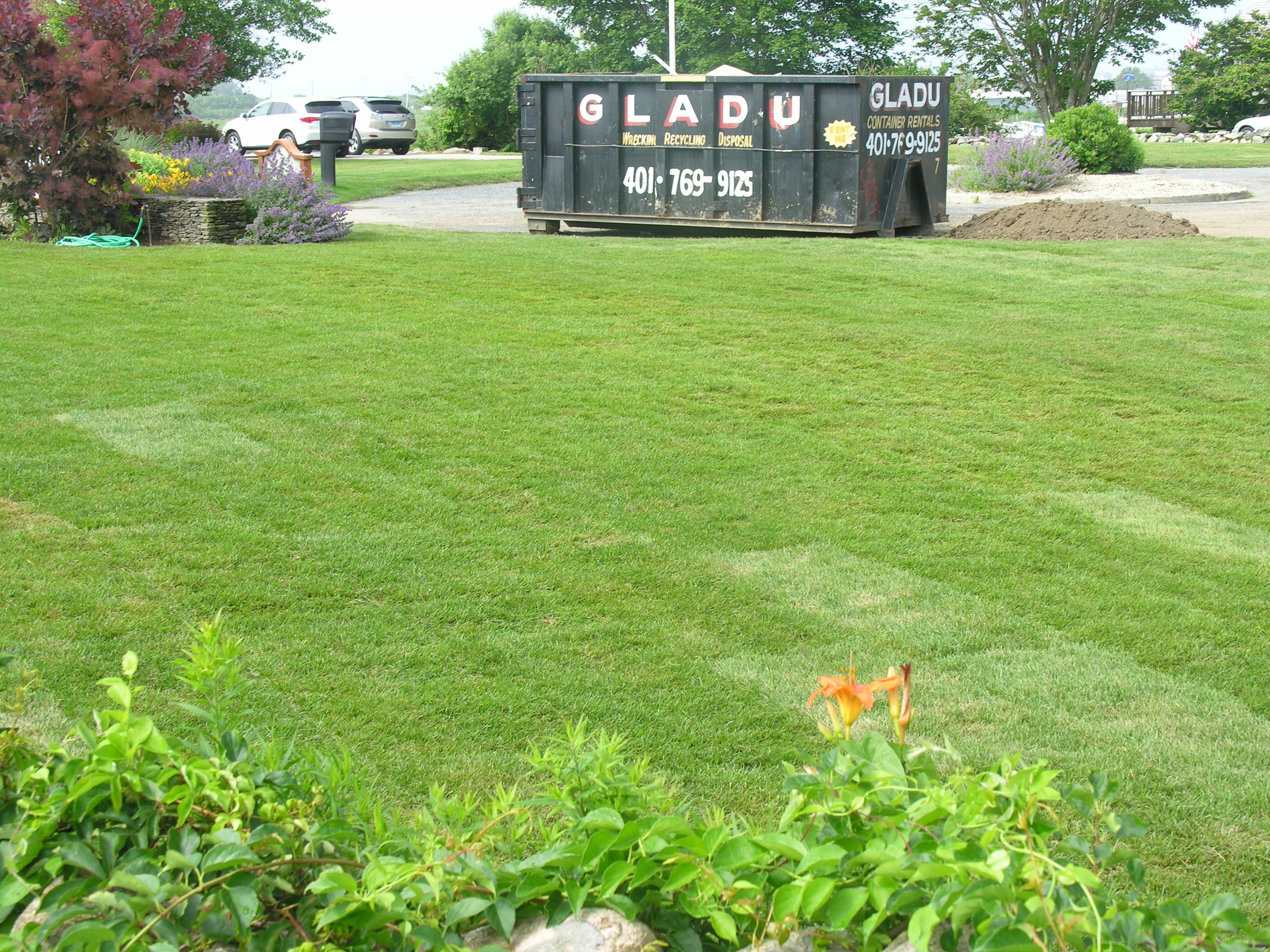
The new garage that belongs to our arrogant, rude, and thoroughly unpleasant neighbor is nearing completion. Regular readers of this blog may recall that it is more than twice the size of our house, and is oriented in such a way as to completely block off our view of the water.

DSCN0458

Over the last six months, we have gone from overlooking a wildflower meadow and the ocean to a sea of mud, a huge dumpster and a porta john, and now, turf grass. Boring old turf grass which he will most certainly spray with toxic chemicals. He already does this on the rest of his property – his property right on the salt pond. But that’s just the swell kind of guy he is.

Oh, and while we are all supposed to be on odd-even watering restrictions, his automatic sprinklers are soaking his dumb grass several times EVERY DAY! Where’s that lightning bolt when you need it?

Posted in Uncategorized | 11 Comments

All I can say is “wow!”

DSCN0450

Happy Fourth everyone!

Just three weeks after planting tomatoes, eggplants and peppers in my new beds, I can confidently state that the growth is amazing. You can read about the transformation of useless shrubs into productive soil and see how small the veggie plants were by clicking here.

DSCN0451

Not only are the plants tall, they’re burly. I have never had tomato stalks this thick. I’m a bit surprised by all this unbridled “phyto enthusiasm,” because everyone I talk to has been whining about all the rain and how it’s been messing up their tomato crops.

DSCN0452

These are the eggplants and peppers. I have fed the plants just once, with seaweed emulsion. I figure they are getting plenty of nutrients from the soil, which is mostly compost.

So the experiment has been a rousing success thus far. I’ll keep you posted.

Posted in Uncategorized | 12 Comments

Gardening by the moon

DSCN9634

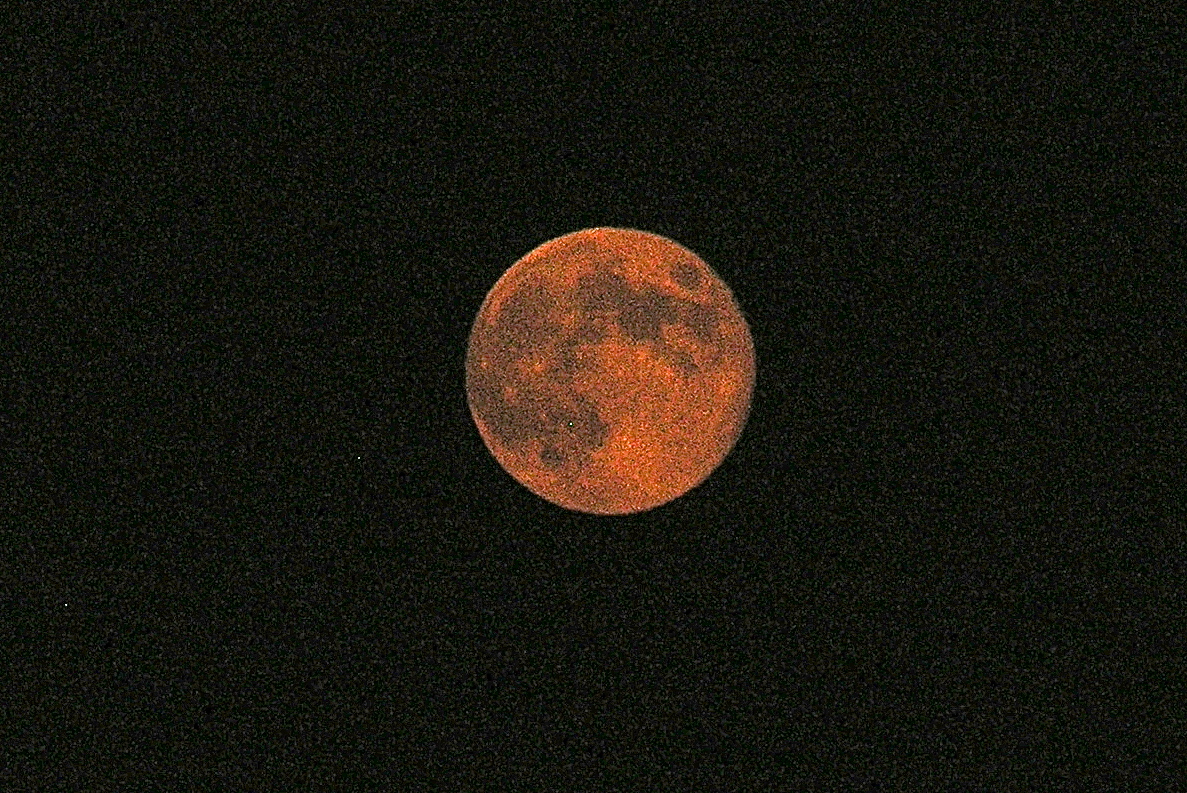
I took this photo of the moon sometime over the winter. It’s a bit grainy, I know, but I’ve been waiting for a chance to use it, and this is it!

As gardeners, we have all heard about the benefits of planting certain crops at certain times in the lunar cycle. One of my most loyal readers, CJ Wright, has taken this practice to a much higher level, and now, she’s offering to share her considerable wisdom with the rest of us in her new booklet: the Lunar Home and Garden Guide to Signs and Seasons Gardening, Home and Self-Care.

Here’s an excerpt to give you an idea of where CJ is coming from. (Makes sense to me….)

“This is the 21st century. Why would we even bother to pay attention to the Moon? Isn’t that a little ridiculous?

It’s no more ridiculous than referring to your calendar when you make an appointment with your accountant or doctor. It would be silly to just show up, right?

When you follow a lunar calendar and gardening guide, you are making an appointment with Mother Nature, following ancient principles of gardening that have been handed down from generation to generation to generation.”

The guide covers the summer months and zodiac signs, Cancer, Leo and Virgo. It is meant to complement basic good gardening practices and gently nudge us back into a more mindful relationship with nature. I love how she expresses that:

“Take a walk outside and find the Moon,” she writes. “It may be midnight, or it may be morning when she appears. Whenever you spot her, bring her inside. Make good use of her perfect timing inside as well as out.”

(She explains the “bringing the moon inside” part, don’t worry.)

This is a beautifully laid-out, 55 -page booklet. I was very impressed when I read it, although I should know by now never to underestimate the depth and breadth of my readers’ talents.

If you’re interested in exploring this further, you can get a copy of CJ’s booklet for $9.95 here, and no, I am not getting any commission on her sales…

Posted in Uncategorized | 4 Comments

Some like it hotter

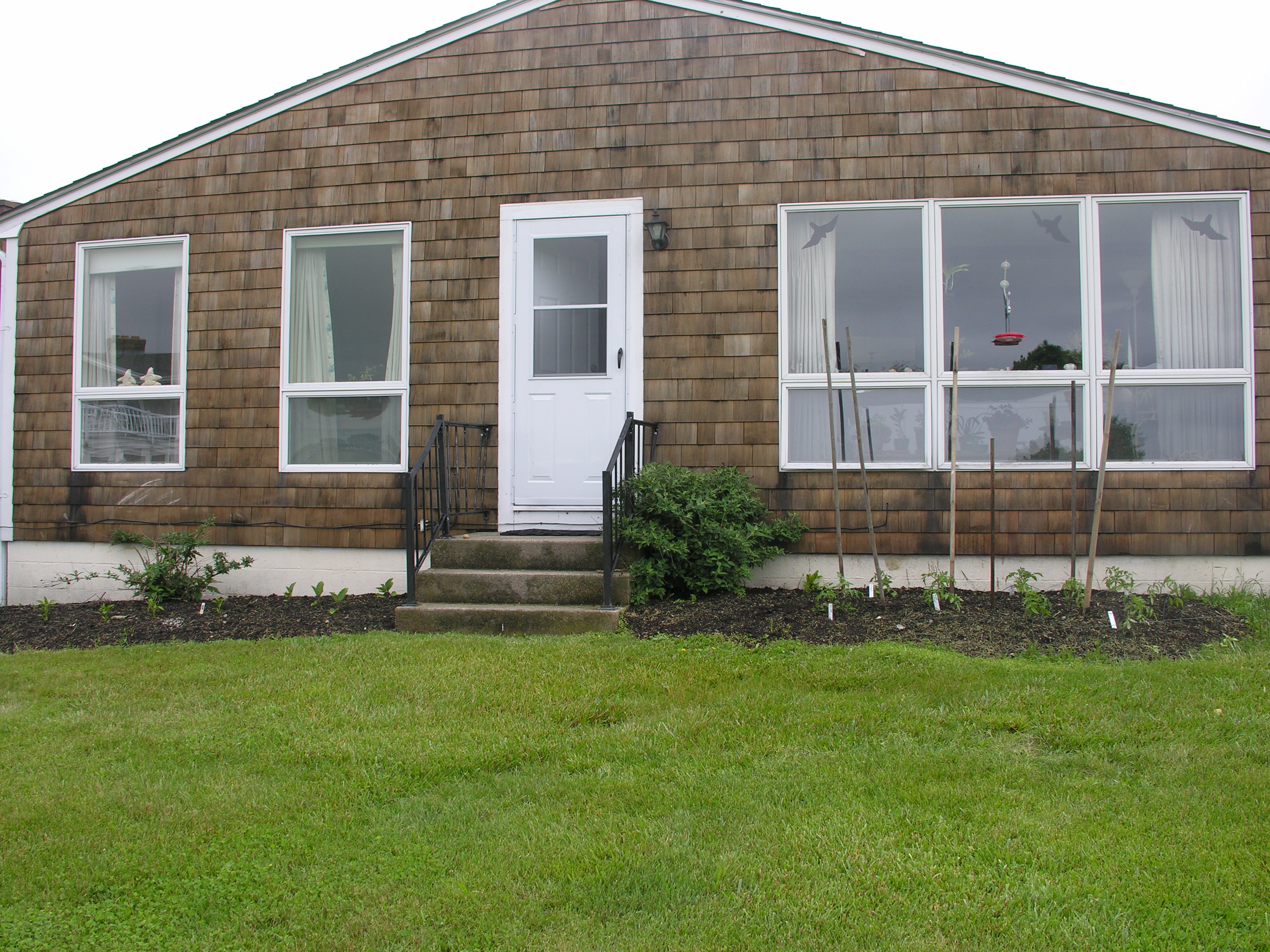
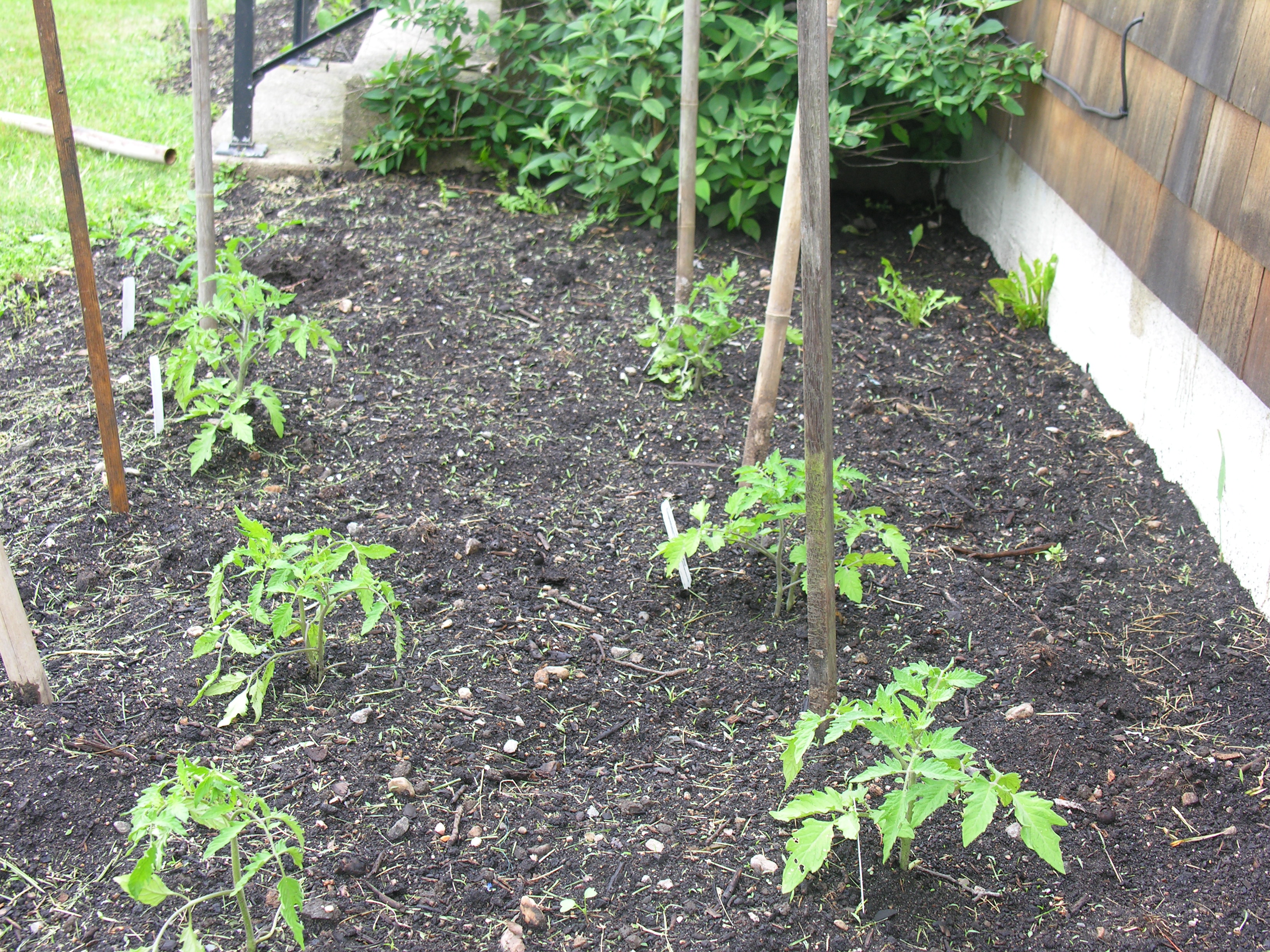
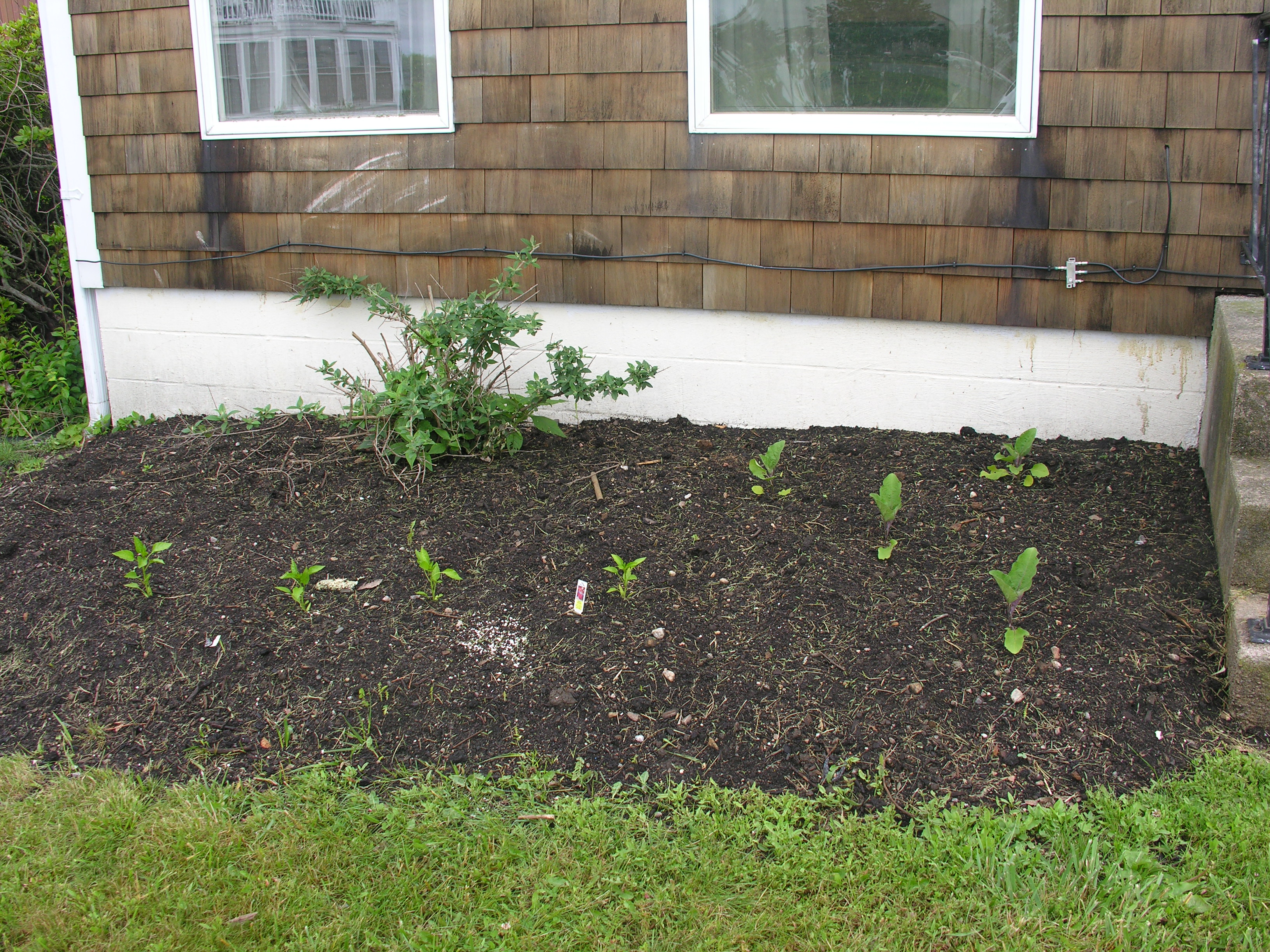
DSCN0409 I made a kind of drastic move a couple of weeks ago. Our foundation used to be hidden by shrubs, the kind that are of no benefit to wildlife and need pruning otherwise they look awful. The back side of our house gets very, very hot, because it faces southwest. What better place, I thought, to grow heat-loving tomatoes, eggplants and peppers. DSCN0404 So out went the shrubs. I called the man who mows our lawn and as luck would have it, he could deliver and spread 3 yards of lovely soil/compost mix where the shrubs used to be for just $20 a yard. A week later, the new soil was in place, awaiting plants. DSCN0413 In another stroke of luck, this was just at the same time the soil finally warmed up enough to make tomatoes happy. So I bought a bunch of heirlooms and some paste tomatoes too, because I do love to make fresh pasta sauce. They should do well here, because it gets so darned hot. DSCN0403 Just at the edge of the bed, some sunflowers from last winter’s bird feeding and some of my beloved verbena bonariensis are coming up. I have left little markers here and there so no one weed whacks them by mistake.

So I’ve gone from a hot, non-productive spot to prime veggie growing beds. So glad I did this! In case you were wondering, the shrubs are buddleia “Blue Chip,” a compact cultivar.

Posted in Uncategorized | 14 Comments