so i’m out there in the garden the other day, and i’m already weeding, and i’m thinking, “really? weeds in early april?” and it occurs to me that i’m really not that familiar with what it is i’m yanking out, and more importantly, what the prevalence of various weeds says about my garden. so i thought i’d put together a series of posts about my many weed nemeses… nemesises? and i figured i’d start with what’s out there right now, growing insidiously among my peas and spinach…
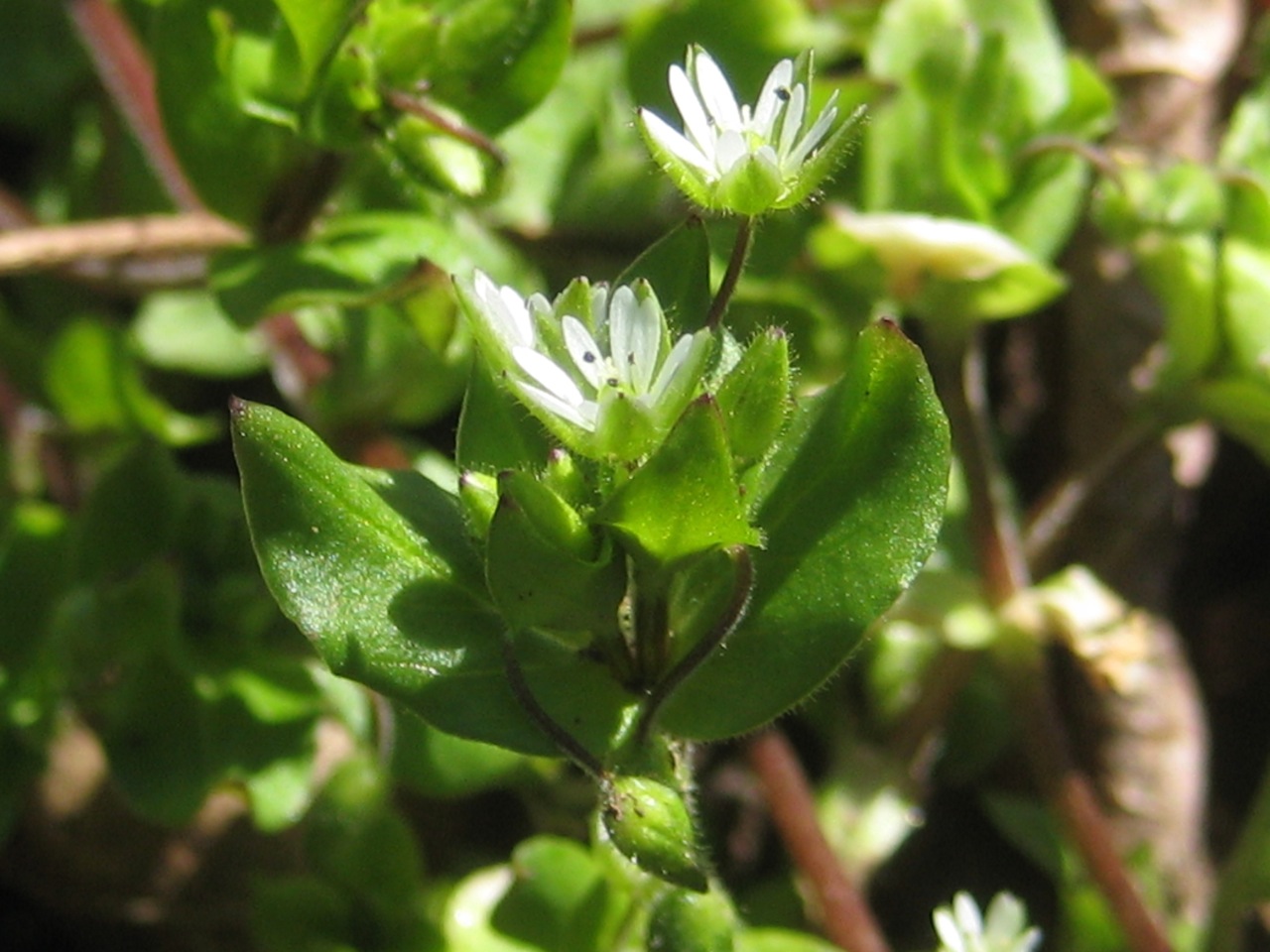
Chickweed
meet chickweed, or stellaria media. stellaria, i guess, named for its star-shaped flowers. (yes, this baby is already flowering.) i’ll give it to you as good news/bad news.
first, some good news. one of the first things you ought to know about chickweed is that it is an indicator of fertile soil. so if you’ve got a lot of the stuff, and i do, that means your garden soil is in good shape, nutrient-wise. some other weeds that are also indicators of fertile soil include henbit (lamium amplexicaule), lamb’s quarters (chenopodium album), and chicory (cichorium intybus). so if you see chickweed along with several of these other weeds, you can feel pretty confident you have fertile soil.
some bad news, according to the university of california, is that chickweed can start producing seeds as early as 5 weeks after germinating, and can continue to produce seeds for weeks or even months thereafter.
some good news. chickweed can be pretty easily controlled by hand weeding, as it is fairly shallow rooted. of course, you’ll want to do this early, before it sets seed, as (bad news) one plant can produce up to 800 seeds, and the seeds can be viable for 7 to 8 years. and if you do yank it out, you’ll want to be sure to remove it from your garden, as it easily re-roots.
more good news: chickweed is edible! go ahead, google “chickweed recipes.” i’ll wait. waiting… waiting…
what did i tell you? chickweed pesto! chickweed salad! chickweed tea! (and i’m sure herbdoc can chime in on the medicinal and nutritional value of chickweed.) so i guess this is one of those “if you can’t beat ’em, join ’em” type situations.
all i know is, there is so much out there right now, i could start a chickweed farm!
for even more exhaustive information about stellaria media, see these fact sheets from virginia tech, university of california, and oregon state.
also, there is another very common weed called mouseeared chickweed. it looks very much like my friend, above, but the leaves are hairy. its latin name is cerastium vulgatum, and you can read about it thanks to the diligent work of, among many other folks, the good people at montana state university and ohio state.













 Digging RI