Rudbeckia Redux

Rudbeckia Laciniata Photo: Peganum

HerbDoc has her own favorite giant coneflower:

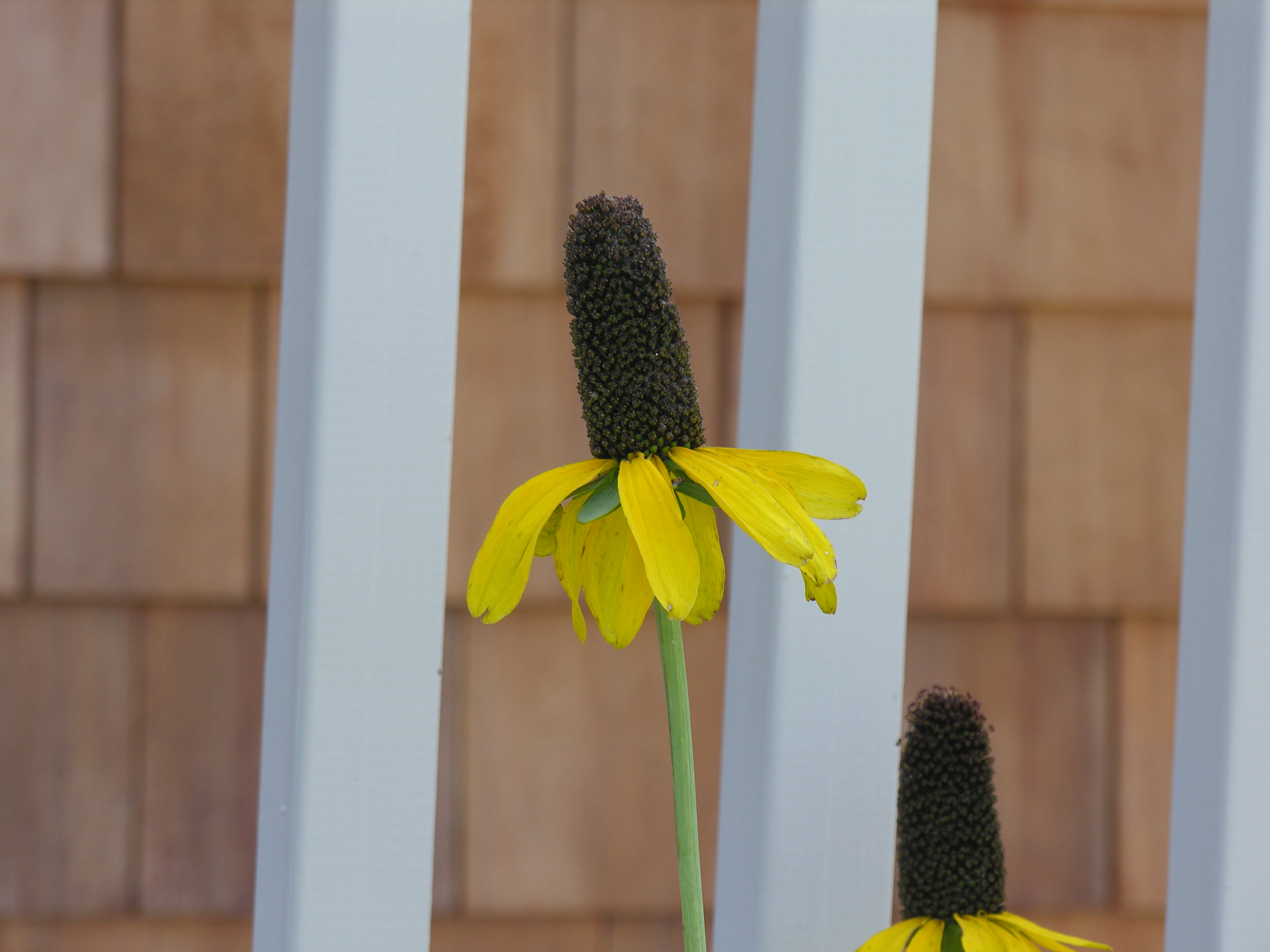
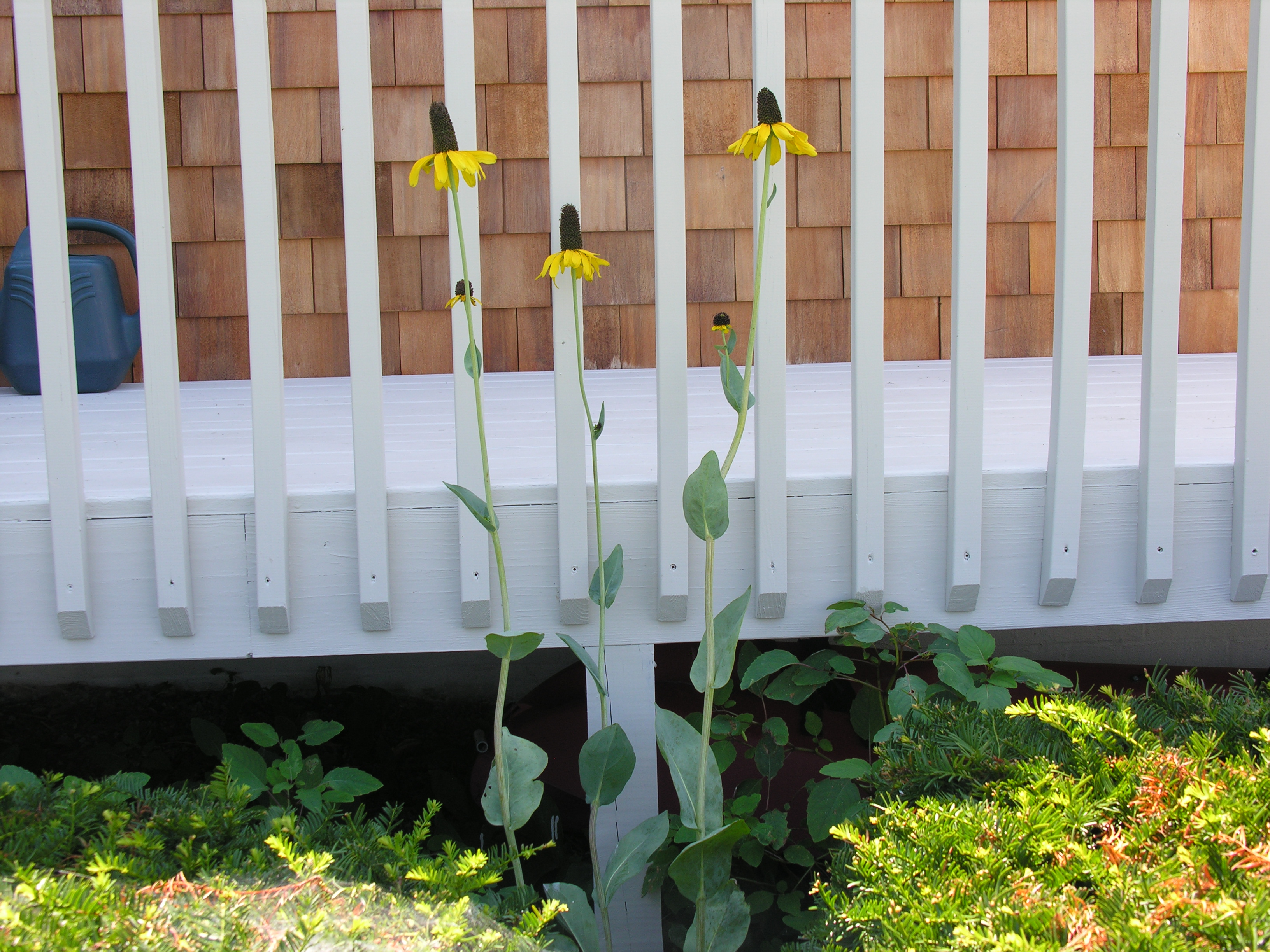
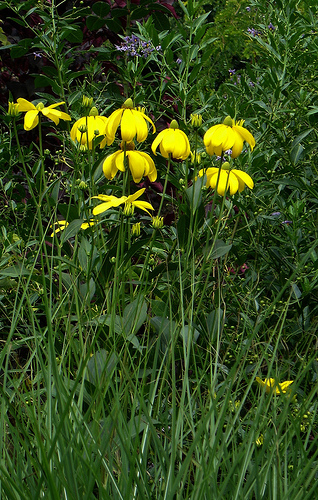
Here’s another native Rudbeckia that’s stunning if you have a spot for it.  Since it was given to me at a plant swap and had no tag, it took me a while to identify it.

The common name is tall or green-headed coneflower with the Latin name being Rudbeckia laciniata.  The neatest thing about this particular perennial is that the lower leaves are pinnately divided into 3 – 7 irregularly lobed leaflets.  They remind of giant’s hands!

The plant is said to grow 3-10 feet high, and it is easily 10 feet tall against my garage wall.  The flower heads are yellow and about 4 inches wide with greenish-yellow knobs in the centers.

I’m hoping it spreads as I really love the way it looks.  Unfortunately after yesterday’s heavy rains it may need some support as some of the stems fell to the ground.

Posted in Uncategorized | 10 Comments

Rudbeckia – to the Max

Rudbeckia maxima

Meet Rudbecki maxima – or giant coneflower. It’s big. It’s bold. It’s in-your-face yellow, and I love it. It’s an American native (to a few western states) with grayish green foliage and tall strong stems. Very tall stems. This is definitely a back of the border or major statement plant that grows from five to seven feet tall, but doesn’t need staking.

Fine Gardening says it “makes a strong vertical statement.” Yes indeed, it most certainly does.

The cones are big, too, and get to be about 4 inches tall, to the great delight of birds, especially goldfinches. It’s hardy to zone 4, and is a plant that grows naturally in wet places, although it has proven to be drought-tolerant here.

This plant likes full sun to part shade and average soil. Rust, aphids and powdery mildew can be problems, but in my experience, this is a tough, trouble-free plant.

Check out the foliage - different and cool!

Posted in Uncategorized | 2 Comments

Coastal Maine Botanical Gardens

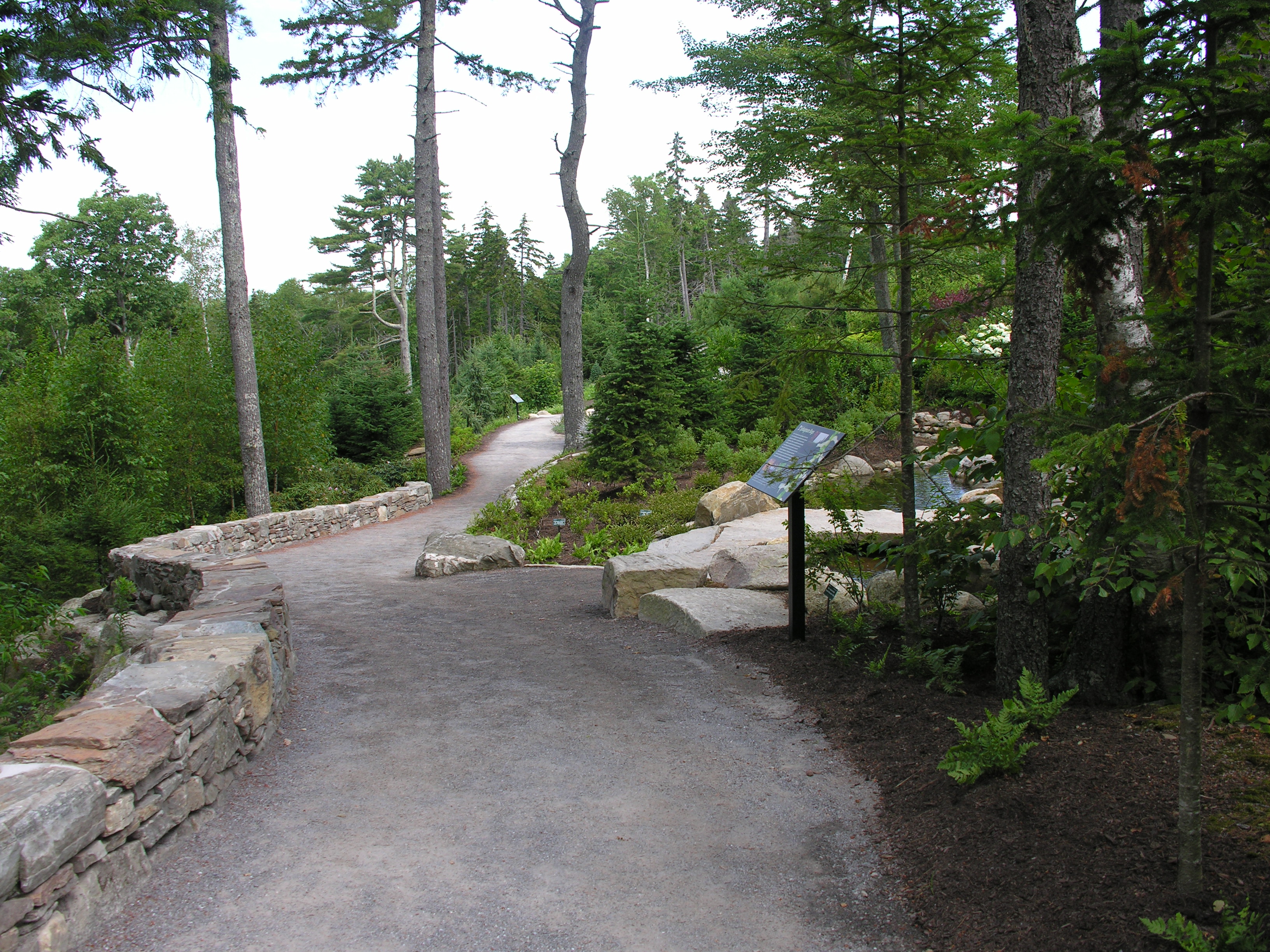
A walking trail near the water

Recently, I took a Master Gardener day trip to Boothbay, ME, home of the spectacular Coastal Maine Botanical Gardens. The gardens are relatively new, having opened in 2007. They employ the latest and best gardening practices, and they have the money to do it right – about $21 million in donations so far.

They left the rocks and planted around them. Yay!

What I mean by best gardening practices is they have preserved what is naturally beautiful on the  248-acre property and have planted to enhance, not obscure it. Native plants are used extensively, but are by no means the only plants featured. The criterion seems to be hardiness, which is necessary here in mid-coast Maine, where winters are very cold.

One of the jaw-dropping views

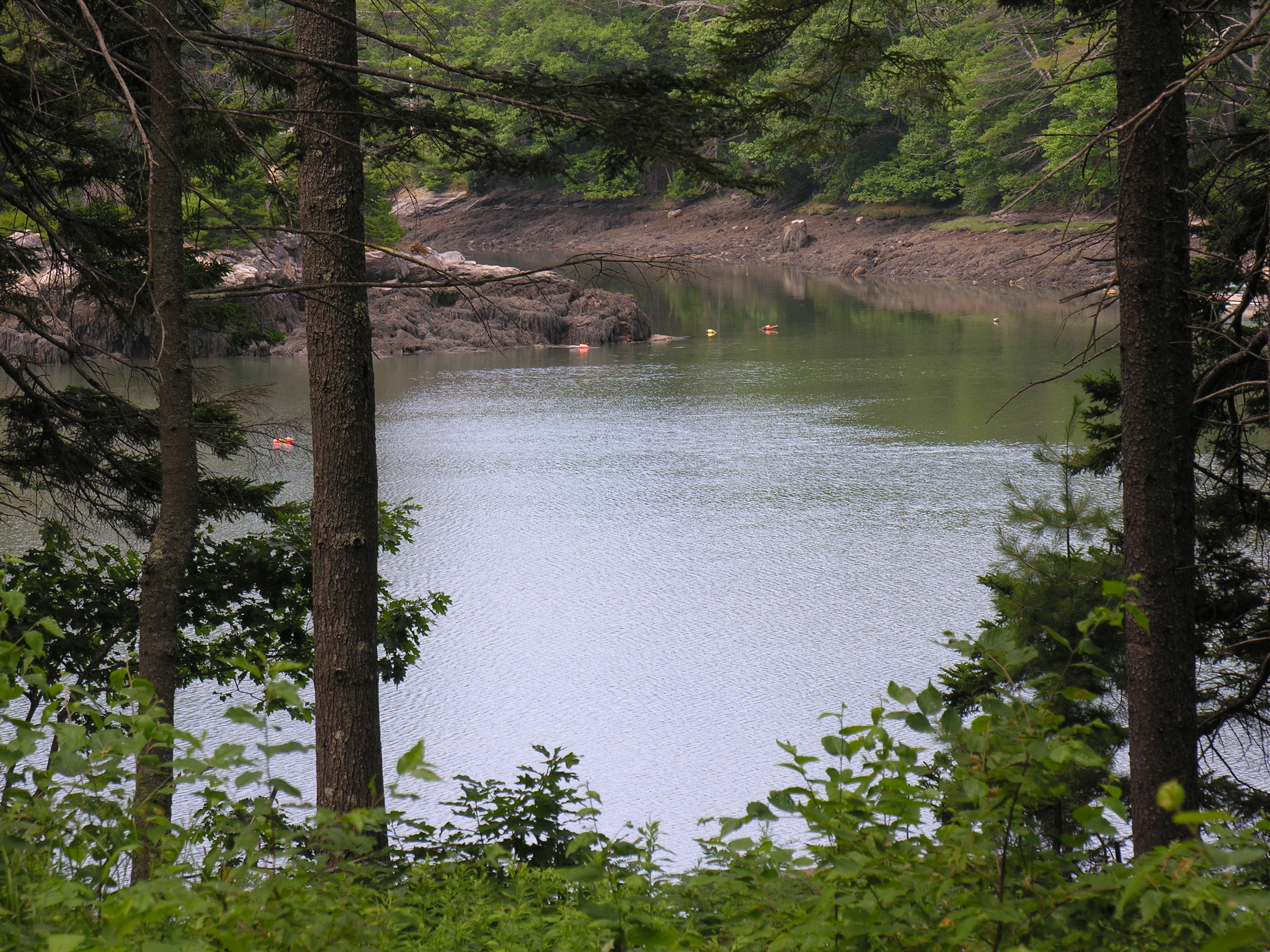
This is now the largest botanical garden in New England. It is situated along a salt water river, and the designers thoughtfully added benches and other sitting areas, so you could pause,  take in the maritime view and even watch a seabird or two.

A natural rock bench

I also appreciate how they include outdoor sculptures throughout the gardens, most of which are for sale.

"Forest Trout" for sale

There are some wonderful water features here – so peaceful and refreshing on a hot summer day, and  natural-looking, too.

This stream looks like it's always been here.

Admission to the gardens is $12 for adults and there are special prices for children and seniors. Admission is free from December to March.

If you find yourself anywhere near these gardens, just go.

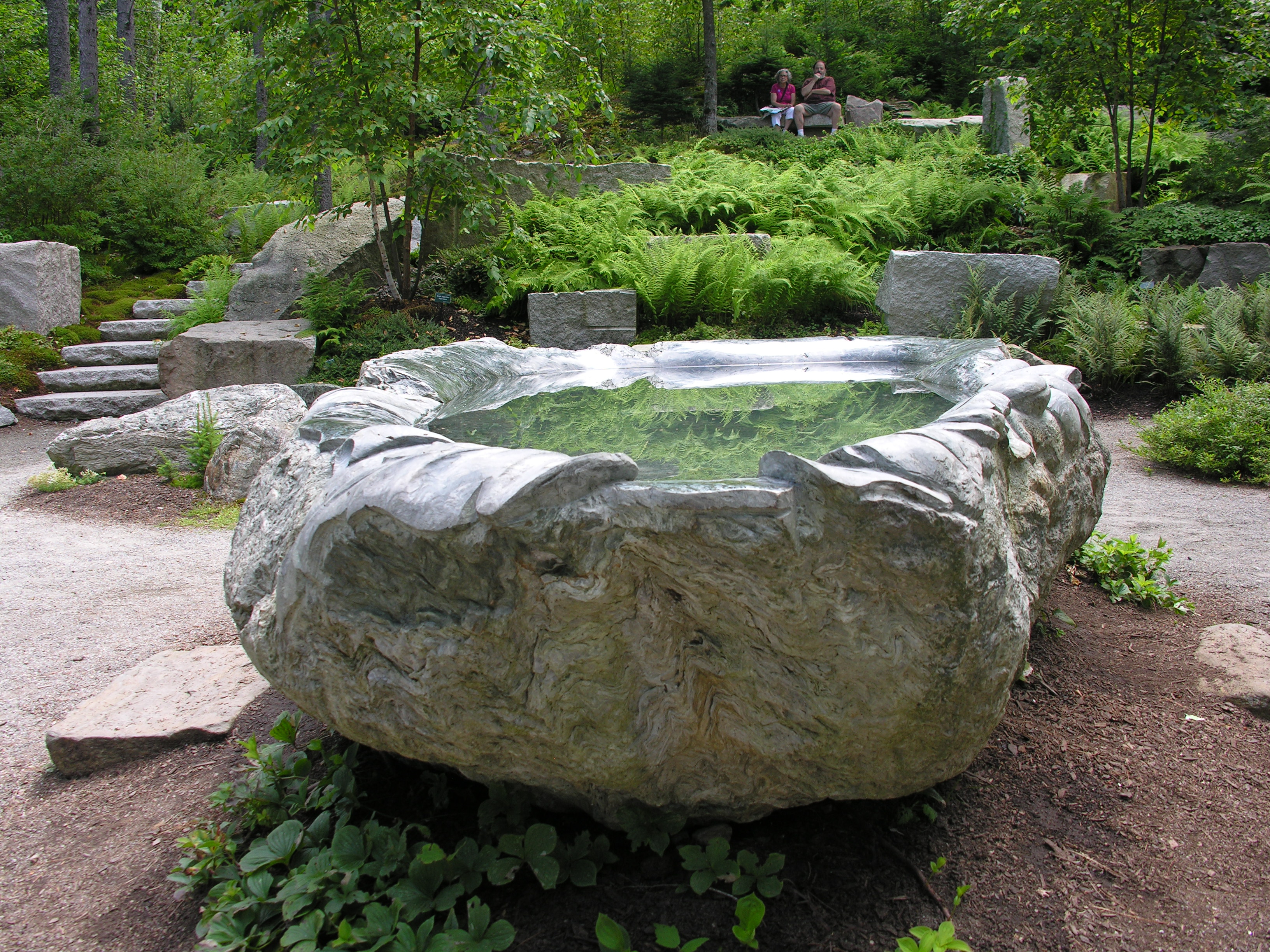
This basin is a sculpture AND a water feature. Note bench behind.

Posted in Uncategorized | 6 Comments

Cookie Monsters

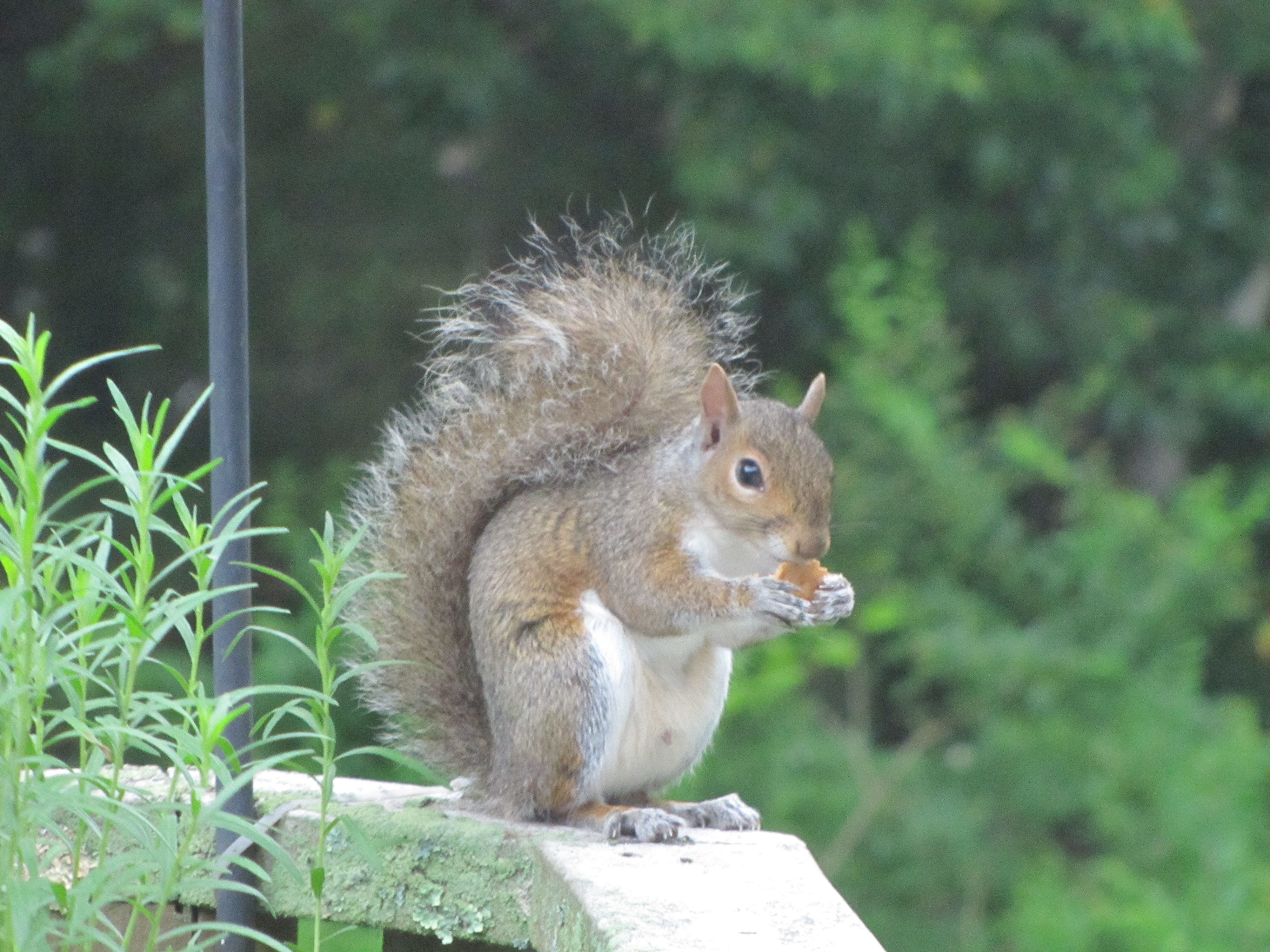
"Cookie"

Yes, we know that squirrels can be annoying garden pests. But HerbDoc has found that bonding with them can be way more fun than chasing them away:

Late last January a tiny gray squirrel appeared at the French doors to the dining room.  He was a bit unsteady on his feet and seemed to have little fear of humans so we left small cookies and sunflowers seeds in an attempt to see him through the winter.  By early spring he was happily collecting graham cracker pieces and peanuts a couple of times a day and eating them no more than two feet from our doors.

Then in early April another small squirrel appeared at the edge of the woods.  She wouldn’t come to the deck, but “Cookie” as we named him, would eat a segment of graham cracker and then take the other one to her in the tree.

Lo and behold, we now have two tinier squirrels which we imagine are Cookie and his girlfriend’s offspring visiting about three times a day.

For the first time two days ago, I stood on the deck with a quarter of a graham cracker in each hand.  One of these cuties has dark red back feet and is a little less shy than the other.  She literally danced toward my left hand, took a few steps back, hopped over my hand and back.  This process was repeated twice and then she covered her face with her tail, sidled up to my hand and ran off with the cookie before we could snap a shot!

This has happened two more times, and we found that she doesn’t usually go far.  She likes to “hide” at the end of the rail where I have a huge tarragon plant on an old metal chair.  She then returns for another snack.

Little squirrel two has gotten up enough courage to come for a cookie if I put the cookie on the rail in front of me and keep my hands at my sides.

Perhaps he will trust me enough to gather a snack from my hand soon.

Just too cute!

Posted in Uncategorized | 10 Comments

Easy to Grow Roses

"RI Red" and White Cap" photo: Angelina Chute

Recently, I wrote  a post about the Rhode Island rose show, in which I ranted – briefly – about the plants’ chemical requirements.

I received a comment from rosarian, Angelina Chute, co-author with her husband, Mike, of a  book on sustainable roses. Angie had many suggestions of roses that don’t require hazmat suits and toxic chemicals to grow, so I asked her if she’d write a guest post for this blog.

Here it is. Thanks, Angie!

When Dirtynailz invited me to write a Guest Blog about roses that don’t need chemical pesticides, I was happy to say yes. So many gardeners seem to think that roses are too difficult to grow and need a lot of care. When my husband Mike and I present programs about roses, we tell our audiences that with so many new, disease resistant (sustainable) varieties being introduced by rose breeders each year, it’s easier than ever to grow roses. Knowing what varieties have above-average disease resistance to black spot and other fungal diseases is the real secret to successful rose gardening.

There have always been sustainable roses such as species or wild roses that flourish and grow without any tending – you’ll see them growing on bike paths and in old railroad beds. There are also old favorite roses such as ‘Ballerina’, ‘Carefree Beauty’, ‘Chuckles’, and ‘Dortmund’ that have been around for many years because they are disease-resistant. No need to suit up in protective gear to keep these roses healthy!

What we have now, though, are more and more new roses that don’t need chemical pesticides to stay healthy and attractive. These roses are not only easy-to-grow but have beautiful form, many petals, and lovely colors. Most gardeners are already aware of the Knock Out roses. In addition to the original red Knock Out rose, there is a whole family of Knock Outs to choose from, including ‘Pink Knock Out’, ‘Double Knock Out’, ‘Sunny Knock Out ‘and ‘White Out’. A small climbing rose by the same hybridizer of the Knock Out rose is ‘Brite Eyes’. We have been growing it for the past two years in our sustainable rose garden and so far it seems to be very disease resistant.

In addition to the Knock Out series of roses, there are other roses that show great resistance to fungal diseases. When doing research for our book, Roses for New England, A Guide to Sustainable Rose Gardening, we found hundreds of varieties that are disease resistant as well as winter hardy. Unfortunately, I don’t have room here to go into descriptions, but I’ll mention some varieties that we recommend to gardeners who want easy-care roses.

On the top of my list are ‘All the Rage’, ‘My Girl’, ‘Yellow Brick Road’, ‘Yellow Submarine’, ‘Centennial’, and ‘Super Hero’. These varieties are all part of the Easy Elegance series and very disease resistant. An added bonus is that they have flowers that grow on stems long enough to cut and display in a vase.

Then there are the Brownell roses, hybridized in Rhode Island in the 1940’s and 50’s. Varieties such as ‘Rhode Island Red’, ‘Nearly Wild’, ‘White Cap’, ‘Golden Arctic’, and ‘Scarlet Sensation’ are winter hardy and disease resistant.

Other easy to grow roses that we chose to plant in the Chet Clayton Sustainable Rose Garden at the University of Rhode Island include the fragrant ‘Julia Child’, ‘Pretty Lady’, the climber ‘New Dawn’, ‘Bonica’, ‘Carefree Delight’, ‘Home Run’, and ‘Lady Elsie May’. They are all growing well with no pesticides.

"All the Rage" photo: Angelina Chute

As you can see, there are many varieties of roses that are disease resistant, easy to grow and don’t need any chemical pesticides. All you have to do is know what varieties to choose.

If you would like more information about sustainable roses visit our website at www.rosesolutions.net
Posted in Uncategorized | 10 Comments

Summer is for Garden Tours!

Garden tour musts: drink lots of water, and wear a hat!

I recently attended one day of a weekend-long garden tour. This event takes place every two years, and is a major fundraiser for the University of Rhode Island Master Gardeners.

This year, 32 gardens were on the tour, most of them private. Here are some photos from the gardens I visited.

Little Neck Farm

We arrived early at “Little Neck Farm” in Narragansett, because we knew the beach traffic would be horrendous. (It was) This garden is actually a series of garden rooms, punctuated by several water features.

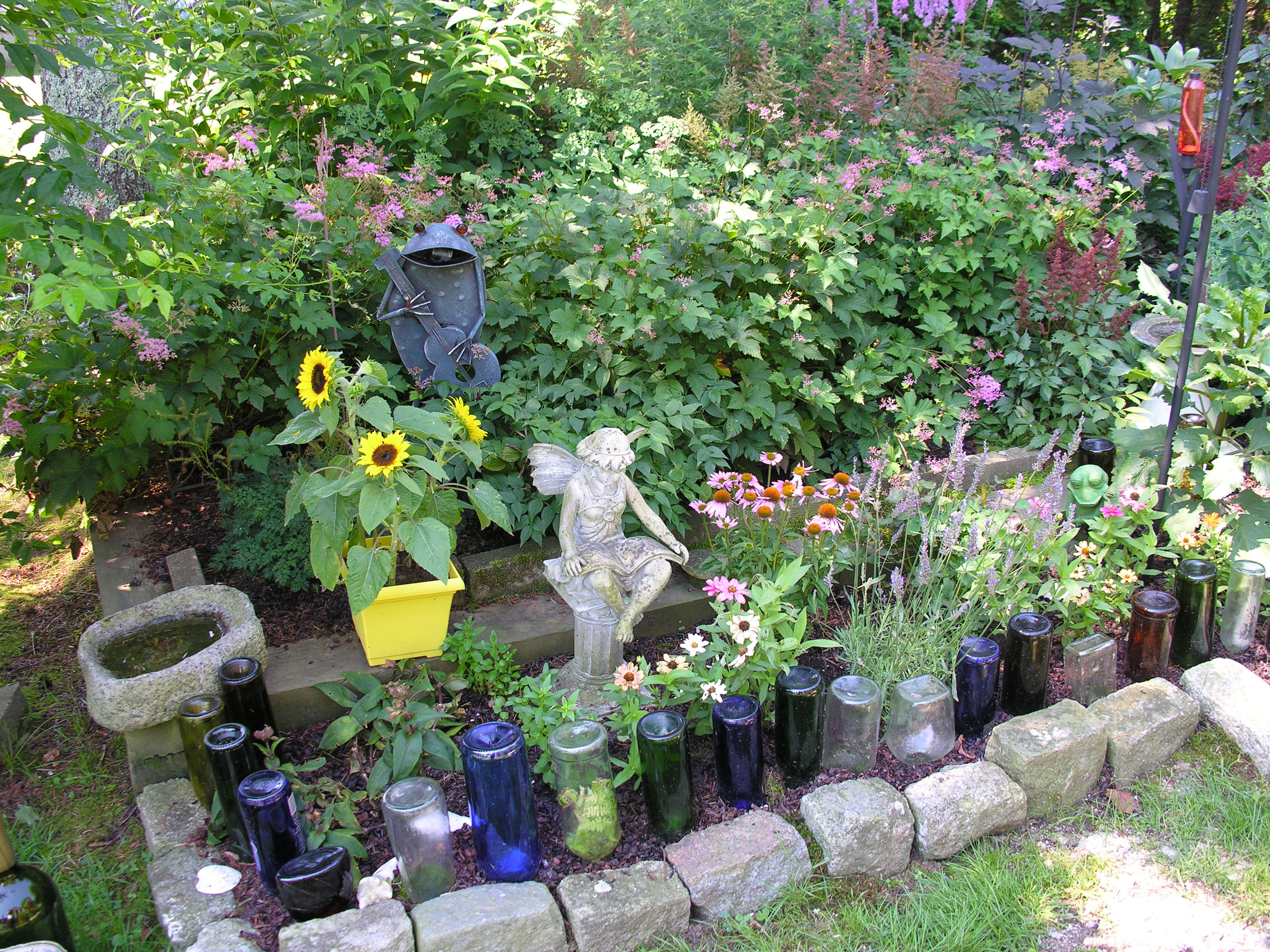
In this garden, called “Bottled Beauty,” the gardener has lined the paths with a great many bottles of different sizes and colors. The effect is quite pleasing- and very eco-friendly!

An interesting idea

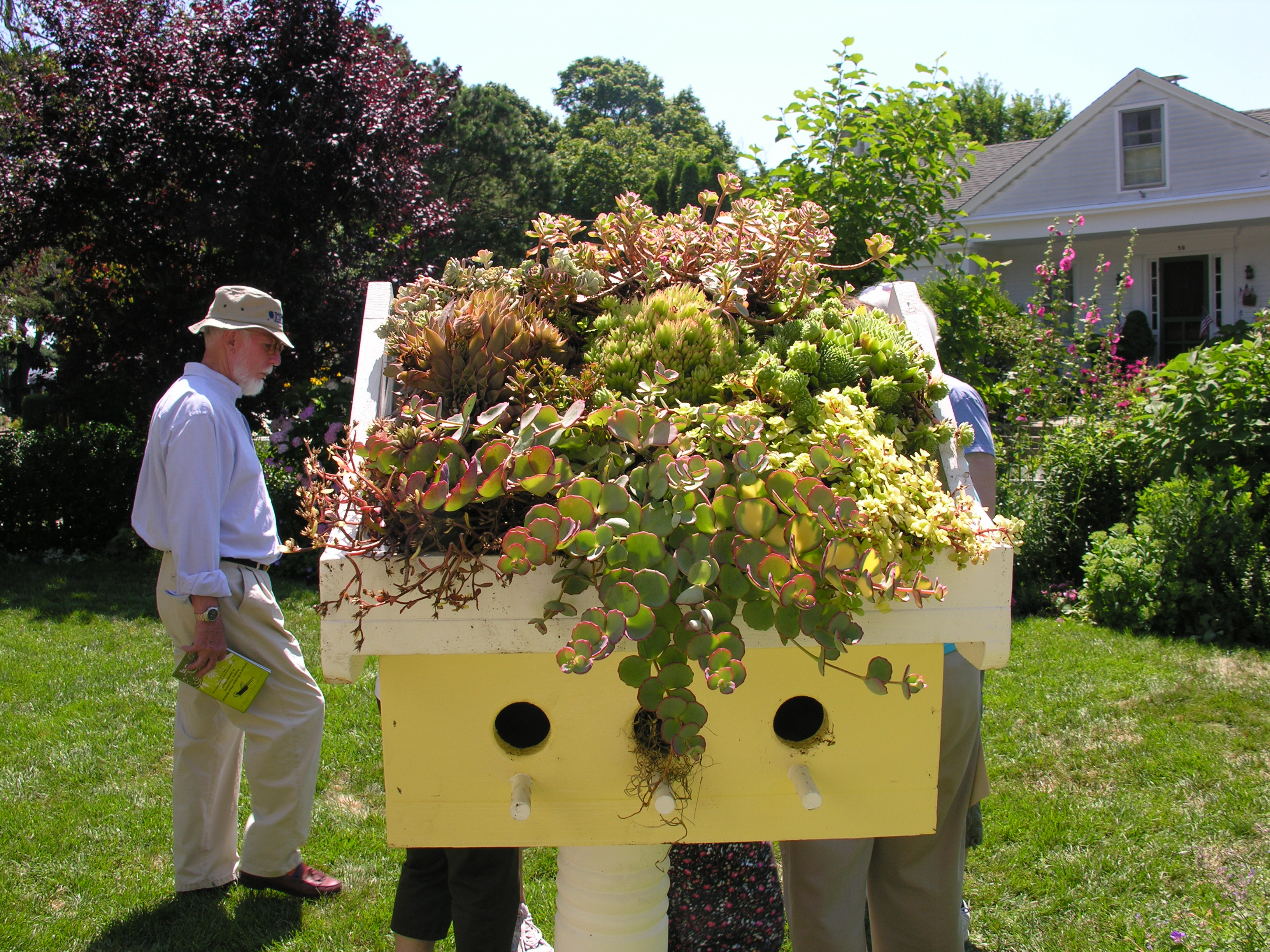
The theme of this garden is “Cozy Cottage Charm.” We all loved the birdhouse with the green roof.

Why not?

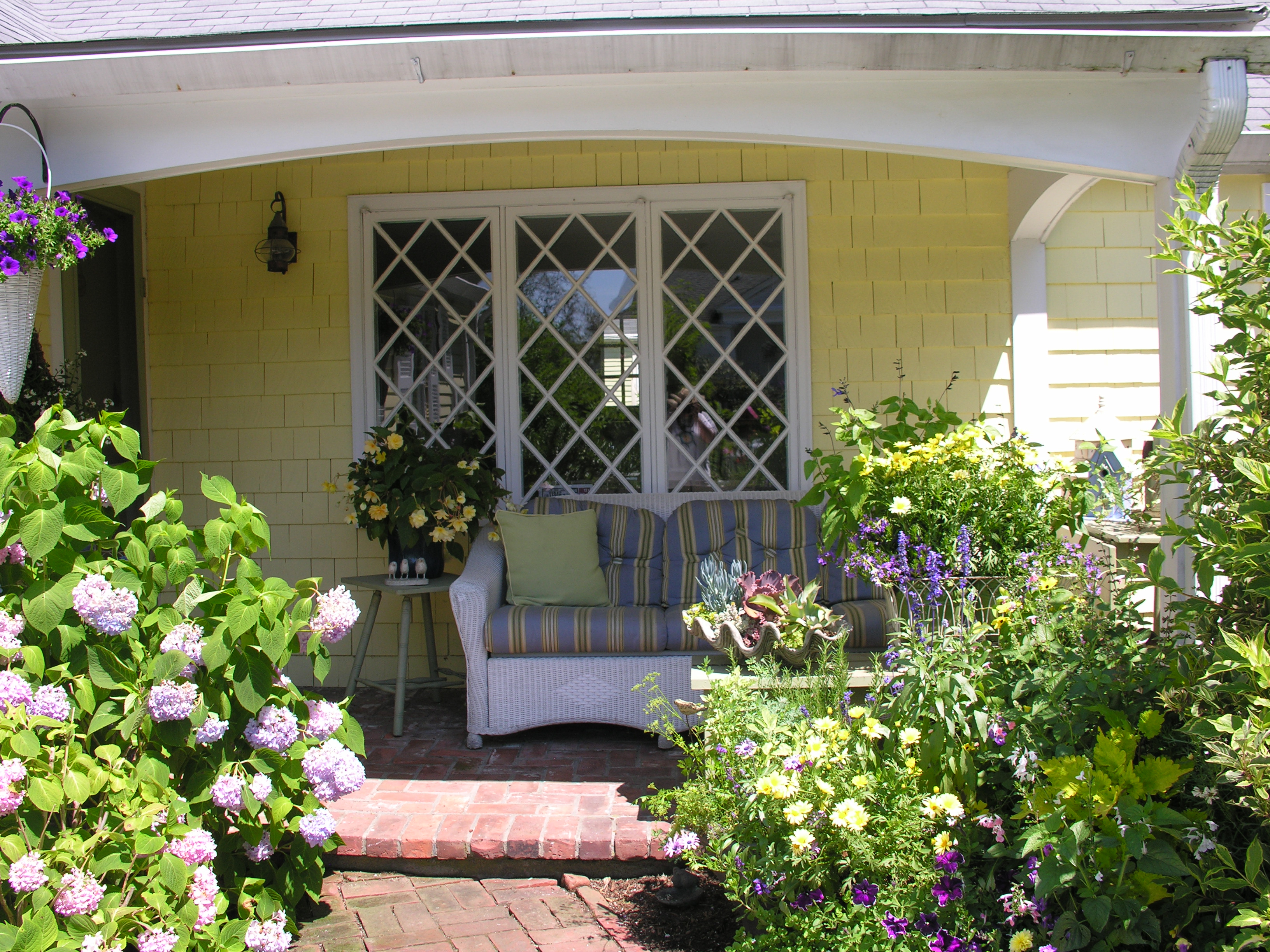
Here’s a view of the “cottage” itself. Charming, isn’t it?

I was tempted to spend the afternoon on that wicker sofa.

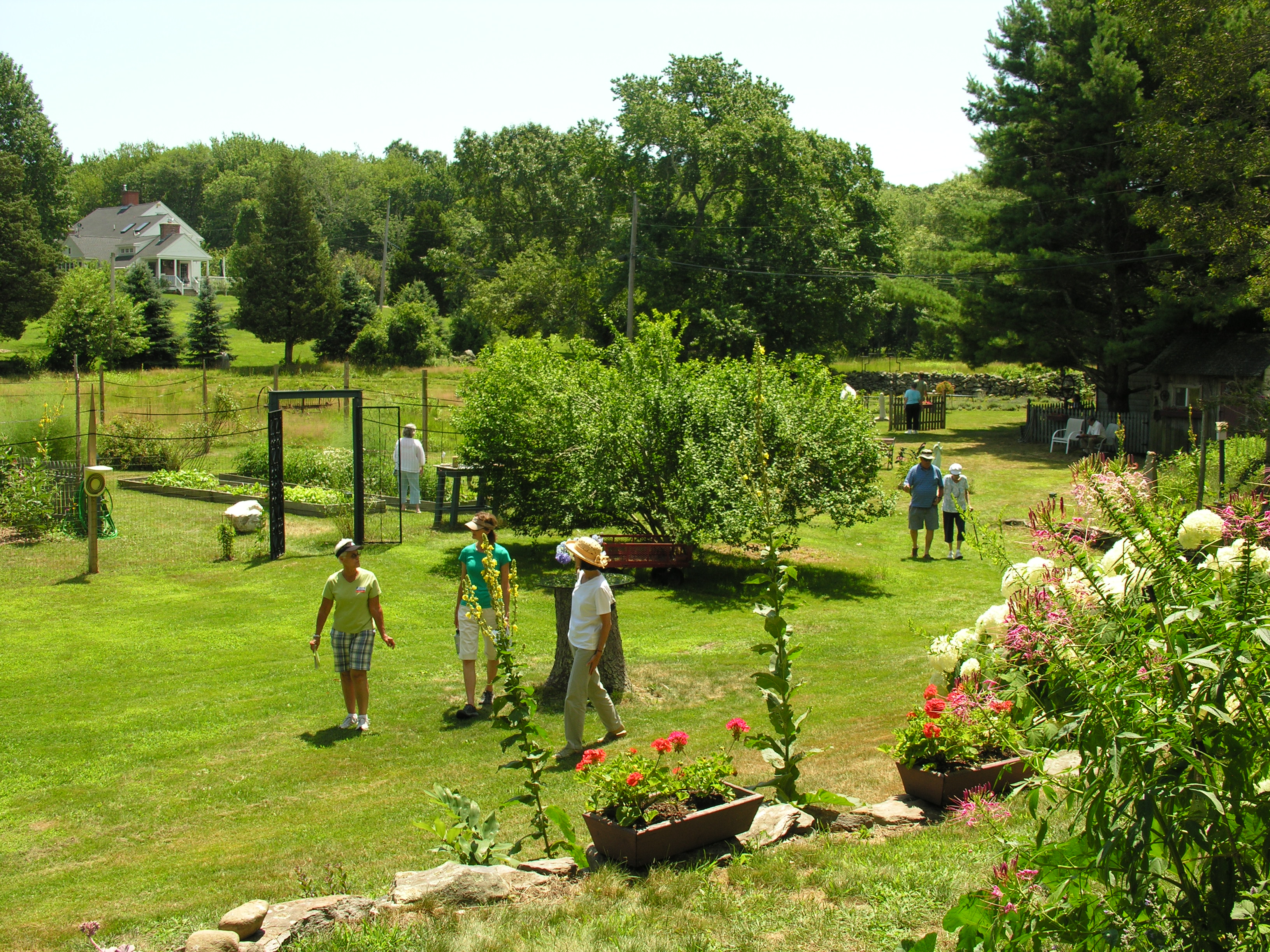
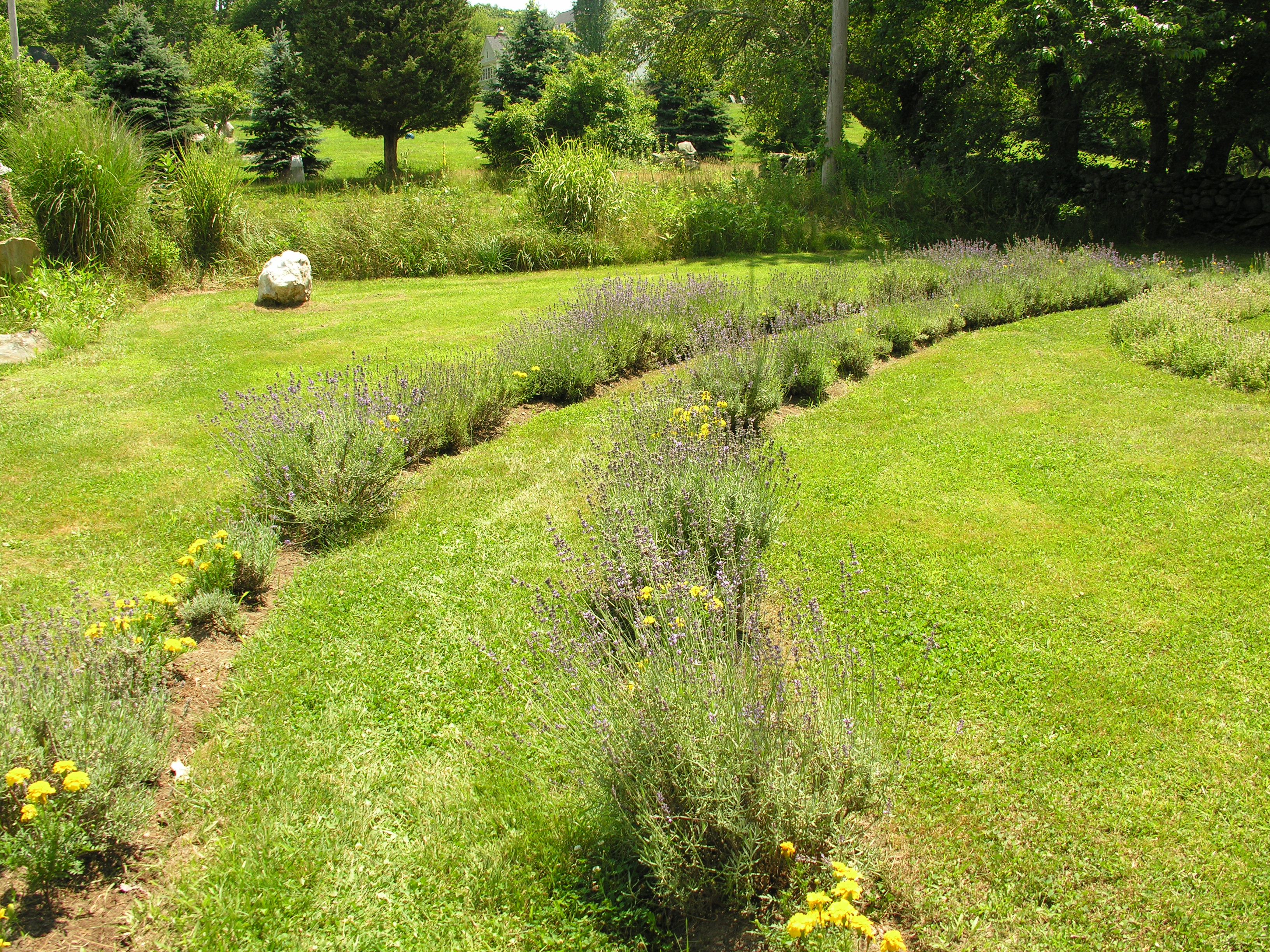
The last garden we visited, “Sun Rose Farm,” was vast – by my standards anyway. This gardener defined the different areas in various ways, creating diverse moods throughout her large property. I loved this circle, defined by sweeping lavender borders.

Cool!

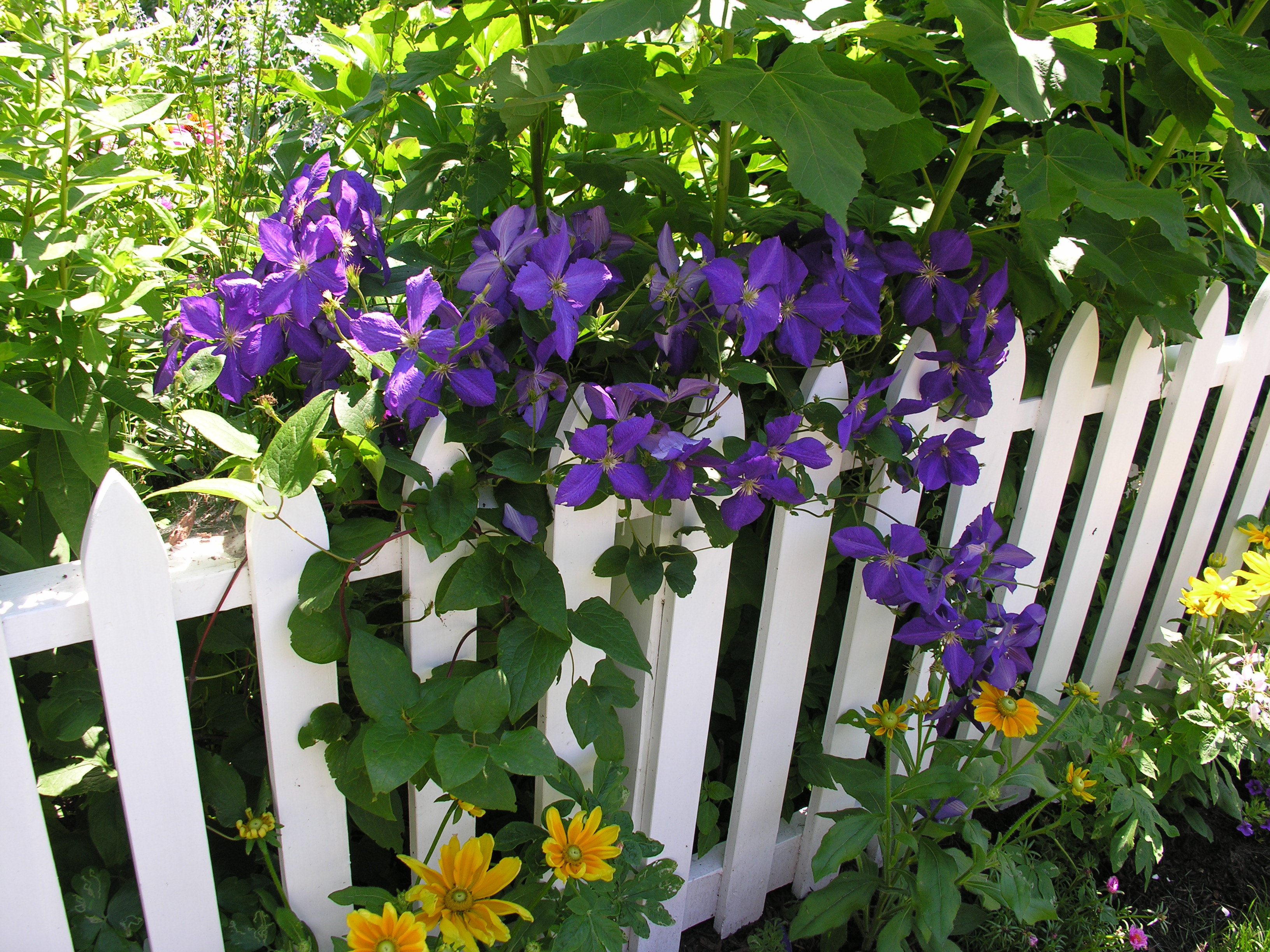
We simply couldn’t manage to visit more gardens after this one. We were just too hot and tired! I will leave you with one more shot, taken at the “Cozy Cottage” garden. I can’t resist a good clematis.

Nothing like blue and yellow against a white fence. That rudbeckia is "Prairie Sun."

Posted in Uncategorized | Leave a comment

My Yard is a Nursery

Waiting for lunch

For the past couple of weeks, my yard has been filled with constant twittering. The barn swallows have fledged.

Barn swallows (Hirundo rustica) are expert flyers and insect catchers, but they’re not born with those skills. It takes practice to swoop and dip and dive, and the young are doing their practicing over our lawn.

Barn swallows have forked tails.

At first, the fledglings would sit on a wire and wait for a parent to return and stuff their little gullets with insects. Now they’re hunting on their own – albeit with parental guidance and support.

I love these birds for many reasons, including their capacity for devouring large numbers of mosquitoes. It looks like they’ve had a banner nesting season, too. Good for them, and good for us, because we benefit from free pest control! For more information on barn swallows, go here.

Lunch! I always feel sorry for the one not getting fed.

Posted in Uncategorized | 6 Comments

Preserving Herbs

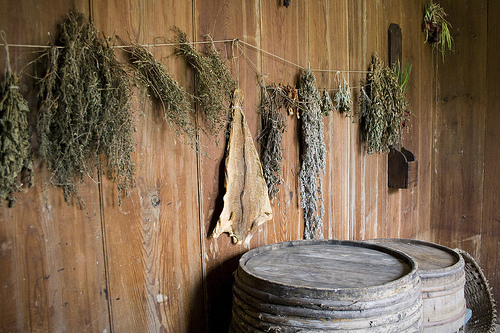
Photo: Caitlinator

Here’s an “herbal how-to” from who else but Herbdoc!

Those dried supermarket herbs in the spice aisle can cost a pretty penny, but preserving your own is easy, and in some cases, results in a tastier product than store bought.

There are many ways to preserve your herb harvest, but the easiest involves picking low moisture herbs and hanging them to dry.  Herbs should be picked in mid morning on a day which has low humidity and once the dew has dried.  If you attempt this process in the hot sticky weather, the herbs will rehydrate and mold will form.  Pick herbs before their flowers open because the oils are at their peak during this time.

Make a bouquet of four to six stems, removing the lower leaves to reveal the stalks.  I prefer to cover the bouquet with a paper bag to catch any dried leaves and to foil insects.  Tie the bag and stalks with twine and suspend in a warm, airy place.  Herbs should be dry in about two weeks.

Once dry, remove the leaves from the stalks, and store them in airtight labeled jars in a dark closet away from the stove/oven.  They should remain flavorful for about a year.

Some cooks advocate drying herbs in the oven on low temperature or in the microwave, but this is a risky proposition.  If the herbs are not watched constantly and get too hot, they end up with a scorched flavor, which is definitely not appetizing.

To dry seeds, gather the ripe flower heads and spread them out in a dry, dark airy space.  When they are fully dry, the can be shaken out of the flower heads or simply rubbed between your fingers.  Again, store your product in labeled jars in a dark closet.

Freezing herbs is another popular way of preservation.  After picking, brush the stems with a stiff paintbrush before removing the leaves from the stems.  Do not wash them. Put the leaves in a single layer on a cookie sheet in the freezer for several hours.  Then pack as many as you think you’ll need for a single serving in saran packets and store in labeled freezer containers.  Hint:

Two to three teaspoons will serve four people.  Warning:  If you prefer your basil to be green, it is one of the few herbs that must be blanched.  To do this, put the leaves in a colander and quickly pour boiling water over them for one to two seconds.  Dry on paper towels before putting on the cookie sheet to freeze.  Frozen herbs retain their flavor for about 6 months.

Happy preserving!

Posted in Uncategorized | 8 Comments

Buddleia “Blue Chip”

Buddleia "Blue Chip"

I bought myself a present this week: two  “Blue Chip” Buddleias, or butterfly bushes. I have been planting these in other people’s gardens, and I decided it was time for me to have one or two of my own.

Blue Chip, a recent Proven Winners introduction, changes the buddleia playing field, in my opinion. This plant is compact – to 3 feet max, never needs deadheading, and is supposedly not invasive,  as its more burly cousins tend to be. It can be grown in a container, as a hedge or as a stand alone garden accent.  And you don’t have to get out a ladder to tame it if you forget to cut it back one year, because it never reaches that gangly stage.

The flowers are a purple-blue and it blooms from mid-summer to frost. I set my newly-purchased plants outside still in their nursery pots, and hummingbirds and other pollinators found them almost immediately. That’s the main reason I bought these, so mission accomplished on that front! This buddleia is hardy to Zone 5, so it should make it through our RI winters without complaining.

While I’m on the subject: why do pollinators seem to love clusters of small flowers so much? They seem to prefer these to all other bloom configurations. Maybe it’s because they can get nectar from several blossoms in close proximity, so they don’t have to travel as far. This is pure speculation on my part, but it does make sense.

Posted in Uncategorized | 2 Comments

Some Help with your Veggies

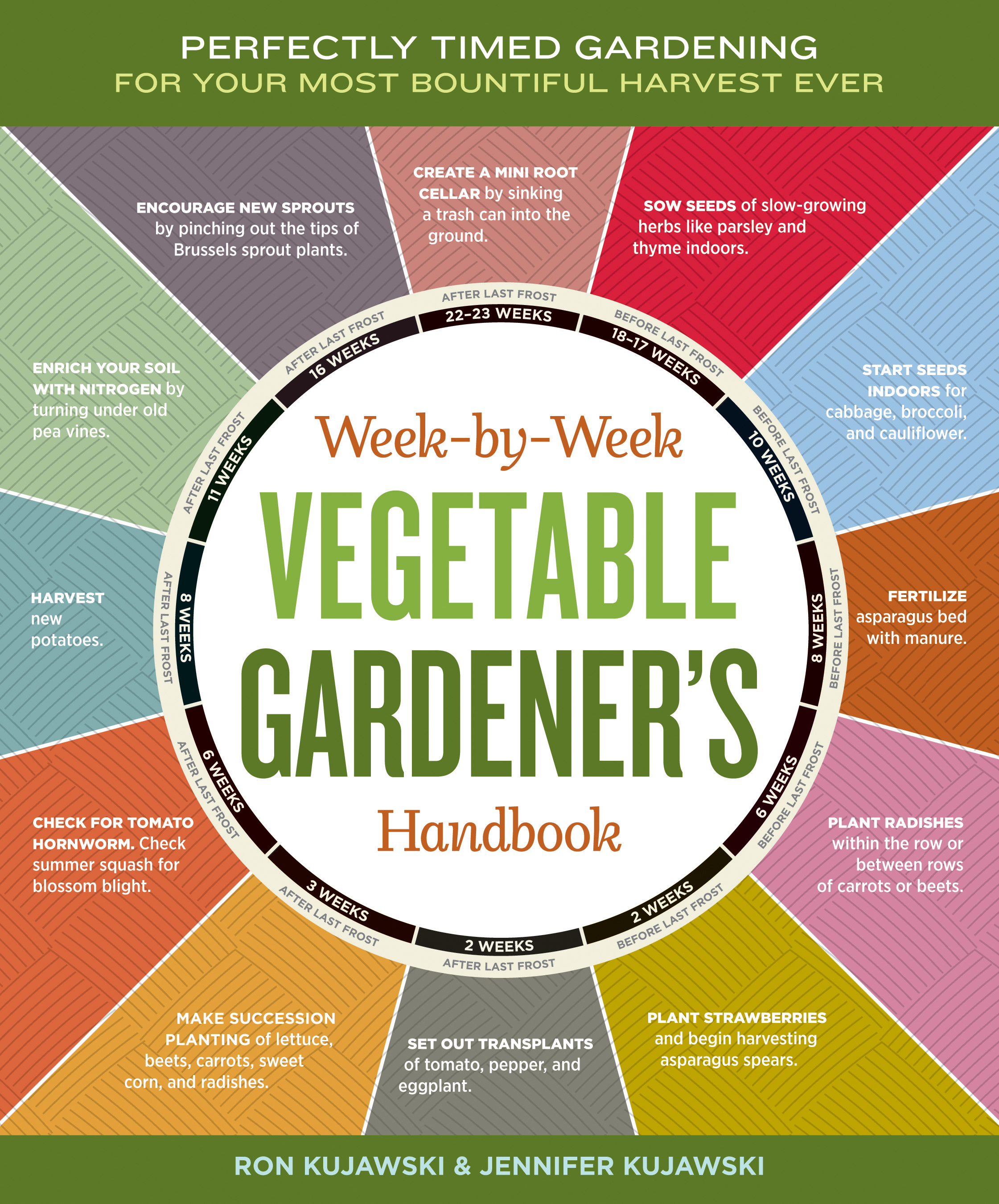
I  try to remain appropriately skeptical when a publisher sends me a book to review, but I have to admit my interest was piqued when Storey Publishing sent me a copy of “Week-by-Week Vegetable Gardener’s Handbook.” This guide, written by father and daughter authors Ron and Jennifer Kujawski, claims to help you achieve “perfectly timed” (yeah, right) gardening, so I was prepared to find something to criticize.

To be honest, I couldn’t find anything in this book to grumble about. Let’s start with its physical characteristics. Ring bound, and with sturdy covers, it is obviously meant to be dragged outdoors for quick reference. Instead of photos, there are lots of illustrations – line drawings actually- clearly showing the subject or technique the text is describing.

There is also  room for entering information about your own garden, so the book can serve as a journal as well. Nice idea, but I like a bit more space for my journaling, so I can rant and ramble and color outside the lines.

I kept waiting for the let-down, thinking that the authors had neglected to mention something important, only to find it on the very next page. I guess the one thing I can think of to criticize is that it does get a bit repetitive at times, perhaps because gardening topics can have a tendency to overlap. The information is sound, though, and the authors manage to cover just about everything without going overboard.

Ay $14.95, this is a pretty good deal. It would make a great “summer weekend hostess gift,” or a useful gift for someone starting a vegetable garden or maybe into their second or third year. This might not be the best choice for seasoned pros, because most of the information is basic – practical, but basic.

Posted in Uncategorized | 2 Comments