Disney in Your Yard

photo: HGTV

I have just caught an episode of HGTV’s new series “My Yard Goes Disney,” and I am horrified. I watched as a team of “Imagineers” transformed two adjoining suburban backyards (Grandma lives next door) into a theme park. There’s a giant sorcerer’s hat, an equally giant teapot, a little railroad that winds its way through the property, and immense metal sunflowers with photos on them. These are painted in glaring, comic book colors, and all of them are for two very young children and their parents, who, it seems, spend every waking leisure moment at Disney World.
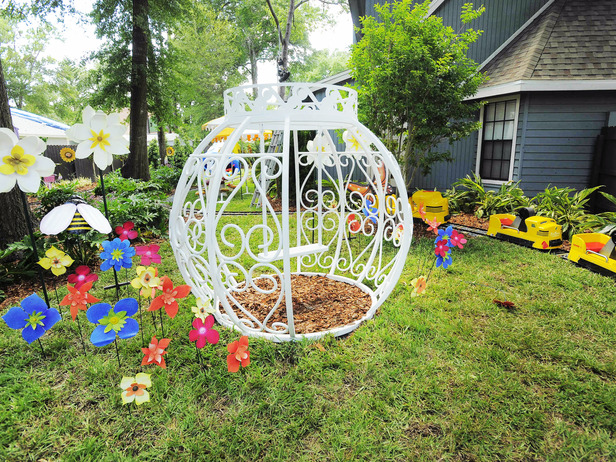
photo: HGTV

So what’s wrong with that?  I have a huge problem with turning everything into a theme park. I do understand that many of today’s children must be electronically stimulated every waking moment. They can’t even take a road trip without a DVD in the car. But what’s wrong with kids learning about REAL miracles – things like butterflies emerging from cocoons, and seeds sprouting and birds building amazing little nests? Why do they need a fake train when they could just walk around? And why a sorcerer’s hat instead of a tree house? Does everything have to be staged, phony and larger than life?

“It’s a dream come true,” said the mother. “I never ever imagined we’d have a yard this nice.”

Well, Mom, what will you do when your kids get sick of their miniature kingdom? It’ll happen sooner than you think. And what will they have learned from this experience? Nothing about growing their own food – or anything else about gardening, that’s for sure.

photo: HGTV
Posted in Uncategorized | 10 Comments

This is Wild

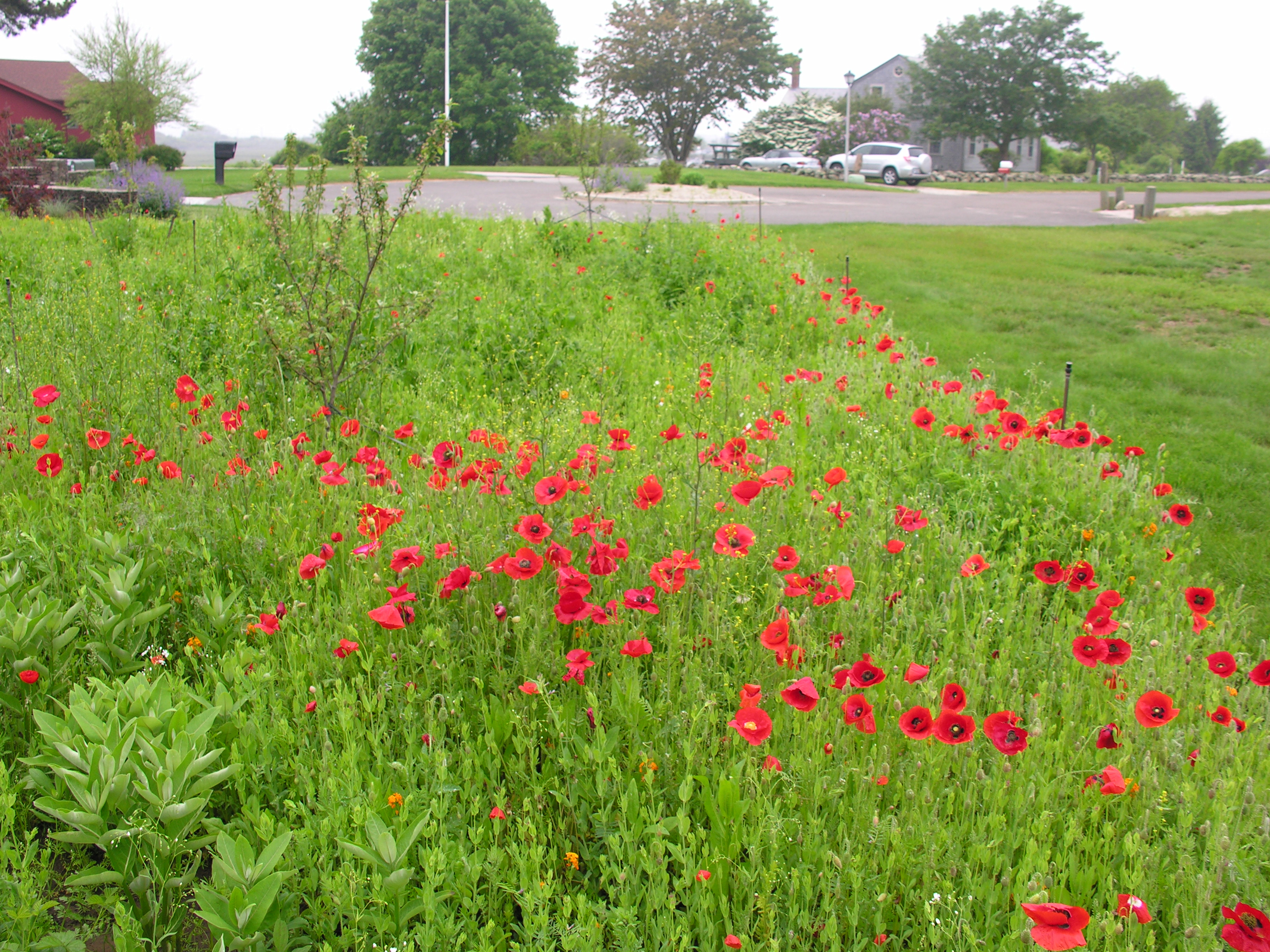
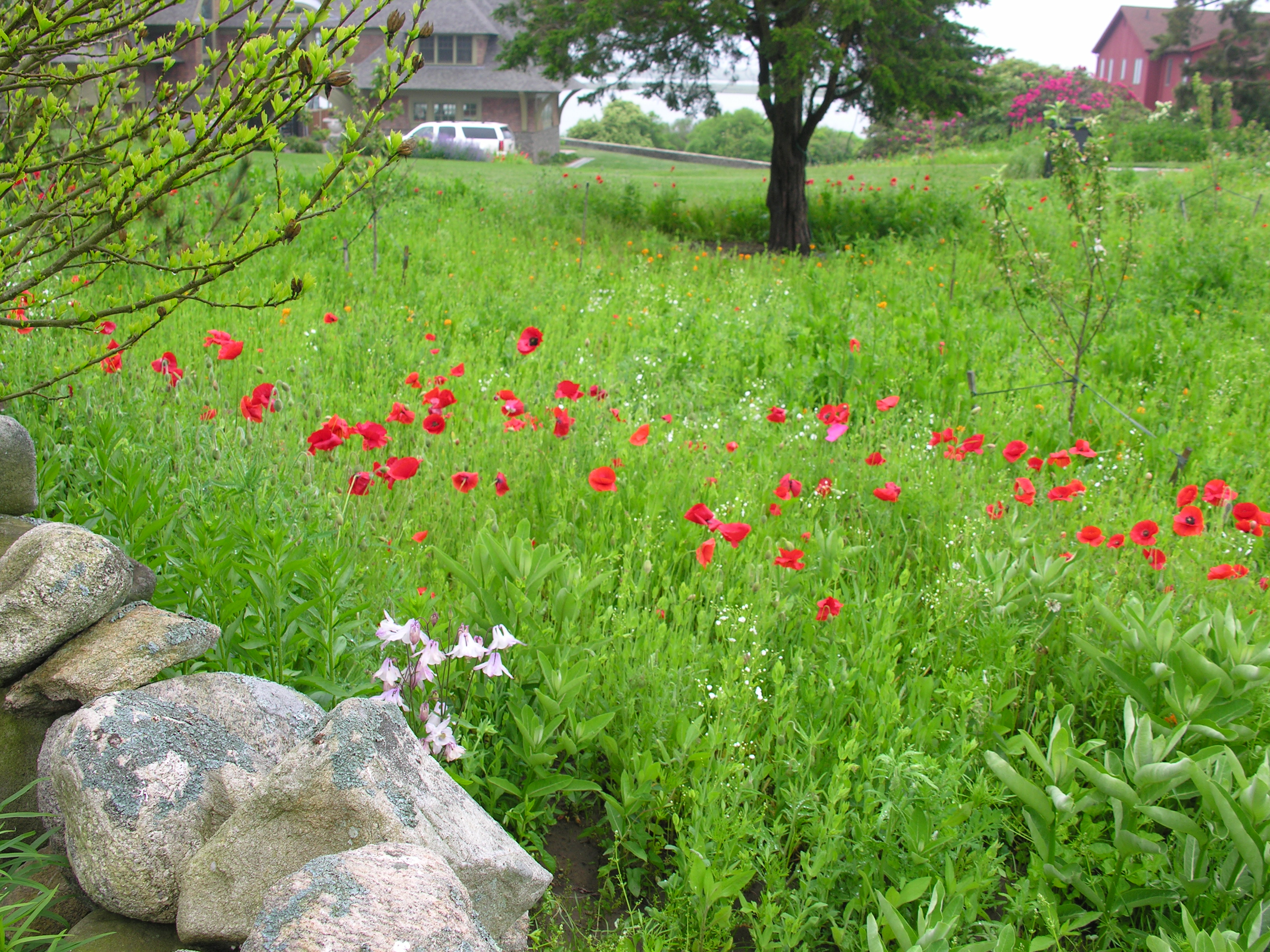
The poppies in the above photo  are the first wave of bloom in a new wildflower meadow behind our house. The meadow is part of a very big and fancy house that took three years to complete and annoyed every neighbor in the vicinity, including us.

Last fall, the fancy-pants landscape company came by with a tanker truck and hydroseeded the area. In the spring, a diverse population of seedlings began to emerge from the ground. Then one day, BOOM! All of a sudden there were hundreds of oriental poppies, all of them red. And the butterflies and the birds arrived, too. Just this morning, when the automatic sprinklers started watering, I saw a hummingbird darting around in the spray, having what looked like a most excellent bath – or shower, actually.

People are coming to enjoy the show, too, and they’re bringing their cameras. Most of us have seen wildflower meadows, of course, but this is something special. I am planning to take photos as the summer – and the meadow –  progress, and I will post them for your  viewing pleasure. Flowers and butterflies and birds beat a boring old lawn, that’s for sure.

Posted in Uncategorized | 4 Comments

CobraHead

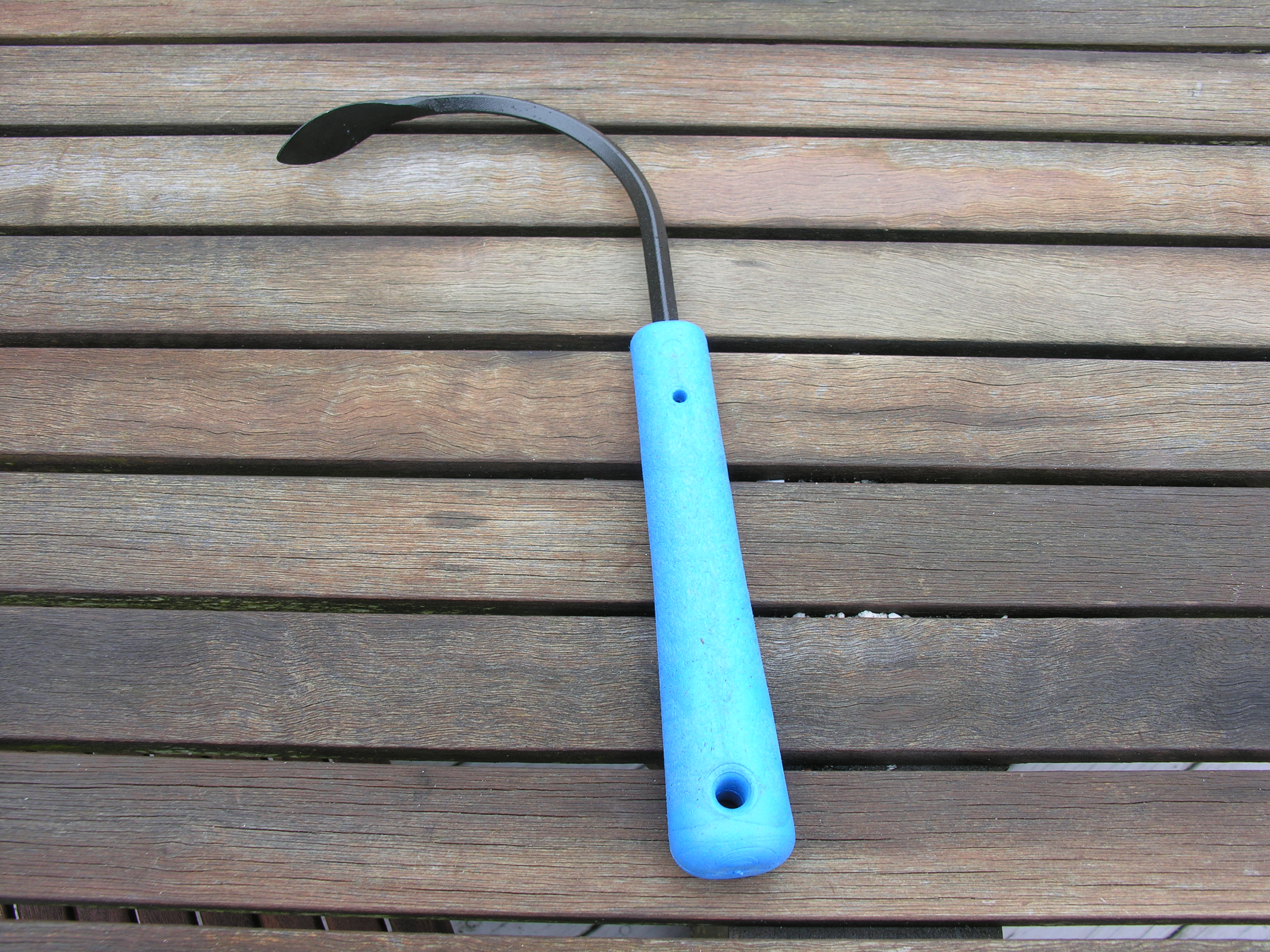
When the makers of the “CobraHead” weeder/cultivator asked me if I wanted to demo one, I said that I would be delighted to try it. I already knew other Master Gardeners who swore by them and now I would finally have my own! (Not that I’m too cheap to buy one at $24.95 – I just hadn’t gotten around to it yet.)

There are several things about this tool that appeal to me:

  • It’s light, so it doesn’t weigh down my tool bag (like my mattock)
  • It does a bunch of things, including weeding, cultivating and transplanting – multitasking is good
  • It’s made in the USA… by a small family business…from recycled plastic and flax fiber!
  • The head is steel, and therefore durable
  • The blue handle won’t disappear in my garden

I have already used it to scrape mud off my gardening shoes, and it’s supposed to be great for edging. I’m sure I will be “testing” it throughout the growing season.

One possible drawback to the CobraHead, especially for lazy gardeners, is that the steel head is not stainless. Unlike my ungainly mattock that shrugs off dirt and moisture, you actually have to clean and dry it after use.

Am I the last gardener on earth to get one of these? Do you have one? Do you love it, or is yours languishing, unused in the garage? I’ll let you know how often I use mine, and whether my mattock gets an early retirement.

Posted in Uncategorized | 9 Comments

Crocosmia

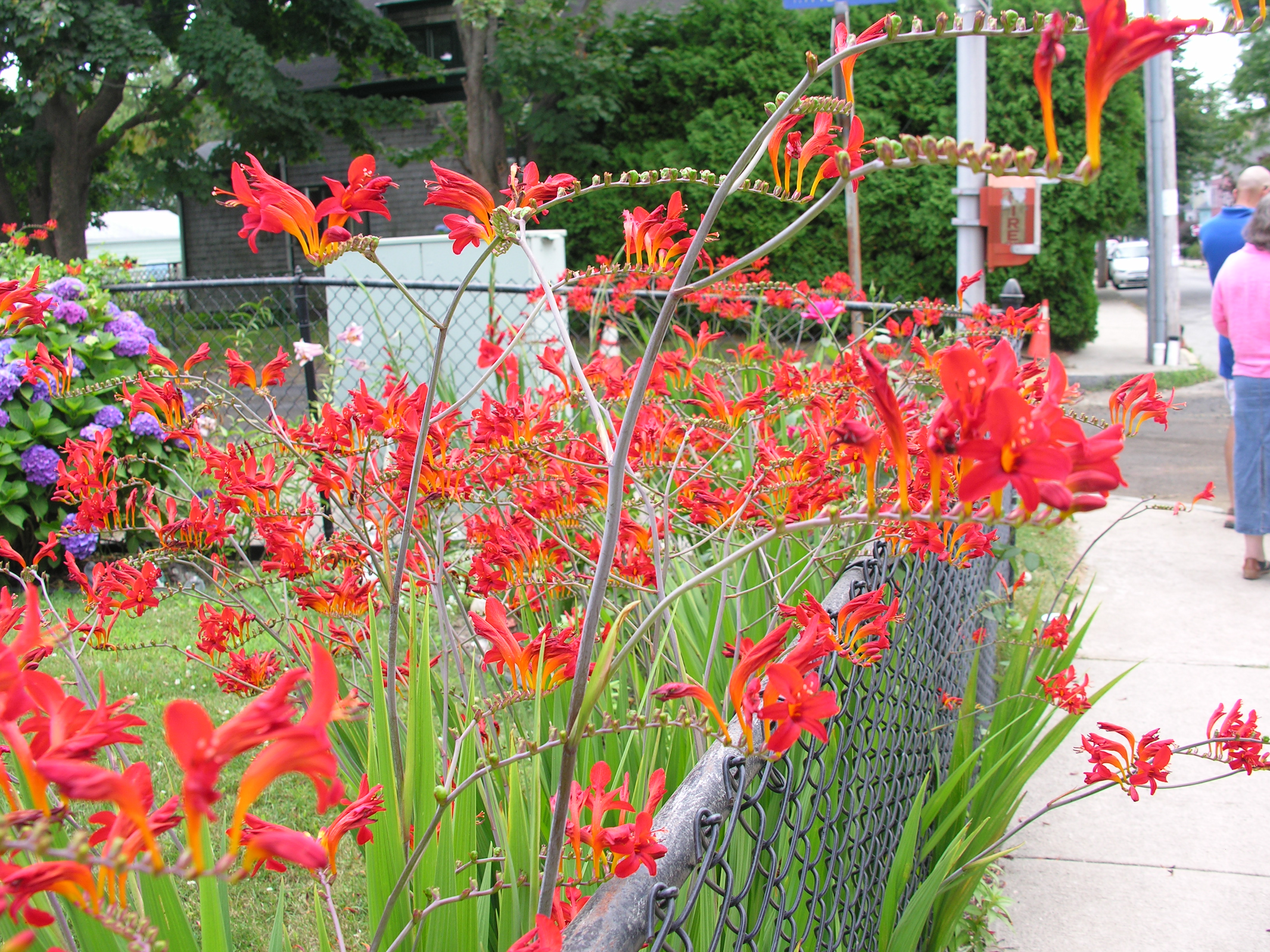
"Lucifer" growing with abandon in a Newport garden

I have always wanted to add some Crocosmia to my garden. It’s a good news bad news kind of situation. The bad news is that most cultivars won’t grow here in southern New England. The good news is that my favorite, x crocosmiiflora “Lucifer” is hardy to Zone 5! So I took advantage of the summer bulb flowering bulb sale at Brent and Becky’s Bulbs and bought 10 corms for $3.50.

Crocosmias are from South Africa, hence their cold sensitivity. But the intense color of “Lucifer” has captivated me, and even if I have to dig out the corms in the fall, I just had to have it. I planted mine yesterday, in full sun, about 4 inches deep and 6-8 inches apart. They don’t like to be bone dry, so I will water them if there’s a drought.

Another reason I planted them was to attract hummingbirds. That red should definitely do the trick!

These pest-resistant monocots, with attractive, upright stems, grow 24-36 inches tall and bloom in mid to late summer. I’ll just have to be patient.

"Lucifer" again, with a friend

Posted in Uncategorized | 4 Comments

So Creative

We are fortunate to have a few good nurseries here in the southwestern part of Rhode Island. One of them is particularly inspiring. I visit  often – sometimes to buy plants and often just for the visual stimulation (read: plant porn) and ideas.

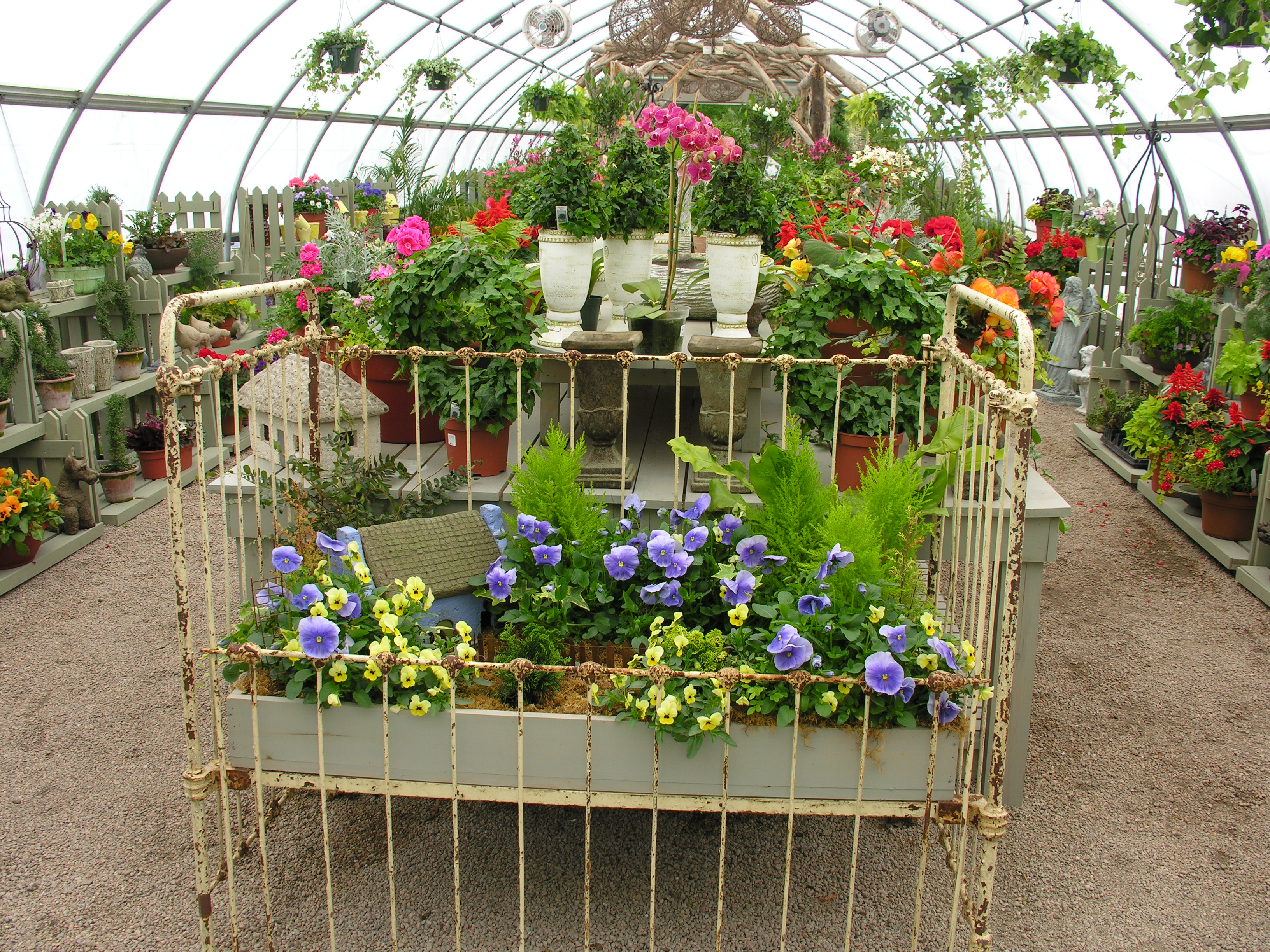
The  top photo is an example of how beautiful edibles and ornamentals can be when they are planted in an elegant (and expensive) container.

Speaking of containers, how do you like this rusty old bed, turned into a lovely vignette?

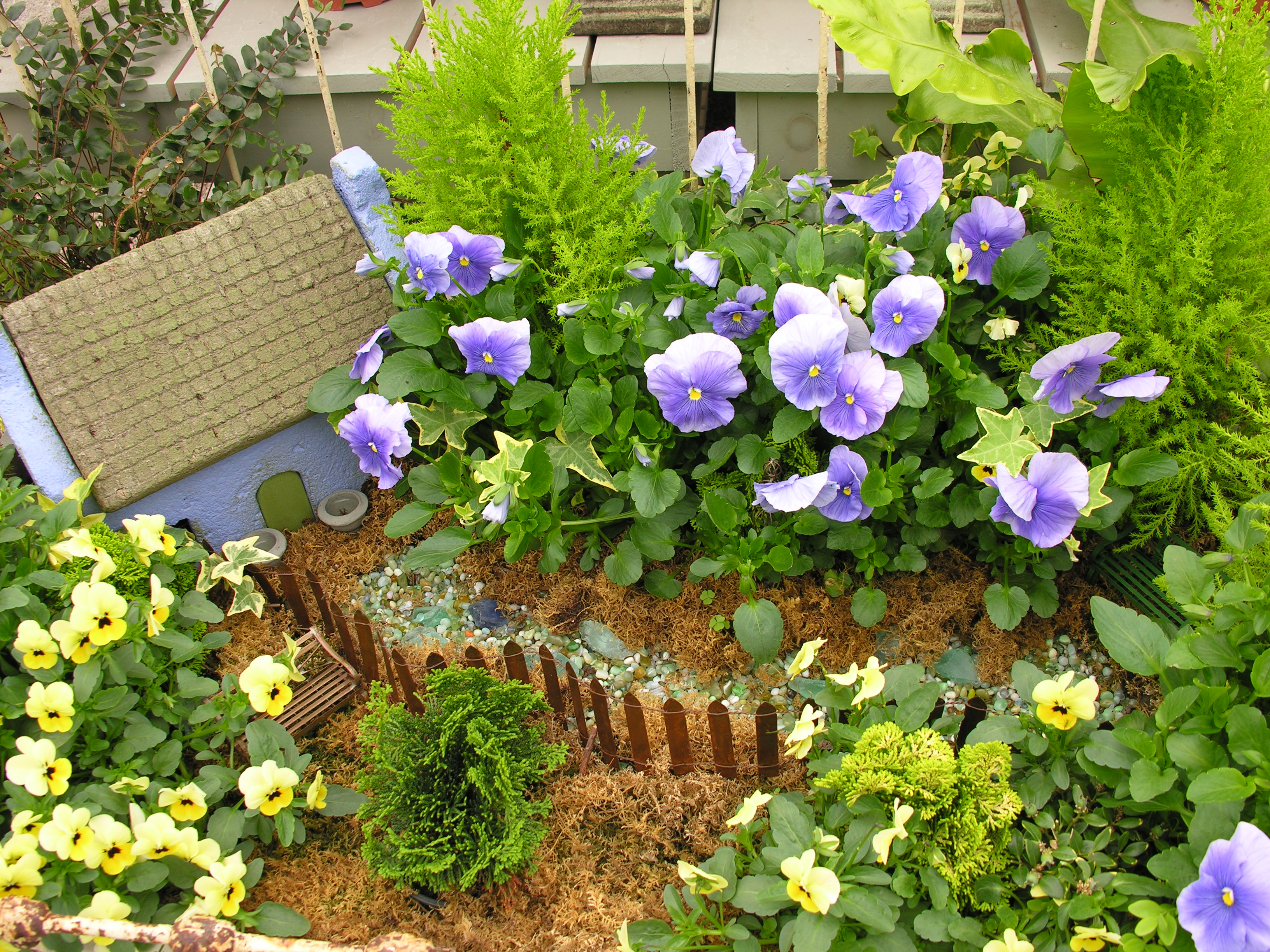
Here’s a closer view, showing the “river” leading to the tiny cabin. Lots of sea glass in the river, and tiny conifers lining the bank.

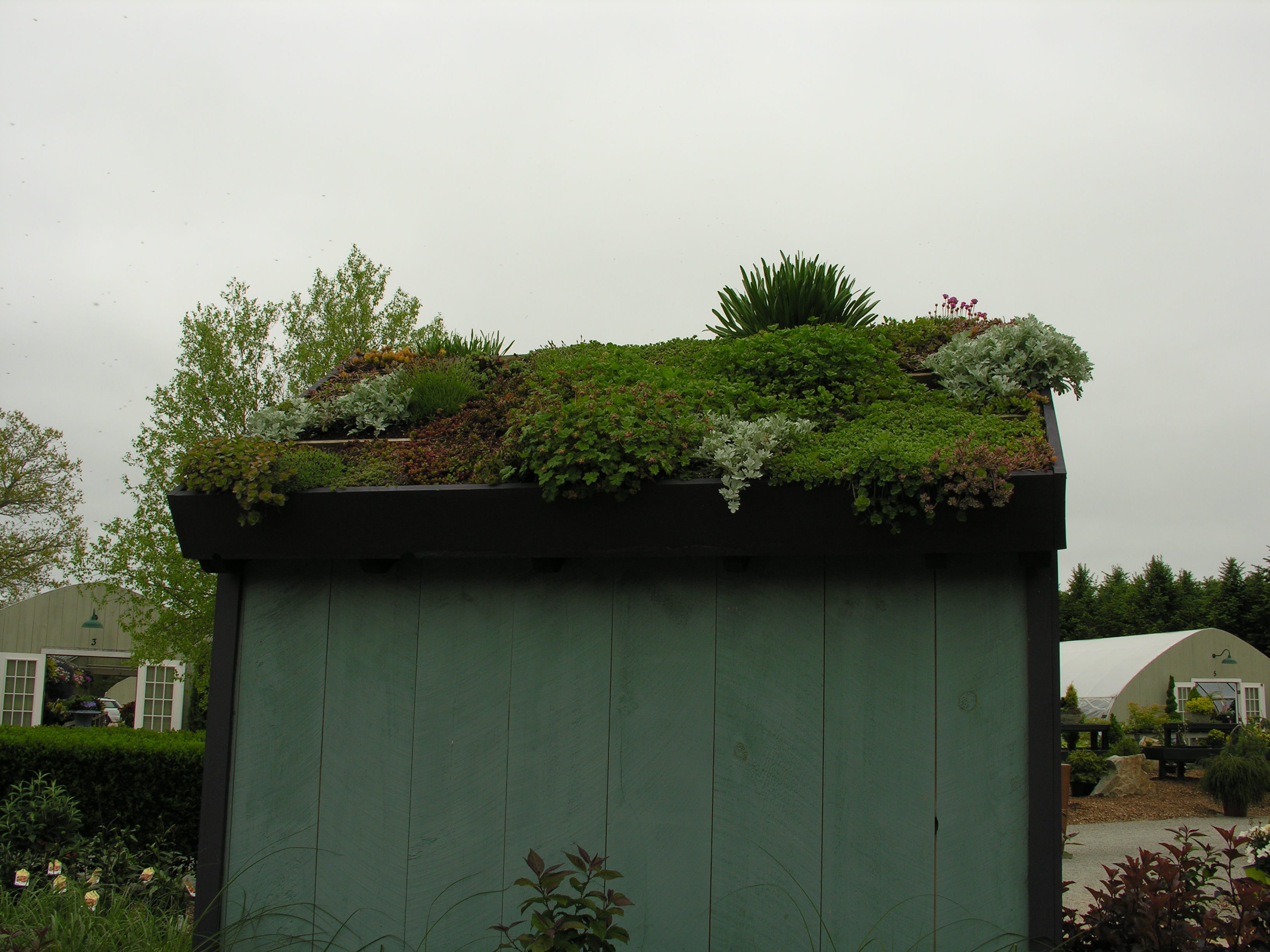
I always like to check out what’s happening with the green roof on one of the sheds. Most of the alpines aren’t in flower yet, except for the sea pinks in the upper right corner. We haven’t had more than a few hours of sun in the past couple of weeks. Maybe they are as depressed by all the rain  as the rest of us.

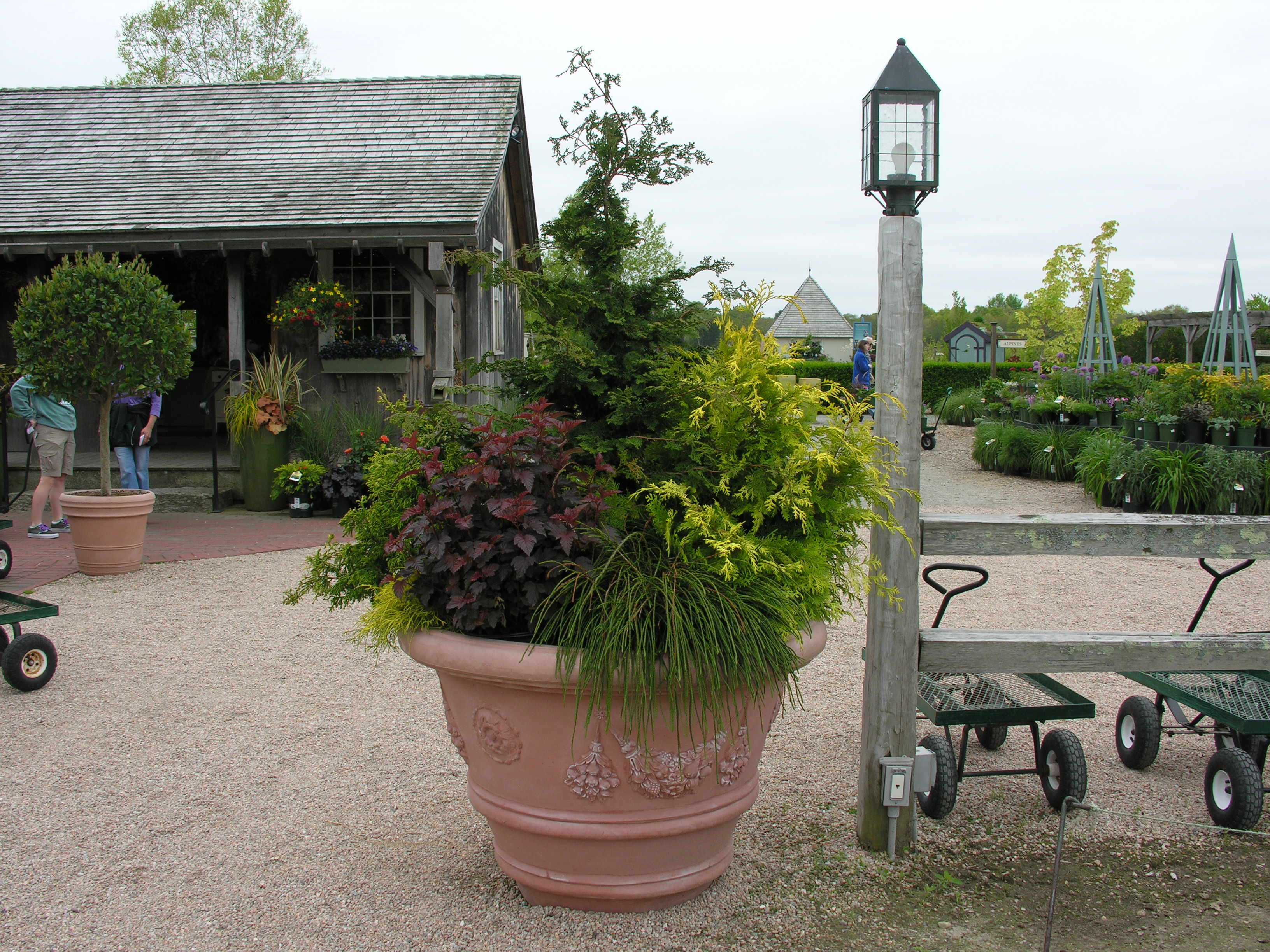
Finally, at the main entrance to the nursery, there are two enormous terra cotta pots displaying mainly conifers – a stunning effect. I wouldn’t want to have to haul those pots inside for the winter, though…

Posted in Uncategorized | 5 Comments

Azalea Paradise

A tempting pathway leads to the moon gate.

For azalea lovers – or lovers of beautiful landscapes in general – the place to visit right now in RI is the Kinney azalea gardens. I drop by every year just to take it all in.When you time it right, as I did when I took the photographs in this post, the contrast of the colors of the azaleas with the deep spring green of the grass is stunning.

Lorenzo Kinney, who passed away in 1994, started planting azaleas and rhododendrons shortly after he and his wife moved into their house in South County in 1927. He had some help from his father, a botany professor and azalea grower.

When Kinney retired, he embraced his azalea passion in earnest. After seeing how the plants thrived in the southeast, he was determined to develop cultivars that would survive RI winters.

Plenty of places to sit and gaze - or picnic!

Over 500 varieties have been planted over the years. You can wander along the pathways that meander through the gardens, and you can also buy plants, if one strikes your fancy. The different cultivars are not marked, so I can’t tell you what they are, but I can say that they are simply gorgeous this time of year.

The gardens are open to the public and admission is free, although donations are welcome. You can find out more about this RI treasure by clicking here.

Color wherever you look, brightening a rainy day.

Posted in Uncategorized | 16 Comments

More Thoughts on Native and Non-native Plants

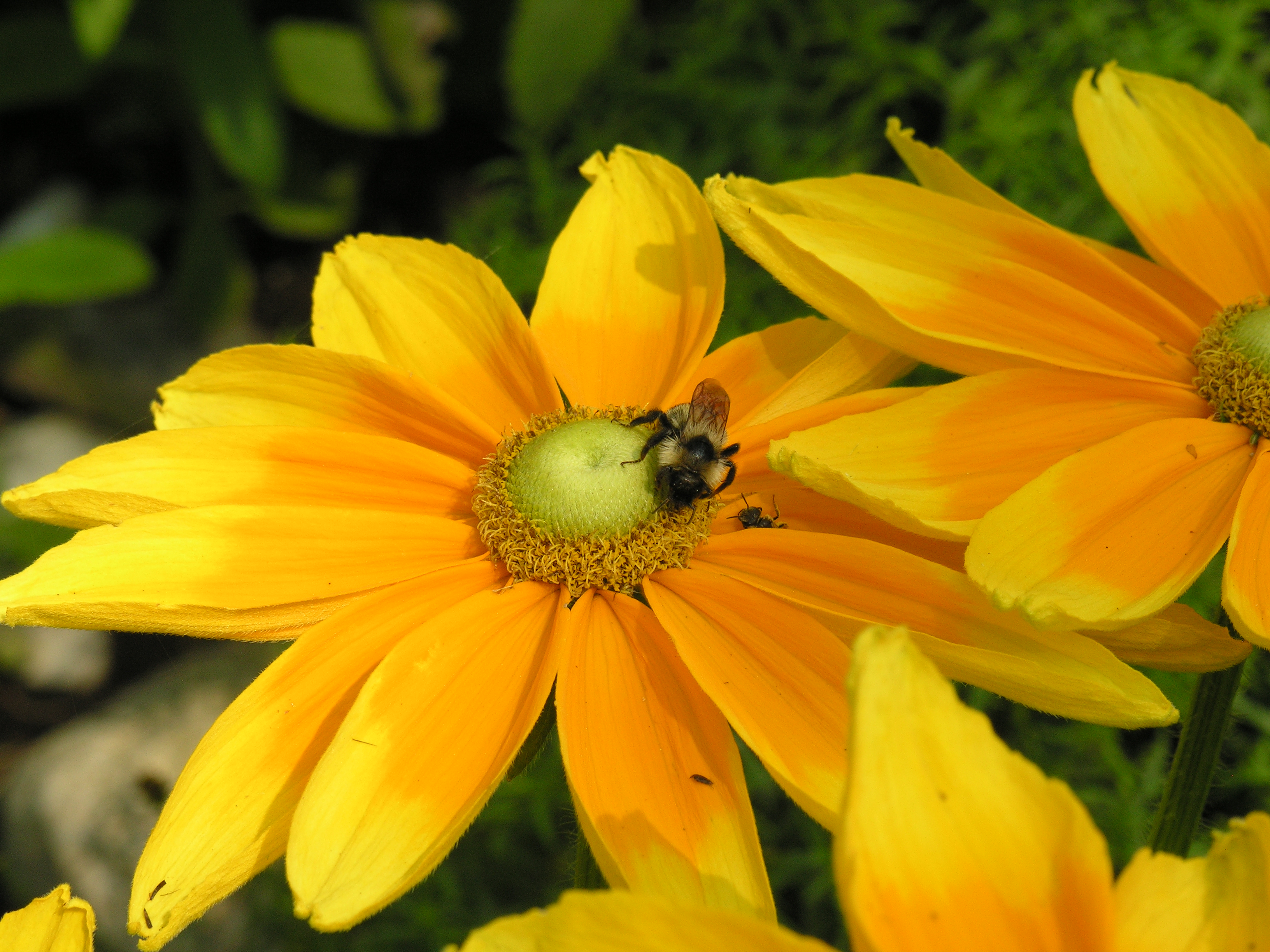
A bee pollinates a relatively new introduction: Rudbeckia "Prairie Sun"

In the photo above, not only is the plant an introduced hybrid, the bee was also introduced by European settlers. These bees displaced many of our native North American bees – a fact most people are unaware of.

I find it interesting how a few studies can herald a paradigm shift. One area where I see this happening is the debate over native and non-native plants. Let me begin by assuring you that I do not promote or cultivate invasive thugs such as oriental bittersweet or kudzu. But there is increasing evidence that some plants we refer to as “non-natives” or even “invasives” and spend millions in usually futile attempts to eradicate, are actually beneficial to wildlife and pollinators. Maybe we should leave some of them alone.

In a previous post, which you can read here, I wrote about a scientific study that showed that one plant, Lonicera, or Honeysuckle (the shrub, not the vine) was an important food source for migratory birds, and therefore contributing to increases in bird populations. The author’s advice: stop trying to get rid of honeysuckle because it has become a valuable part of the ecosystem, and the birds depend on it.

Now,  respected plantsman and writer, Graham Rice, cites another interesting study – this one done in the UK over a 30-year period. Biologist Jennifer Owen found that “alien” plants produced more food for certain species, in this case moths. Rice’s conclusion is that we gardeners should stop obsessing over planting only “native” species and just plant what we and the birds and insects like – excluding the thugs, of course.

Many advocates of “natives only” planting would respond by saying that the nutrient quality of the fruits and seeds produced by non-natives is usually inferior to that produced by natives. I have not yet read any studies proving this to be true or untrue, nor am I a biologist, so I really can’t take a position on this issue.

If you want to read the study itself, click here. It looks like the book is in short supply right now, so keep trying.

Posted in Uncategorized | 2 Comments

Not So Fast…

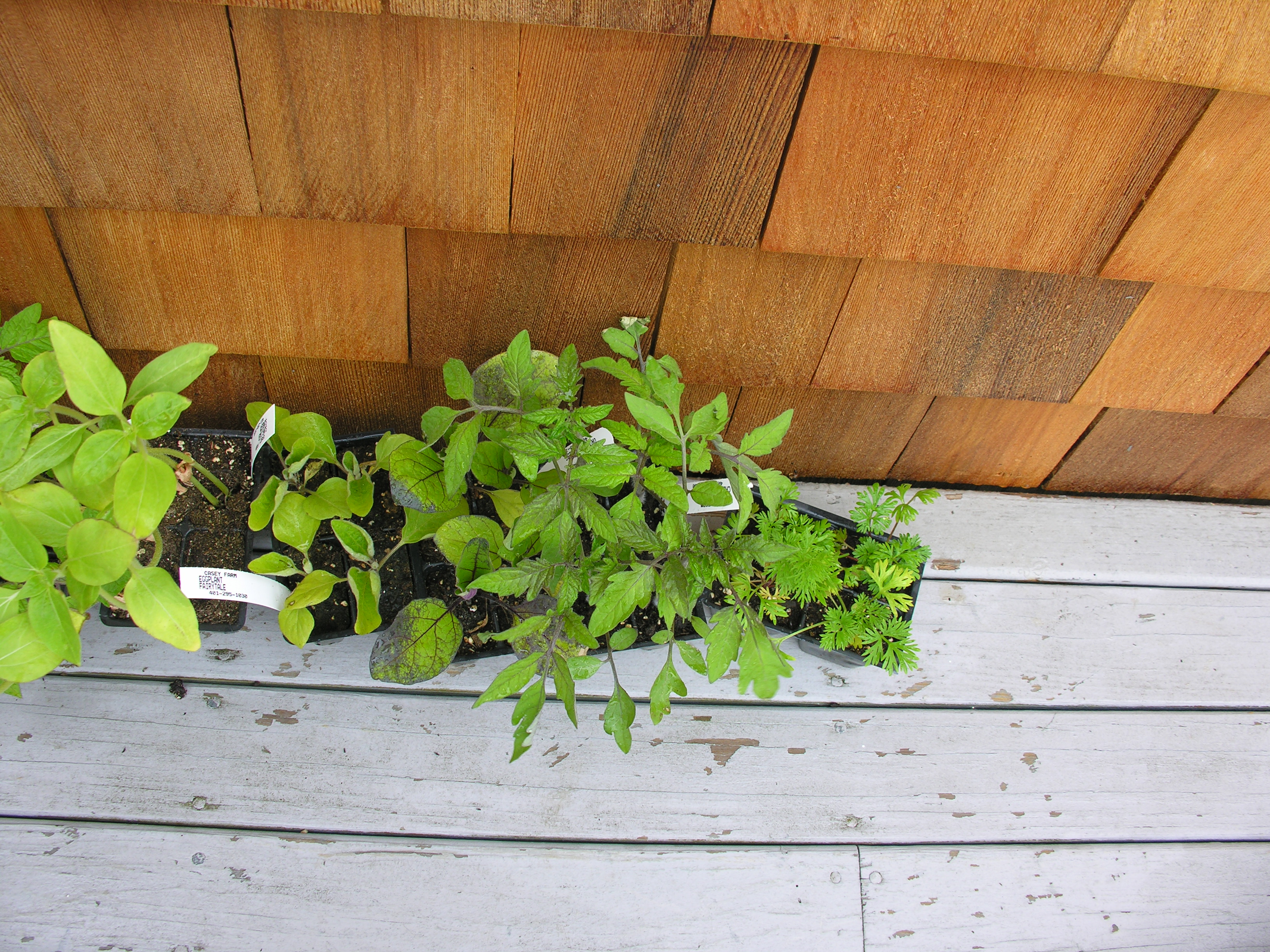
Tomatoes, eggplant, and larkspur: cold and miserable

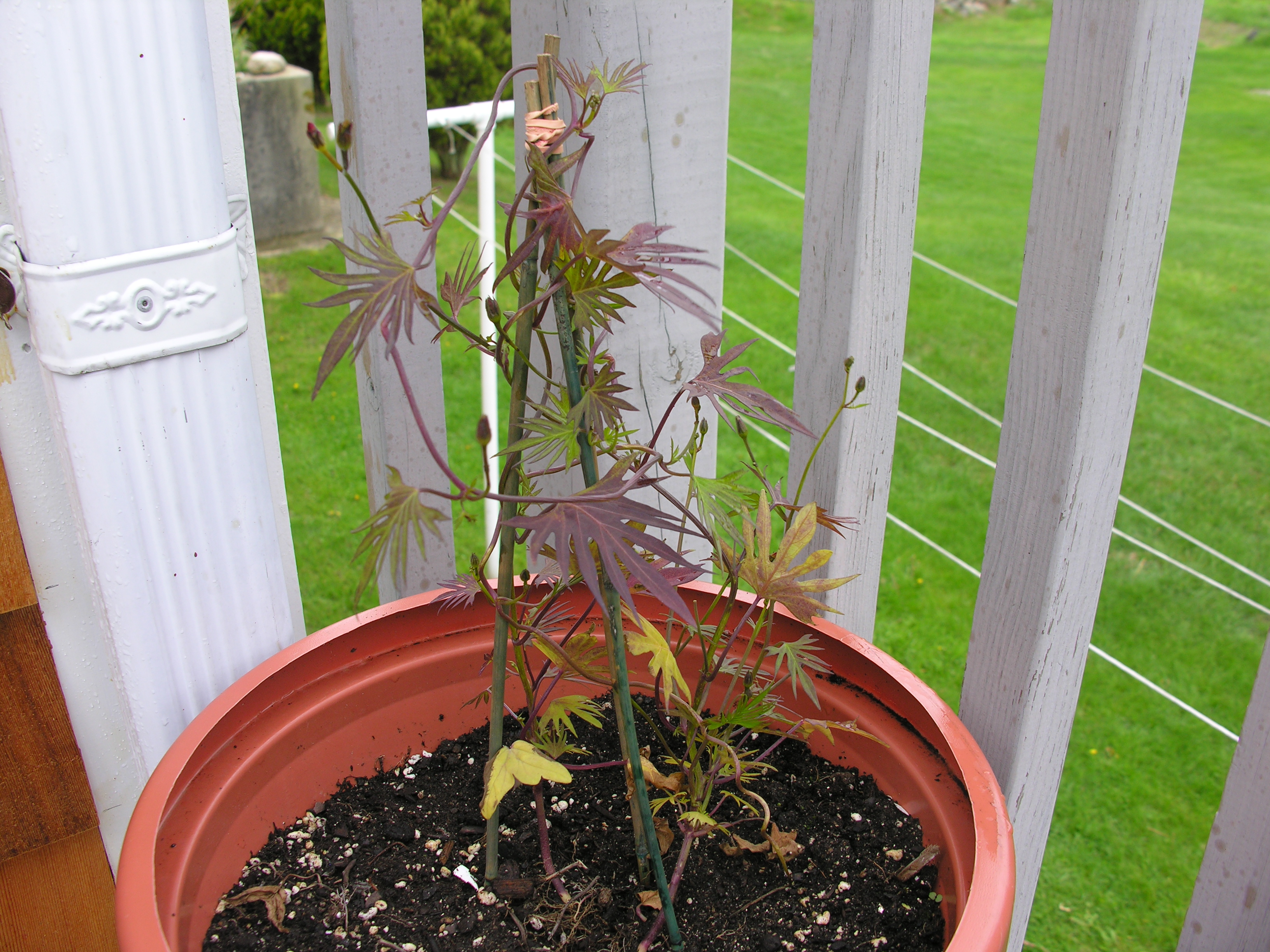
Here we go again. Like most gardeners in RI, I bought my plants at plant sales a week or two ago. And what happens? As it does every single year, the weather turns cold and miserable for a couple of weeks – AFTER you’ve bought all your plants. It’s so predictable! I should know better by now, but I am always seduced by the promise of summer.

So there they are, lined up on my deck, shivering and huddling together in the cold spring wind and rain.

Here’s my question: if it’s too soon to plant, then why are the sales so darned early in the season? Why don’t they wait until we can actually put the plants in the ground? I have way too many to bring them inside, so I look at them from my kitchen, and my annoyance grows with every passing day.

I say delay plant sales by at least two weeks. I’m tired of watching plants suffer.

Cardinal climber: equally miserable

Posted in Uncategorized | 6 Comments

Our Own Saint!

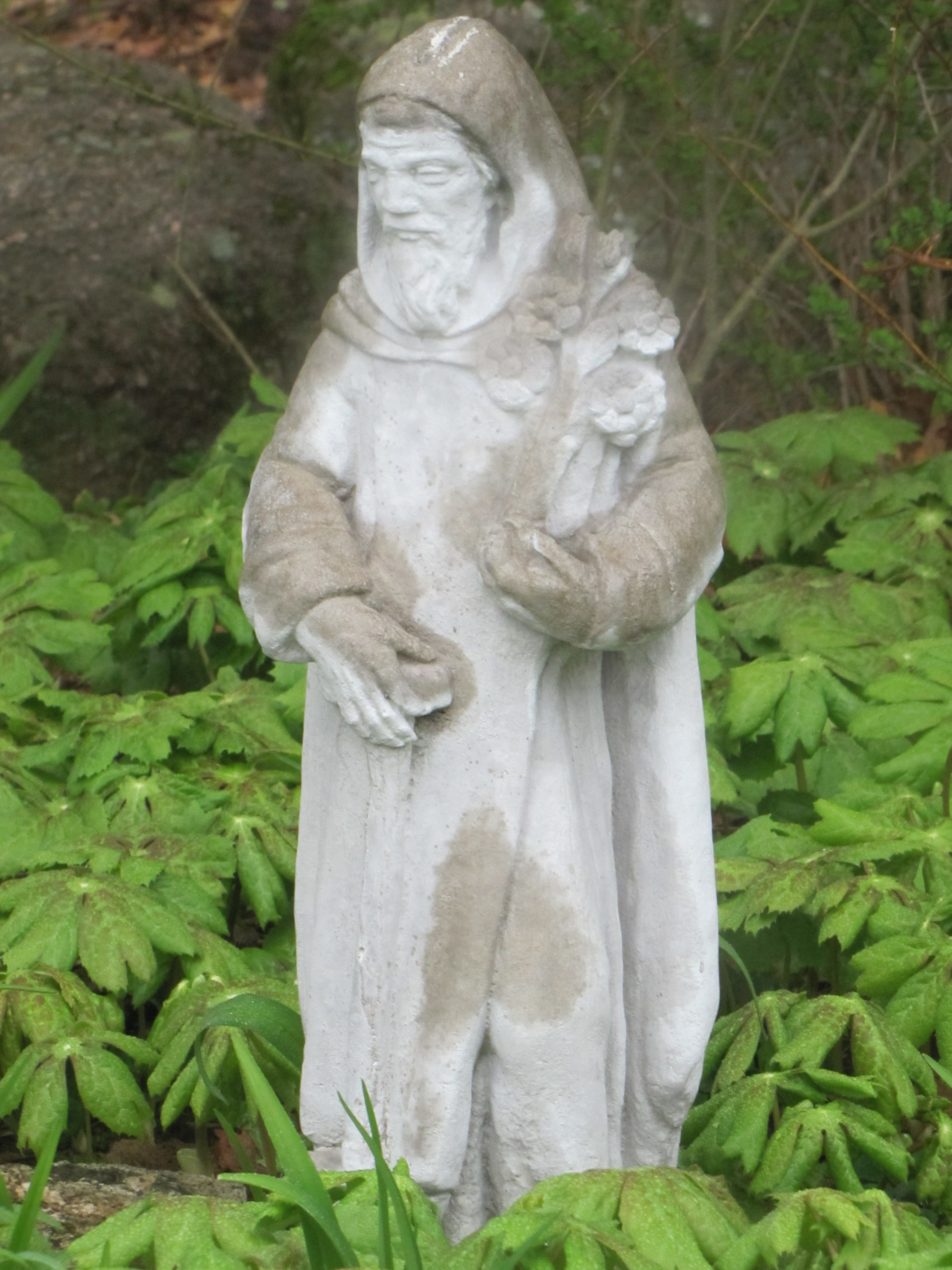
St. Fiacre presides over HerbDoc's garden

HerbDoc pays homage to the patron saint of gardeners:

Visitors to my herb garden often mistake the large statue of St. Fiacre (Fiachra) for St. Francis.  While St. Francis was born in Italy and is the patron saint of animals and the environment, St. Fiacre was of Irish descent and is said to be the patron saint of growing food and medicinal plants.

Because he was so skilled with herbs and was seen as a great healer and holy man, hundreds flocked to him.  In search of solitude, St. Fiacre sailed to France where St. Faro, the bishop of Meaux, gave Fiacre a solitary dwelling in the forest.  The bishop then told him that he could have as much surrounding land as he could turn up in a day and was amazed at how much soil Fiacre had turned with the point of his staff.

The anchorite cleared the ground of trees and briers, made himself a cell with a garden, built an oratory in honor of the Blessed Virgin, and made a hospice where many came to him for advice and relief from sickness.  St. Fiacre prohibited women from entering the hermitage or the chapel, but they were content to offer their prayers outside.

St. Fiacre’s relics are installed in Meaux Cathedral.  To celebrate the Millennium, a garden dedicated to him was opened in 1999 at the Irish National Stud, County Kildare, Ireland.

Posted in Uncategorized | 6 Comments

Let the Planting Begin!

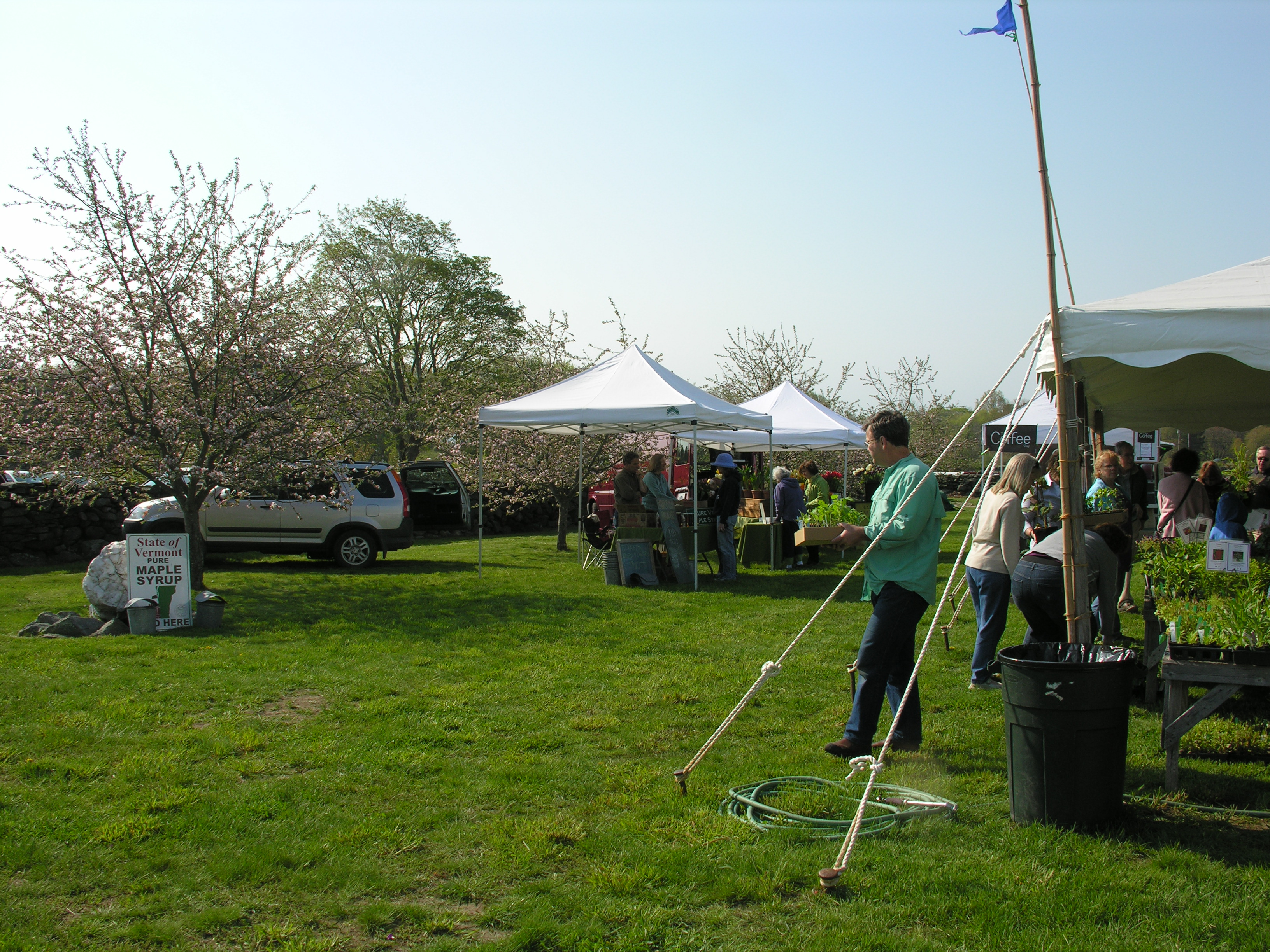
Crabapples in bloom, gardeners in action

Early May is the official kick-off to the gardening season here in RI. There are always several plant sales around Mother’s Day, and if you get up early and plan it right, you can squeeze in a few in a single day.

This is the plant sale at historic Casey Farm in Saunderstown. The 300 – acre farm dates back to 1750. They grow organic vegetables here now, and they also sell eggs from their flock of Dominique chickens.

The entire farm is bordered by classic RI stone walls

I managed to spend quite a chunk of change (as I always do) without batting an eye. I didn’t start any tomatoes from seed this year, so I needed to buy those, and some eggplant and broccoli and onions, as well. The tomatoes and eggplant can’t go in yet, of course. The soil will not be warm enough in these parts for a couple of weeks.

Lobelia baskets for sale under the tent. They sold out of these.

It was a gorgeous morning- sunny but not hot – with a fresh, salty breeze coming off the ocean. I guess if you’re a gardener like me, this day would be  just about perfect.

Posted in Uncategorized | 5 Comments