I debated about posting this, but after consulting with fellow bloggers, I decided to go for it.
Below is the potato I dug in my garden. Mother Nature sure works in mysterious ways.

I debated about posting this, but after consulting with fellow bloggers, I decided to go for it.
Below is the potato I dug in my garden. Mother Nature sure works in mysterious ways.
Herbdoc has seen some interesting insects around her garden this summer:
It certainly has been a banner year for insects here in Rhode Island!
Here are three I recently found in my yard.

Black Swallowtail caterpillar
Black Swallowtail Butterfly caterpillar (Papilio polyxenes) – found happily munching the parsley in my gigantic herb basket on the back deck.
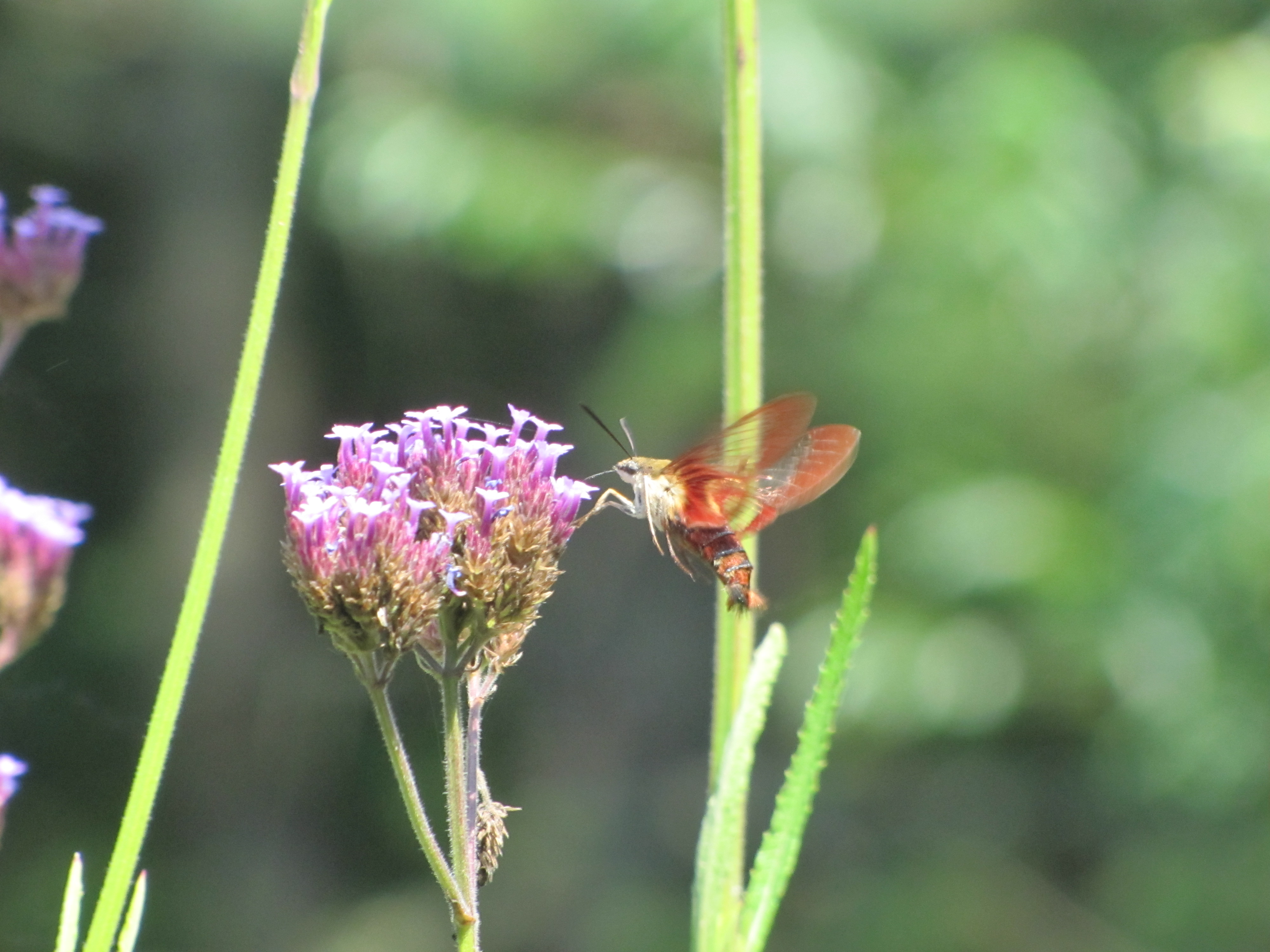
Hummingbird Clearwing Moth
Hummingbird Clearwing Moth (Hemaris thysbe) – spotted enjoying the nectar of the Verbena bonariensis. (This plant has attracted a lot of wildlife this summer including hummingbirds who sip the nectar and goldfinches who love the seeds! I will definitely plant more of these verbenas next year.)

Bella Moth Caterpillar
Bella Moth caterpillar (Utetheisa bella) – I had to do a lot of research to identify this one. Three of them were snacking on my licorice plant (Helichrysum petiolatum) on the front deck. I plan to keep watching them to be sure they are Bellas. Let us know if you think they may be something else!
Editor’s note: Herbdoc wrote about a week later to say that the caterpillar had emerged from its cocoon, and it was indeed a Bella Moth.
They grew just like regular pole beans here in my southeastern Connecticut garden. I had them on posts growing with Scarlet Runner Beans (because I like the flowers) and cukes.

Greasies on the vine.
And they are delicious. This is one garden experiment that I will definitely repeat. Here’s one way I prepare them.

Greasies on the counter, ready to cook. Mmmm.
Greasy Beans with Onion and Bacon
Servings: 2
1 lb. greasy beans, trimmed and cut into bite-sized pieces
2 slices bacon, chopped
1/2 medium onion, slivered
Trim and rinse beans and place in a pot of boiling salted water. Have an ice-water bath ready. Blanch beans in boiling water until crisp-tender, cool off in ice water and set into colander to drain.
Cook chopped bacon in a skillet until it releases some of its fat, then add onion slivers. Cook bacon and onion until onions are just beginning to brown and bacon is crisp. Add drained beans and cook until rewarmed. Season to taste with salt and pepper.
Nutrition information per serving: Calories 220, Total Fat 10.2g, Cholesterol 28mg, Sodium 645mg, Total Carb. 18.7g, Fiber 8.2g, Sugars 4.3g, Protein 14.4g
Recently, I told you about the monarch caterpillar that had pupated among my string beans. I considered myself lucky to have found the chrysalis, but did not dare hope to catch the emergence of the butterfly.
I was away for a few days, and one of the first things I did when I got home was run and check the chrysalis. This is what I found last evening. It was much, much darker, and I could see orange wings inside. This morning, the chrysalis was still there, but it looked ready to pop at any minute.
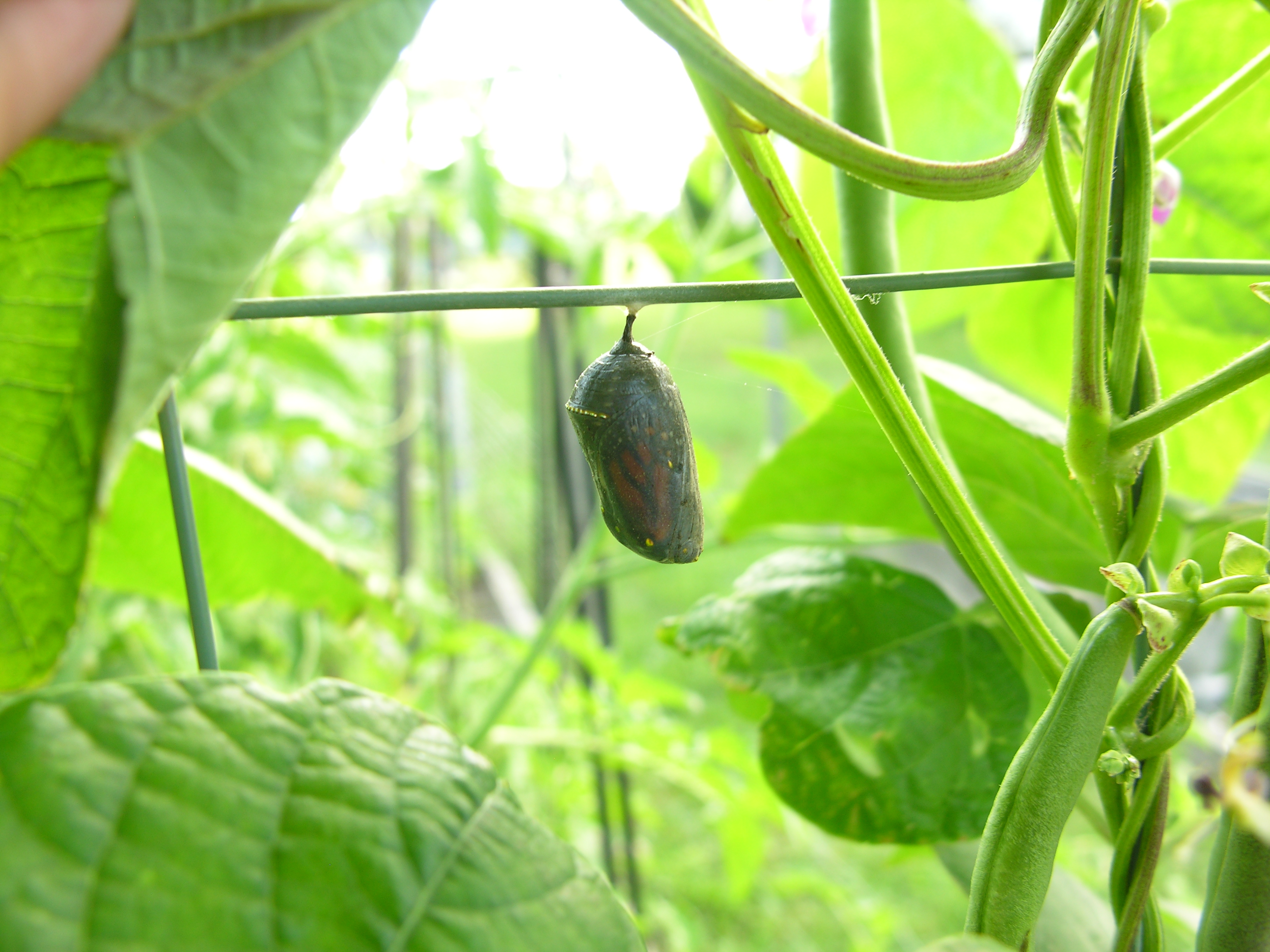
See the wings?
I reluctantly went out for a while, and when I returned, there was the empty chrysalis with the newly-emerged butterfly beside it. It was just hanging out drying its wings, so I snapped a couple of photos and let it be.
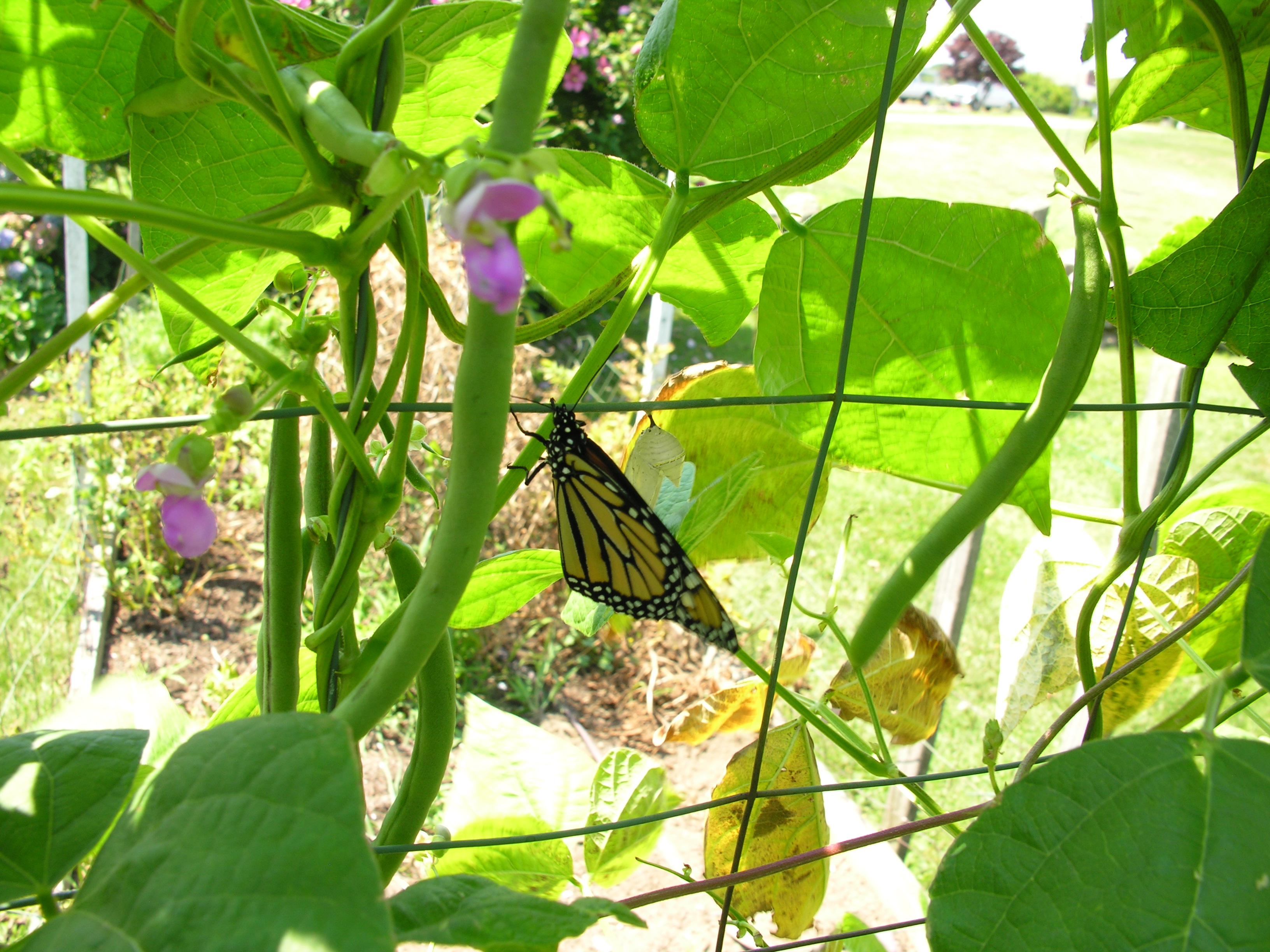
I didn’t catch the actual event, but this came close. I’m so glad I left that milkweed!
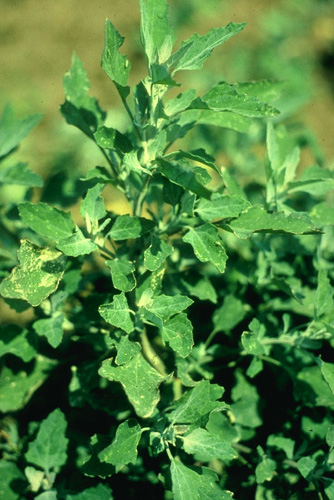
lamb's quarters
Here’s Herbdoc with another edible wild plant:
Here’s an edible weed that I routinely yanked out of my vegetable garden until I met a mother of ten who cultivated a row! She insisted it was edible and nutritious with a distinctive flavor, so I just had to try it.
Lamb’s Quarters (Chenopodium album), sometimes called “goosefoot,” can be found growing in disturbed soil, vegetable gardens or at the edges of fields. It can reach four feet in height with multiple branching stems off its squared main stem. Both leaves and stems have an earthy spinach/chard flavor. The easiest way to cook it involves putting the leaves and stems in a bamboo steamer; they will turn a deep green and reduce as they cook. Small, raw young leaves are a wonderful addition to salads.
As with all edible wild plants, make a positive identification through the use of a good field guide or by working with a person who collects them regularly. Be sure they have not been exposed to pollution or chemical sprays before harvesting for consumption. If you choose not to harvest wild plants, there is a cultivated variety called “Magentaspreen” which carried by a few seed houses.
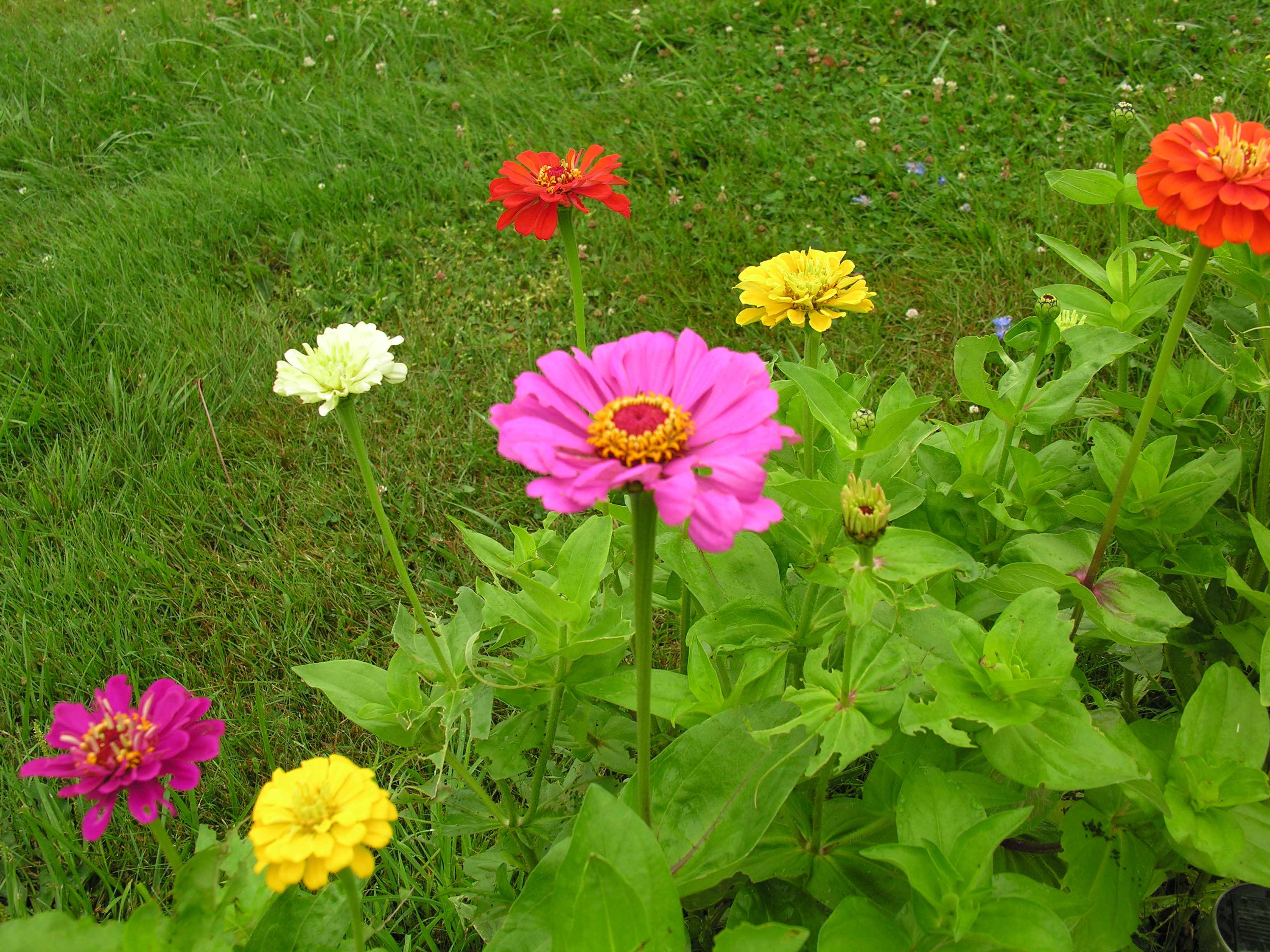
Benary's Giants
Back in April, I told you about my fondness for zinnias. I started two cultivars from seed – Cut and Come Again, and the newer Benary’s Giants. I promised to tell you how I liked the Benary’s, so here’s my review:
I planted the seedlings along my front stairs, and they began flowering (in a horrendous heat wave with no rain) about a month ago. They’re about 24 inches high, and sturdy, despite repeated attacks by earwigs and other various insects.
What I like best about them is their strong, jewel-like colors, which really stand out against the green of the lawn. The hummingbirds seem to enjoy browsing the flowers, zooming in after a stop at the feeder, and I often see butterflies feeding on them, too. To make things more interesting, I planted a container of bachelor’s buttons (Centaurea cyanus) nearby. I really like the way all the colors work together.
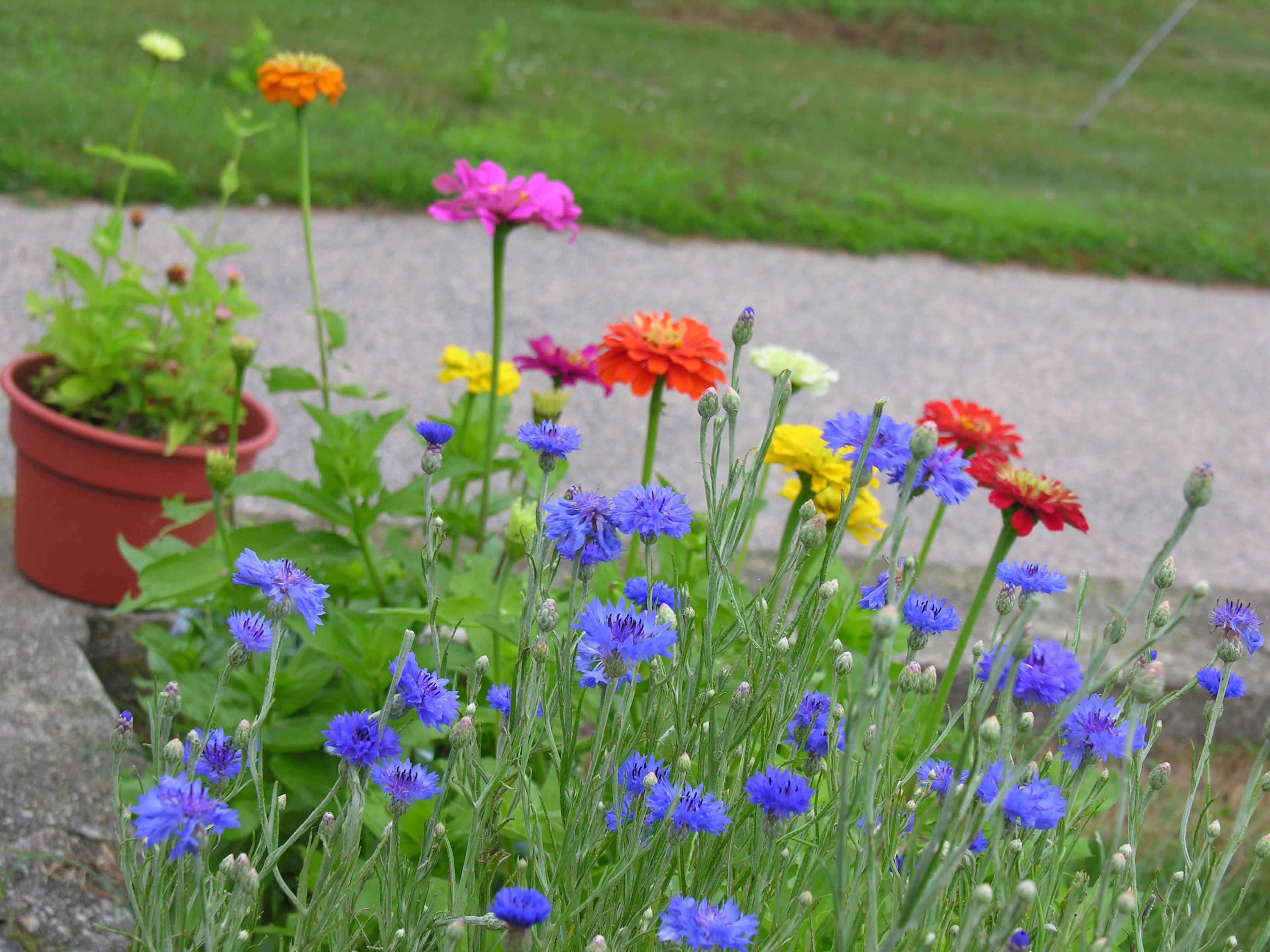
Love this
The Cut and Come Agains are doing well – vigorous and blooming strongly. They just don’t have the pop of the Benary’s, though, and their colors seem a little muddy by comparison.
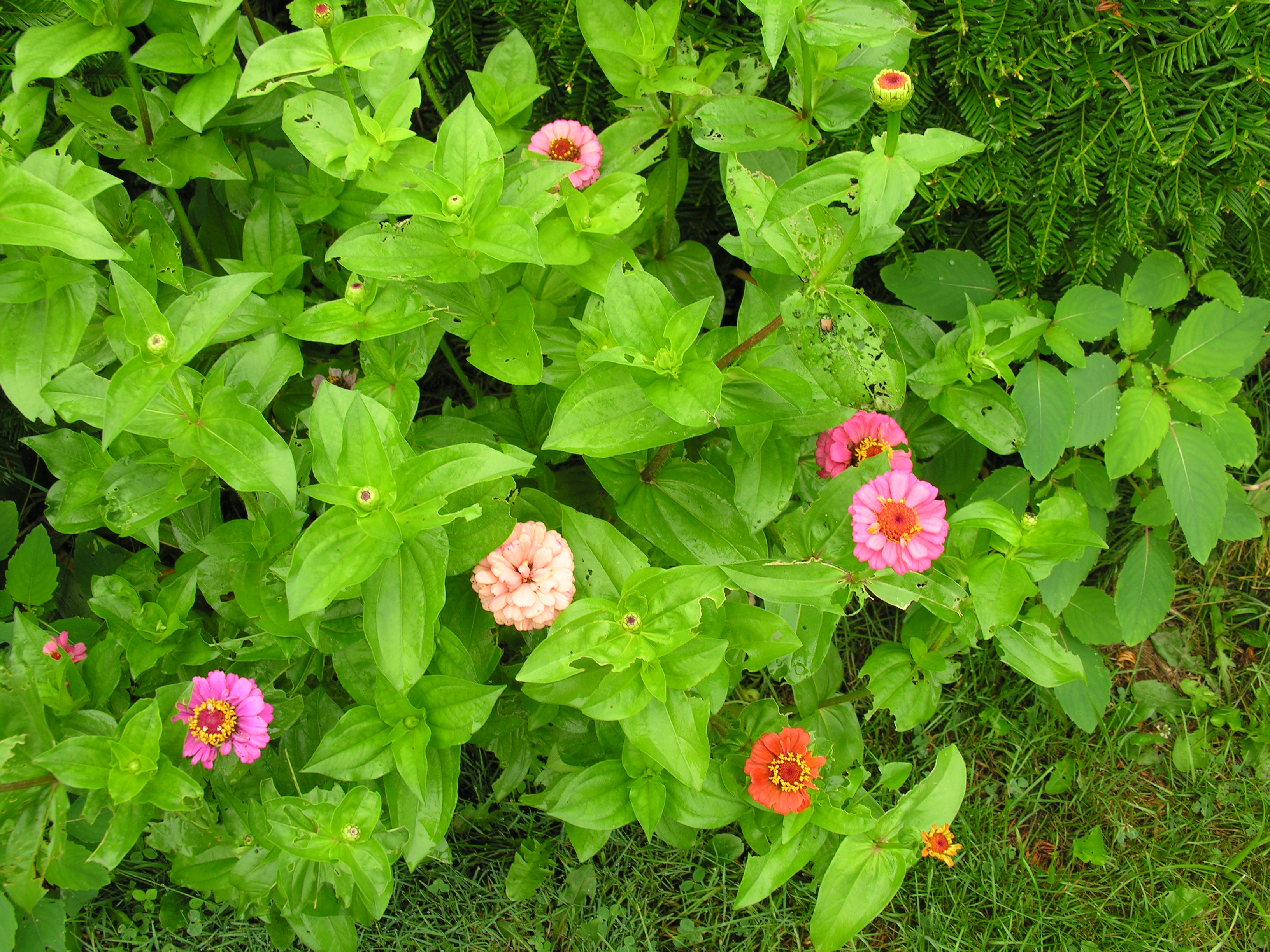
Cut and Come Again
So the results of my very un-scientific zinnia trial are these: Benary’s Giants are awesome and worth the extra $.50 of whatever per seed packet. I think they’ll be my default zinnias for the foreseeable future – or at least until something better comes along.
I always allow some milkweed to grow in my vegetable garden. I don’t let it take over, but I want to provide a hospitable place for monarch butterflies. In case you didn’t already know, milkweed is the ONLY thing monarch larvae eat. I feel they have enough to contend with, and this is the least I can do. It is obvious that monarch larvae have been munching on these leaves. Good! I was hopeful I might actually catch some of them in the act.

Some serious munching going on here
I didn’t see any eating, but when I was harvesting my string beans, I saw a monarch caterpillar – more or less out in the open – about to pupate. I had always assumed they did this on the undersides of milkweed leaves, but I guess I was wrong. This one was attached to the fence the beans climb on, about three feet high.

Pupating among the beans
After taking a few photos, I left the house for about two hours. As soon as I came home, I went outside to check on the caterpillar, and I found this. That sure didn’t take long!

The chrysalis
My next step was to go online to try and learn more about this stage in the monarch’s development. The first thing I found out is that unlike moths, monarchs do not spin cocoons. A monarch during this pupa stage is properly called a chrysalis, and the chrysalis is found under the skin of the larva when the last layer splits and falls away.
So, how long will it be before a butterfly emerges from the chrysalis? It seems temperature can affect the speed of the metamorphosis. The hotter the days and nights, the faster it happens. I figure it’ll be between a week and two weeks before this one emerges. It would be great to catch the big event, but I can’t camp out with the beans until it happens. I’ll just have to check on it every day – and of course I’ll keep you posted.

Hal Morpeth welcomes student volunteers. photo courtesy of CELS News
This is a story about a university, its faculty, staff and students, the State of Rhode Island, some Master Gardeners, and a food bank. It’s also about testing new vegetable cultivars, and bringing many diverse interests together to grow good food, and lots of it.
For the past several years, University of Rhode Island Plant Sciences professor Dr. Rebecca Brown and research associate Carl Sawyer, with help from some URI students, have been growing fresh produce for the Rhode Island Food Bank. This year, the project has undergone a significant expansion. Dr. Brown needed more help, and a team of volunteers headed by Master Gardeners Hal Morpeth and Charlie Samson got involved. With help from some URI and other student volunteers, they made the transition from “gardening” to “farming,” planting hundreds of cucumbers, lettuces, peppers, cabbages, carrots, potatoes, and onions.

volunteers getting down and dirty. photo courtesy of CELS News
Vegetable trials are also part of the project. One of these, partially funded by the RI Department of Environmental management, is testing blight-resistant tomatoes.
Bringing so many diverse groups together seems to benefit everyone. The trials will produce research data, the volunteers – including Master Gardeners – gain valuable experience, and the Food Bank gets the fresh produce. Sounds good to me.
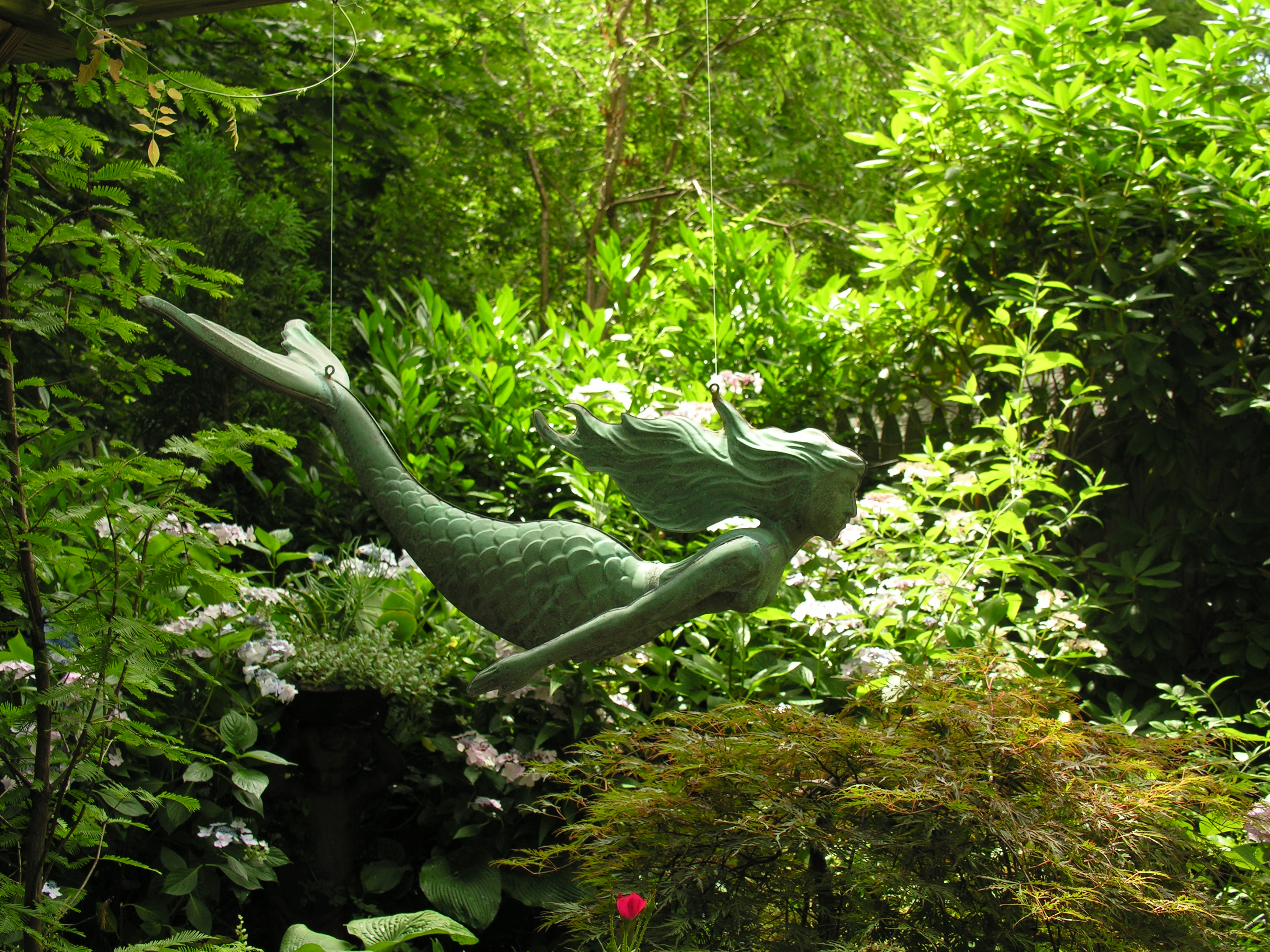
Recently, some friends and I went on the Newport RI “Secret Garden Tour.” A ticket purchased in advance was just $20, and the proceeds went to charity. It was also an opportunity to explore the historic and lovely “Point” section of the city, since all the gardens were located there, within walking distance of each other.
Actually, that was the best part: walking around The Point, where most of the wooden houses were built in the 1700s, and charming vignettes like this one abound.
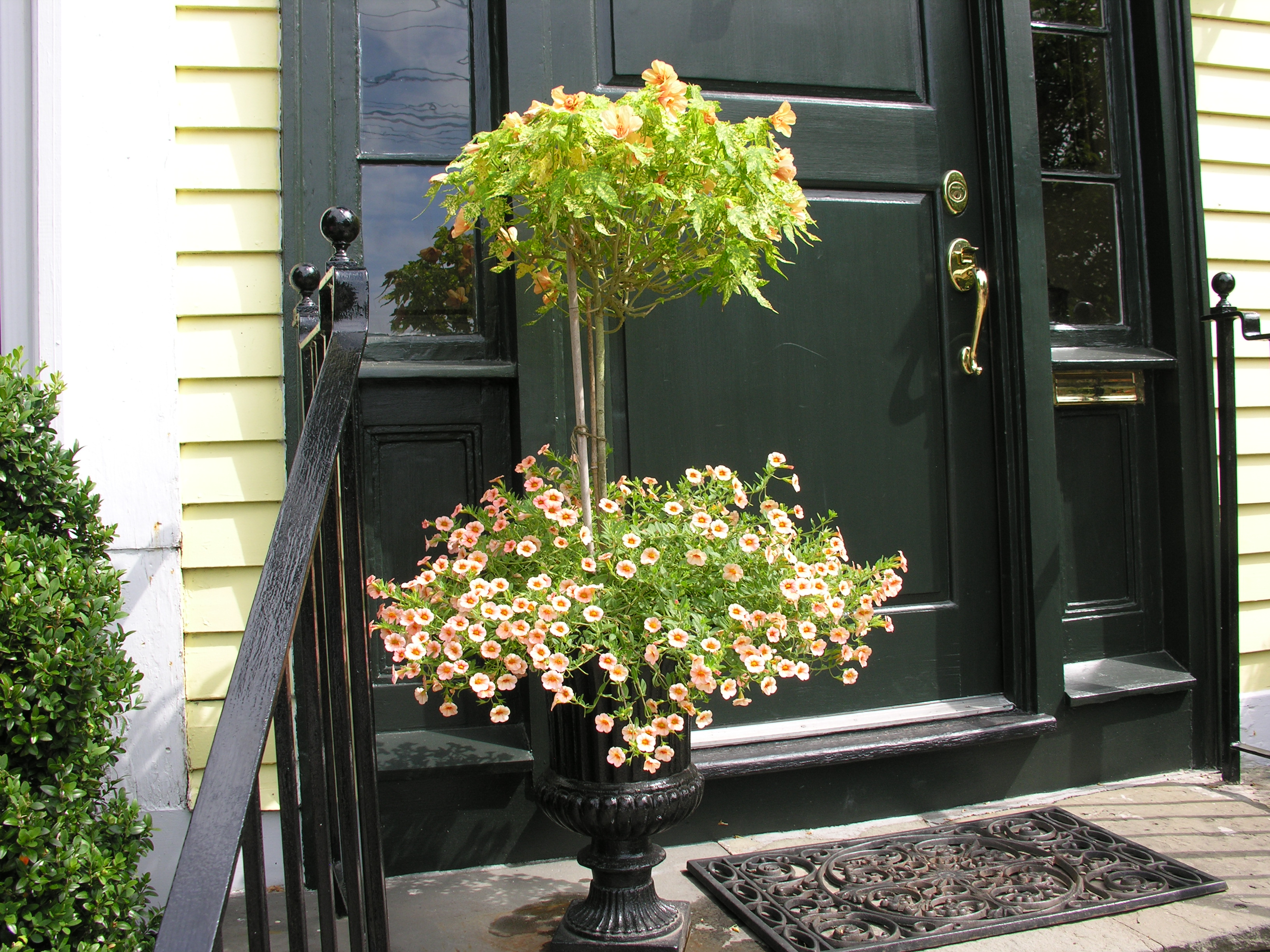
The houses are close together, so the gardens are quite small. Some were delightful – with garden ornaments as interesting as the plants themselves. As for the plantings, I adored the shape of one azalea, which, we were told, is 110 years old, and there were some wonderful trees like the venerable copper beeches in the garden of a B&B.
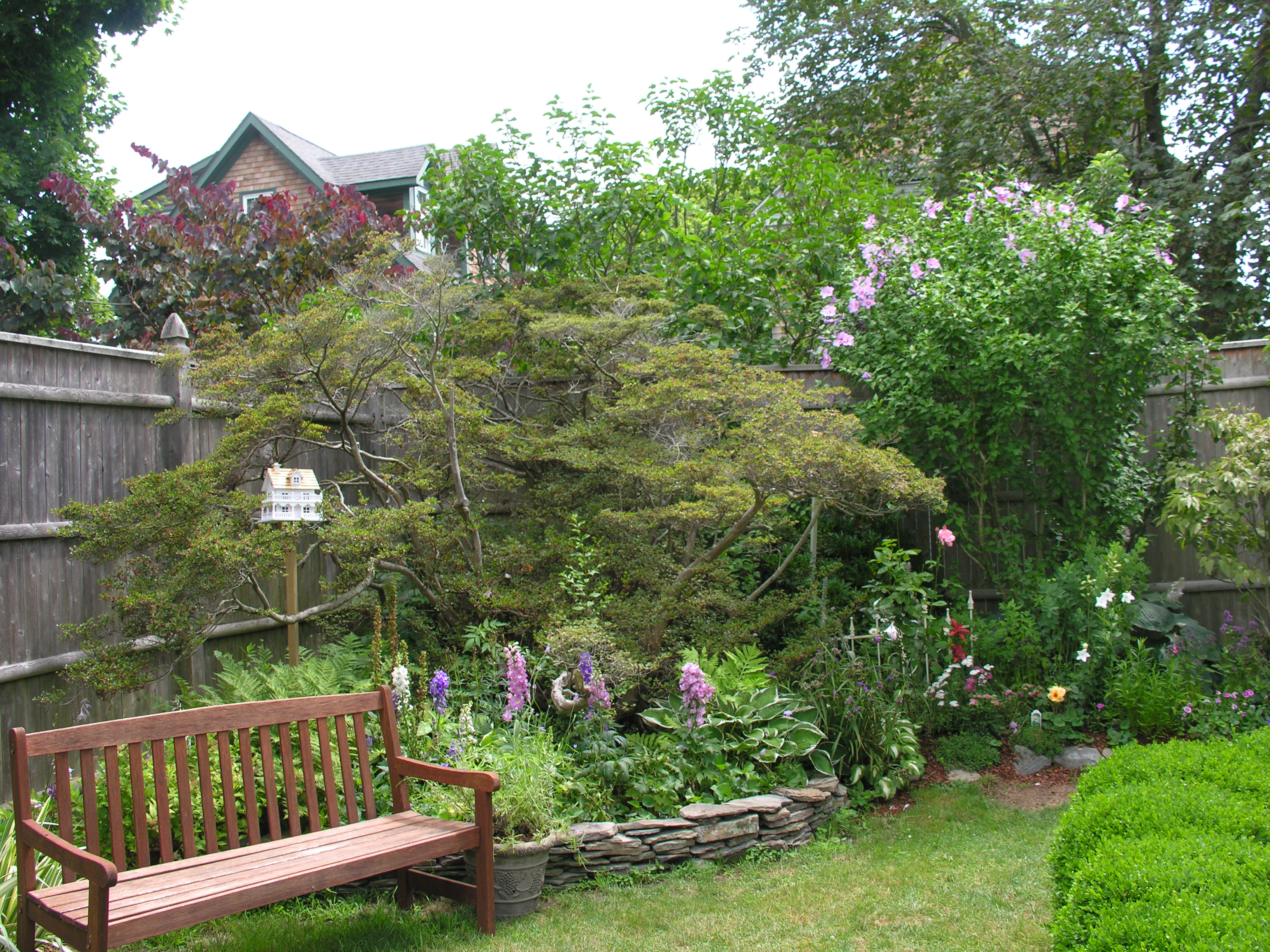
The 110-year-old azalea
Other gardens, though, were not “tour ready” in our opinion. They needed dead heading and weeding, and no one could tell us anything about the individual plants if we had questions. At least two of the gardens touted specimen trees in the brochure, but when we asked about them, in one case the tree had been cut down and in the other, it had been “moved somewhere else.”
Overall, the tour was worthwhile, especially since our ticket money went to a good cause. I guess I was expecting more on a horticultural level – and docents who could answer our questions about the plants.

This garden was full of surprises
Herbdoc has some good news. I love good news.
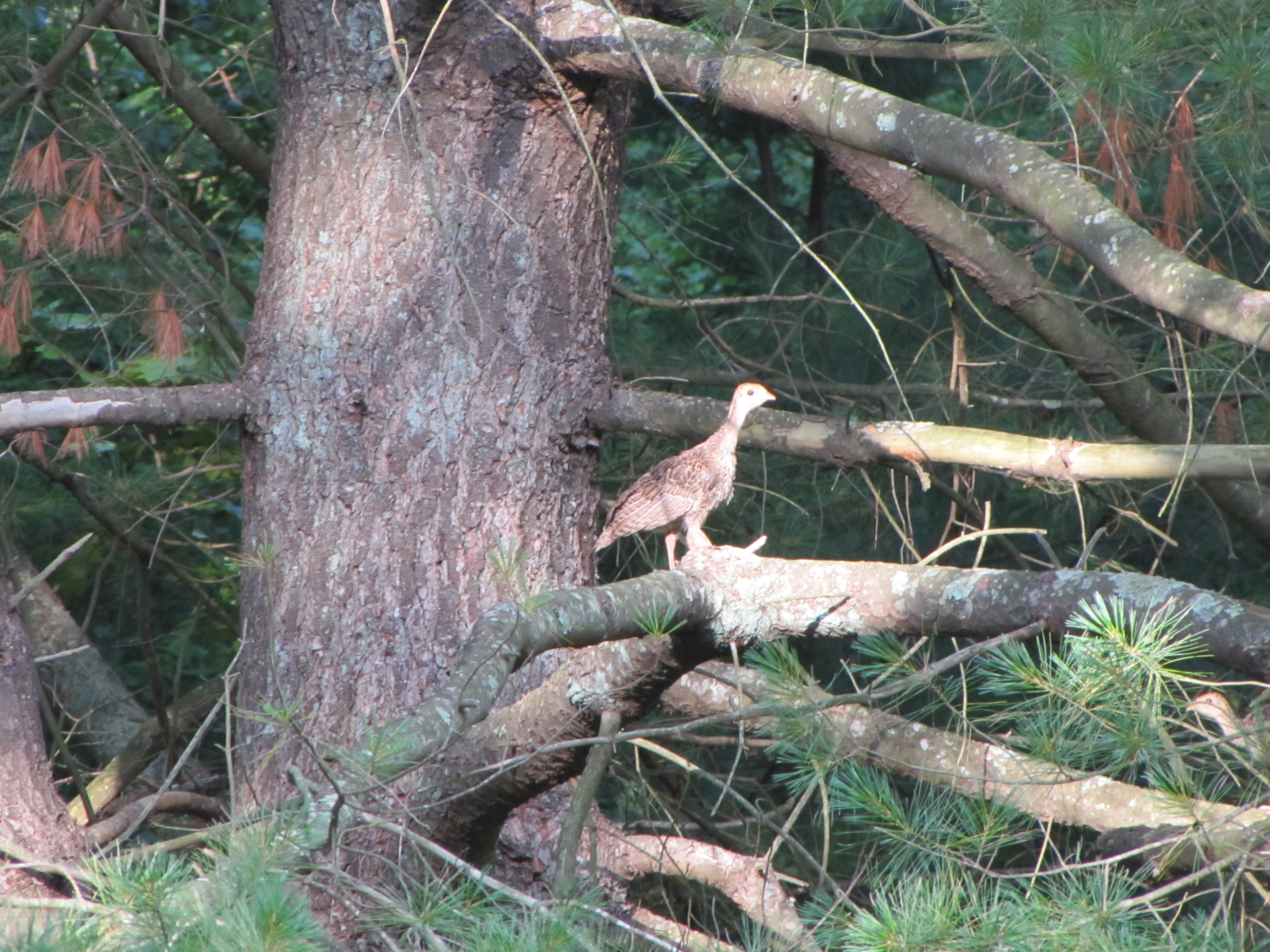
turkey poult. photo: Herbdoc
The Eastern wild turkey (Meleagris gallapavo silvestris) was near extinction in the early 1900’s due to over hunting and loss of habitat. In Rhode Island, The Department of Environmental Management’s restoration effort started in 1980, and the population swelled to an estimated 4900 in 2009.
For the past ten years we have seen increasing numbers on our wooded property. The first flock consisted of a dozen adult birds, but last winter we counted 72 visitors! It wasn’t until last summer that we spotted the poults, or young turkeys, accompanied by three hens. The hens apparently teach their young to be very quiet since they would otherwise become dinner for predators. This year we have nineteen poults with four hens. They are particularly fond of my herb garden where they snack on insects, green plants and fruit.
They are such a delight to watch, and a real benefit of having them visit has been a rapid decline in the number of ticks. An adult turkey can eat up to 200 ticks a day with the result that our woods have been tick free for the past several years.
The second successful restoration project has involved the osprey (Pandion haliaetus), a magnificent raptor with a 3 foot wing span that feeds on live fish.
The osprey population was decimated during the years between 1950 and 1975 due to the effects of the pesticide DDT which worked its way up the food chain to the birds. It caused a thinning of eggshells and poisoning of embryos; very few eggs hatched. The ban on DDT in 1972 and the construction of special platforms to provide nesting sites contributed to the osprey’s remarkable comeback.
This photo was taken at the Salt Pond in South Kingstown, RI. The nestlings were peering across the road at their parents, either awaiting dinner or being urged to take the plunge for their first flight!

ospreys panting in the heat. photo: Herbdoc

 Digging RI
