More Spring Pruning…Hydrangeas

Since I was fortunate and did not get flooded last week I spent a few days pruning my hydrangeas…second only to my roses in that they “must be done,” and following the spring-blooming clematis – discussed in my last post – which has to be first according to the calendar. But, you may say, “Aren’t hydrangeas supposed to be pruned in the fall after blooms fade”? Well, no, they can be pruned either in the fall or in the spring…I prefer spring, so let me explain.
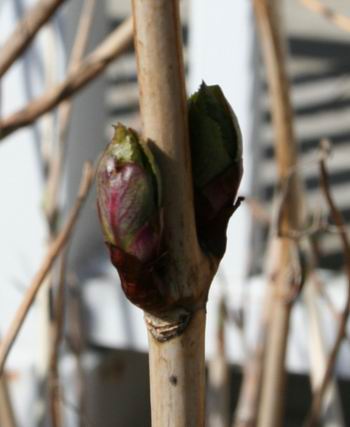
Prune your hydrangea when the buds start to swell.

There is no advantage to pruning in the fall because you will have to prune again in the spring anyway. Why? Because parts of the plant will be damaged or killed by winter weather and these parts have to be removed. So you might as well do all pruning at one time. Now I originally thought hydrangeas were the easiest of all plants to prune because you can cut to them any height and there is no “shape” to worry about. I soon found out that it is quite the opposite and while I prune the plants with loving care each spring I struggle and swear while I am working. The reason they are so hard to work on is two-fold: when you remove dead branches you have to cut them at ground level and when you work around the budding stems you knock off the buds!

Here are some guidelines that may help you with this task. First, wait until you see the buds starting to swell so the dead ones are obvious. Then, cut out all dead stems, stems that are rubbing against other stems, and stems that look like snakes twisting and turning in all directions. Now you can cut back the

Before pruning, the shrub may look like a jumble of stems.

remaining branches and this is where some informed decisions have to be made. Endless Summer hydrangeas produce blooms on both old and new wood. This means you can cut the stems as much as you want without losing a bloom cycle for the season. If, however, you have an “old fashion” hydrangea, such as a Nikko or lace cap variety, care must be taken because if too much stem is cut off the flower buds will be removed and there will be no bloom until next year. I like to keep my hydrangeas at the same height every year so I cut about 6 to 8 inches off the tops of all stems, which is the amount of seasonal growth and the plants will always stay the same height. When you cut the stem back, always cut just above a pair of healthy, swelling buds.
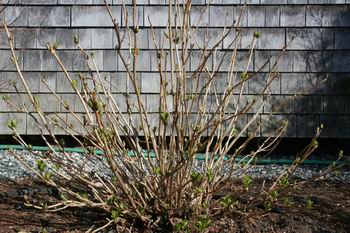
After pruning...now there is room for new growth, and the plant will be healthier.

There is one footnote to all of this. Endless Summer hydrangeas do not have cold-hardy flower buds, so if the winter was severe they may be killed and you will only have blooms on whatever new branches grow this season.

The third part of my pruning series will talk about roses, so check back next week.

Posted in Uncategorized | 4 Comments

Get Ready; Get Set; Sow! Part 2

Here’s HerbDoc once again, with more on seed starting:

Once the seedlings start to push through the growing medium, they no longer require bottom heat, but they will need abundant light.  If they don’t get enough light or they are crowded together, they will grow tall and spindly with very weak stems.  To thin them out, snip extras off at the soil line.  If they are pulled out, the roots of adjacent seedlings may be damaged.

Most of my seedlings go straight to the fluorescent light garden in the basement where the temperature runs from 60 – 65 degrees.  I lower the lights to 4 inches from the tops of the seedlings and run them for about 12 hours a day.  Although many folks swear by grow lights, I have had great results with one cool white and one warm white tube in pairs.  Make sure that there is good air circulation and great drainage in the containers to prevent fungus, especially damping off, from occurring.  I spray the seedlings with a chamomile solution to discourage damping off. Once the second set of true leaves appears, each seedling will be given its own pot and I water with a weak solution of Para Vida Bloom, an organic fertilizer.

About ten days before the safe planting date, move the little plants to a sheltered, partially shaded location to harden them off during the day and water them a bit less.  The tender ones come in at night, but some of the hardier types like lettuce and parsley are relegated to the coldframe.

Once the safe planting date arrives, wait for a cloudy, damp day to plant the garden. (I’ve been known to plant in a light rain!)  Dig a hole, set the plant in the soil, water, and cover the roots with fine soil or compost.

Sit back and enjoy your new garden!  You’ve helped your little seeds to grow into productive plants and have saved money in the process.

Posted in Uncategorized | 2 Comments

Glove Love

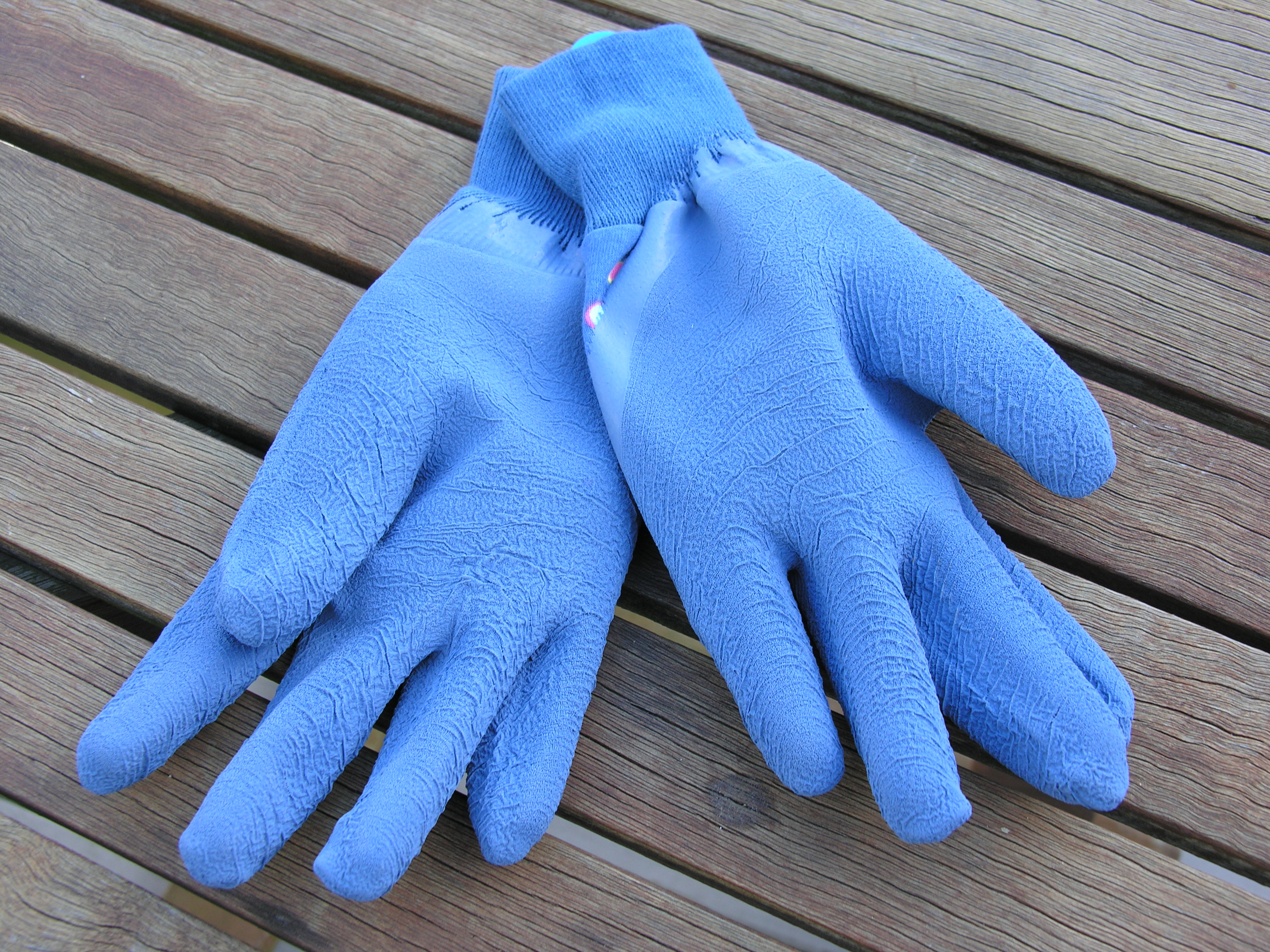
A couple of weeks ago, I stopped in at Job Lot (our RI and Mass discount store) to buy my supply of gardening gloves. If I don’t pounce now, they’ll be sold out – at least the ones I prefer will be. These are my favorite all-purpose gloves.

They have fabric on the tops and are coated with some sort of rubbery stuff on the fingers and palms. They’re comfy and relatively waterproof and I buy three pairs every season in case I run out. At $2.99 a pair, they’re a bargain.

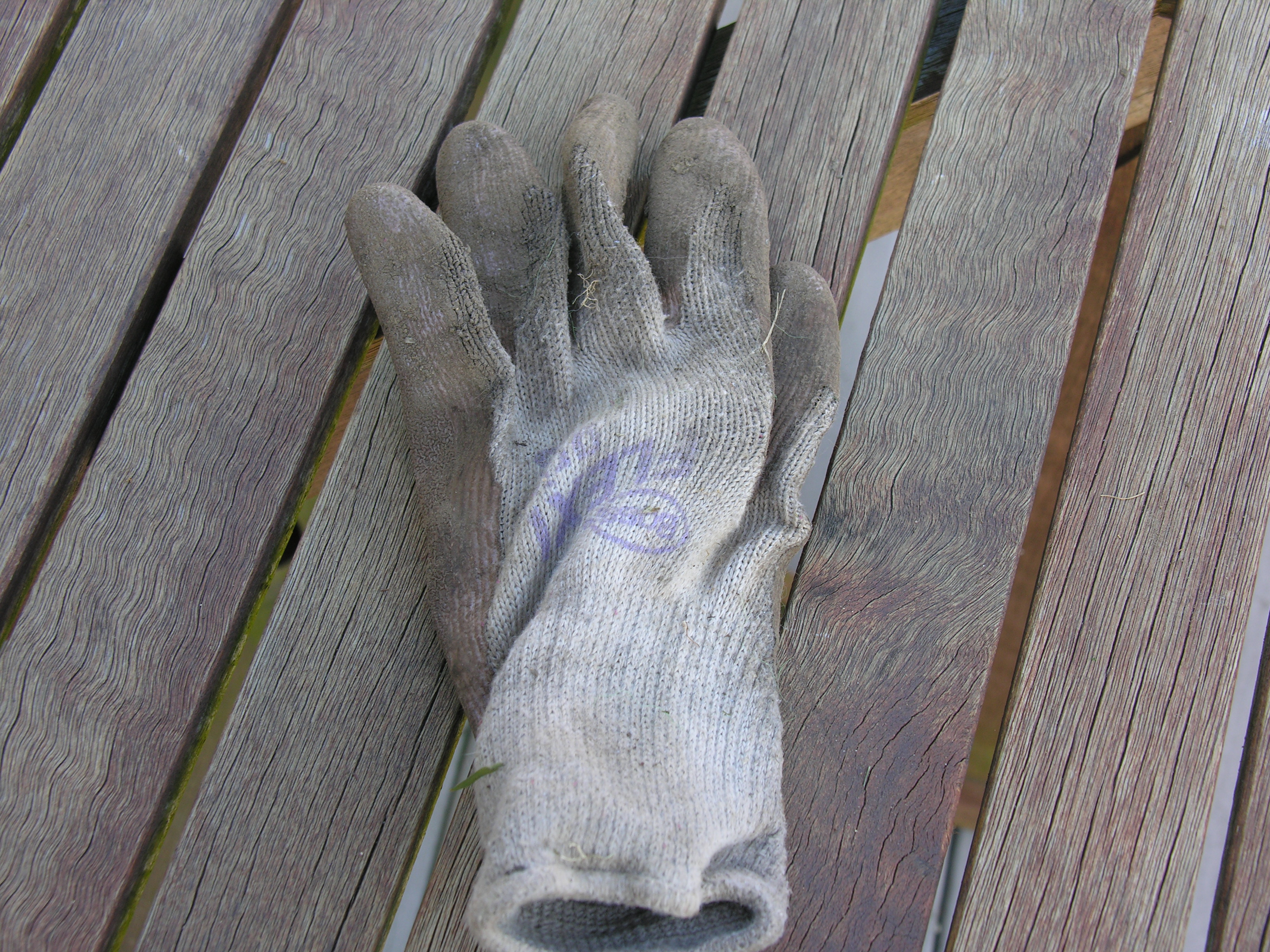
Here’s one of last year’s gloves. Definitely finished.

While I love the feeling of soil on my bare hands, I eventually grew tired of all the nicks and scrapes and the incredibly persistent dirt. My hands still get dirty when I wear gloves, but they’re not quite as bad.

When I am working with roses, I wear leather gloves to protect my hands from the thorns – and the fungus you can get if you are pricked by one. This happened to my mother-in-law, and it turned into a drama that lasted several weeks.

Sometimes, if I am doing something very delicate, I put my gloves aside, but most of the time, especially when I am working in a client’s garden, gloves are as much a part of my uniform as my Felcos, my apron and my hat.

Posted in Uncategorized | 2 Comments

Till, or Over-till?

Snug Harbor, RI. Photo: Cynthia Drummond

With parts of Rhode Island still under water from this week’s disastrous flooding, it might be a bit premature to start thinking about preparing our vegetable gardens. Even those lucky people among us who stayed high and dry have some serious moisture to contend with in their soil. It’s tempting to get out there and start digging, but if you’ve had a lot of rain, you should give the soil time to dry out before you work it.

Tilling or digging very wet soil can destroy its structure, and compact it to the point where it will not allow roots to penetrate. This damage can take years to repair, so please be patient and check your soil BEFORE messing with it. Testing is easy. Grab a handful of soil and squeeze it. If it stays clumped in a ball or sticks to your shovel, it is too wet to work. If it’s powdery, it’s too dry.  If it crumbles nicely, you can be thankful that your soil is suitable for planting.

Unless you have permanent raised beds, you will have to till or otherwise prepare your garden for spring planting in order to break up clods and offer a hospitable, fine surface for your tender vegetable seedlings. Many gardeners do their major soil work in the fall. This has several advantages, not the least of which is allowing time for any modifications to be well incorporated into the soil by spring planting time.

Regardless of the season in which you do your tilling, it’s important not to go overboard and smash the soil to oblivion. You’ll end up with a crusty mess. The objective here is to mix the upper soil layers, not to bury all the organic matter and kill the beneficial organisms living there. Also, make sure you are not creating a layer of compacted soil just below the reach of the tiller.

Photo: City of Madison, WI

Your choice of equipment depends on how strong you are, and the size of your beds. You can just grab a spading fork or a shovel and work up a sweat, or you can use a rototiller or a garden tractor.

Many gardeners have started experimenting with the no-till method. Proponents of no-till gardening maintain that any disturbance of the soil damages its structure and its resident microorganisms and worms. One no-till method involves covering the soil with layers of newspapers, which in turn are covered with mulch such as straw.

For more information on soil and soil amendments, check out the University of Rhode Island Master Gardener Learning Center.

Whether you do it by hand, or use a machine, make sure your soil is not too wet to be worked, and please don’t over-till your garden!

Posted in Uncategorized | Leave a comment

Get Ready…Get Set…Sow!

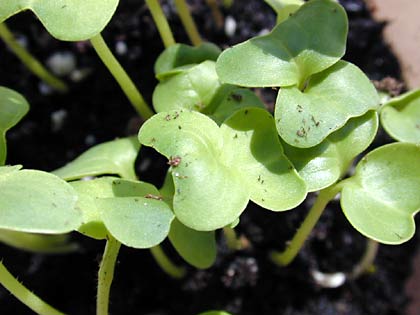
Radish seedlings: Michigan government photo

HerbDoc has some tips for starting your spring seeds…indoors or in the garden.

All of the seeds have been ordered and divided into those that can benefit from an early start indoors and those than can be directly sown in the garden. Since there is very limited indoor space and no greenhouse available, I have to be very selective when choosing what to start at home. Usually I’ll pick tomatoes, peppers, eggplant, basil, parsley, and a few flowers that I have difficulty finding at local nurseries.

First I gather together all of the plastic containers and make sure they’re scrupulously clean by washing them in a solution of one part bleach and nine parts water and rinsing them well.  In the past I’ve used cut-down milk cartons, cottage cheese containers, etc. along with peat pots and seed starting flats.  Almost any container will do as long as it’s at least 2 inches deep and has drainage holes.  If a container has a lid, I use that as a saucer. This year I’m looking forward to using my new soil blocker with recycled trays, but I also have a favorite pint sized greenhouse that a fellow Master Gardener recommended last year.

Each container should be filled with seed starting media that encourages germination and growth.  Steer clear of commercial potting mixes as most today contain fertilizer that seeds don’t need or which are heavy and hold too much moisture.  In the past I have made my own mixture of equal parts screened compost and vermiculite, which worked very well. Fill the containers with the mix, tamp down, and water well before sowing seeds.  This prevents the seeds from clumping together or washing away.

Next, sow your seeds thinly, carefully following the package directions. (Don’t feel the need to use the whole package!  If you store them properly, the leftover seed will germinate next year.) Some will need sunlight for germination to occur; these need to come in contact with the soil so firm them gently in place.  Others can be dusted with a light amount of soil.  Be sure to label the container with the variety and date sown.  Cover the containers with plastic wrap to retain moisture.  Bottom heat can speed germination and this can be accomplished by heating mats or by putting trays on top of the refrigerator or near a heating vent.  Water the trays from the bottom as necessary to keep the trays evenly moist.  Watering from the top can dislodge seeds and/or cause disease.  Check daily for sprouting.  Once it occurs, remove the plastic wrap immediately!

In the next post, we’ll look at germination, transplanting, hardening off, and growing.

Posted in Uncategorized | Leave a comment

Soil Testing

Herbdoc dishes some “dirt.”

When I first started gardening, the only thing I was concerned about was the pH of the soil.  As everyone who lives in Rhode Island knows, our soil tends to be on the acid side.  I would unscientifically broadcast lime every couple of years and hope that I was improving the pH of my wooded property.  It was only after I took a landscaping course last year and decided to plant wildflowers in a secret garden in the previously unplanted woods that I found out just how acidic the original soil was.

I had the soil in my established herb, perennial and vegetable beds analyzed by UMASS (the University of Massachusetts) about three years ago, and I highly recommend this lab.  They not only provided the pH of the samples but also gave the amounts of nutrients (phosphorus, potassium, calcium and magnesium) and micronutrients (sodium, sulphur, manganese, copper and zinc) present in the soil.  The latter determine the amount of fertilizer needed for optimum growth.  Organic recommendations are also given.  Since I had regularly added compost and rotted manures along with the unscientific amount of lime to my established gardens, all of the results came in at optimal levels.

When I decided to have the proposed secret garden’s soil tested, I was amazed to see the pH at 4.5.  Micronutrient levels were all in the normal range as were potassium and magnesium, but calcium and phosphorus were low.  The organic matter was said to be quite high which will provide a good growing medium for the intended perennial wildflowers.  UMASS recommended adding about 1 part compost and 2 cups of bone meal to every ten parts of soil and broadcasting a light top dressing of lime to the area. They also suggested retesting next year.

In the long run, the cost of the test ($9) is well worth the price.  When gardeners guess about what their plots need, money is wasted by buying too much or losing plants to inappropriate environments.  If too much fertilizer is used, run-off to ground water occurs and natural resources are compromised.  Too much lime can cause soil pH to rise above the needed level which makes micronutrients less available to plants.  When too little fertilizer or lime is applied, the plants can’t access what they need to grow.

Visit www.umass.edu/plsoils/soiltest for further information on soil testing.  The form will tell you everything you need to know about the proper procedure for taking and mailing samples to the lab.  Results can be sent to you by e-mail or by snail mail.

Posted in Uncategorized | 2 Comments

Raspberries and Late Leaf Rust

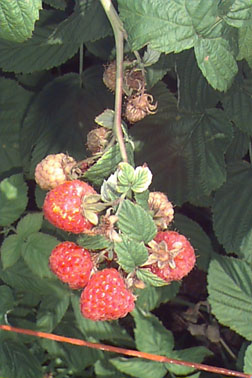
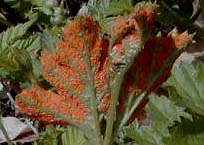
Fruit with late leaf rust.

I (yes, it’s me, HerbDoc) had an interesting question from a beekeeper the other day and thought others might have the same problem.  The beekeeper was looking for a control for late leaf rust which would not harm the pollinators in the garden.  He indicated that his property also contained white spruce and that they had lost their entire crop of raspberries last year.

Red raspberry leaf infected with late leaf rust.

Late leaf rust is a fungus which is heteroecious, meaning that it attacks two different hosts at different stages of its life cycle.  The rust fungus produces two types of spores only on red raspberries.  The alternate host for the rust is white spruce on which the aeciospore is produced.  These are released from infected white spruce in mid-June to early July and are capable of infecting the raspberries at that time.  The spores start to form on the undersides of the infected raspberry leaves and flower parts.  Another type of spore develops on the infected leaves and canes in the fall and serves as the overwintering form of the fungus.  These develop the following year and infect the white spruce needles.

New studies indicate that most of the fungus is overwintering on infected canes so it is wise to cut them down.  All of the canes and anything that fell to the ground should be disposed of in the garbage that leaves the property.

 The best advice includes making sure the site has good air circulation and full sun exposure.  A tree canopy can cause fungus problems.  Row width should be 1-2 feet and cane density should not exceed 3-4 canes per square foot.  Control fertilizer to prevent excessive growth and keep weeds under control.  At the end of the season remove and destroy old fruited and infected canes.

 The only treatment that is considered organic is fixed copper (Bordeaux mixture – a mix of hydrated lime and copper sulfate).  It would be applied in dormancy and at first bloom.  Most farm supplies carry this product and Gardens Alive! Online carries what they call Soap-Shield which is copper-based and non-toxic to bees and other pollinators.

Posted in Uncategorized | 4 Comments

Spring Pruning…Clematis

Now is a good time to start your spring pruning chores. I will write this series over a period of weeks to coincide with pruning time for some of the more confusing plants in your garden in the hope that I can demystify the process. Among the first plants to get my attention in March are clematis.

When pruning clematis it is a good idea to cut the stem just above a pair of swelling buds.

Clematis that flowers from late spring to early summer (late April to late May) belong to Group 1 and these plants bloom on last year’s wood. Varieties that I grow from this group are ‘Prinsesse Alexandra’ and ‘Josephine.’ I only do a minimal pruning at this time in order to protect the bloom. First, I remove the winter-damaged stems and then I thin out shoots because there is always a dense tangle of stems. Then I look at individual stems and remove the ones that are too long by cutting to a pair of swelling buds. To keep your plants healthy and thriving you should hard prune all shoots to the base every three years and this can be done after blooming to assure a bloom the following year.  

Group 2 clematis flower twice a year…or continuously: in early summer (mid to late May), on last year’s wood, and again in late summer (September into October) on new shoots. Varieties that bloom continuously put out flowers from June to September. The varieties I grow are ‘Jackmanii,’ ‘Mer. President,’ ‘Multi Blue,’ and ‘Henryi.’ The key to successfully pruning plants in this group is: prune to stimulate new growth while retaining the old-wood framework and preserving spring blooms. To keep the plants looking neat, I always cut to a pair of buds. Pruning can be staggered over the season, doing only some shoots at a time. Hard pruning every three years is also recommended.

Finally, there is Group 3 which includes clematis that flower from late summer to fall. ‘Sweet autumn clematis’ is probably the best-known variety in this group but since this is an invasive variety and grows to massive size I do not have one in my garden. Young plants can be pruned in the same way as plants in Group 1 and established plants should be hard pruned every year.

Posted in Uncategorized | Tagged | 2 Comments

Front Yard Food

As Auntie Beak was toiling over her previous entry on unusual vegetables, I was at the University of Connecticut, attending the 2010 Garden Conference. The keynote speaker was Rosalind Creasy, Garden Writers’ Hall of Fame member, lecturer and photographer. The topic of Creasy’s talk was “Edible Theme Gardens,” and it was terrific – entertaining, informative, and above all, useful.

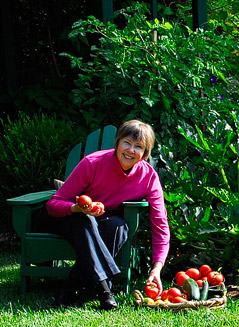
Rosalind Creasy: photo from her website

Rosalind was one of the very first proponents of mixing edible and ornamental plants. This is definitely timely concept during the current resurgence of interest in growing one’s own food. Space is never an issue, Creasy says, if you simply mix useful food plants, bushes and trees with the purely pretty stuff. If you choose your plants wisely, you can have a beautiful and edible landscape.

Creasy’s website is full of practical advice, plant sources, and gorgeous photos. Click here to check it out.

Posted in Uncategorized | Leave a comment

Neck Pumpkins, White Greasy Beans, and Blue-Podded Peas

When it comes to gardening, I’ll admit it here and now, I’m in it for the food. My front yard is one large vegetable garden with a few square feet of lawn around the periphery for contrast. I grow the usual suspects here in southeastern Connecticut: tomatoes, peppers, peas… you know the drill.

But I’m also a sucker for the unusual, and I’ll try anything once. This has resulted in some interesting horticultural experiments over the years; some successful and some less than successful. For example, last year I decided to try growing my own lupini. You Rhode Islanders know what I’m talking about—those pickled yellow bean things served at Christmastime in Italian homes… the ones you pop out of their skins to eat.

Now I don’t know if it was just our terrible, horrible, very bad summer last year or if lupini are just not suited to New England, but this was one experiment that went sadly awry. I had a few stunted plants, a couple of sorry little flowers, and no beans. Which is just as well, really, considering that lupini in their raw state are basically inedible, and must be repeatedly soaked and rinsed before being fit for human consumption, and I don’t know that I would have been all that enthusiastic about so much extra work in the middle of canning season. But as it turned out, I didn’t have to worry.

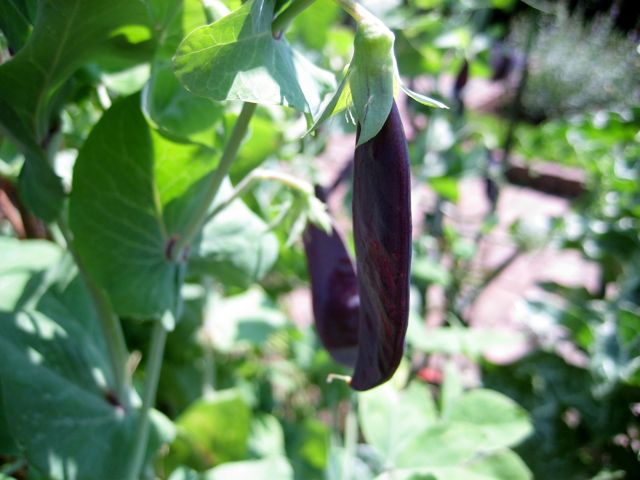
This year, I have a three fairly unusual vegetable varieties I plan to try. First up is Capucijners Blue Podded Pea. I saw these growing in the herb garden at the Cloisters in New York last summer on a Master Gardener-sponsored bus trip, and fell in love at first sight.

Gorgeous, aren’t they? They can be eaten very young as snow peas or fully mature and dried as soup peas. I had to hunt around for the seed, and finally found it at Amishland Heirloom Seeds in Lancaster County Pennsylvania. According to their website, the company was started by a graduate of the Pennsylvania Master Gardener Program. Besides blue-podded peas, they also carry white cucumbers, Japanese melons, and a root vegetable called skirret. I am so going to visit this website again next year!

Another of this year’s experiments is Neck Pumpkin. You have to see this baby to believe it…

Looks like a butternut squash on steroids, doesn’t it? I got this seed from the very nice, very generous Daniel Gasteiger, who blogs at SmallKitchenGarden.net. He bought one last fall and offered seeds to his readers, and being the adventurous gardener that I am, I jumped at the offer. Daniel also gardens in Amish country in Pennsylvania, and apparently these wild-looking squash are common in that area, and also go by the name Pennsylvania Crookneck Squash. You can read Daniel’s post about them here. Neck Pumpkins are mainly used for pie-making. Can’t wait!

Last but not least in the garden experiment category: White Greasy Beans. I first read about these on Slashfood. They’re called “greasy” because the pods don’t have the fine hairs on them that other garden beans have, and they’re pretty much unknown outside of Appalachia. From the Slashfood article:

Greasys are so prized in the mountain south that an Appalachian bride’s trousseau would traditionally have included a few seeds from her family’s unique strain of beans. Such devoted guardianship has produced an unmatched diversity of greasy beans in the North Carolina and Kentucky highlands, with more than 30 known varieties still cultivated on small patches of mountain land.

I found White Greasy Bean seed at a website called Cherry Gal Heirloom Seeds. They’re also one of the sources of seed I found for a dye garden project I’m working on, but that’s another post.

I’ll try and keep you all informed on the progress of my experiments this year. What is everyone else trying out? Leave me a comment and let me know! (I get my best ideas from the web.)

Posted in Uncategorized | 5 Comments