Secrets Revealed

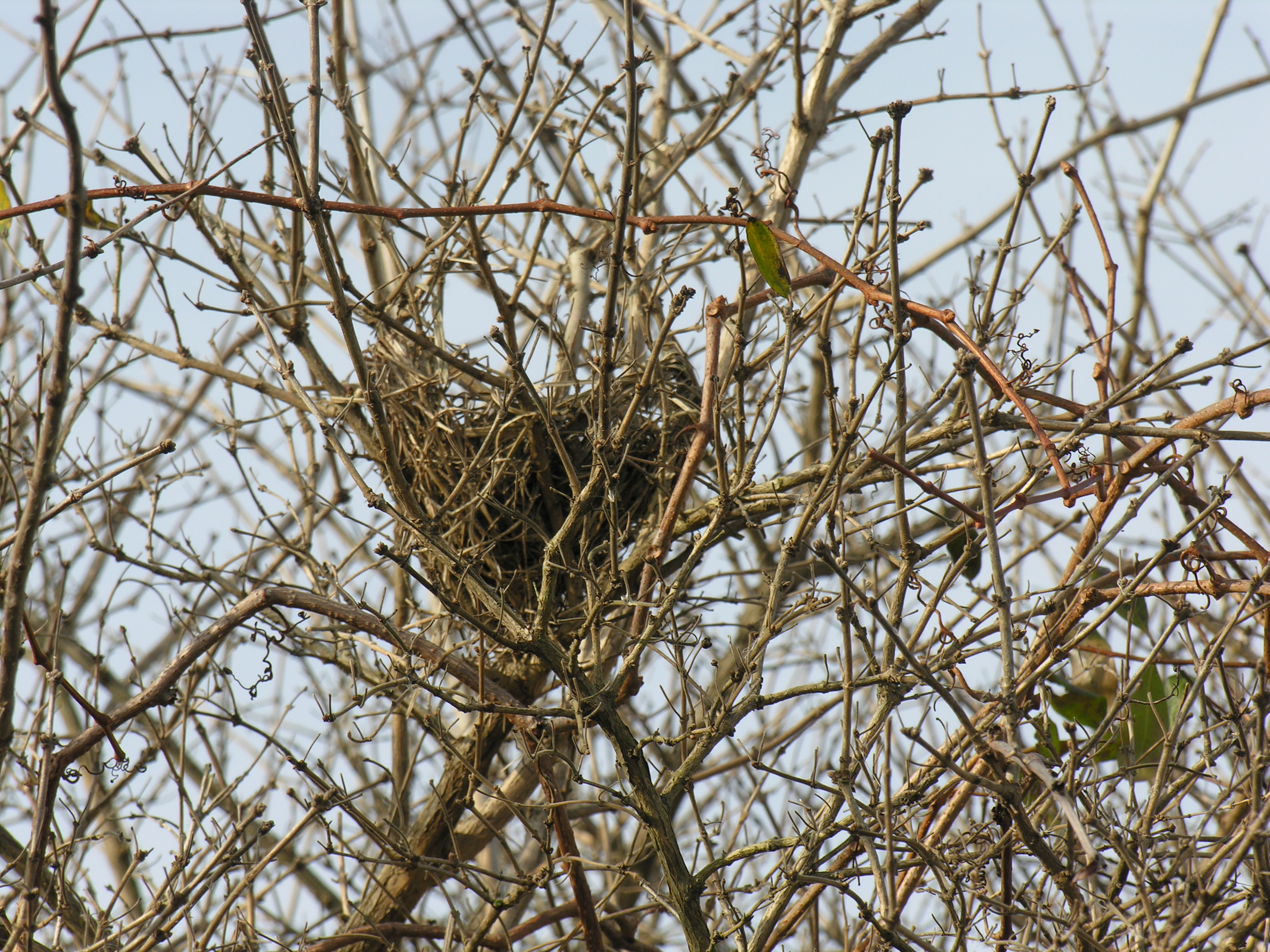
One thing I really like about late fall and early winter is seeing what went on in the tree canopies all summer, secretly – behind the leaves. When the leaves come down, suddenly, you can see all the nests. I like to walk around my neighborhood and look at what the birds left behind.

This Baltimore oriole nest

Baltimore oriole nest

is built every summer in more or less the same spot in my neighbor’s tree. The hanging oriole nests never cease to amaze me. They are true miracles of construction, and they are built in a matter of days!

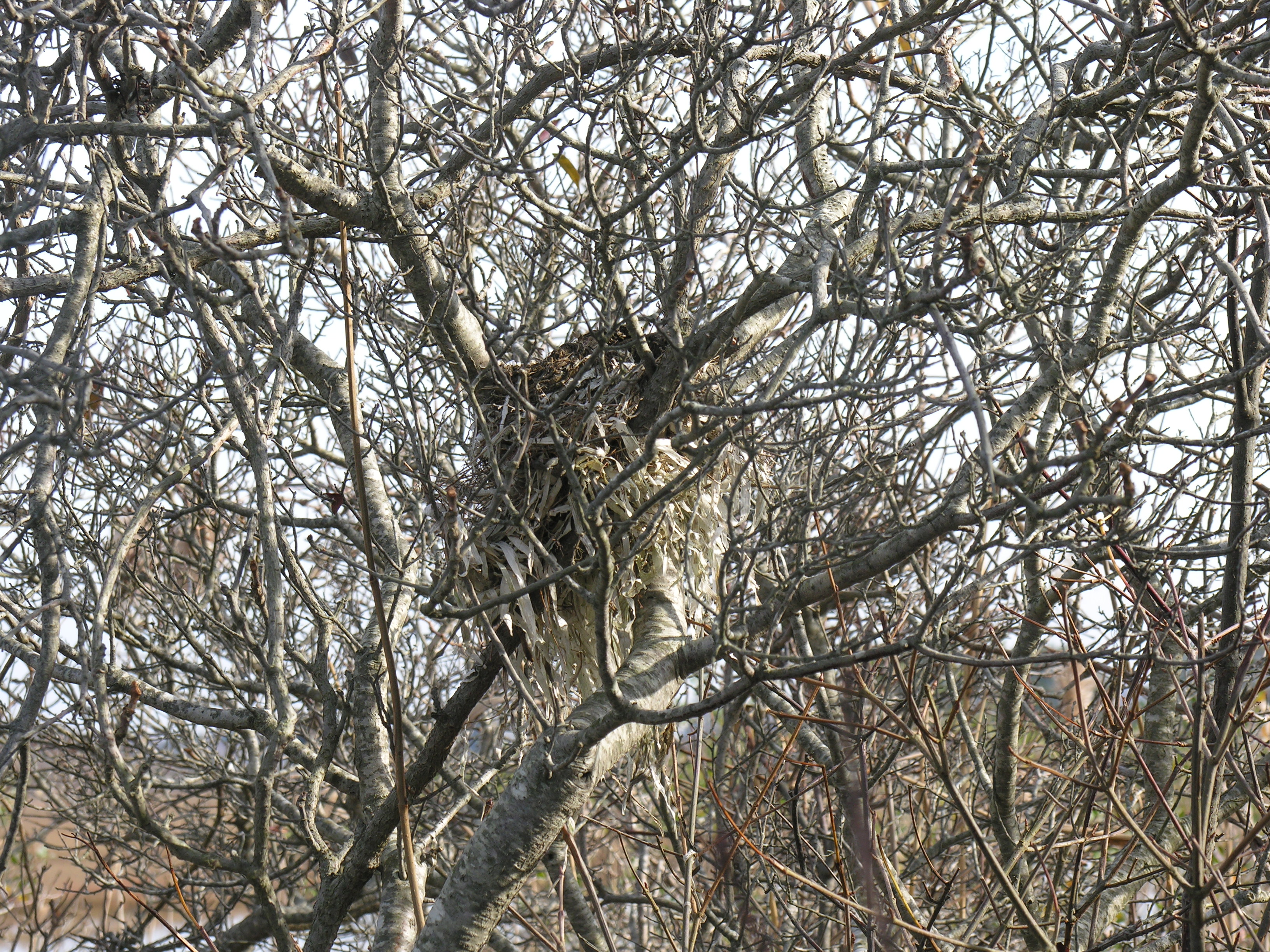
heavy on the marsh grasses

We live next to a salt marsh, so many of the nests consist of marsh grasses and are built in lower, shrubby vegetation. But they are so beautifully concealed, there’s no way you would ever guess they were there in the summer.

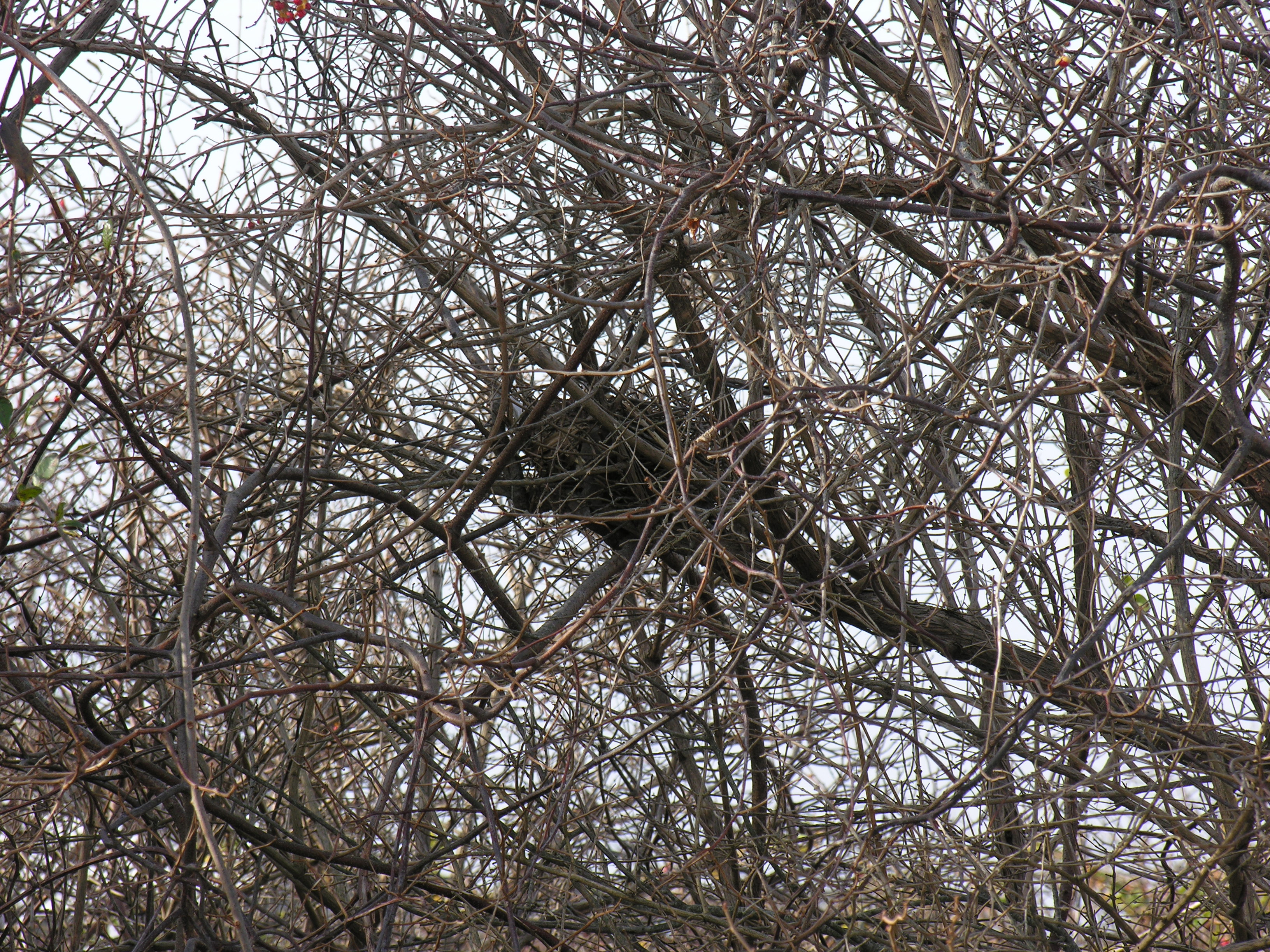
Other nests look like jumbles of sticks. I can’t see inside this one, but there’s probably a nice soft lining in there.

Then there’s the one huge nest that’s always out in the open. This osprey nest has all sorts of material, in addition to sticks. The nest faces a large fishing port, so the ospreys collect rope, plastic – whatever they can get their talons and beaks on.

osprey nest

But most of the nests around here are well-hidden. So, before the wind takes them down, and before the birds return to build something new behind the leafy curtain, at least a few of their secrets are revealed.

Posted in Uncategorized | 6 Comments

Christmas Greens

please don't make bittersweet wreaths

Herbdoc has some tips for those of us who go out and collect our own holiday greens:

As I was gathering greens on my property for holiday displays the other day, I came across a small patch of Oriental Bittersweet (Celastrus orbiculatus) in the side yard.  This plant is highly invasive and so I immediately cut it down and bagged it for removal, but I know I will have to watch the area carefully as it’s tenacious and will re-sprout in the spring.

oriental bittersweet berries

That same day a warning from UMass appeared in the local newspaper warning gardeners and homeowners to forgo hanging wreaths or garlands that contain bittersweet or multiflora rose (Rosa multiflora).  Although the red berries and hips are very beautiful and are commonly used in holiday decorations, the fruit can easily drop into the soil or be carried off by the birds that eat them.  The sprouted seeds lead to massive infestations which in turn crowd out native plants and choke mature trees.

multiflora rose hips

If you are designing your own holiday creations or buying them from a local stand, please steer clear of these two invasives.  In the long run, it will save you and your neighbors a lot of unnecessary yard work or money to have them removed.

Posted in Uncategorized | 2 Comments

The Girl Can’t Help It

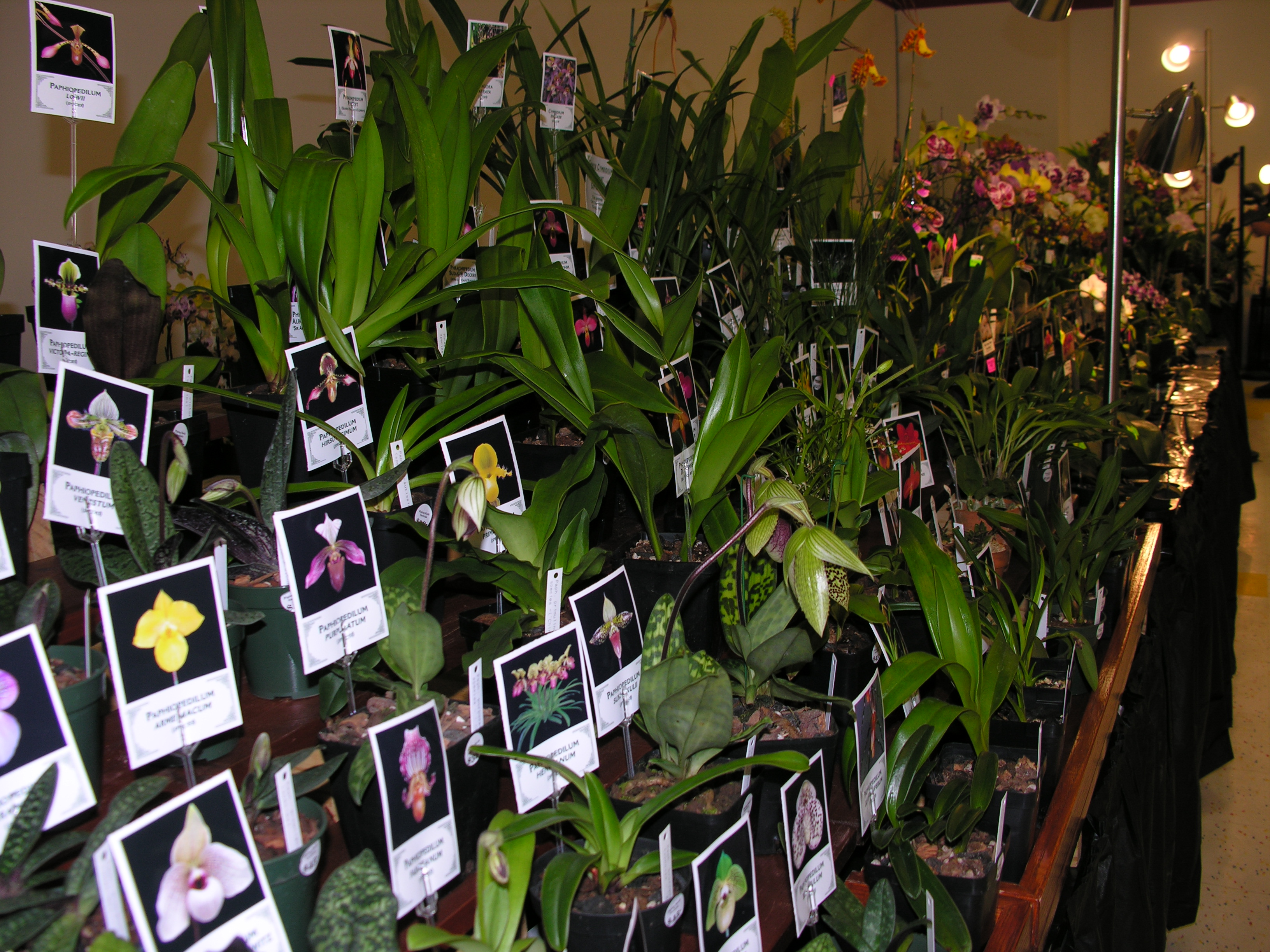
The Ocean State Orchid Society recently had a big show, and like a moth to a flame, I went. Not that I NEED any orchids, mind you. I told my skeptical husband that I was just going “to look” and to buy some potting medium.

And when my skeptical husband came home that night, there were three new orchids in the house, thereby reinforcing his skepticism. I don’t care. I am fascinated by these plants, and this being a juried show, there were some spectacular plants to ogle.

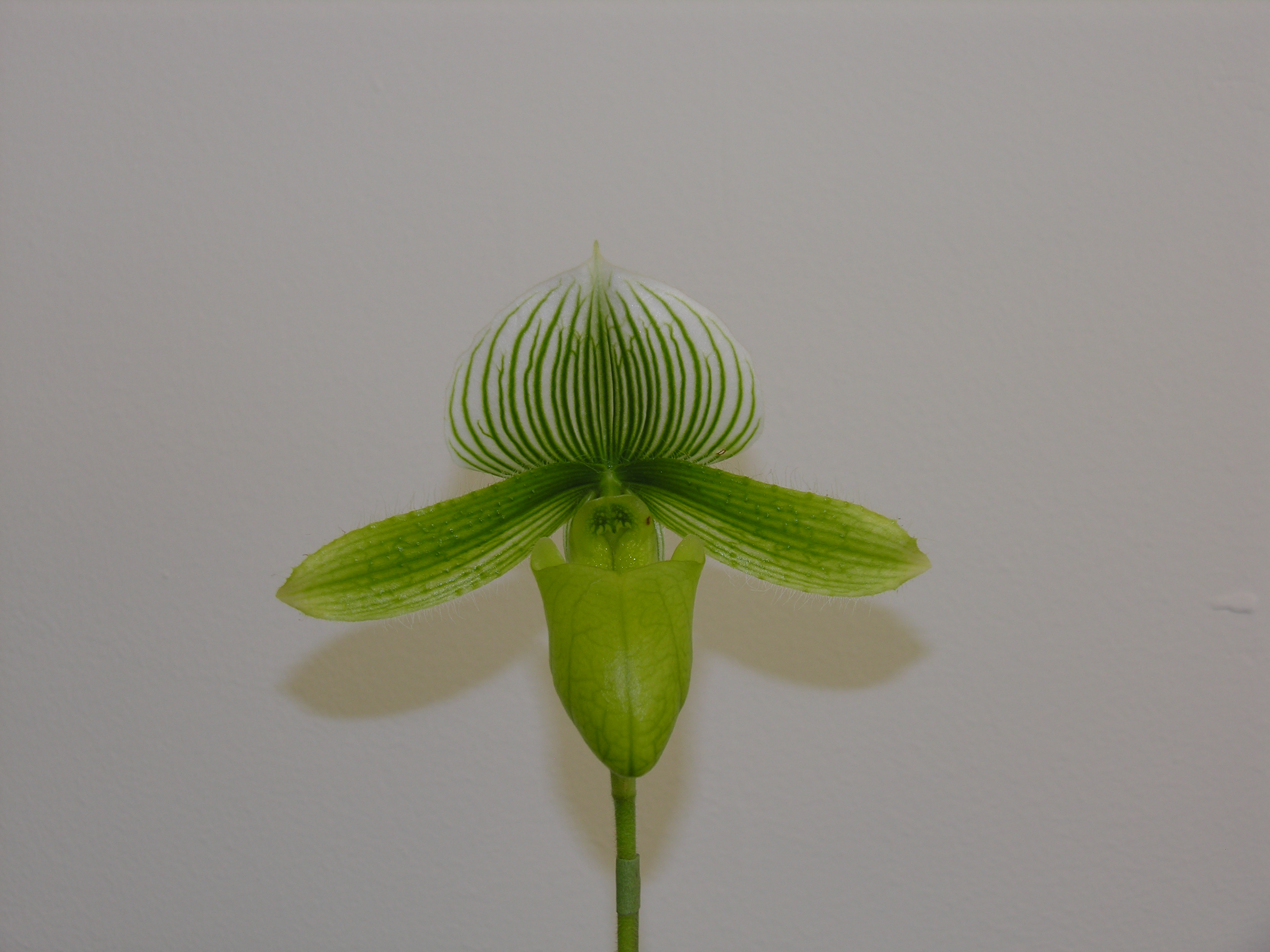
a paphiopedilum like the one I bought

I was able to corner a couple of  experts and grill them on why my zygopetalum is languishing. They all reminded me that “zygos” need lots of moisture. One even flattered me by suggesting that perhaps it wasn’t my faulty culture, but that I had somehow gotten a bad plant. I still don’t think it’s the plant’s fault, though.

I really did need potting medium and fertilizer, and these shows are always the best places to buy such specialty items. Then, I turned my hungry eyes to the growers’ displays, and the hundreds of yummy orchids for sale. I prefer to buy directly from the growers. They always offer lots of good advice, they sell superior plants, and their prices are usually better than those in the big box stores.

With the exception of the zygo, most of my orchids are in spike, including the irresistible aerangis citrata I bought last year at another show. I figure I am ready to try something a bit different, so here’s what I bought:

Masdevallia “Gold Dust,” and two Paphiopedilums: a deep reddish purple one – a hybrid of “Knight” and “Red Magic” and a lovely greenish white one – a “Green Machine” and Maudiae “Classic” hybrid. These are both  lady slipper types. The Masdevallia is open now and has two more spikes, and the “Paphs” are both in spike.

serious temptation

I don’t know what it is about orchids that I find so alluring. I am not an expert by any stretch of the imagination, but mine seem to do quite well, and it is always so rewarding – even exciting –  to get a plant to re-bloom. It’s  a good thing I don’t have a bigger house.

Posted in Uncategorized | 4 Comments

Sleepytime

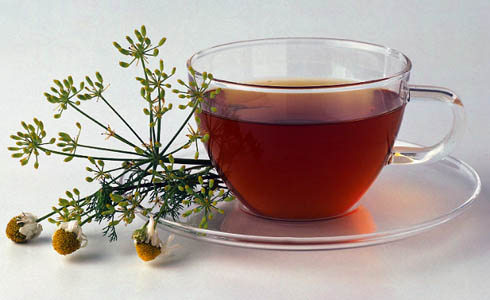
a cup of slumber

There is nothing worse than not being able to fall asleep or to stay that way.  Since Herbdoc has a very large herb garden, she is often asked if there is anything that’s safe to take. Here are some of her best tips:

Not a night goes by that I don’t have a cup of hot chamomile tea before bedtime.  It’s one of nature’s oldest and most gentle sleep aids and not only promotes calmness but also soothes the stomach.  The flavonoid in chamomile that promotes sleep is said to be apiginin.  I select a tea that lists no other ingredient than chamomile because I prefer the taste.

Valerian, which contains isovaleric acid, is also a safe and effective way to promote sleep, but it tends to have a bitter taste and an odd odor.

Neither valerian nor chamomile has adverse effects on next day alertness; however, valerian in high doses may cause headaches, dizziness and nausea.

Other ways to make the bedroom more pleasant include adding lavender sachets to the linen closet to scent the bed sheets and to make small sleep pillows of cheesecloth.  These sleep pillows will fit inside the pillowcase with the regular pillow, and your body heat and head pressure will release essential oils, acting like aromatherapy.

The most popular sleep pillows are filled with lavender blossoms which relax the body and the mind.  Other insomnia-relieving herbs include chamomile, hops cones, lemon balm leaves and rose petals.  Any combination to equal about 3 cups can be used, and I like to add a tablespoon of orris root (the root of Iris germanica) as a fixative to stabilize the mixture.  Two notes of caution:  some people may be allergic to orris root and if hops are used, they should be replaced every three to four months because they may become rancid and cause headaches.

Posted in Uncategorized | 2 Comments

Preparing Roses for Winter

Now that we are reaching the end of November…and it certainly was a mild one…it is time to prepare the roses for winter. There really isn’t much to do, but it is a must-do chore in Rhode Island and anywhere else where winter temperatures go below 25 degrees F. 

Roses can survive winter if they are kept cold and dormant, which means keeping the ground at a fairly constant temperature in order to avoid cycles of freezing and thawing. First, pick up all fallen foliage and other litter since disease agents can winter over on this material. Then water the roses. Now you have to hill up the bottom of the plants with a mound of insulating material. I usually use a combination of manure and mulch but either material can be used alone. Pile up whatever you use into a cone of about 12 to 15 inches. In the spring you will break down each mound and spread the material over the bed for added soil enrichment.

The one other thing I do is to secure tall canes by wrapping them with string and tying them to something secure. Then, if canes are very long, and the plant is not a climber, I trim them down to about 5 to 6 feet. All of this helps prevent canes from whipping in the wind which breaks them, sometimes right down to the ground. Otherwise, don’t cut anything from the plants and pruning will be done in the spring.

Posted in Uncategorized | 3 Comments

Storing Dahlias for Winter

I have been growing dahlias for about six years…can’t imagine a summer without them. They are fun to see in the garden, a jumble of plants in all sizes and dressed in a riot of gorgeous blossoms of all shapes, sizes, and colors. And there is nothing more cheerful in the house than a vase full of dahlias. This goes on until frost takes its toll and since dahlias are not perennials they must be dug up and stored over the winter. That is when my challenge begins.

A climp of dahlia tubers ready for storage.Successful overwintering of dahlia tubers is one of the great mysteries of gardening for me. In my years of trying to find the best technique I have done everything but consult the oracle. I got instructions from growers and dahlia societies, I’ve asked other Master Gardeners, and I’ve talked with “the locals,” but there are never two sources with the same answer.

OK, here are some “approved” instructions for storage. Cut down the plants after the first killing frost, leaving a stub of about 6 inches. Dig up the tubers, turn them upside down, let them dry, then remove or wash the soil off, and dry the tubers before storing. (But some folks have success without removing the soil and I’ve even been told that in Jamestown you can leave them in the ground all winter.) Put the tubers in a cool (40 – 50 degrees. F – yes, everyone agrees about the temperature), dry, dark place in crates or cardboard boxes and nested in damp peat moss or sawdust. Or, put them in trays of dry sand or peat moss. Some say to store them in one-gallon plastic jugs (with ventilation holes) containing vermiculite, sphagnum moss, or sawdust. I even read that you should wrap the tubers in plastic wrap from the supermarket. The idea of any storage method is that you need to hold moisture in the tubers so they don’t dry out.

Now, here’s what I’ve tried…with little success, I might add (I lose 70-80 percent of the tubers I store): putting the tubers in damp peat moss nested in newspaper; putting the tubers in Perlite nested in newspaper; putting the tubers in wood chips and shredded newspaper; storing each tuber separately in a paper bag. I always use a crate to hold them.

Since the weather has been so warm I am just now digging up my tubers. Then, when they dry I will throw them in a basket, dirt and all. Why not, I’ve tried everything else. Meanwhile, I will order some replacements for next year, just in case.

So, if you have any secrets to successful dahlia tuber storage PLEASE let me know.

Posted in Uncategorized | Tagged | 5 Comments

Serious Winter Protection

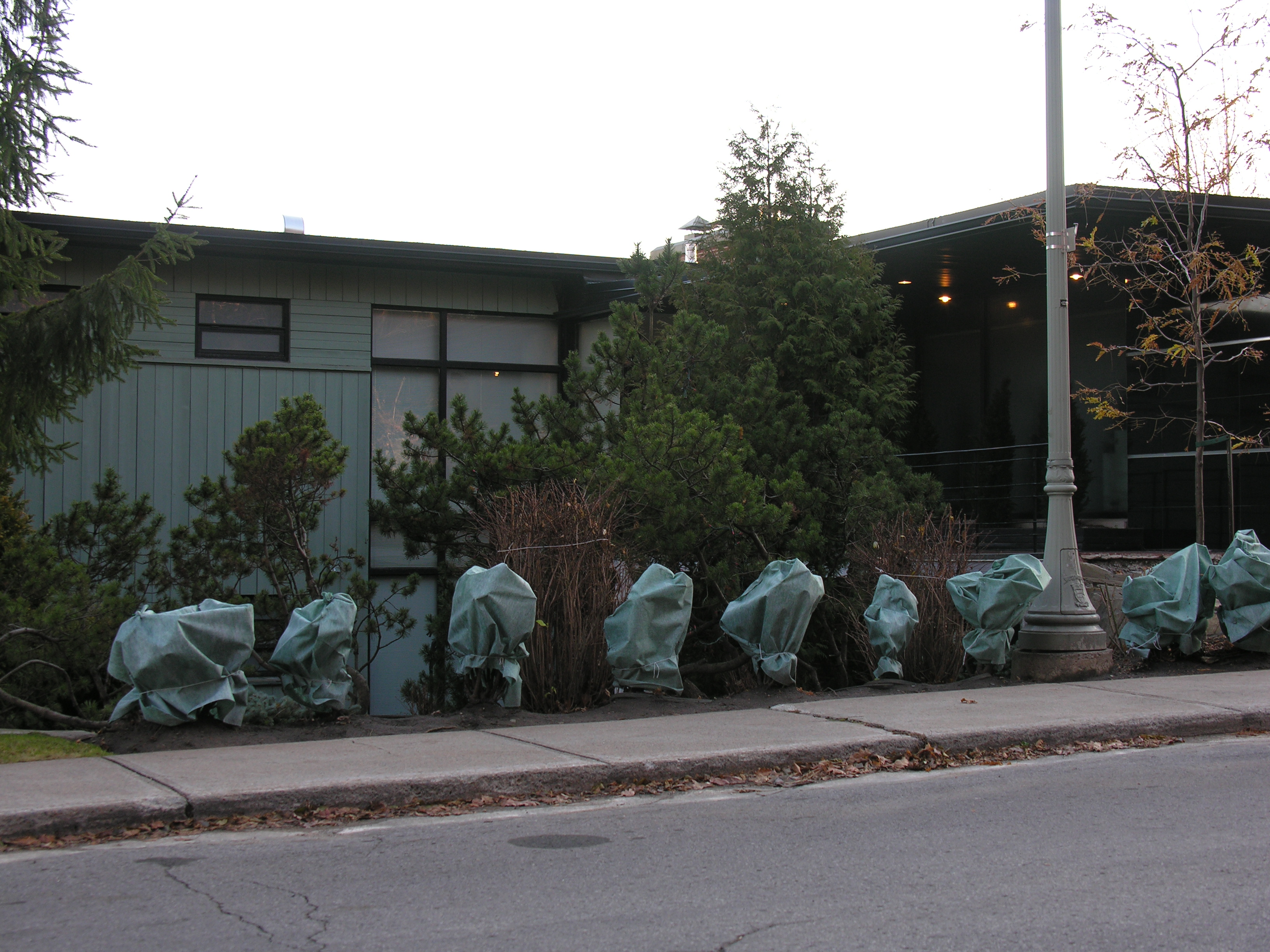
I’m just back from another trip to Montreal. While there’s no snow yet, people there are READY for winter, and the preparations include their plants, shrubs and even their stairs and walkways.

funny-looking but effective

If you walk around looking at people’s front gardens, you see the shrubs and small trees all wrapped up like presents. This not only protects them from the cold, ice storm breakage and desiccating wind, for plants near the sidewalks, it also protects against ice melting chemicals. Believe me, they use a lot of those up there.

Here’s a line of boxwoods all wrapped up and ready for whatever winter – and city crews – throw at them.

While they’re at it, many Montrealers prepare their walkways and steps for winter, too. Sometimes this involves laying down rubber mats, but most people put down coir matting and affix it so it doesn’t buckle or peel away. Ice does not form on this stuff, so your front walk is much safer.

coir matting on top of stone

And speaking of winter prep, in Montreal, for the past couple of years, if you don’t get your snow tires on your car by December 15th, you can be fined – heavily. Up there, they don’t have time for people spinning their “all season” radials on the hills. Like I said, when winter finally does arrive, it’s serious.

Posted in Uncategorized | 16 Comments

Is It a Nut or Not?

Some more insights…and a holiday tip…from Herbdoc:

A casual remark by a fellow Master Gardener indicated that she had recently learned that almonds were drupes. This led me on a research quest to find out exactly what might be included in this botanical category and why.   

drupes

Some common drupes.

A drupe is a fleshy fruit with a hard layer (the shell) surrounding the seed so that almonds, cherries, mangoes, nectarines, olives, peaches and plums all qualify.  Some botanists also include the fruit of date palms, hickory nuts, macadamias, pecans, pistachios and walnuts because of their outer, green fleshy husks and stony seed bearing endocarp.  The coconut is considered a dry drupe because of its waterproof, green outer layer and woody inner layer.  The large seed is actually embedded in the coconut meat.

As if the term drupe wasn’t enough new information for me, bramble fruits such as blackberries and raspberries are composed of small, individual drupes.  Each individual is called a druplet!

sweet almond

Sweet almond.

So when you’re out shopping for berries or nuts for that Thanksgiving feast this year, it might be fun to ask the produce clerk where he keeps the drupes.  After all, we botanically correct types shouldn’t be calling tryma (the specialized term for nutlike drupes) nuts!

Posted in Uncategorized | 2 Comments

A Letter to My Houseplants

DSCN5241

My beloved fern garden

Dear Plants,

Please don’t take this the wrong way and drop all your leaves or anything, but it’s time for me to decide who will spend the winter with me, and who has to go.

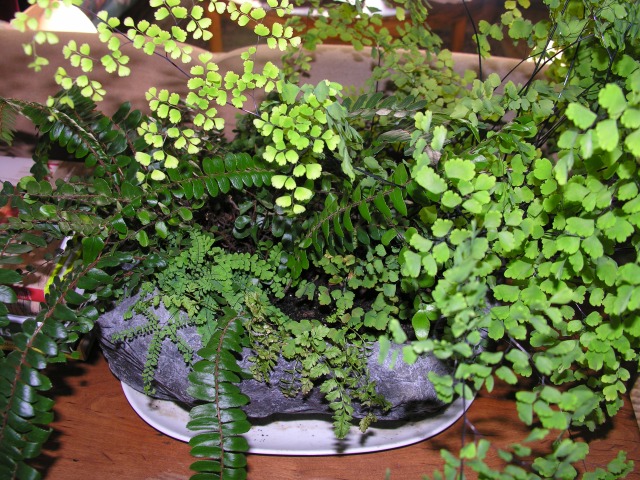
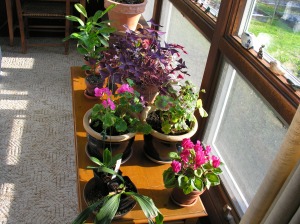
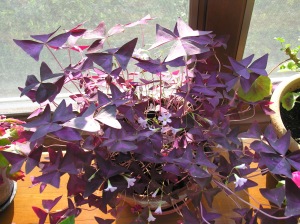
First, on a positive note, I am thrilled with the performances of several of you. Fern garden: I could gaze at you for hours. You are welcome to stay here as long as you like. Oxalis, you never fail to amaze me with your constant flowering. And that purple foliage is a standout. Keep up the good work. Ficus, I know you suffered on the deck in that sun and wind when we moved. I hope you recover soon.  The same goes for you, hibiscus. I see you are already sending out leaves where I cut you back. Next summer it would be nice if you could get off your roots and flower already.
DSCN5231

Lots and lots of light

Christmas cactus, when you arrived as a gift last December, I hoped you would flower your little head off. I watched you anxiously all summer, but you did not grow at all – not even a tiny bit. But lo and behold, all of a sudden you burst forth with buds everywhere. Nice.Very nice.

Geraniums, you continue to flower years after my mother-in-law begged me to keep you over one winter. Hah! I knew you’d never leave. Anyway, you look pretty and your flowers are cheery, so keep it up.

Rosemary topiary, you have spent your entire life indoors, so I was astounded when you flowered this past summer – lovely little blue flowers. You’re one of my originals, and besides that, you smell great and I can use you in my cooking.  I like multitaskers.

And you, cyclamen, who arrived at the hospital to cheer me when I was laid up a year ago. You are never out of bloom. I did repot you and got you out of that nasty plastic thing, but I think you’d flower no matter what.

Orchids: most of you have had a good year. I am very impressed with the performances of the following: most of the phaelenopsis, and the new aerangis citrata. I am less than gaga over the zygopetalum, the dendrobium and the oncidium, which, despite my best efforts, continue to languish. Well, my exotic little friends, it’s time to throw out some spikes or buds or whatever, because my patience has its limits.

Meyer lemon and  Plumeria, don’t think you’ll sneak under the radar. Lemon, what is it with you? I even bought you that special chelated iron you were whimpering for, and you have not grown one teeny bit since I took you home.  Plumeria, I know you didn’t enjoy the move, and I let you to sulk for a while. But are those new leaves you’re starting to push out? I hope so.
DSCN5235

oxalis triangularis: a star performer

Finally, I must remind all of you that there is a give and take here. Taking a space in my house and receiving loving care from me must be rewarded with performance on your part. If there is anything you need that I am not providing, please let me know as soon as possible. Otherwise, a few of you slackers – and you know who you are – may wake up one morning in a different spot: the compost bin.

Yours Truly,

Your Caregiver

Posted in Uncategorized | 17 Comments

Bouquet Garni and Fines Herbes

In her last post Herbdoc told us how to make herb vinegars. What better to complement this than her recipies for bouquet garni and fines herbes.

If you’ve been looking at special recipes for the holidays, you may have come across two French expressions, “bouquet garni” and “fines herbes” in the ingredient lists.  Both of these herb and spice combinations are easily made at home and add wonderful flavors to dishes.

bouquet garni herbs

Bouquet garni herbs.

Bouquet garni is a blend of herbs and spices, generally tied together with string in several layers of cheese- cloth and is used for seasoning stews, soups or marinades.  Fresh sprigs or dried herbs and spices may be used.  A sweet bay leaf is always included in the recipe.  Other popular herbs and spices include parsley, thyme, marjoram, sage, savory, celery seed and peppercorns.  The amounts are selected based on personal taste, but it’s best to simmer the bouquet in the last half hour or so of cooking time so that the flavor doesn’t deteriorate.  Try ¼ cup dried parsley with 2 tablespoons of dried thyme, a bay leaf and 1 teaspoon celery seed with 5-6 peppercorns. Remove and discard the bouquet prior to serving.

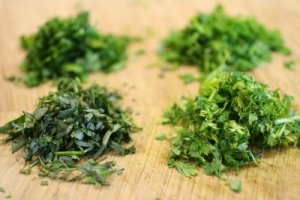
Fines herbes is a classic blend of delicately flavored fresh herbs.  It is used to season mildly flavored dishes such as fish, vegetables or omelets.  The herbs are freshly chopped or snipped and are added to the dish in the last few minutes of cooking.  Traditionally the fines herbes include parsley, chives, chervil and tarragon.  Some cooks like to add other herbs to the list:  basil, marjoram, rosemary and thyme, but these must be added in very small amounts or they will

Fines Herbes 2

Fines herbes.

overwhelm the delicate flavor of the fines herbes. You can try 2 tablespoons each chopped Italian parsley, chervil and some snipped chives with 4 teaspoons chop- ped tarragon and 1 tablespoon of thyme,  finely chopped.

Experiment with different combinations, taste and judge for yourself what you and your family like and dislike.  Cooking with herbs is a learning experience and can be a lot of fun!

Posted in Uncategorized | 2 Comments