El Nino and the Garden

In case you missed it, this is an El Nino year. NOAA tells us that this quirky climate phenomenon is now strengthening and could become what it calls a “moderate” event. El Nino is caused by a combination of changes in the trade winds and unusually warm water in the Equatorial Pacific.  For a more detailed explanation, click here.

Basically, it’s all about sea surface temperature. That “SST” affects the weather on land,  so it is helpful to keep an eye on changing SST patterns so we can garden accordingly. So will the coming winter be warmer, wetter, cooler or drier? It depends on where you live.

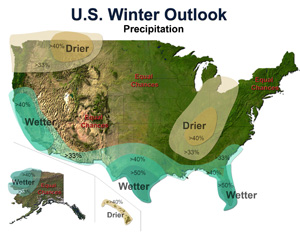
winteroutlook_precip_300

Here in southern New England, climate scientists say they don’t know how El Nino will affect our temperatures or precipitation. Our winter might be “average,” or we could experience some fluctuations. The only prediction I could find pointed to a slightly warmer, and perhaps wetter winter ahead.

Here’s the  latest “official” forecast from NOAA’s Climate Prediction Center:

For the contiguous United States, potential impacts include above-average precipitation along the Gulf Coast, from Texas to Florida, and below-average precipitation for the Pacific Northwest.  Other potential impacts include a continued suppression of Atlantic hurricane activity, along with above-average temperatures and below-average snowfall for the Northern Plains.”

In Rhode Island, we will take our usual winter precautions. Years ago, we could depend on a nice cozy blanket of snow to protect our flowerbeds, but that is no longer the case. Many gardeners now use various windbreaks, mulches, conifer boughs and leaves for insulation. At this point, we don’t know how El Nino will affect us, if at all, so we will adapt as the winter progresses and hope for the best.winteroutlook_temp_300

Other parts of the country could experience  more severe weather events. Gardeners on the  Gulf Coast should prepare for rain, and possibly lots  of it. It looks like the Northern Plains could be dry, so gardeners there should probably give their trees and shrubs – especially the evergreens –  a good watering before the freeze.

Posted in Uncategorized | Leave a comment

Herb Vinegars

Herb Vinegar

Looking for a nice gift that is inexpensive and easy to make?  Flavored vinegar can be very costly if purchased in a store, but it’s relatively easy and fun to make. Who better than our regular contributor, Herbdoc, to show us how?

What you need:

  • Clean, dry decorative bottles with cork stoppers.  (These are available online from many vendors)
  • Gather the fresh herbs and veggies you plan to use.  Gently wash and pat dry on paper towels.  If using fresh veggies, make them pretty.  Slice peppers in strips; peel garlic; slice lemons and limes in rings.  Green onions and jalapenos can go in just as they are.  Popular combinations include:  basil, garlic, and red peppers; tarragon and garlic; and parsley, sage, rosemary and thyme.  Remember that you must be careful not to use too much of a strong herb in a combination else the entire batch will taste of the strong one.  Single herb vinegars can also be made.
  • Spices may be used, but they must be whole or they will cloud the vinegar.
  • A good quality vinegar should be purchased.  Try red or white wine vinegar or rice vinegar.

Directions:

  1. Place the chosen herbs, veggies and/or spices in clean jars.  Use a long wooden skewer or chopstick to push them down in the bottle.
  2. Fill the bottle with vinegar about ½” from the top.
  3. Cork the jar, and if you like the look, cover the cork with melted colored wax.
  4. Label the bottle with the type of vinegar and the herbs/veggies included.

These vinegars are wonderful in green salads or salad dressing, marinades or in any recipe which calls for vinegar.  Unused, the jars make outstanding decorative accents in the kitchen!

Posted in Uncategorized | 6 Comments

Plants in a Parallel Universe

Tovah Martin:  photo: Susan Johann

Tovah Martin: photo: Susan Johann

With most outdoor garden chores winding down, I turn my attention indoors – to  my houseplants. But indoor gardening can be way more than  plants growing in pots.  With a little imagination, you can turn a few plants, some pebbles and glass into a captivating vignette – in other words, a terrarium.

A few months ago, I read a new book by horticulturalist and writer, Tovah Martin, entitled “The New Terrarium.” I have always found terrariums fascinating. I made one as a child one summer out of moss and ferns, and it was so lush and green and mysterious inside. I kept it by my bed and looked at it – or into it – every day.

After inviting Tovah to lead a terrarium workshop for our Master Gardeners (she said yes!) I asked her a few questions about the book, and her obvious interest in this facet of indoor gardening.  Here’s part of our conversation:

Why are terrariums so appealing? Is it because they are like little “parallel universes?”

“Parallel universes is certainly an apt description.  I like to call them ‘small worlds.’  There’s an element of fantasy to a terrarium – like someone shrank the ecosystem.  But there’s also the creativity factor – a terrarium is a design challenge in miniature.  And everyone can succeed with a terrarium – it can even survive in your office cubicle.  Plus, it’s the ideal venue for soaking up stress.”

Are they enjoying a resurgence in popularity?

“Absolutely – terrariums have gone through several spikes in popularity – first in the mid-1800s, then in the 1970s, and now.  The current trend features a sleeker, simpler terrarium compared to its more fussy predecessors.”

What made you want to write about them?

“I’ve been growing terrariums for many, many years.  Actually, Clarkson Potter came to me with the project (I was recommended by another of their authors – Ken Druse), but I jumped at the opportunity.  The book definitely fills a gap.  And I was lucky to team up with Kindra Clineff, who created truly brilliant photos.”

Can you name a few plants that are best suited to terrarium culture?

“Ferns and tropical mosses (selaginellas) are some of the easiest terrarium plants.  Other very appropriate plants are rhizomatous begonias, orchids, peperomias, pileas, and members of the African violet family.  Basically, you want a plant that likes high humidity and indirect light.  And the plant should remain miniature.”

terrarium book cover

Tovah Martin's new terrarium book

Are there some plants that are not suited?

“Yes, plants that prefer sunny and dry growing conditions are not going to thrive – succulents and alpine plants quickly perish in a terrarium.  Most herbs also do not succeed – mints are an exception, they like shady, moist conditions, so they can be grown in a terrarium.”

What are the most important guidelines for a successful terrarium?

“Location, location, location.  Grow a terrarium in indirect light  –  direct light can quickly bake (read that fry) the plants in a terrarium.  Correct planting is also critical – firming the plants into the soil is a crucial step.  Basically, you follow all the same rules that govern planting out in the garden.”

Can you describe some common mistakes and pitfalls?

“Many people think that misting is necessary.  Actually, misting is a really bad idea in a terrarium because the environment is already moist.  Keeping the plants inside a terrarium clean is also critical.  Grooming, removing past-prime flowers, and cleaning the glass are all necessary for terrarium hygiene.”

Is your house full of them?

“Everywhere.  I counted 22 at one point, all sorts of shapes and sizes, but I finally ran out of room and sold some at lectures.  Now they’re beginning to stack up again.  It’s hard for me to part with a terrarium once I’ve planted it.  I guess that I don’t want to lose the small world I’ve created.”

Do they make good office accessories?

“They’re perfect for the job.  Not only do they soak up stress, but they require almost no care.  And they’re contained, so they aren’t messy.  Plus, they love fluorescent lights.”

What sort of set-up would you recommend to a beginner?

“I think that a simple jar with a mouth large enough to fit your hand into and a lid is the ideal vessel.  Apothecary jars are perfect for the purpose.”

Posted in Uncategorized | 4 Comments

This Post Sucks!

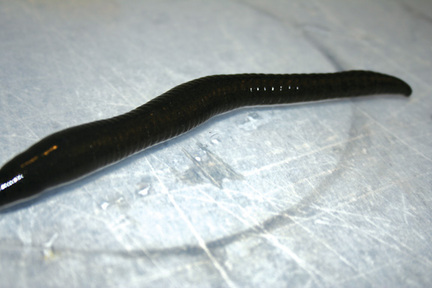
Haemopis ottorum

Haemopis ottorum

During our recent move, our dog stayed with my in-laws for a few days. She’s stayed there often. It’s a typical ranch house with flower and vegetable gardens in the back – no water feature of any kind.

The night of the move, when she came home, I noticed blood coming from one of her hind legs. When I rubbed the area, small, dark wormy things, about ½ inch long, fell off. Exhausted, grossed out, and assuming they were slugs, I threw them in the trash. Then my husband suggested we try and bag one just in case it was a parasite and the vet needed a sample. Luckily, another one did fall off and he gleefully scooped it up in a plastic bag which he then stashed in the fridge.

I didn’t bother looking at the creature in the bag until the next morning. It sure looked like a leech to me. I telephoned the vet and made an appointment so she could remove any remaining “things” – whatever they were – from my dog’s leg. When I showed her the sample, she confirmed that it was indeed a leech.

I have since found out that certain leeches – called terrestrial leeches – live on land, in moist environments, eating worms among other things. Most of the information on terrestrial leeches comes from places like Australia where they are a big problem, and actually attack people.

But lo and behold, just this past September, a couple in New Jersey came upon a terrestrial leech in their backyard. They kept it alive until they found a scientist who was interested in having it, and it has since been designated a new species: Haemopis ottorum. You can read the story here.

kidswith leeches

New Jersey children with their new "friends"

So if this leech has gone undetected in New Jersey, as scientists claim, for centuries, is it possible we have our own terrestrial leeches right here in Rhode Island? The leeches on my dog were much smaller than the Jersey monster – appropriately sized for “Little Rhody.”

I did not take any pictures of “our” leeches, and the vet was grossed out by the sample leech and unfortunately threw it away. How did my dog end up with them? Where did they come from? I may never know.

Posted in Uncategorized | 10 Comments

Nature’s Predictions: Winter Weather

wooly bear cat

Herbdoc has yet another timely and helpful post:

New England folklore tells us that the wooly bear caterpillar (the larva of the Isabella tiger moth or Pyrrharctia Isabella) can predict how harsh a winter is in store.  If the brown band in the middle is large, it will be a mild winter; if narrow, a severe one.

Severe winters are also forecasted by:

  • an abundance of acorns
  • very dense feathers on chickens or thick coats on raccoons
  • Very thick skins on onions or corn husks
  • Crickets in the chimney or on the hearth
  • Frequent halos around the sun or the moon.

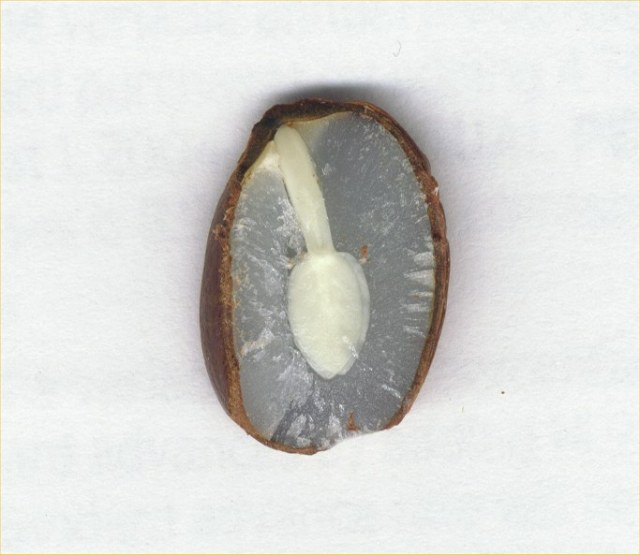
Old timers swear that winter weather can be forecasted by the shape of persimmon seeds.  Seeds are cut in half, and the shape inside predicts the weather.  If the cut seed has the shape of a knife, the winter will be so cold that the wind will feel like it’s cutting through you.  If a fork shape appears, the winter will be mild with light dustings of snow, but if the seed looks like a spoon, the winter will be harsh with much snow to shovel.

a persimmon seed

Is this persimmon seed trying to tell us something?

Another prediction of winter is made from fog or late leaf fall.  For every fog in August, there will be a resultant snow in the winter, and an old rhyme tells us:

When leaves fall early,

Fall and winter will be mild;

When leaves fall late,

Winter will be severe.

Given that we have already had a significant snowfall as close as Massachusetts, that the leaves on my trees continue to be abundant and green, and we have had a massive amount of acorns, I’m wondering if we’re due for a harsher winter this year.  I believe I’ll buy a persimmon this week and wait patiently to see if my suspicions are confirmed.

Posted in Uncategorized | 9 Comments

Making the Bed for Spring

So you want to plant a new bed next year…well, now is the time to get it ready. First thing to do is mark the outline of your planned bed with a hose, or string, or some powdered lime. Then you can do one of three things: (1) spray the area with an herbicide and then dig up everything in the spring; (3) rototil the area and add compost and manure (seems the easiest but think of the damage done to earthworms, not to mention all the weed seeds and fungal spores you will bring to the surface to thrive in your garden); or (3) or lasagna gardening, the no-dig, no-till organic gardening method that results in rich, fluffy soil with very little work.Lasagna Garden

Let me explain what lasagna gardening is and you’ll see why it is the best choice. I am telling you this now because fall is the optimum time of year to make a lasagna garden. It is a method of layering organic materials that break down over time…you are actually composting the bed. This is what makes it so easy. All you have to do is put down three to five layers of newspaper and a layer of compost or at least good loam directly on top of the grass or weeds in the area you’ve selected for your bed and then wet this layer down to start the decomposition. In the spring, all you have to do is plant, fertilize, and add mulch – another layer. There is no need to remove grass and weeds, or to double dig the soil, or even to work the soil.

No digging, no weeding! Could you ask for anything easier? Enjoy your new garden bed.

Posted in Uncategorized | Tagged | 8 Comments

Colchicums: Cool Fall Color

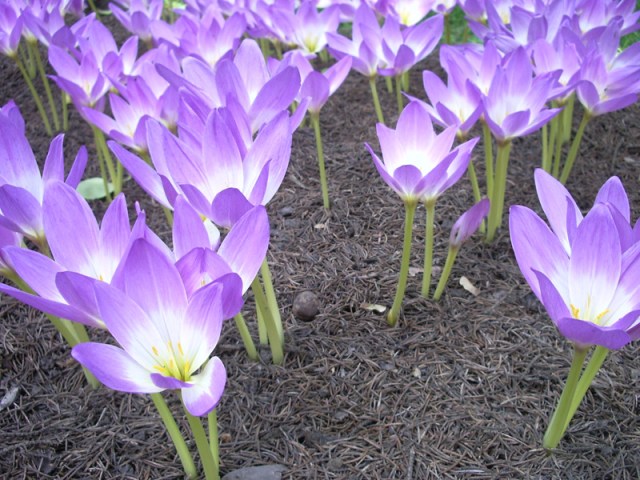
colchicum_sp2

I wish I had colchicums in my garden now. I used to grow them, and they never failed to wow me in the fall, when they would send up big, showy flowers from the grass or bed. No foliage – just great waterlily-type flowers.

Often called “autumn crocuses,” colchicums aren’t crocuses at all. They’re part of the lily family, and they are the only bulbs known to bloom while they’re dormant. (Actually, they are corms, not bulbs, however since most gardeners refer to them as bulbs, that’s what I’ll call them here.)

Colchicums produce foliage in the spring, but then the foliage dies back, leaving no trace of the plant. The flowers emerge in late September and October, showing spring-like mauves, pinks and even a stunning white – an unexpected and refreshing change from the usual autumn garden colors. They like to get several hours of sun a day, but will tolerate some shade. Plant them in a well-drained spot, and let them dry out a bit more while they are dormant.

colchicum_sp1

Colchicums have a narrow window of planting and blooming. You can buy and plant them in the fall and enjoy instant gratification with flowers a couple of weeks later. For that reason, they are not always available at garden centers, and most people end up buying them from mail order sites.  The bulbs can be pricey, but the plants are very easy to divide, and your initial investment of between $5 and $15 per bulb can yield many plants in just a couple of years.

Posted in Uncategorized | 4 Comments

We Have Color! and fungus gnats and whiteflies and aphids….

DSCN5161

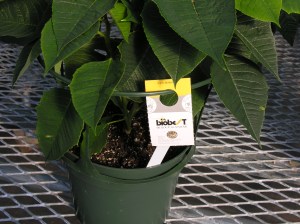
A few weeks ago, I reported on the poinsettias that the University of Rhode Island Master Gardeners are growing for sale in early December. Despite assaults from the above-mentioned (and common) greenhouse pests, the poinsettias are thriving. Many of the plants are showing bract color, and some are even boasting cyathia (the actual flowers).

The Master Gardeners employ integrated pest management (IPM) in the greenhouse, and for those of us who volunteer there, it’s always interesting and educational to see what’s being used each year. I like to imagine the ongoing war – on a very tiny scale – between the pests and the organisms we enlist to control them.

Here are the weapons in the IPM arsenal this season:

Gnatrol: this is a larvacide, added to water to control fungus gnats, which, like whiteflies, often occur whenever you water the plants from the top. The active ingredient in Gnatrol is Bacillus thuringiensis israelensis (Bti). To control adult gnats, we use sticky traps. A daily (and time-consuming!) fluffing of the soil in each pot also helps fight them.

fluffing, fluffing, always fluffing...

fluffing, fluffing, always fluffing...

Aphid Parasite Aphidius colemani: Aphidius colemani is a small parasitic wasp that lays its eggs in aphids. The eggs hatch inside and the larvae spin cocoons, which swell the aphid’s body. The adult wasps then exit the aphids’ bodies, leaving behind hard brown shells called “aphid mummies.”  Aphidius colemani is a very good flyer and is able to locate small colonies or even individual aphids! Gross, but effective.

Whitefly Parasite Encarsia Formosa: Encarsia formosa is a tiny wasp that attacks whiteflies. Adult female Encarsia kill whitefly scales in two ways: by puncturing and feeding on pupae, or laying their eggs in pupae (each female may produce 30-500 eggs during her lifespan). Encarsia eggs hatch into tiny larvae, which cause the whitefly pupae to turn black as the young wasps mature.

These wasps arrive on small cards, which are hung amid the plants throughout the greenhouse. The cards are replaced every couple of weeks. It’s cool to look at them through a magnifying glass, because you can see the wasps moving around.

Eretmocerus eremicus: another small wasp that parasitizes and host-feeds on silverleaf whitefly larvae. This is a valuable tool for controlling silverleaf whitefly, because it is more tolerant of higher temperatures and pesticide residues.

caution: parasitic wasps at work!

caution: parasitic wasps at work!

With less than two months to go before our big sale, the “points” are looking good, thanks to the efforts of Master Gardeners – and an army of tiny insects.

Posted in Uncategorized | 3 Comments

The Grass is Greener…

It is Fall, and here in RI that means it is the best time of year for cool season grasses. My lawn looks great from March to November, but now it is also free of weeds.

Grass is Greener

As a master gardener, I am very tuned in to lawn care practices and I am frequently asked what makes my lawn so healthy. When I explain that one of the most important things is not fertilizing four times a year most people are shocked. Yes, besides doing regular soil testing and using mostly fescue grasses, I fertilize only in the fall (around mid September) and then again in late March, every other year.

Too much fertilizer – that means four applications every year (as recommended by major lawn care companies) – is a waste of money and is harmful to the environment, as well.  You see, grass only uses a limited amount of fertilizer and the rest goes into runoff that pollutes our water. Fertilizing grass in summer when grass is dormant just stresses the grass. Excess fertilizer also means too much nitrogen, which is converted to nitrous oxide and destroys the ozone layer.

So remember, the grass is greener in Fall but only if you stop applying fertilizer four times a year and follow other good lawn management practices.

Posted in Uncategorized | Tagged | Leave a comment

Cold and Flu Season

slippery elm

slippery elm

Herbdoc discusses some tried and true herbal cold and flu treatments:

If you were to ask an old-timer what could be done for colds and flu, you probably get a quizzical look and a “Nothing you can do” answer.  My grandmother always said “Three days coming; three days staying; and three days going”, and she was right.  Once you get a cold or the flu, that’s the approximate amount of time you’re stuck with it!

There are, however, several ways to give your immune system a boost prior to the season hitting its full swing.  I’ve used Echinacea for years if I think I’ve been or will be exposed to viruses or germs.  For instance I’ve never gotten a respiratory illness from plane travel.  It is also said to reduce symptoms significantly if you contract a cold/flu.  It can be taken by capsule or in a tea or tincture.  One aside though…if it’s a good Echinacea tea or tincture, your tongue may feel numb for a while.  This is not dangerous though.

Another miracle immune system booster is garlic (Allium sativum).  It contains allicin which is one of nature’s most potent antibiotics.  Use it liberally in your food, or if you don’t like the taste, it is available in capsule form.

ginger

ginger

Scientists have also isolated sesquiterpenes, a chemical, in ginger (Zingiber officinale).  Ginger is particularly good for preventing or lessening the severity of the most common cold, the rhinovirus.  Gingorols and shogoals, other chemicals in ginger, help to reduce pain and fever and reduce coughing.

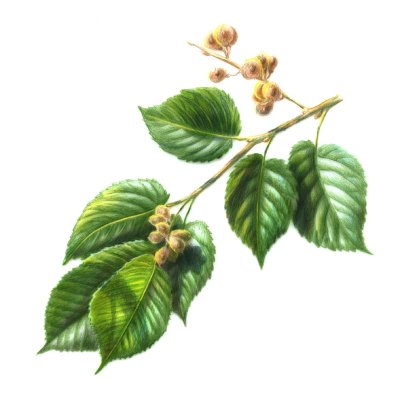
Two other herbs to have on hand are goldenseal (Hydrastis canadensis) which has antiseptic and immune building properties and Slippery Elm (Ulmus rubra).  Slippery Elm’s bark contains large quantities of mucilage which soothes sore throats and acts as a cough suppressant.  It is FDA approved.

Keep a few of these on hand in your medicine cabinet or borrow some from your pantry shelves.  Old folklore says that hot chicken soup is excellent for the colds and flu, and recent research has proven it to be true.  Throw in some onions and garlic and those veggies that you preserved from the garden this summer, and you’ll have a potent tonic and a great lunch!

Disclaimer: the above text is for informational purposes only, and is not meant to take the place of a doctor’s diagnosis.

Posted in Uncategorized | 2 Comments