My Garden Now

Above is a photo of what my garden is up to these days. Everything is so far ahead of where it would normally be that I can’t even remotely plan a succession of bloom. It’s futile.

I have a fondness for Monarda. You have to stay on top of it, because it can get a bit pushy, but nothing beats the tall stems and red flowers of “Jacob Cline.” It is irresistible to hummingbirds, and the plant is tall enough to keep the hummers out of the clutches of my neighbor’s incredibly annoying and predatory cat. ( I could rant for days on this subject, but I will spare you.)

And this is my new lavender, called “Grosso.” The people at the nursery assured me that if it was happy, it would overwinter just fine (it’s hardy to Zone 6). We’ll see. It is a lovely plant, though, and I like lavender near the sea. I think it’s right for the coast.

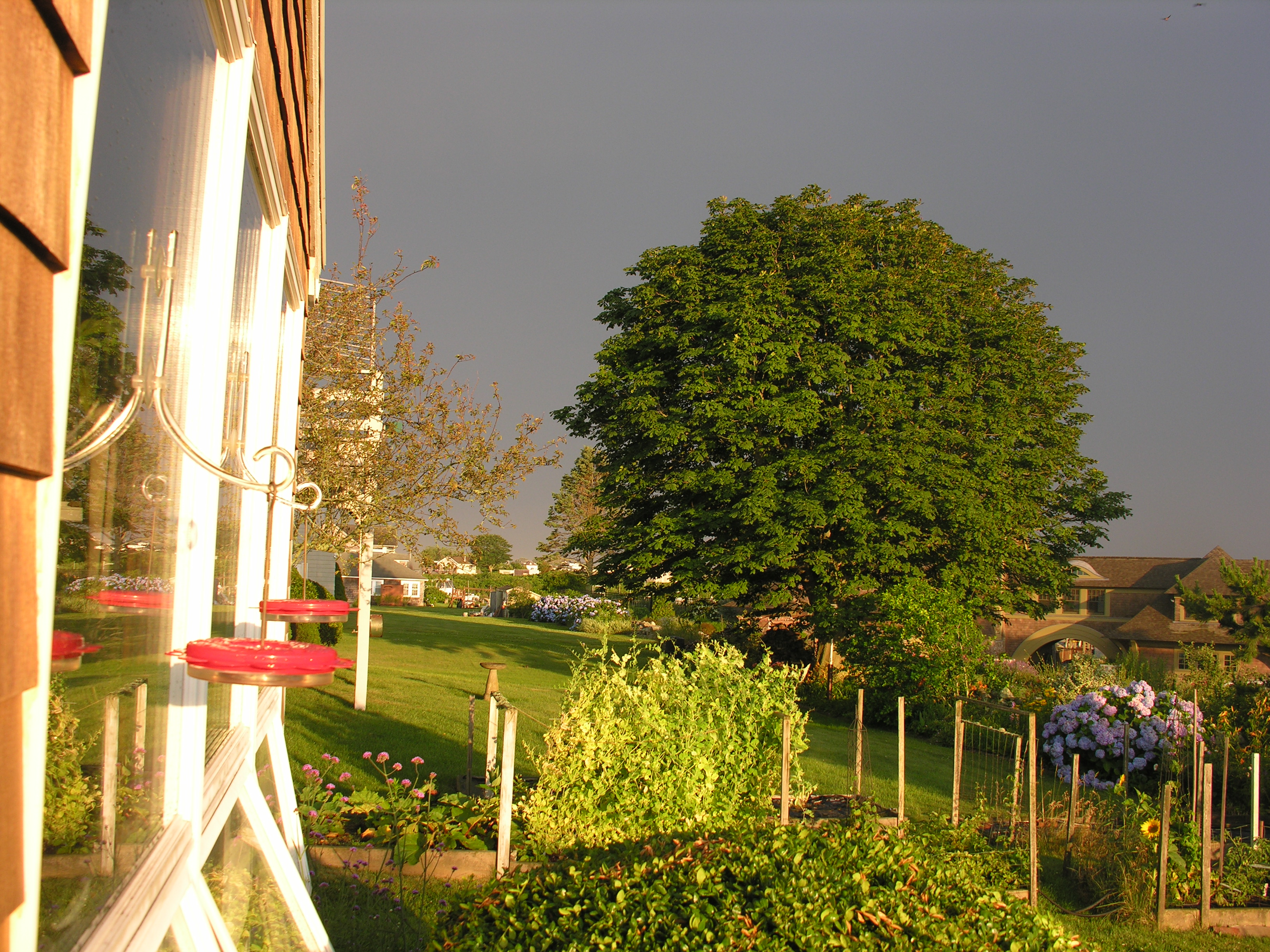
We just had some cool thunderstorms, and the light is amazing right now – brilliant sun against an inky sky. Note hummingbird feeders.
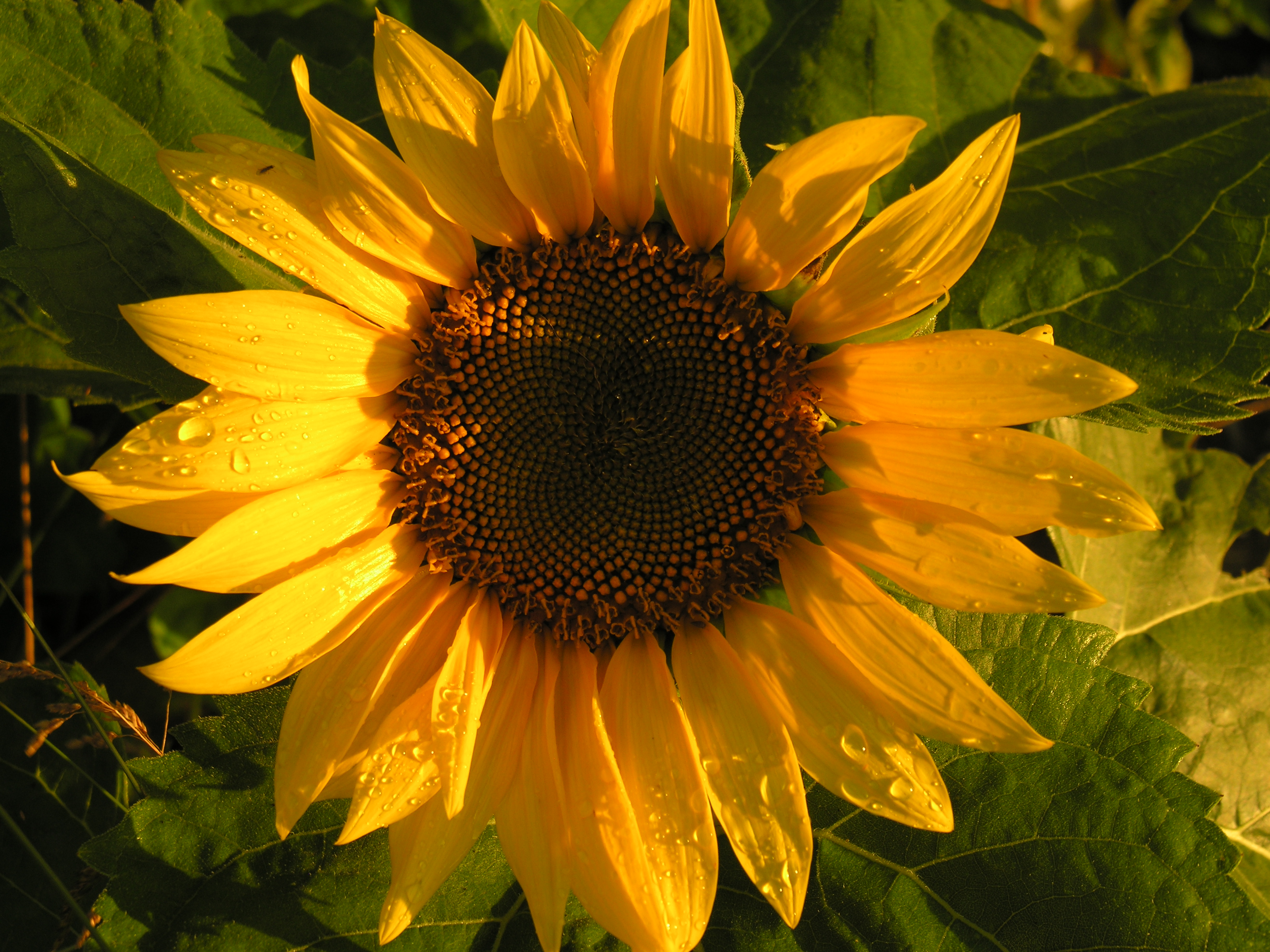
I dashed outside to snap a few, and caught this sunflower shedding some raindrops. This is a gift from my avian friends, who deposited seeds in just the right places. Thanks!

A Happy Fourth to my American readers and friends!
Posted in Uncategorized | 8 Comments

The New York Botanical Garden IV: Trees

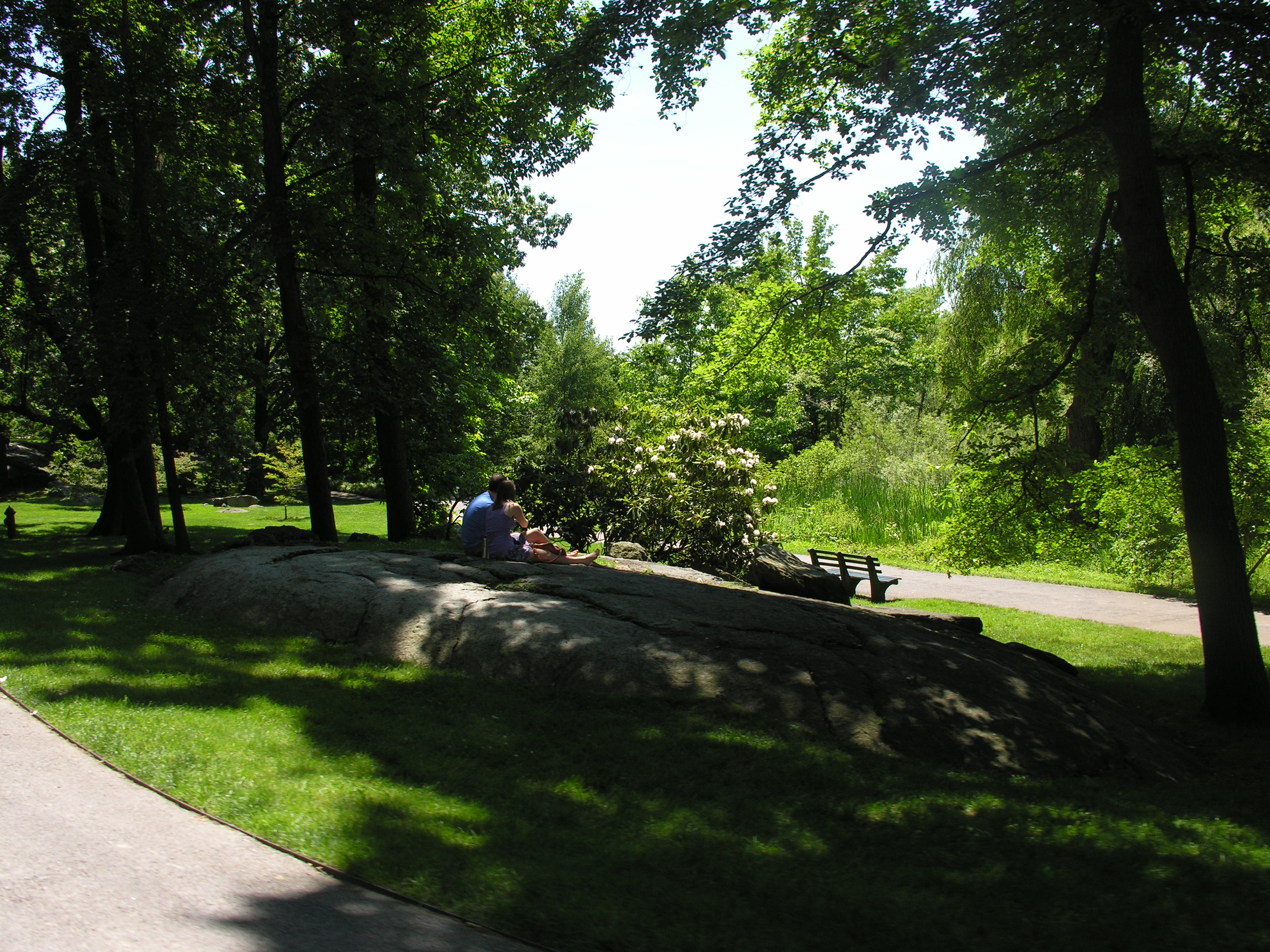
The New York Botanical Garden provides an oasis of relaxing green in an intensely urban setting. I have been nattering on about the ornamental plantings I saw – and they are beautiful – but the trees are spectacular. This is  a world class arboretum.

Here’s an example of the kinds of trees you will see here. There is also a “native forest,” a  remnant of the old growth forest that is now Manhattan. We did not have time to walk in it, but I would like to visit it sometime.

There are interesting rocky outcroppings in certain areas of the garden, and several small lakes. The Bronx River also runs through the property.

A weeping hemlock, one of my favorite trees.

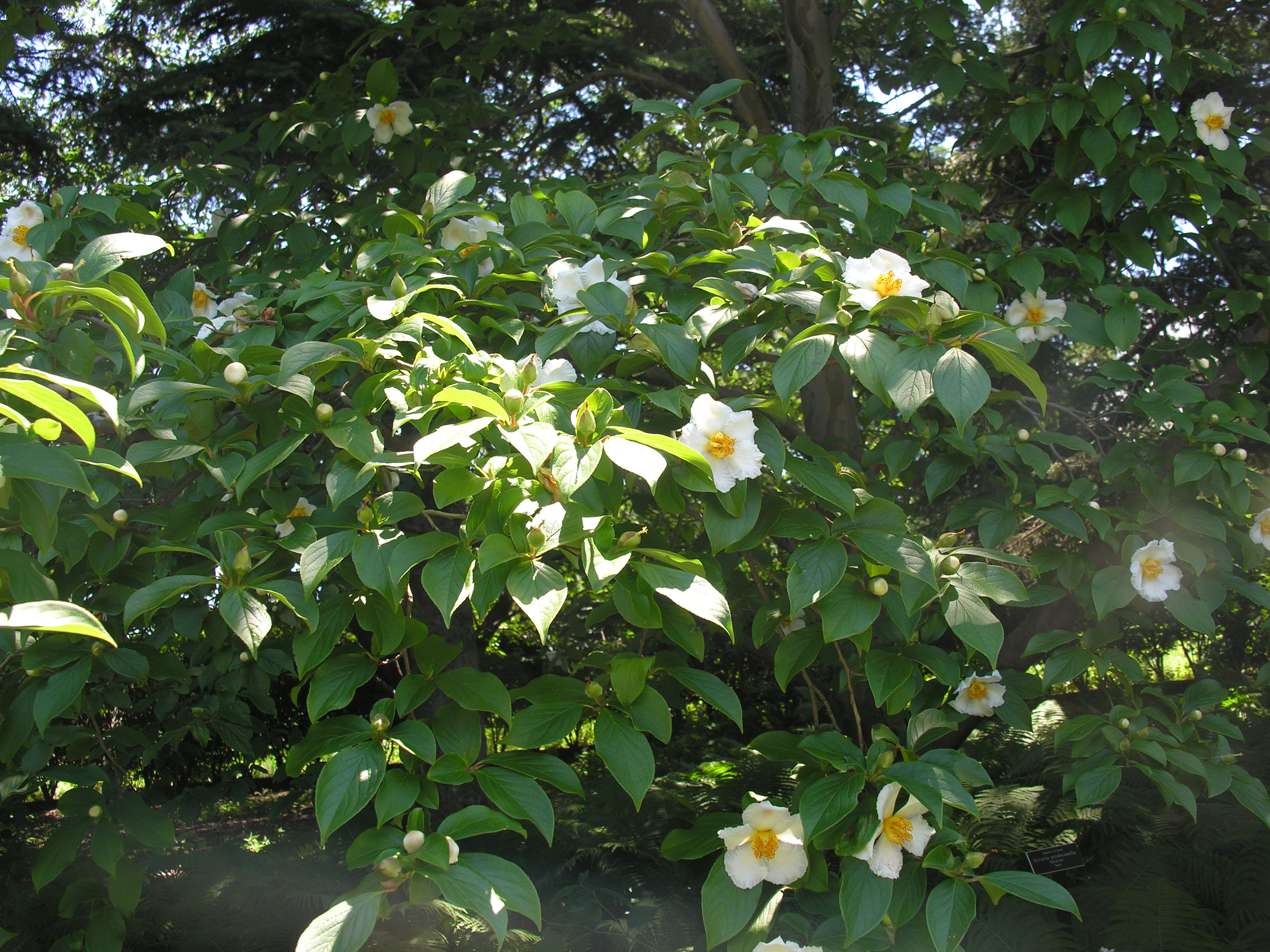
A Stewartia in bloom.

Families enjoying a stroll along the allee of tulip poplars. New Yorkers seem to love their botanical garden and treat it with respect.

A few final things I really appreciated about this place: almost every plant collection was labelled, (thank you!!!)  there was a tram, so you could jump on and quickly reach the next exhibit, and finally, there were large “you are here” maps everywhere which made finding your way around a breeze.

I will end with this shot I took of someone’s  plants high on a window ledge of the Mertz library.

Posted in Uncategorized | 7 Comments

The New York Botanical Garden III: Roses

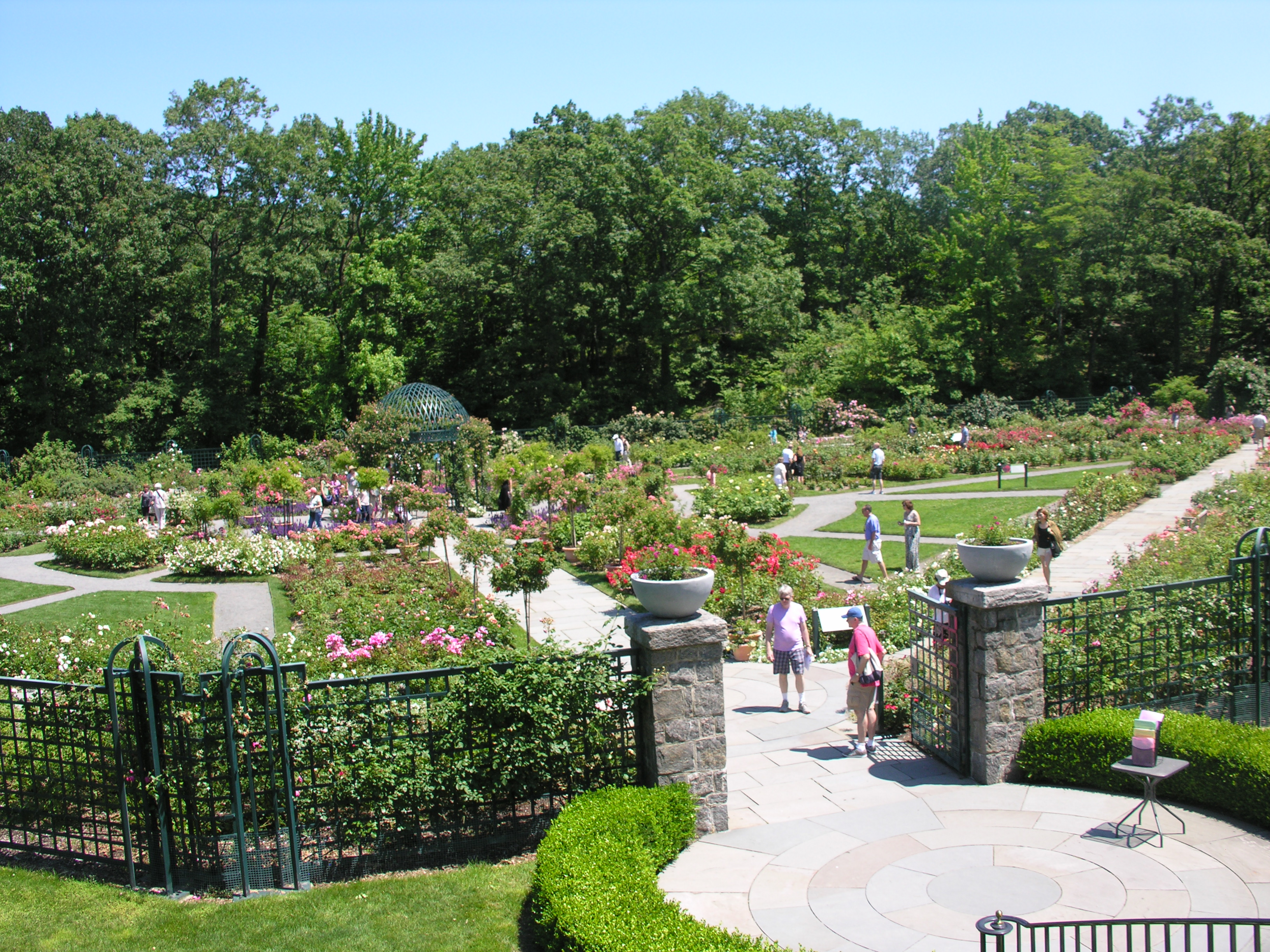
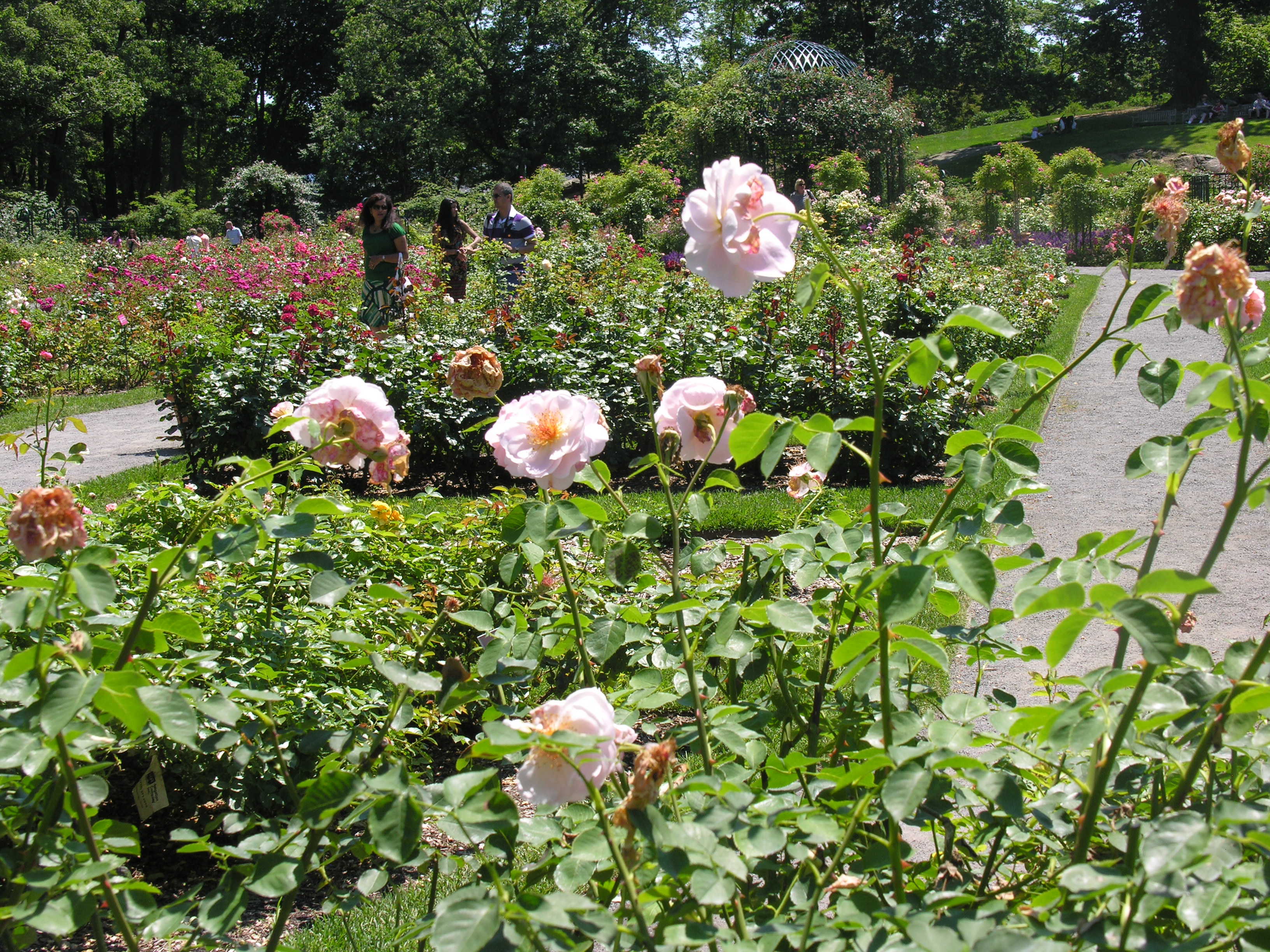
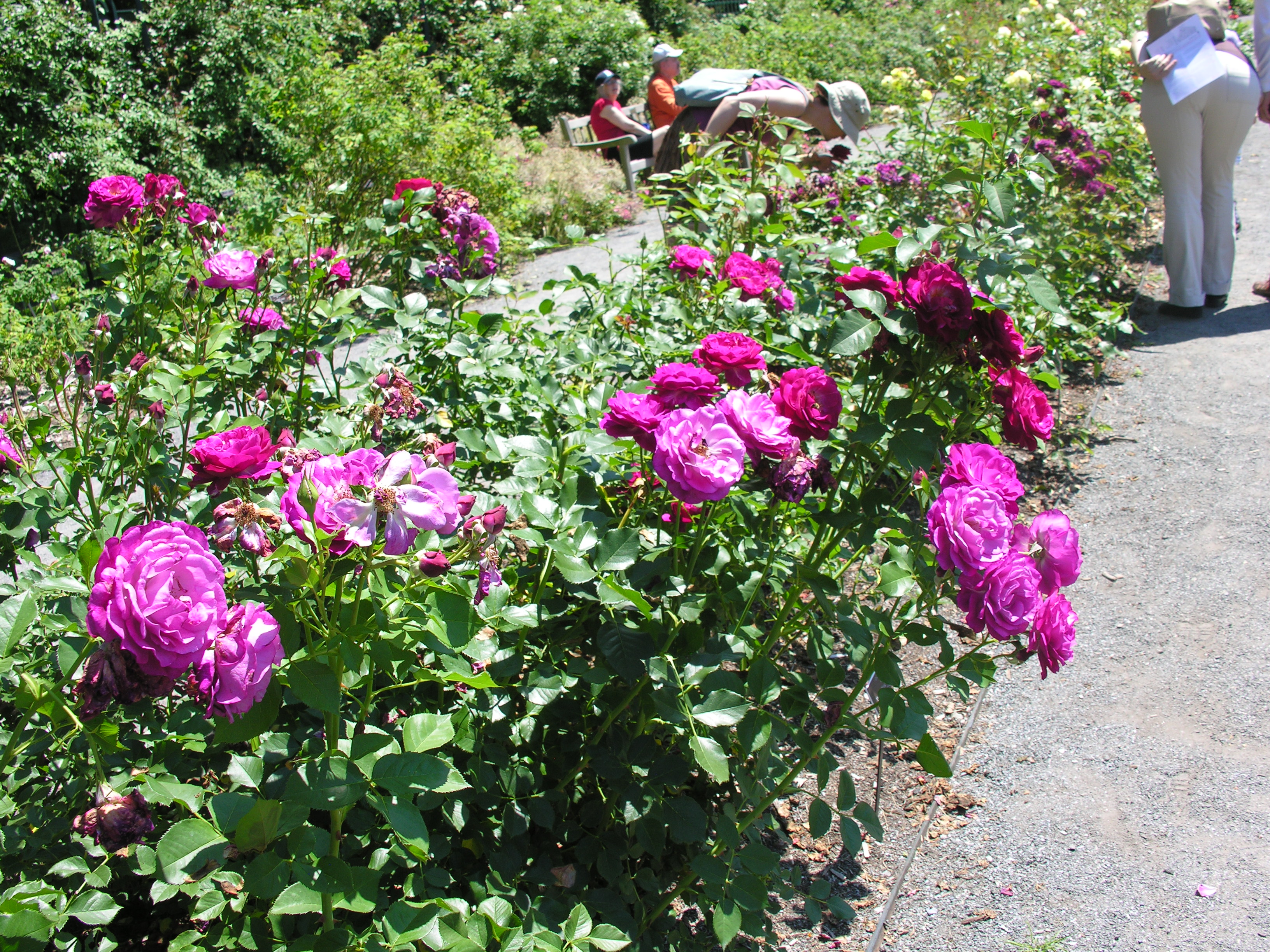
The above photo might give you an idea of the size of the Peggy Rockefeller Rose Garden at the New York Botanical Garden. I say might, because you have to see it to  understand the scope of this display.

Designed in 1916, completed in 1988, and renovated in 2006, this garden features “sustainable” varieties – 600 of them. Described as “one of the world’s most environmentally-friendly rose gardens,” it certainly is a rose-lover’s paradise. I still couldn’t determine whether they still spray occasionally or use other chemical treatments on the 4,000 plants, though. Everything looked pretty healthy, and I don’t remember seeing any black spot.

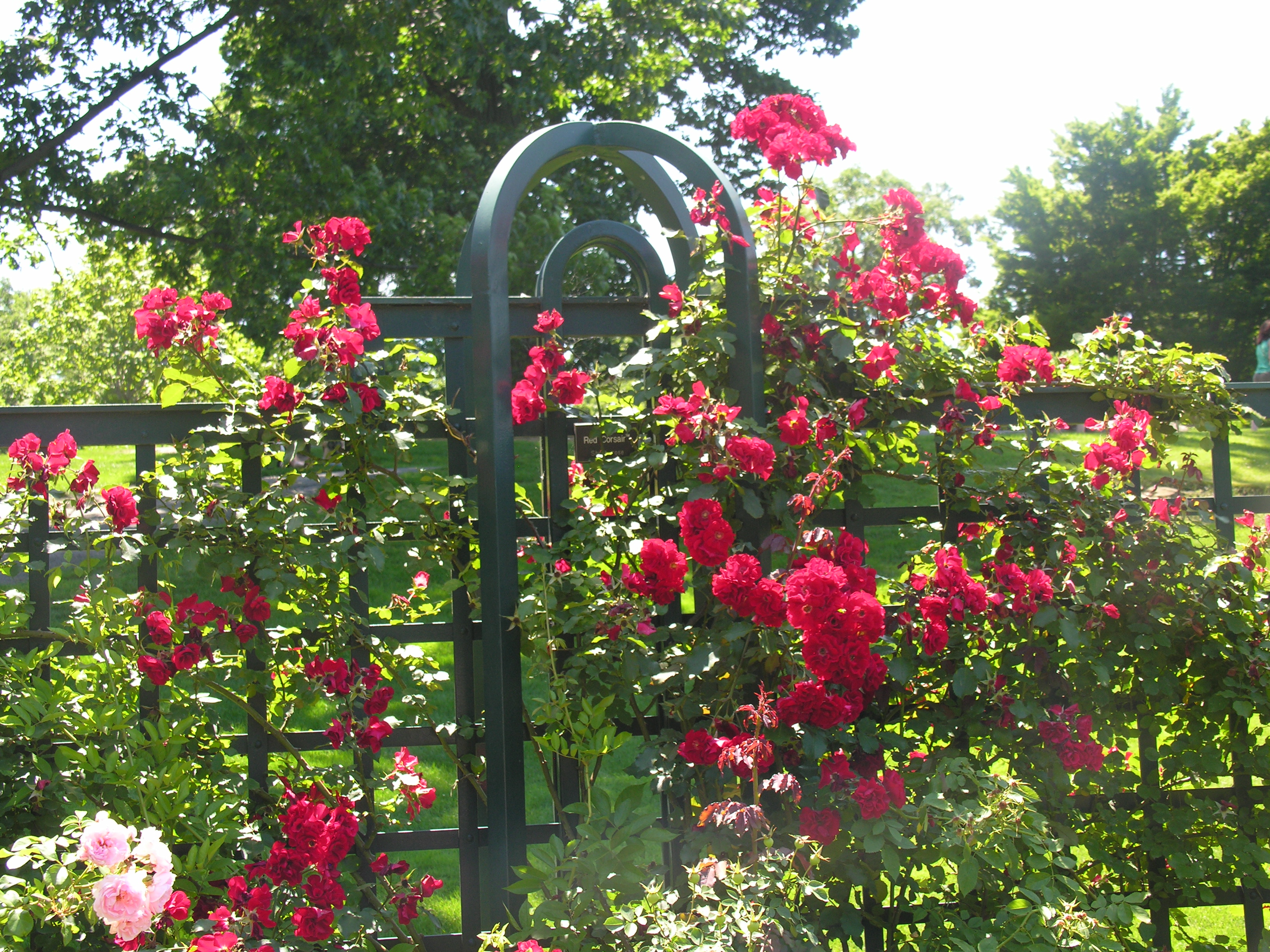
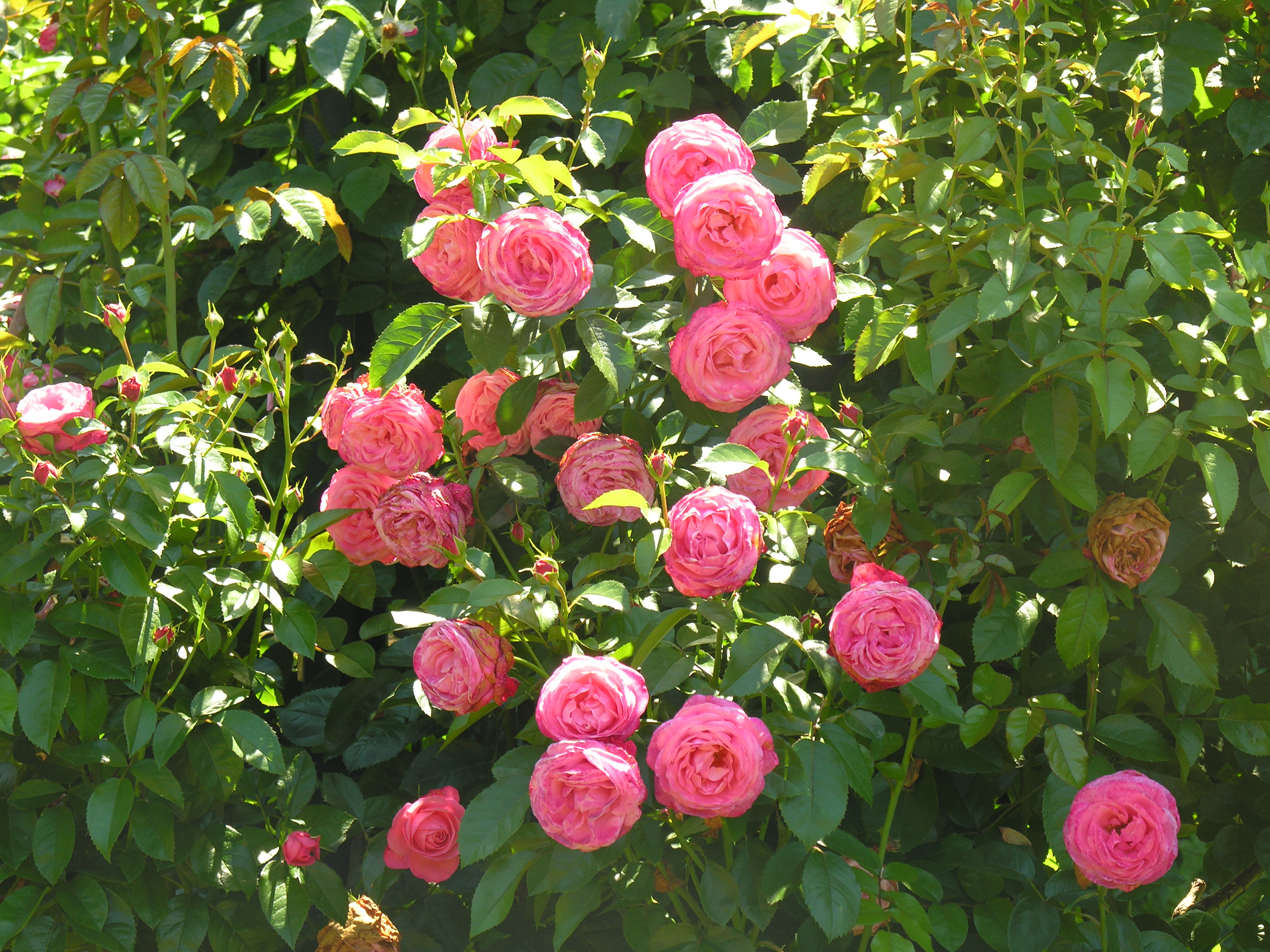
I loved this in-your-face red climber.

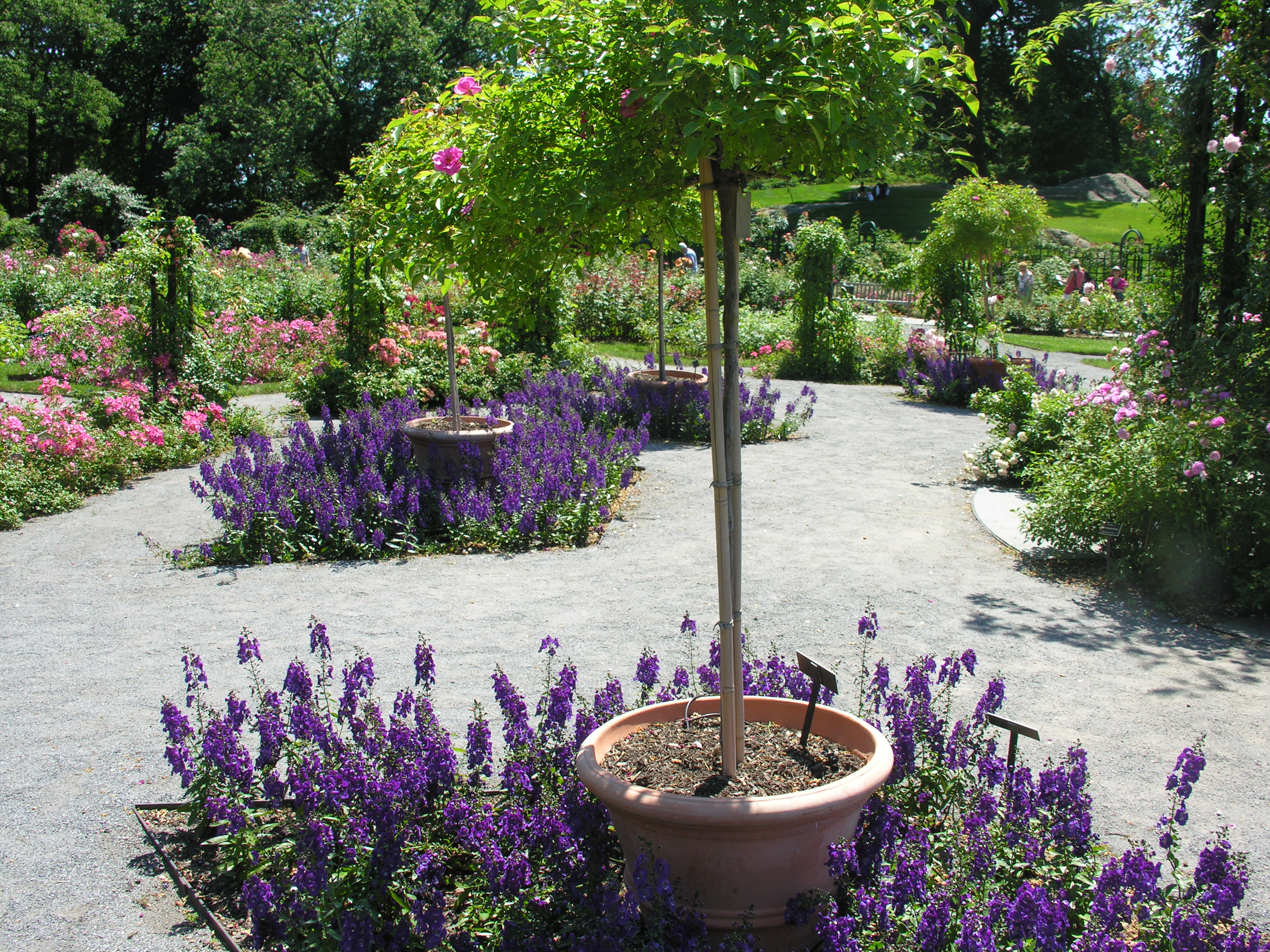
These standards were set off nicely by plantings of deep blue Angelonia at their bases.

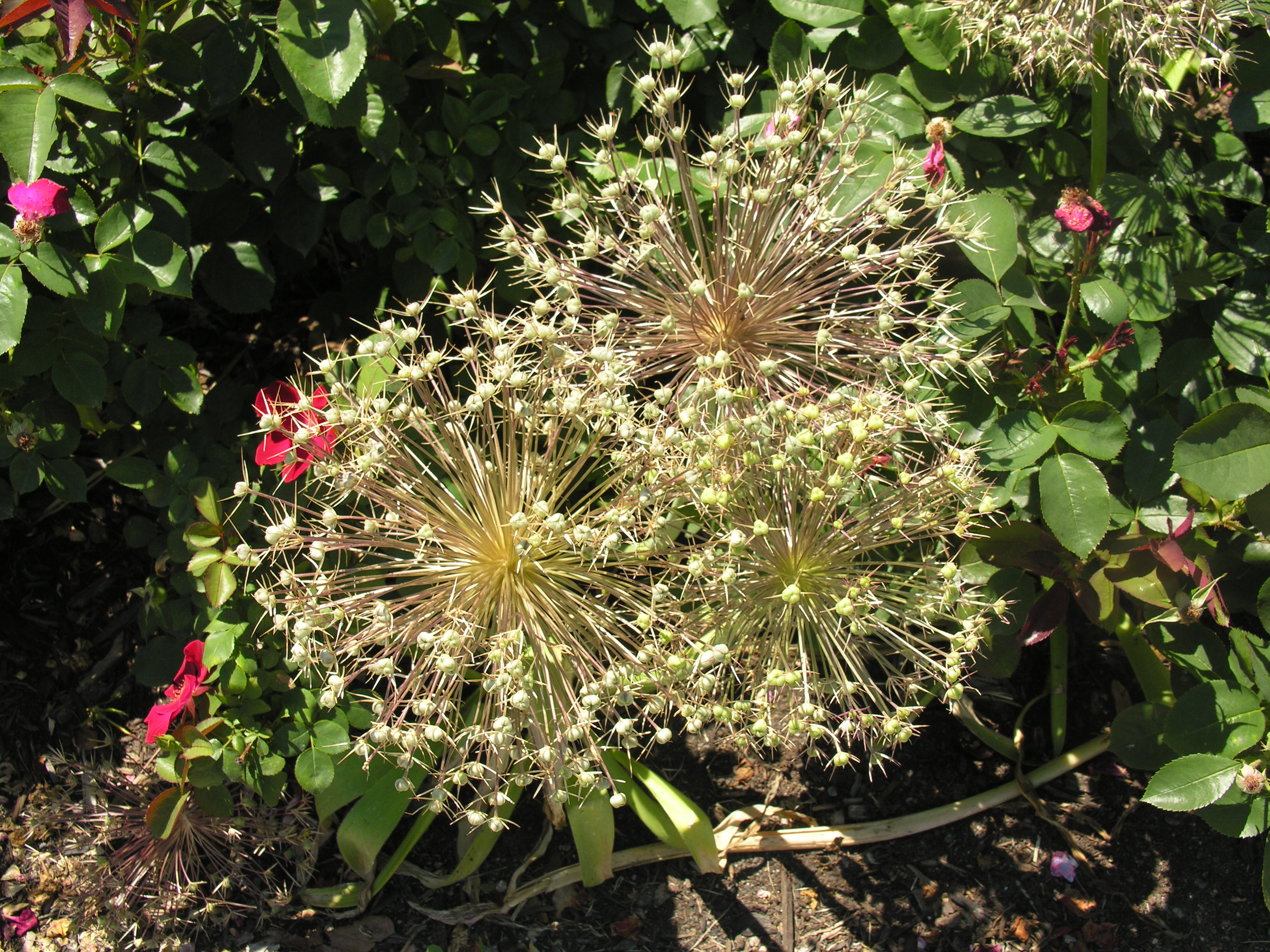
Another cool thing the designers did was to leave the allium heads after they had bloomed. They looked great among the roses and provided some interest and contrast.

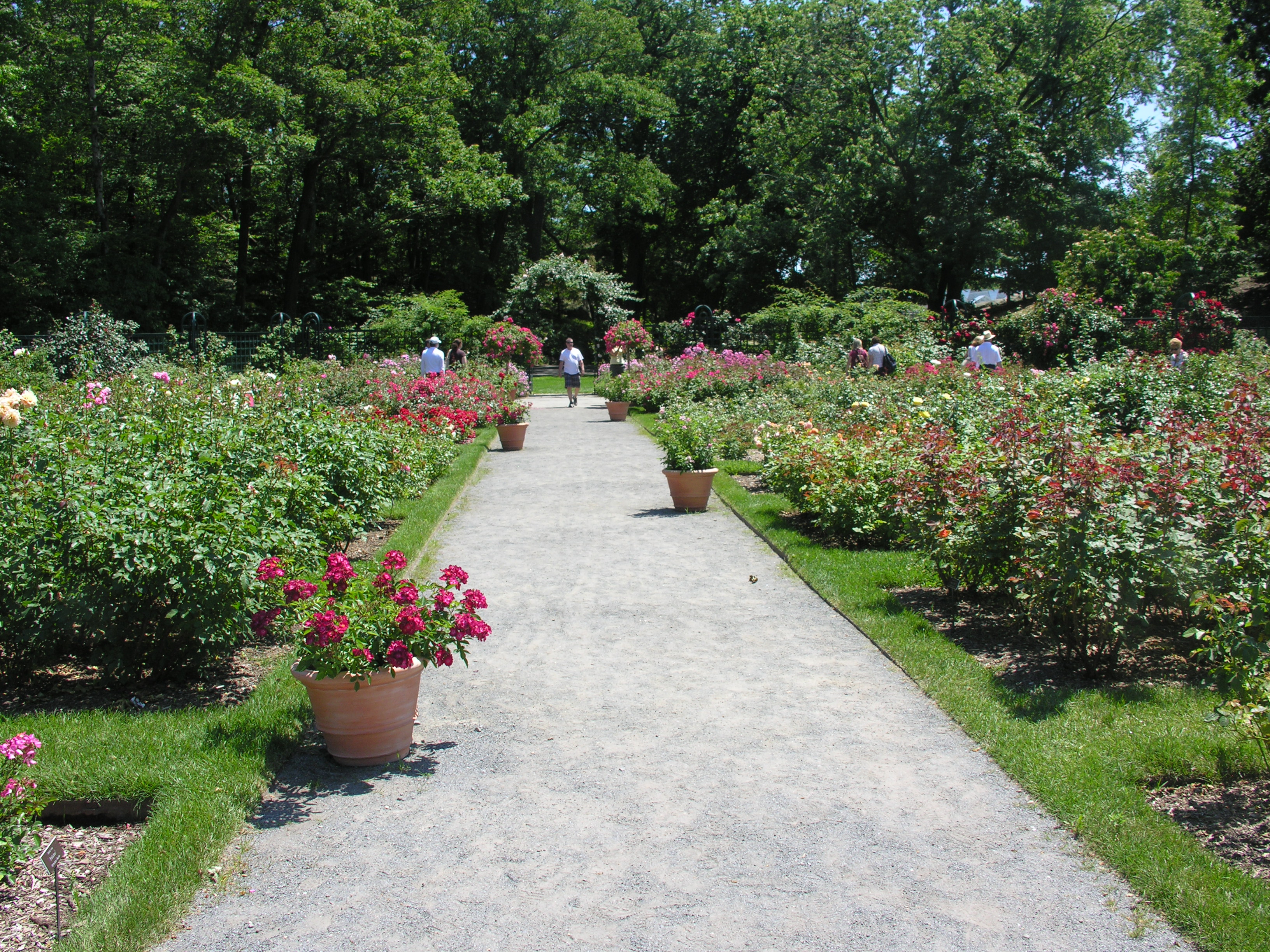
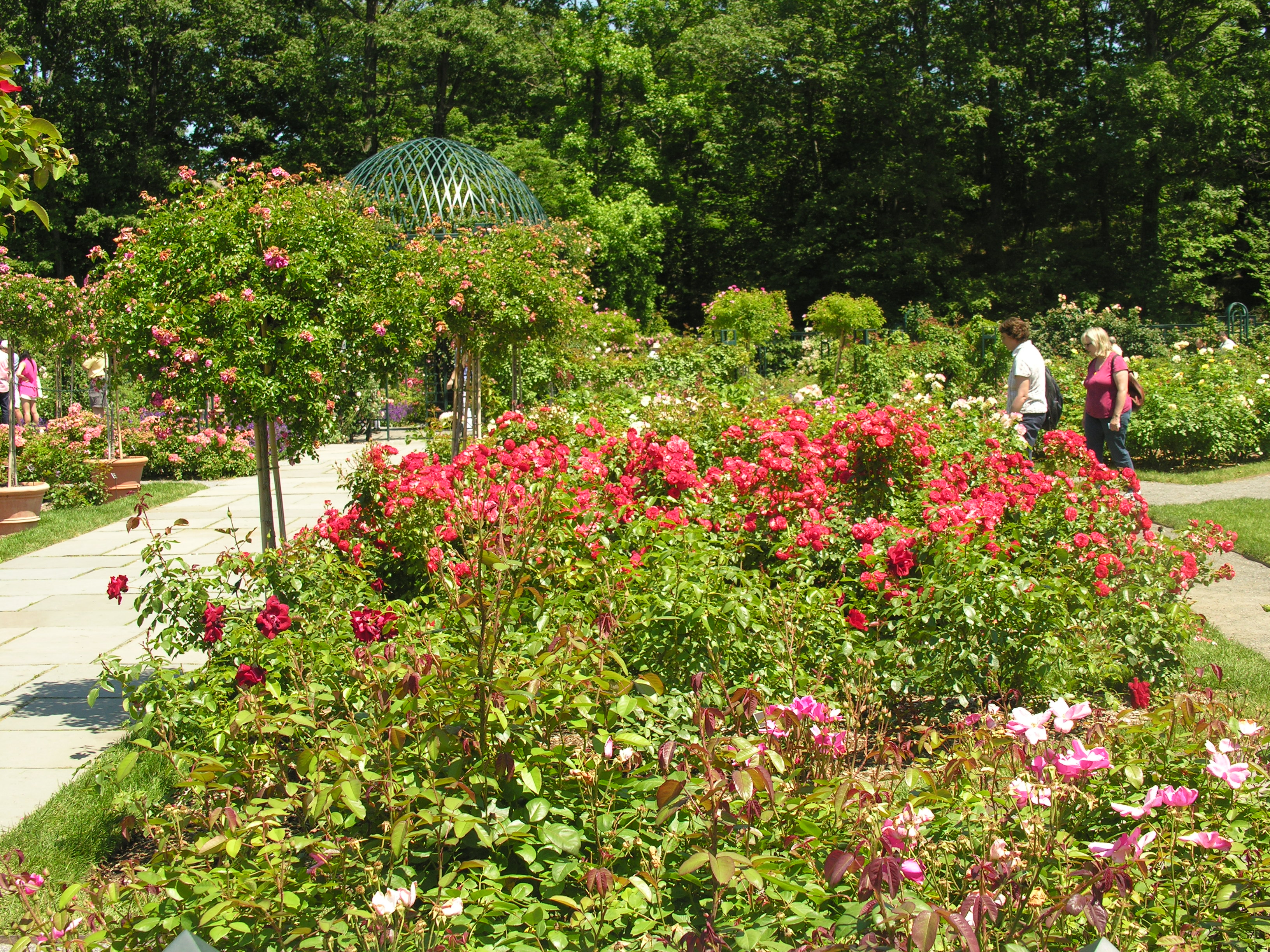
Here’s another view of one of the large beds and a couple of those marvelous standards.

Another lovely climber. Sorry I can’t give you the names of these plants. Honestly, at this point, I was hot and tired and needing to get some shade. This garden is very, very sunny and hot, which roses love – and I don’t.

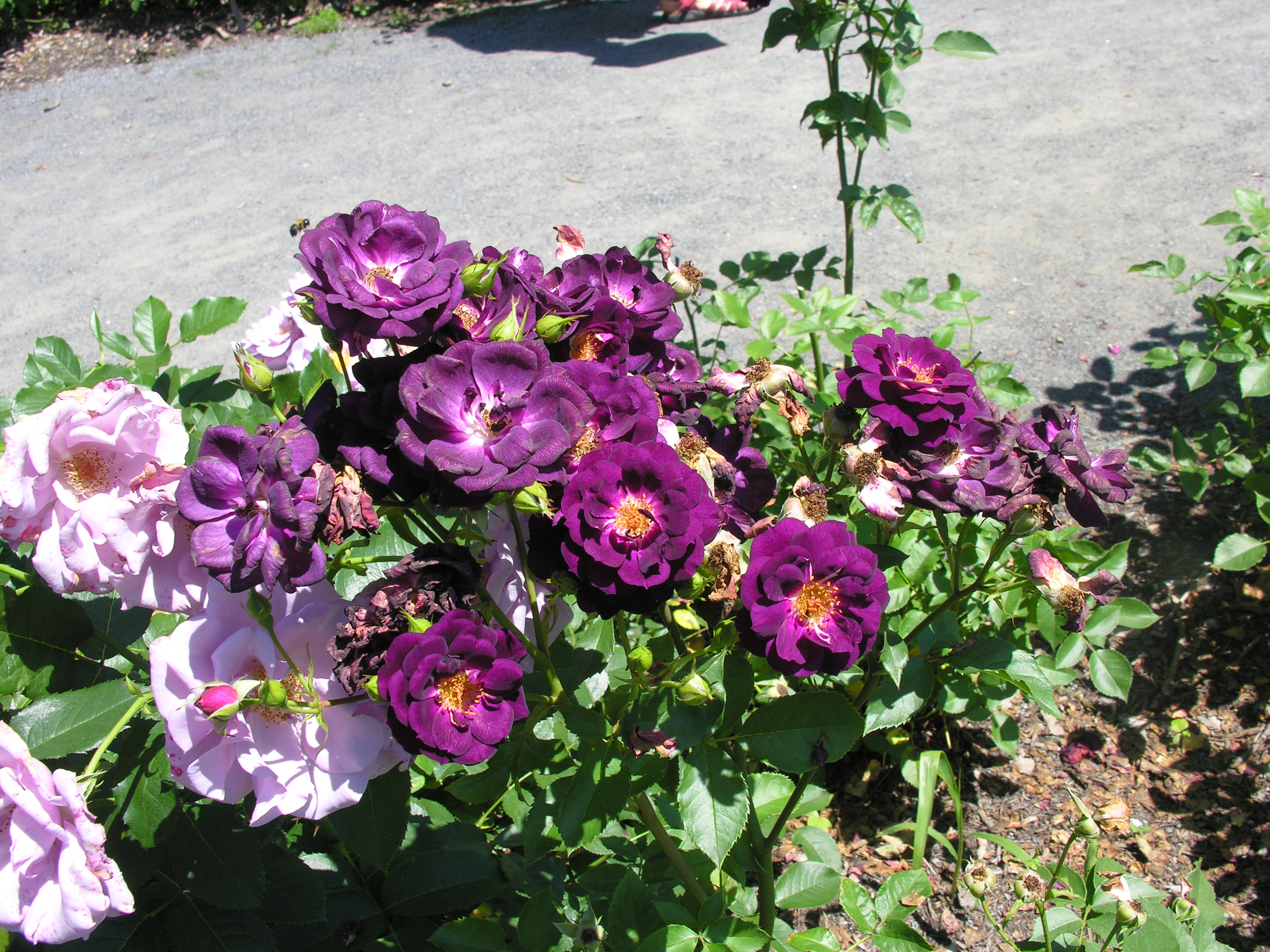
Interesting color, no?

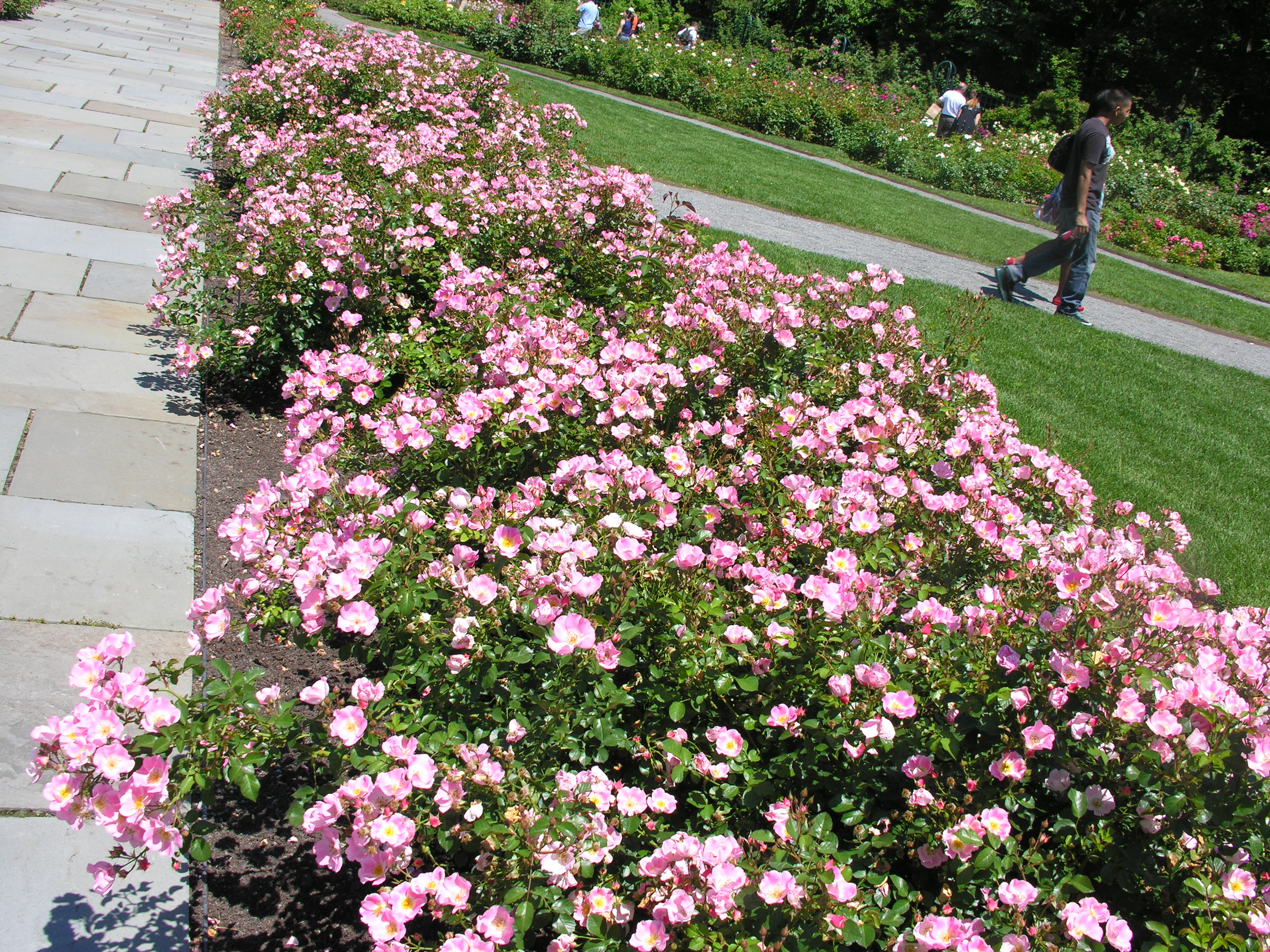
A large bed of what I believe is “Carefree Delight.” Very pink and exuberant.

The garden is home to the Northeastern “EarthKind” trials. Researchers are trying to identify and hybridize roses that thrive without chemicals. The goal is to dispel the rose’s reputation of being chemically-dependent.

Notice the visitors bending down to smell the blooms? I do that, too, and I am always disappointed when a rose has no fragrance.

In my next post: other stuff I saw on this visit.

Posted in Uncategorized | 6 Comments

The New York Botanical Garden II

In my previous post, I gave you an overview of the 250 acres that comprise New York City’s magnificent botanical garden. In this post, I’ll get more specific.

For starters, check out this dusty miller (jacobaea maritima) in topiary form. We figured they must dig it up and overwinter it in one of the conservatories.

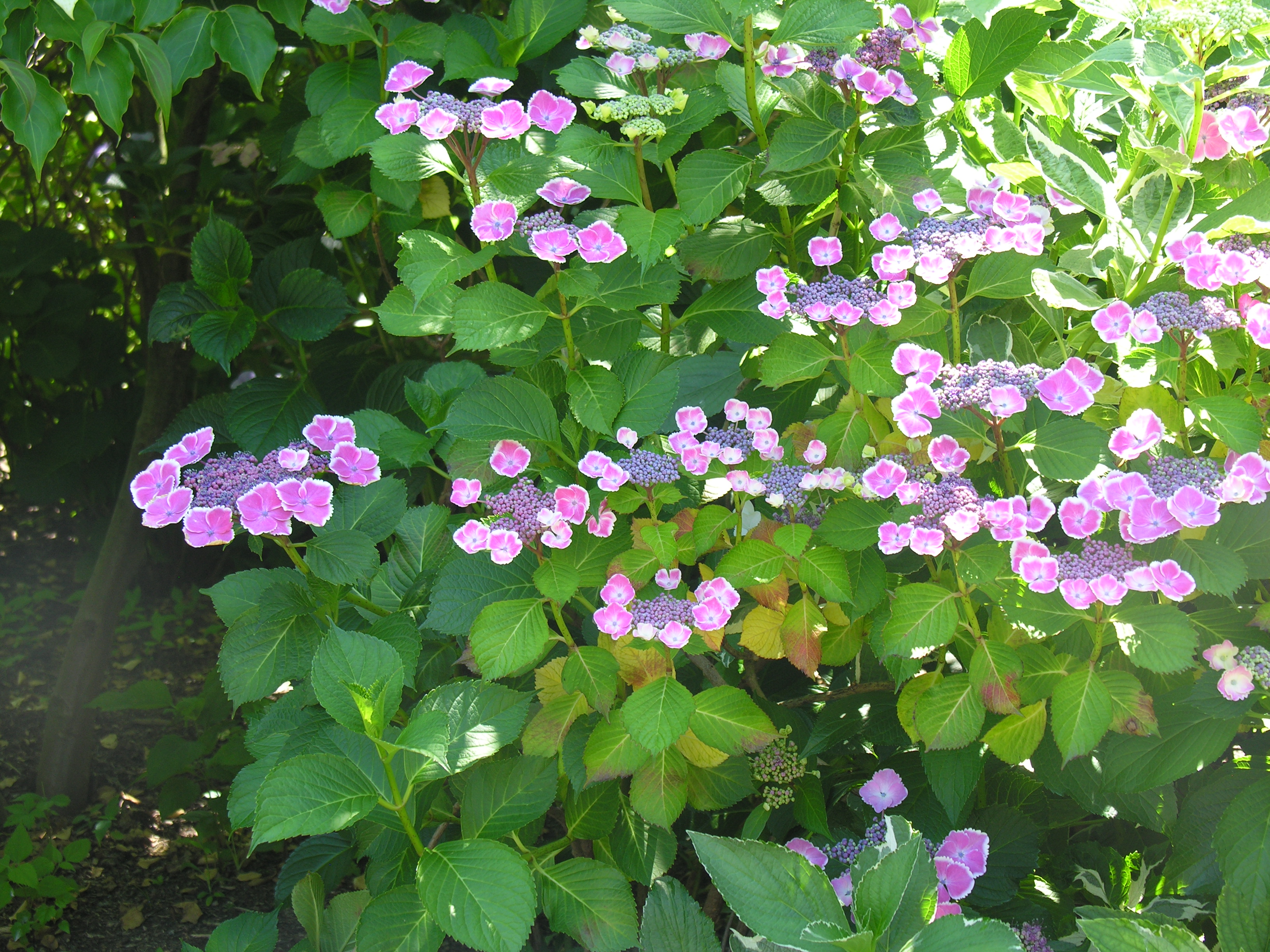
Everyone loved this hydrangea macrophylla “Frau Reiko.”  The flowers are much pinker in person, but still delicate enough to marry well in almost any garden.

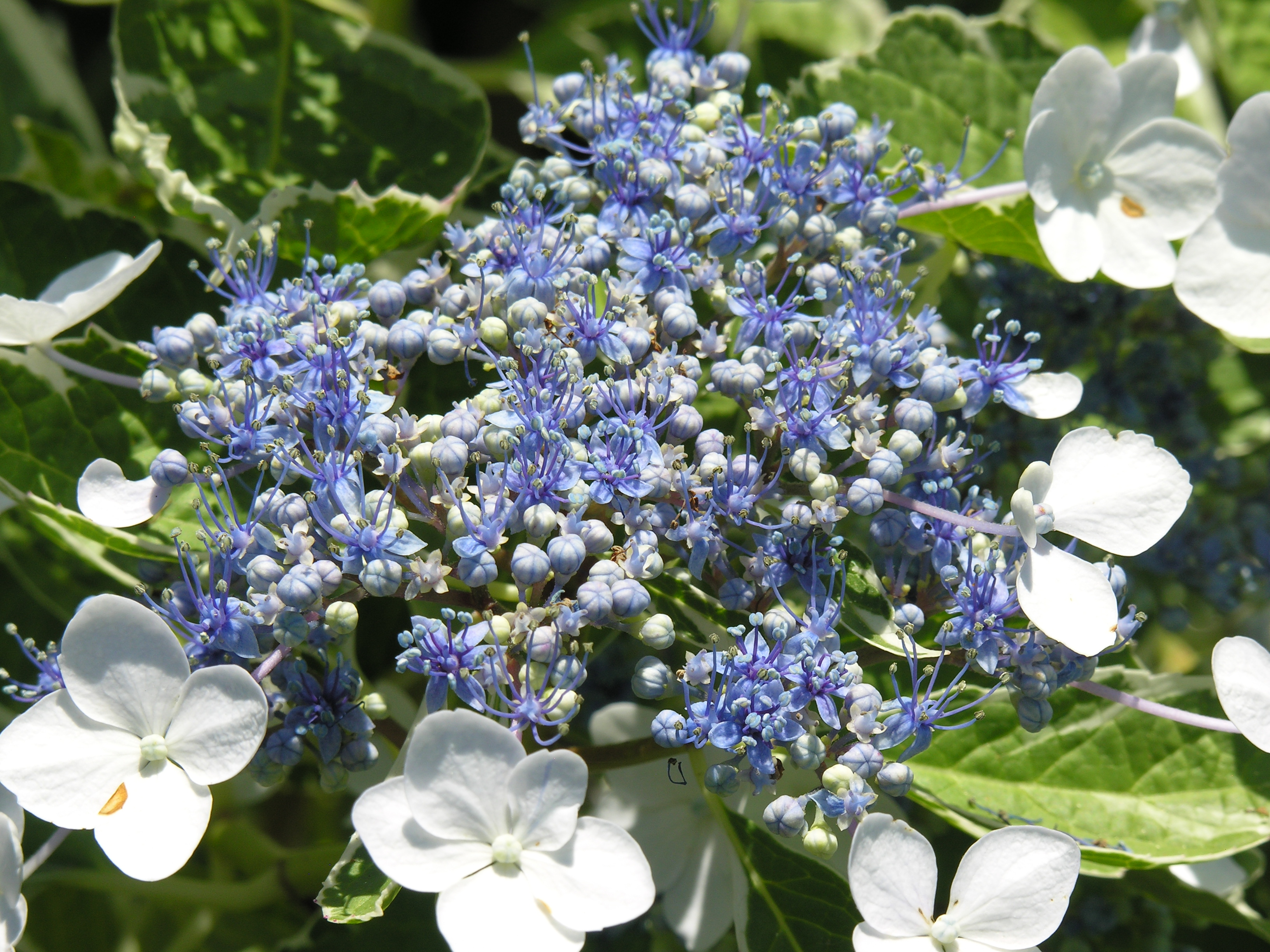
While we’re on the subject, here’s another hydrangea that caught my eye.

And finally, this oakleaf, in full bloom. Gorgeous in the dappled light.

I know it’s probably not my place to question this, but a  bed of heuchera in a hot location in full sun? You can’t tell from the photo, but the plants looked unhappy and their leaves were beginning to crisp up.

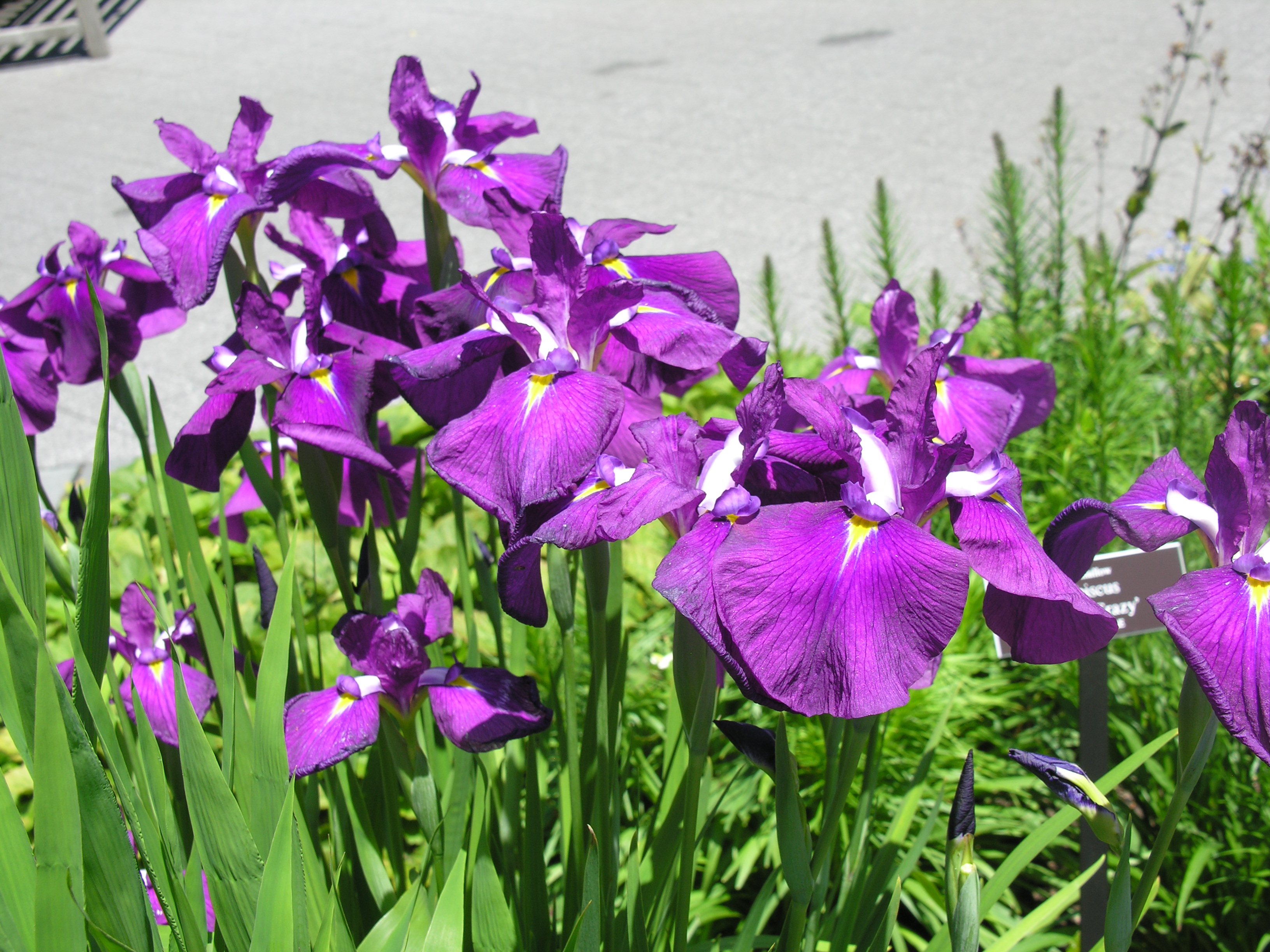
On a happier note, there were many plantings of Japanese iris, and they were at their peak.

I will leave you with a photo of a stunning allee of huge tulip poplars – among my favorite trees.

In the next installment: the rose garden

Posted in Uncategorized | 5 Comments

The New York Botanical Garden I

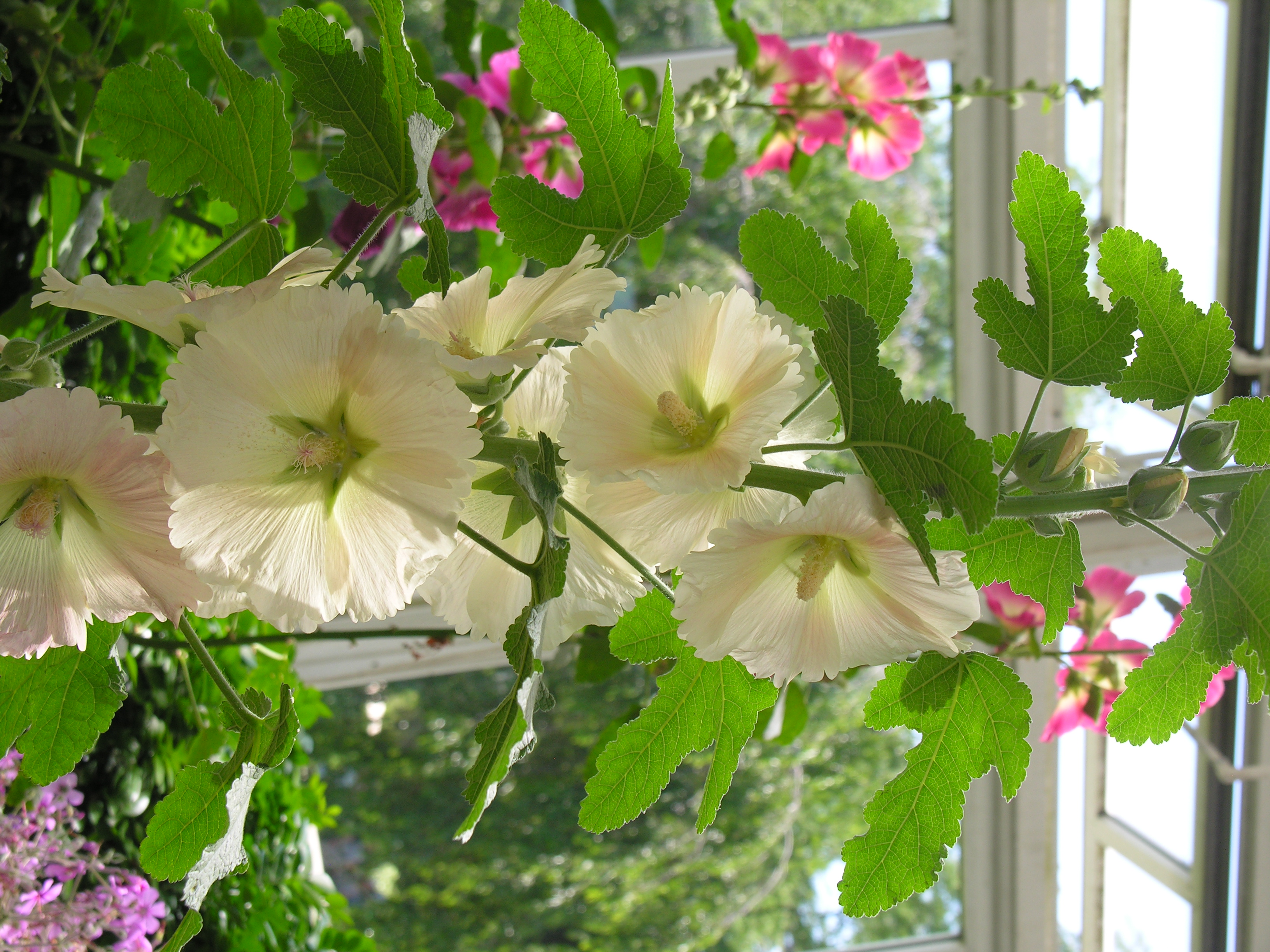
I recently had the pleasure of taking a day trip with fellow Master Gardeners to the New York Botanical Garden. The above photo of a hollyhock was taken inside the Enid A. Haupt Conservatory. This post will be short on text and long on photos, I promise.

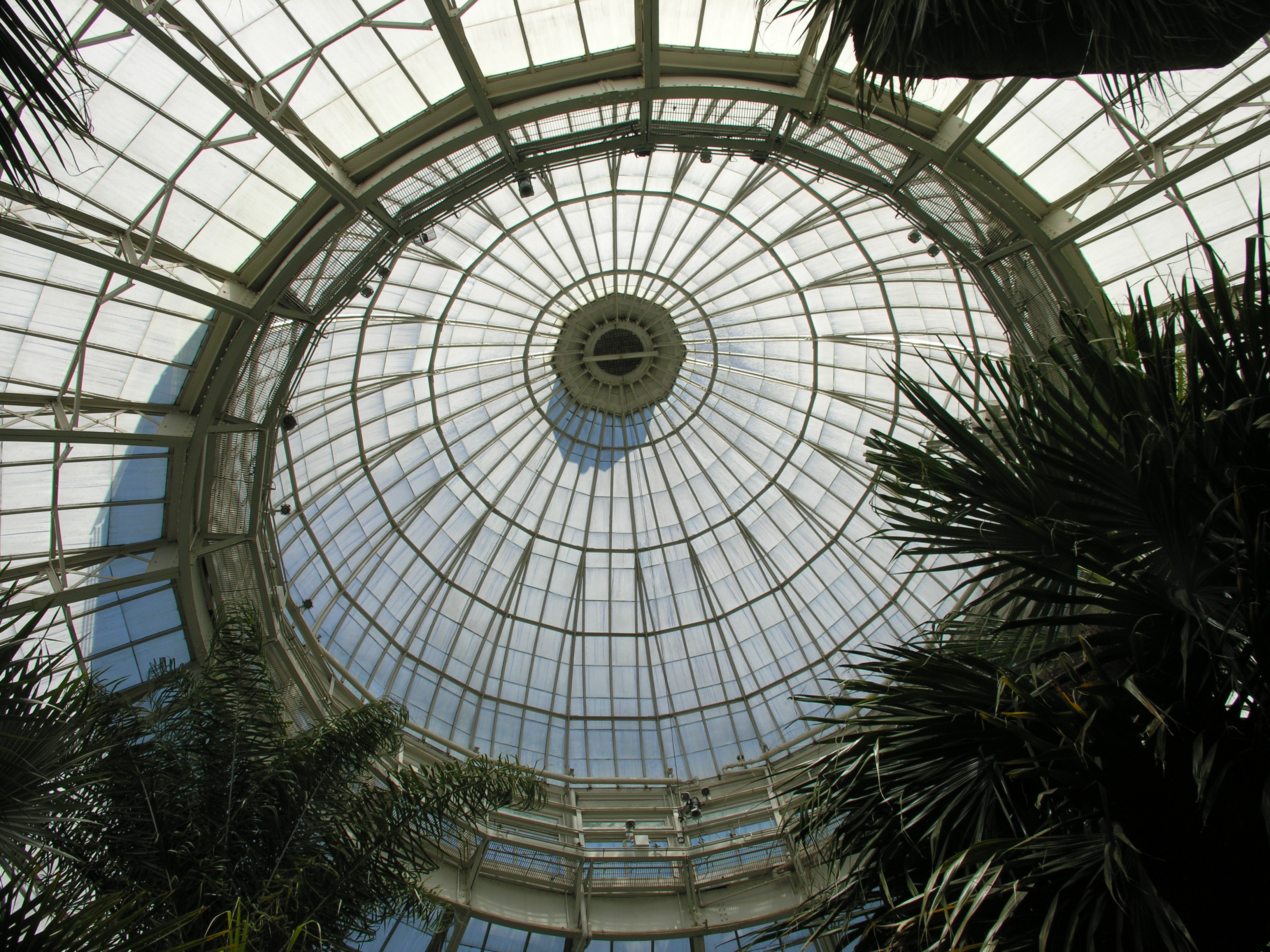
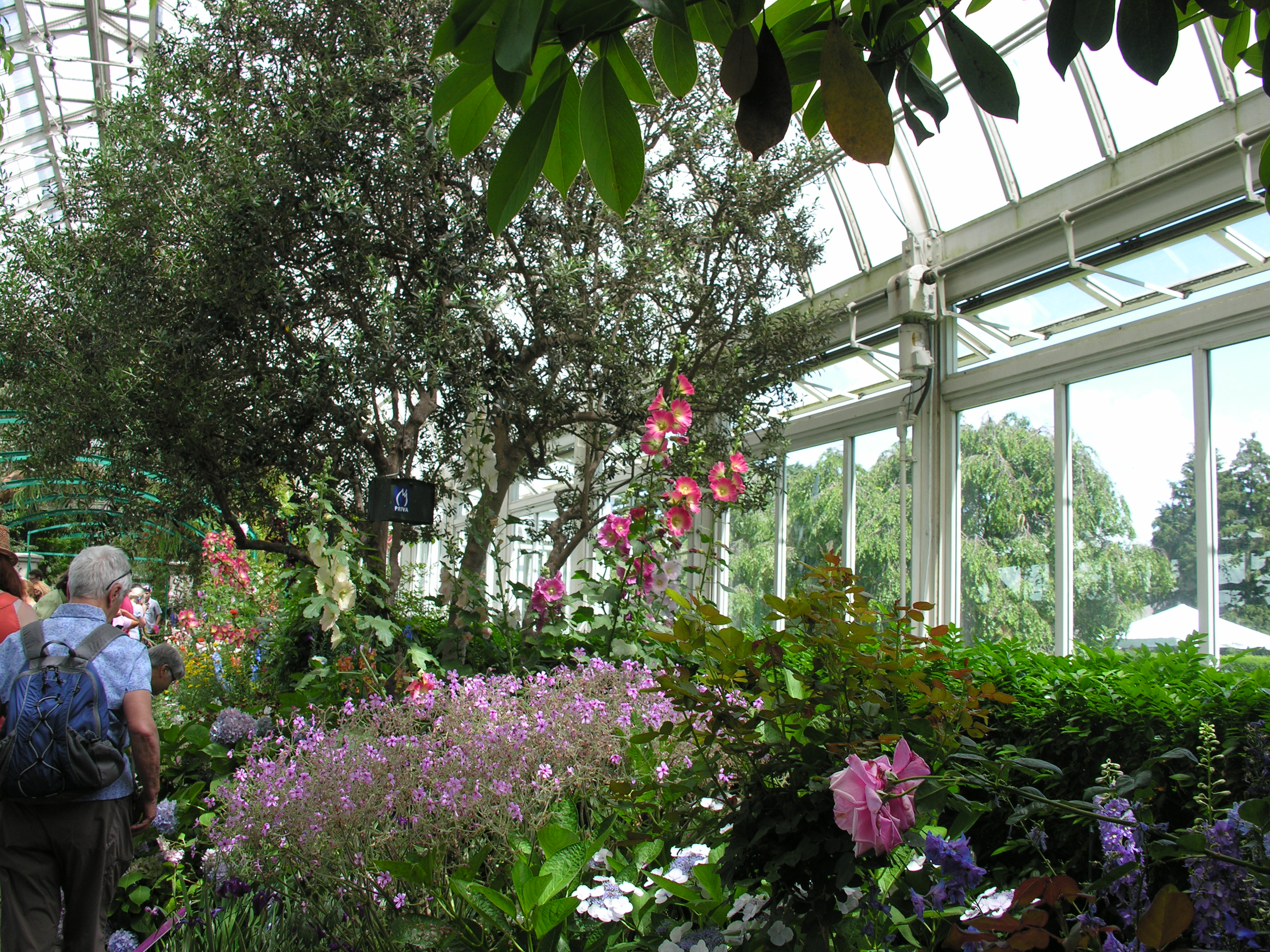
Here’s another view inside the conservatory, which contains some immense palms. When they get too big  – over 90 feet tall – they are replaced with shorter specimens.

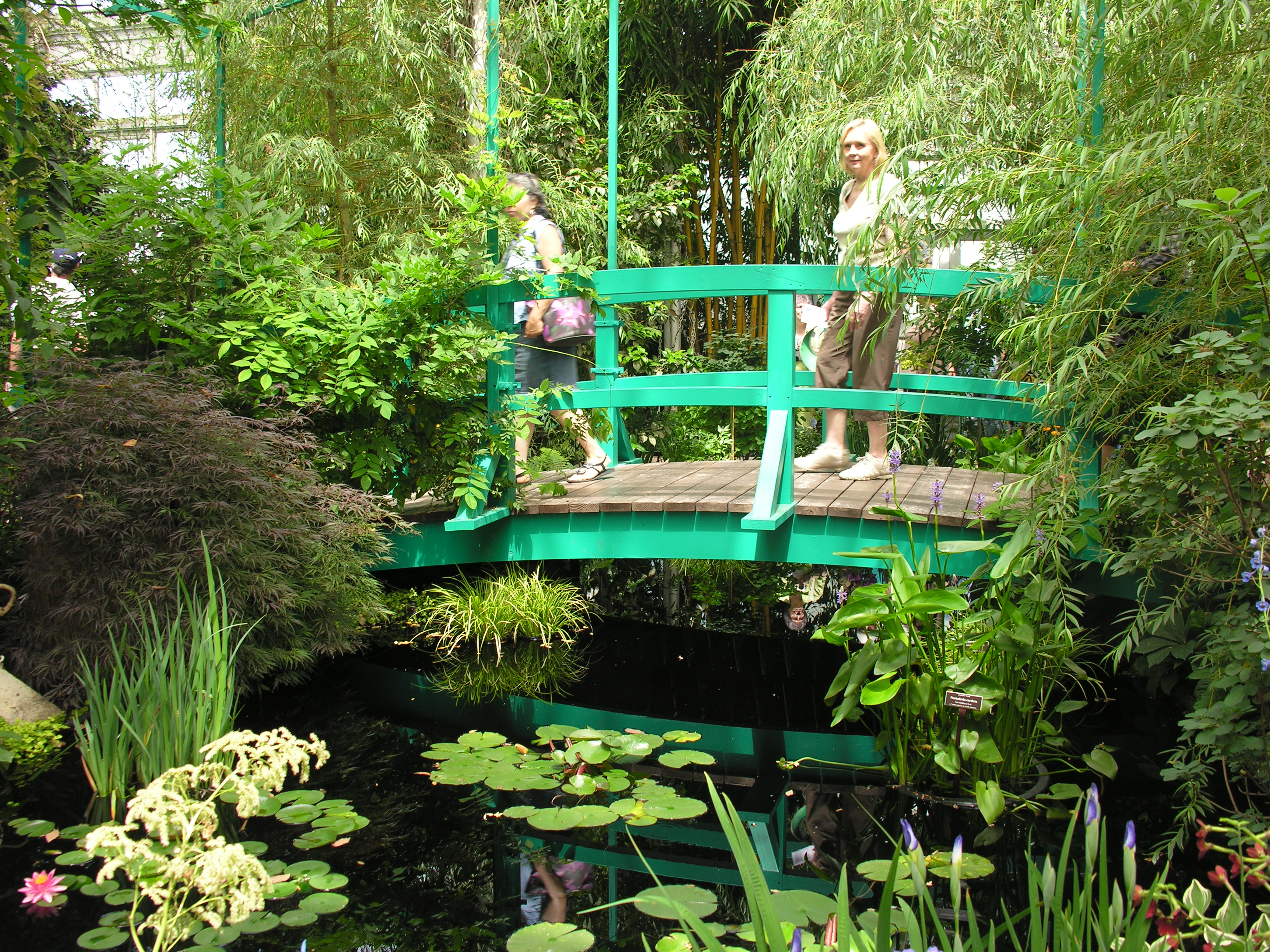
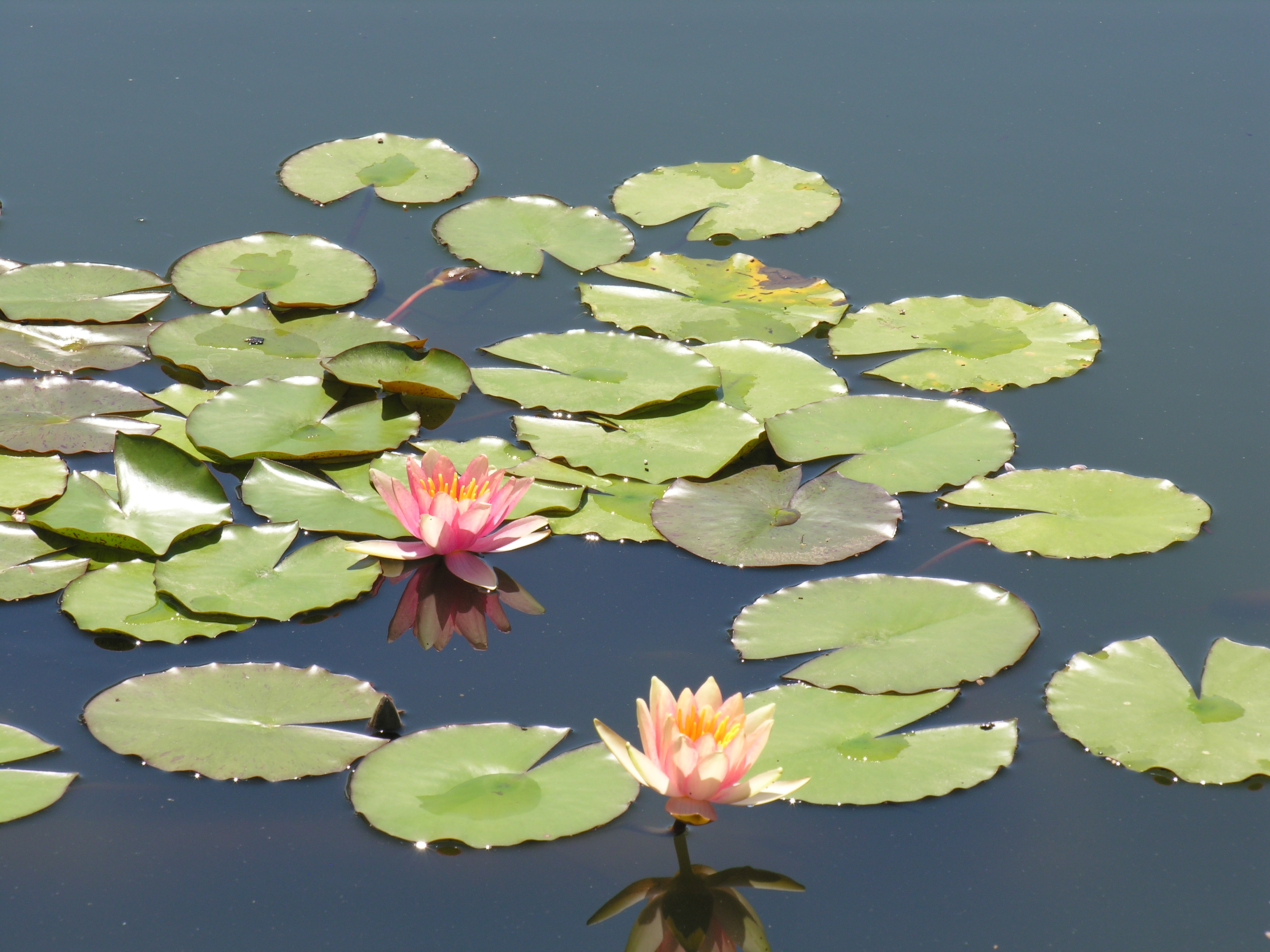
This bridge is part of the “Monet’s Garden” exhibit. Lots of waterlilies as you can imagine. Below is my own image of waterlilies, taken at one of the water gardens.

The property is immense – 250 acres of beauty with Bronx traffic whizzing by just outside the garden’s boundaries. The garden was designed in the late 1800s and endowed by some very wealthy people. It still is.

Isn’t this lotus leaf amazing? I couldn’t take my eyes off them. Something about the shape….

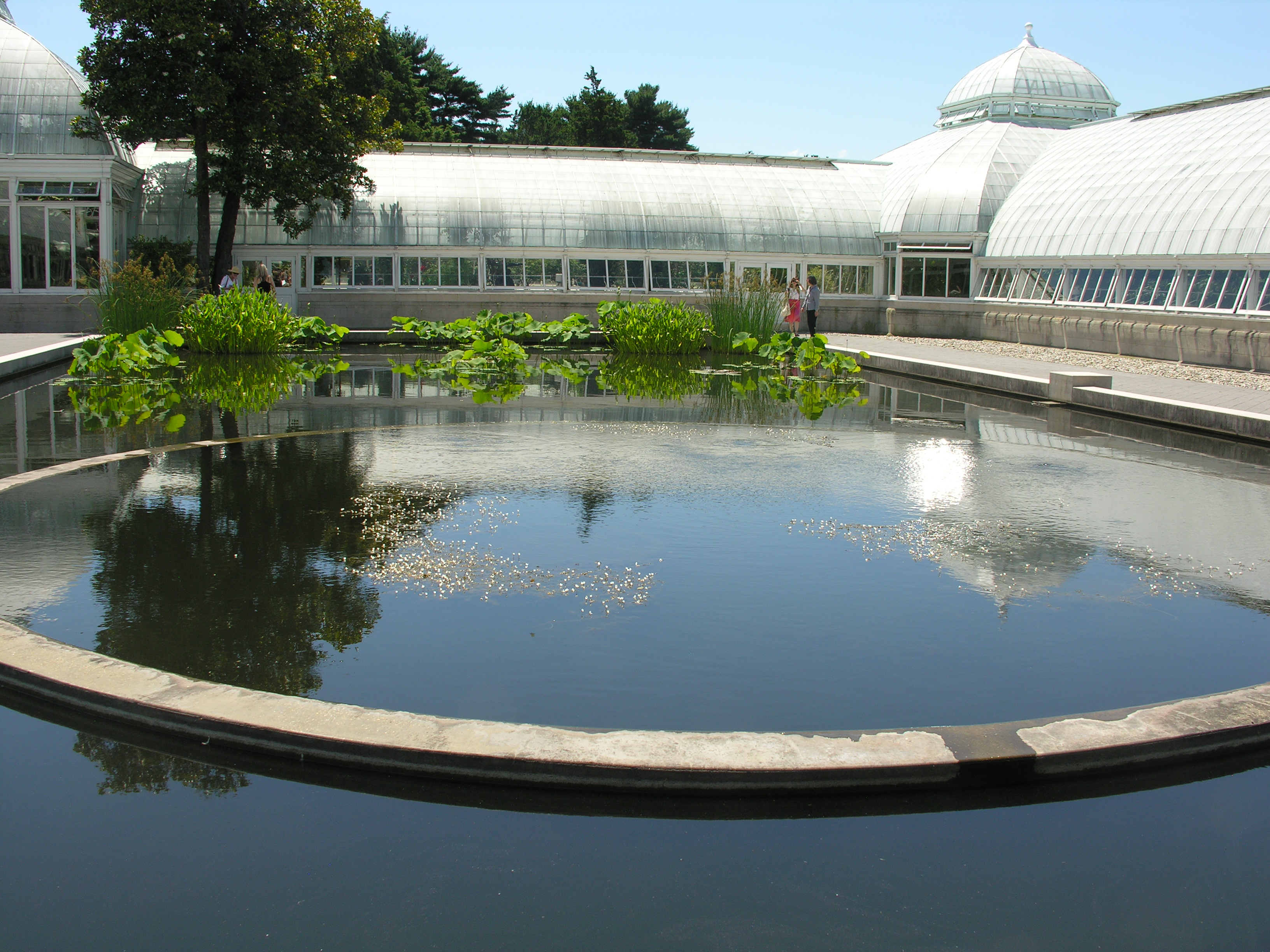
Another water garden, as yet unplanted. It reminded me of an infinity pool for plants.

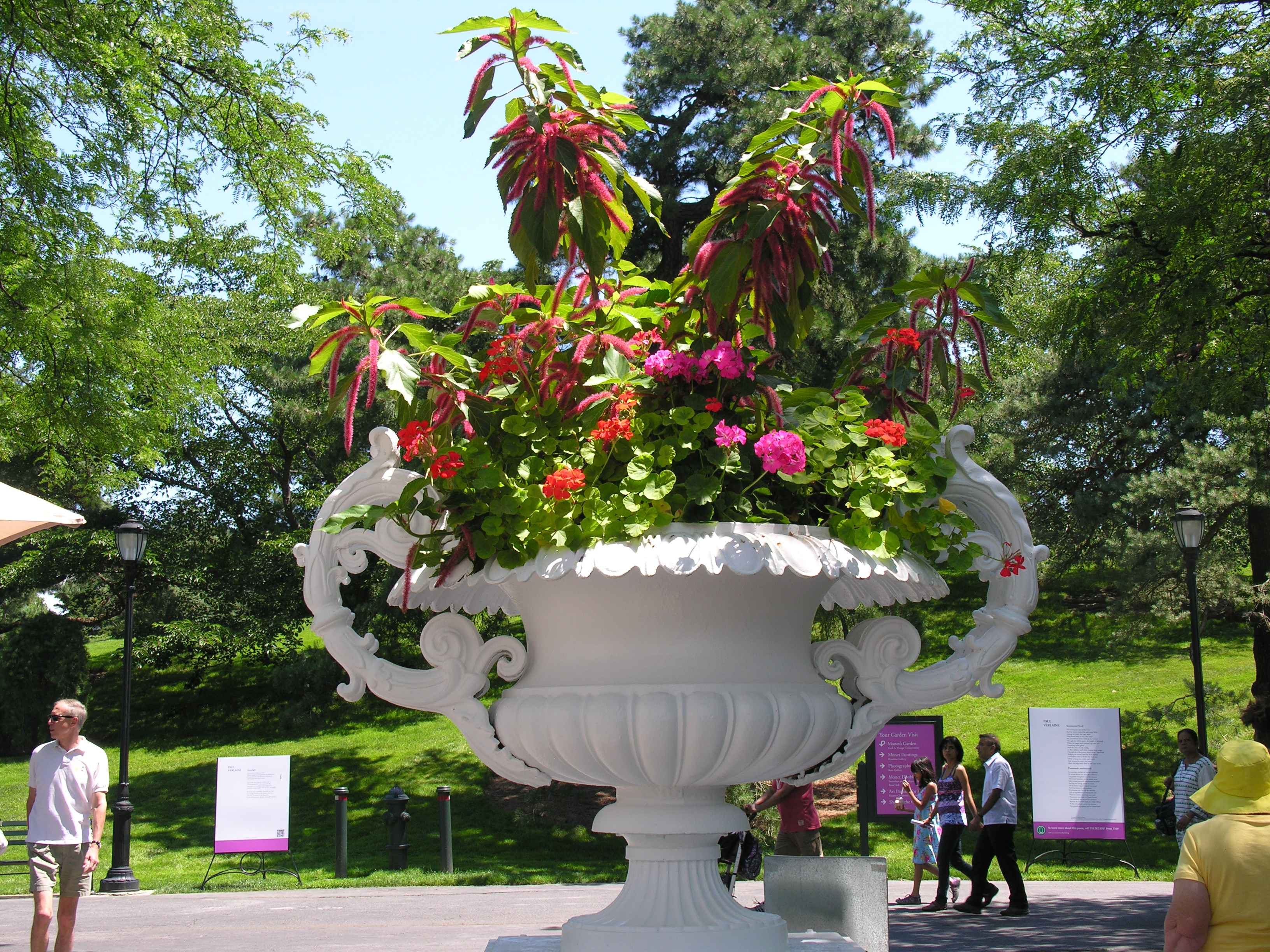
One of the gigantic containers on the property. I wonder how they move it around, or whether they even can.

I will end this with a final shot inside the Haupt Conservatory. Imagine growing delphiniums indoors! In my next post, I’ll show you some of the interesting plants they’re growing here.
Posted in Uncategorized | 12 Comments

A Favorite Easy Care (Really!) Rose

Zepherine Drouhin.  photo: Erin Silversmith

Here’s HerbDoc with a new/old garden favorite:

Here is a rose I highly recommend to anyone who wants a sustainable climber.  Its name is Zepherine Drouhin and it’s an antique rose introduced in 1868.  There are three in my yard at the present time; two border an arbor and the third scales a second story deck.
Zephirine is a gorgeous, high centered rose with cerise flowers.  It has a wonderful, heady Bourbon fragrance which perfumes my yard from early spring well into the fall.  Other positives include thornless canes and masses of healthy green foliage which don’t seem to be bothered by the usual rose diseases.  It will grow and bloom in full sun or a semi-shaded environment.
My only warning is to be sure that you grow this beauty on strong, suitable supports!  With thick canes up to twelve feet in length, it can easily pull down a large metal trellis.  Aim for sturdy arbors and deck uprights and rails to keep it erect!
Posted in Uncategorized | 4 Comments

The Meadow: Year ll

Digging RI recently celebrated its third anniversary. I have returned to work full time, and keeping this blog fresh  has not always been easy. Thanks to Auntie Beak and HerbDoc for their consistently interesting and wise contributions, and a big thanks those of you who continue to read this and offer your own comments (which we love!)

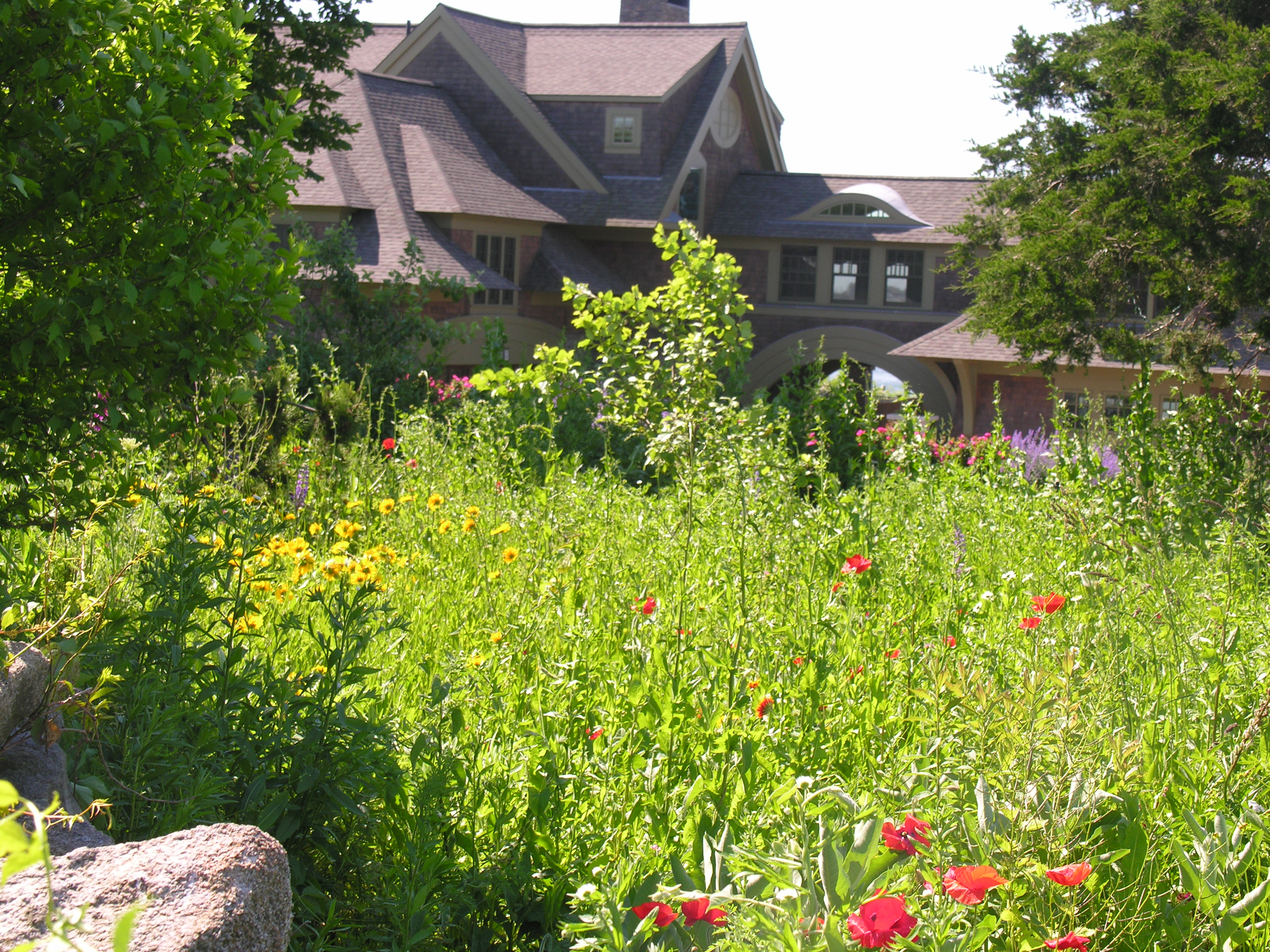
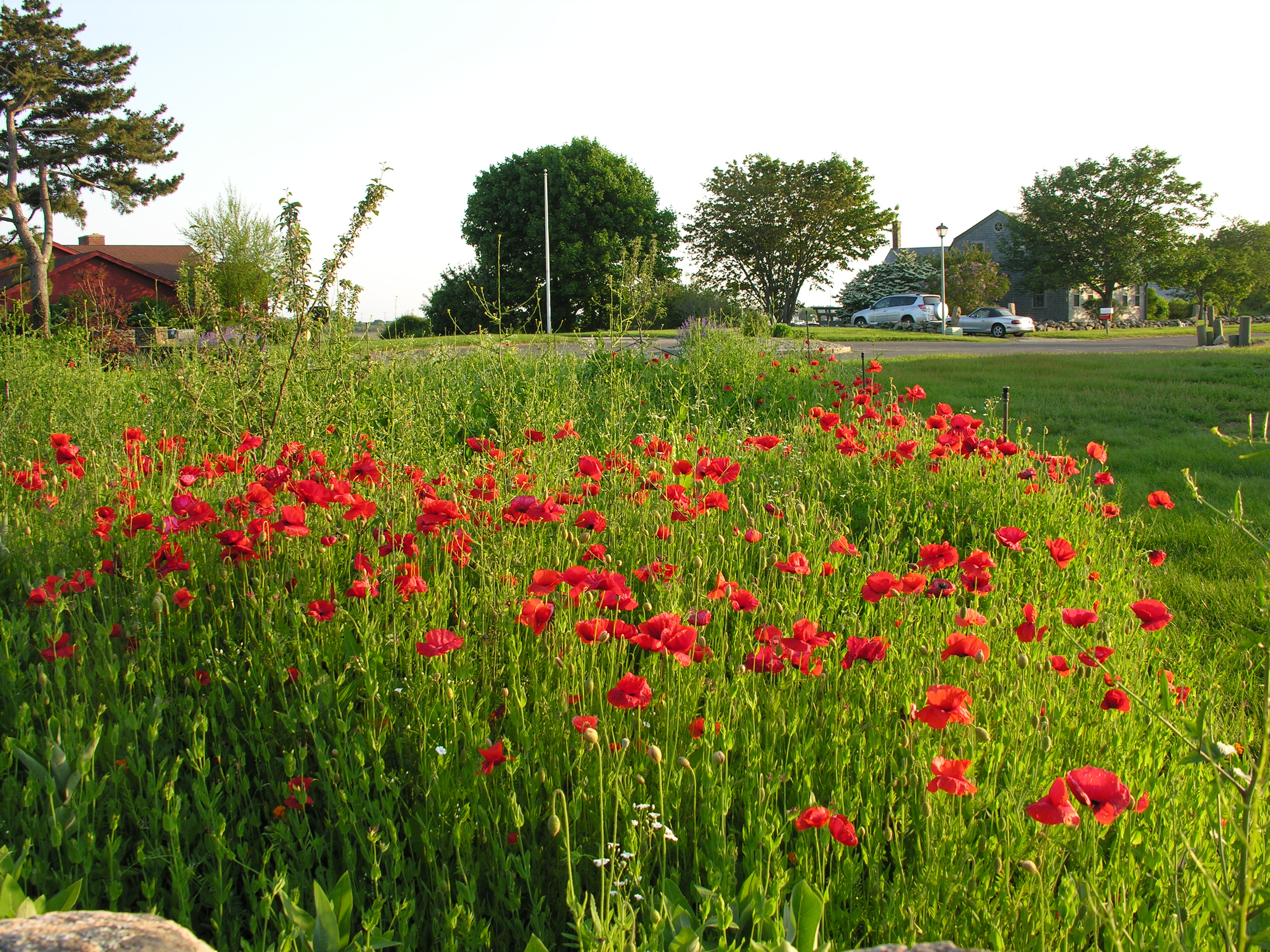
I thought you might like to see my neighbor’s wildflower meadow this June. Last year, there was a profusion of stunning red poppies. This year there are fewer of them and more of other things. Not surprising.

This photo shows the diversity of the plants. There’s a lot of coreopsis and lupines, which have just about gone by.

Here you can see some dianthus (pinks) and some daisies, which  look like the wild “oxeyes” to me.

Many people think that wildflower meadows are low maintenance alternatives to lawns. They are, in the sense that you don’t have to mow them regularly, but you have to replenish most of the plants each year, otherwise it will revert to its less colorful weediness. I spoke with the ( very expensive) gardener there, who told me the meadow was “driving her crazy.”

Here’s a photo of how it looked last year at this time, so you can see how much it’s changed. Too bad about the poppies. They were spectacular.

What is it about poppies?????

Posted in Uncategorized | 4 Comments

Know Your Enemy; A Continuing Series, #2—Mugwort

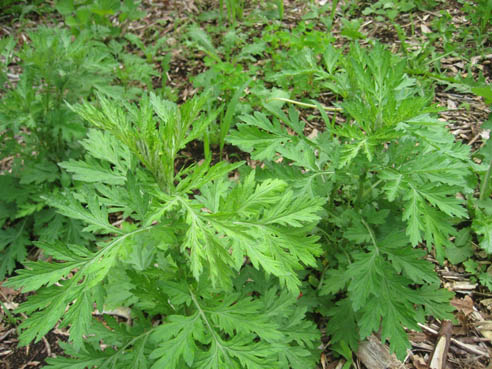
there is nothing i can say that is good about this plant. sorry; no “good news/bad news” this time. it is one of the most difficult weeds to eradicate, because it reproduces via underground rhizomes, so if you leave just a teensy little bit of the roots in the ground, before you know it you’ve got another whole crop.

mugwort, aka Artemisia vulgaris

mugwort, aka Artemisia vulgaris

and boy, do i have a crop. it’s my best crop.

fortunately, it’s another indicator weed, and it grows best in low fertility soil. so basically,  it’s just growing in the border of my vegetable garden, where i’ve mulched with wood chips. that’s not to say it hasn’t tried to creep out into the middle… but it doesn’t really thrive in very fertile soil.

its latin name is Artemisia vulgaris, and it is native to europe. according to my research, it was originally used to flavor beer until hops became more commonly used. probably why we have it now; it was likely imported by the colonists. it also has quite a few medicinal uses, and was even believed to ward off evil spirits. it can also cause contact dermatitis. lovely plant.

your best bet to get it out of your garden is to pull, pull, pull, until you’ve exhausted the root system. to that end,  don’t let it leaf out and replenish those roots.

for more information, see this info from ohio state, or this pdf file from the virginia cooperative extension service.

additionally, from HerbDoc:

The dried leaves of mugwort were used as a tea replacement by the early colonists and by the working class in England about 75 years ago; it has a combination acrid and sweet taste. The leaves and large root minus the rootlets were used medicinally for their tonic and slightly stimulant properties. It was used for stomachaches, palsy, epilepsy, and other similar affectations. I wouldn’t use it as a tea or a medicinal, but readers might like to know that it repels insects and could be used in a bouquet along with tansy and wormwood on the picnic table! It is said the word “mugwort” comes not from the word mug but from “moughte,” which means a moth or maggot.  It was often used to repel moths in larders and on clothes. I have also found that woodchucks tend to keep their distance from any stands of this herb, but that’s just my observation and not a scientific theory.

to quote HerbDoc, “I guess even mugwort has its positive side (in small doses).”

Posted in Uncategorized | 4 Comments

Another Neighborhood

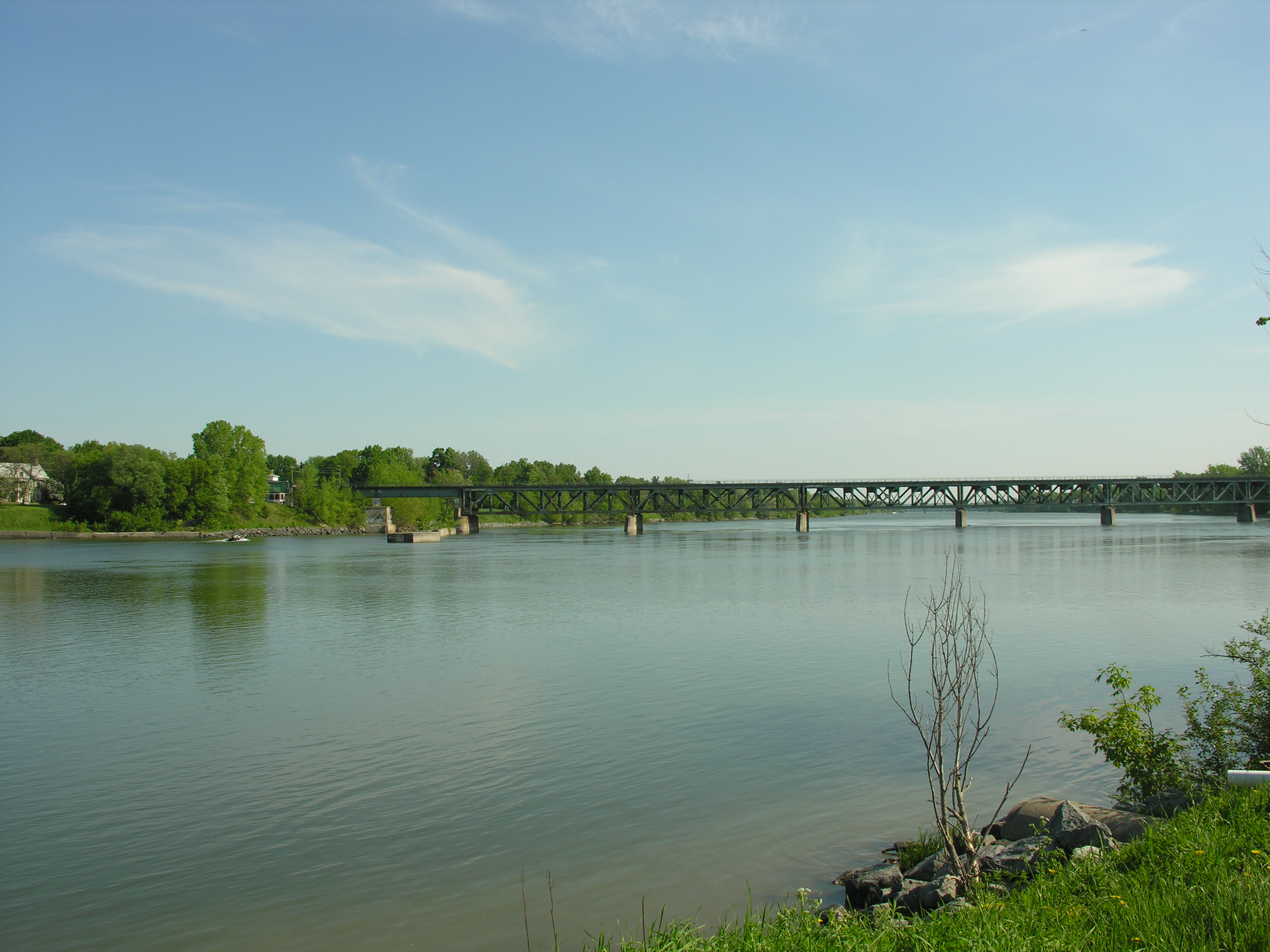
Whenever I travel, I try to take a few good walks. It’s the best way to see how people live – and of course, for a gardener, what they are growing. First, though, here’s a gratuitous shot of the Richelieu river that flows by the town of Mont St Hilaire – just because it looked so beautiful that morning. If you’re wondering what I’m doing here, check out my previous post.

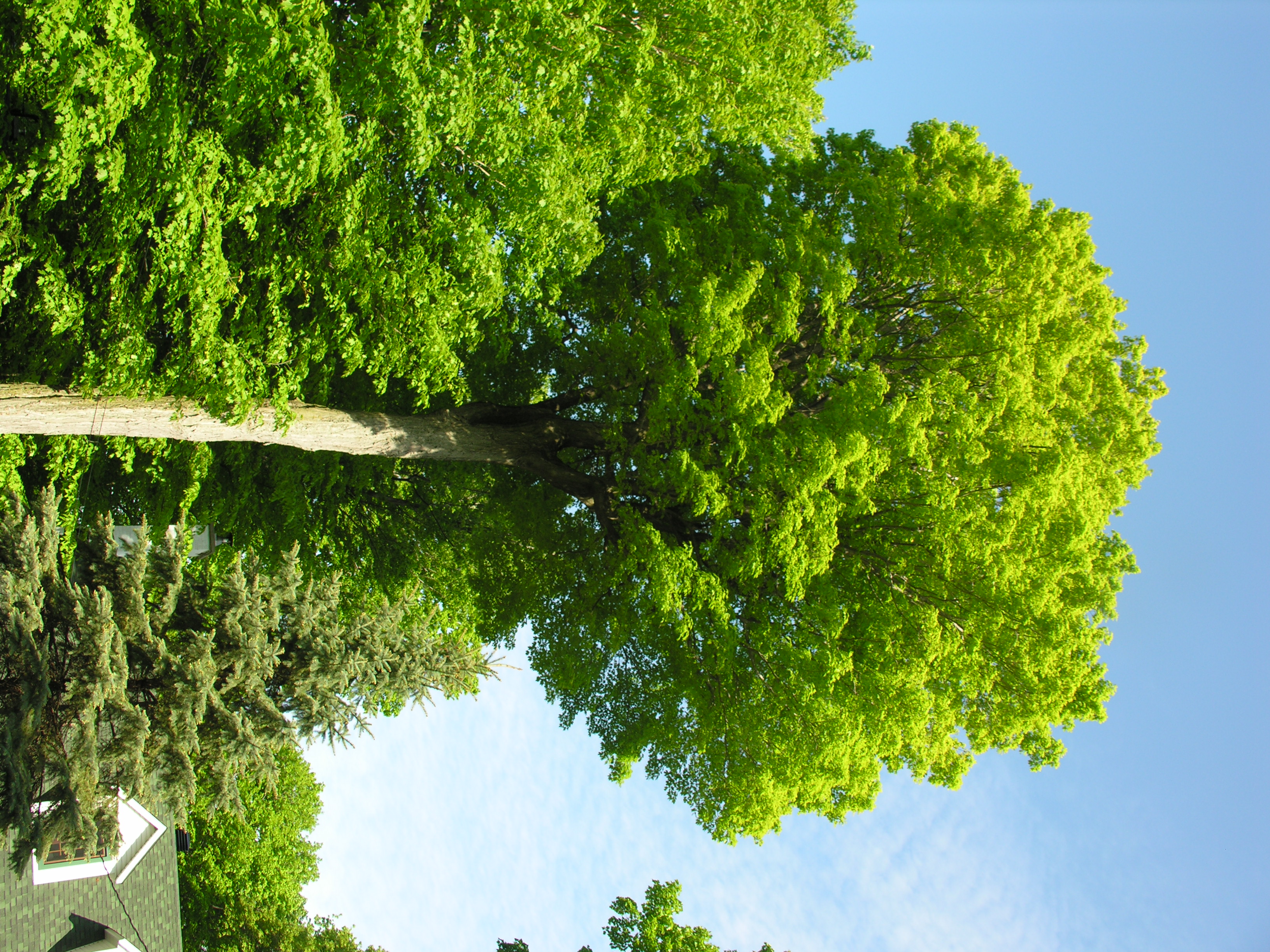
On to the plantings. Someone limbed up this immense tree, so now it looks like a giant lollipop next to the house. What a shame. Something as old as this deserves our respect.

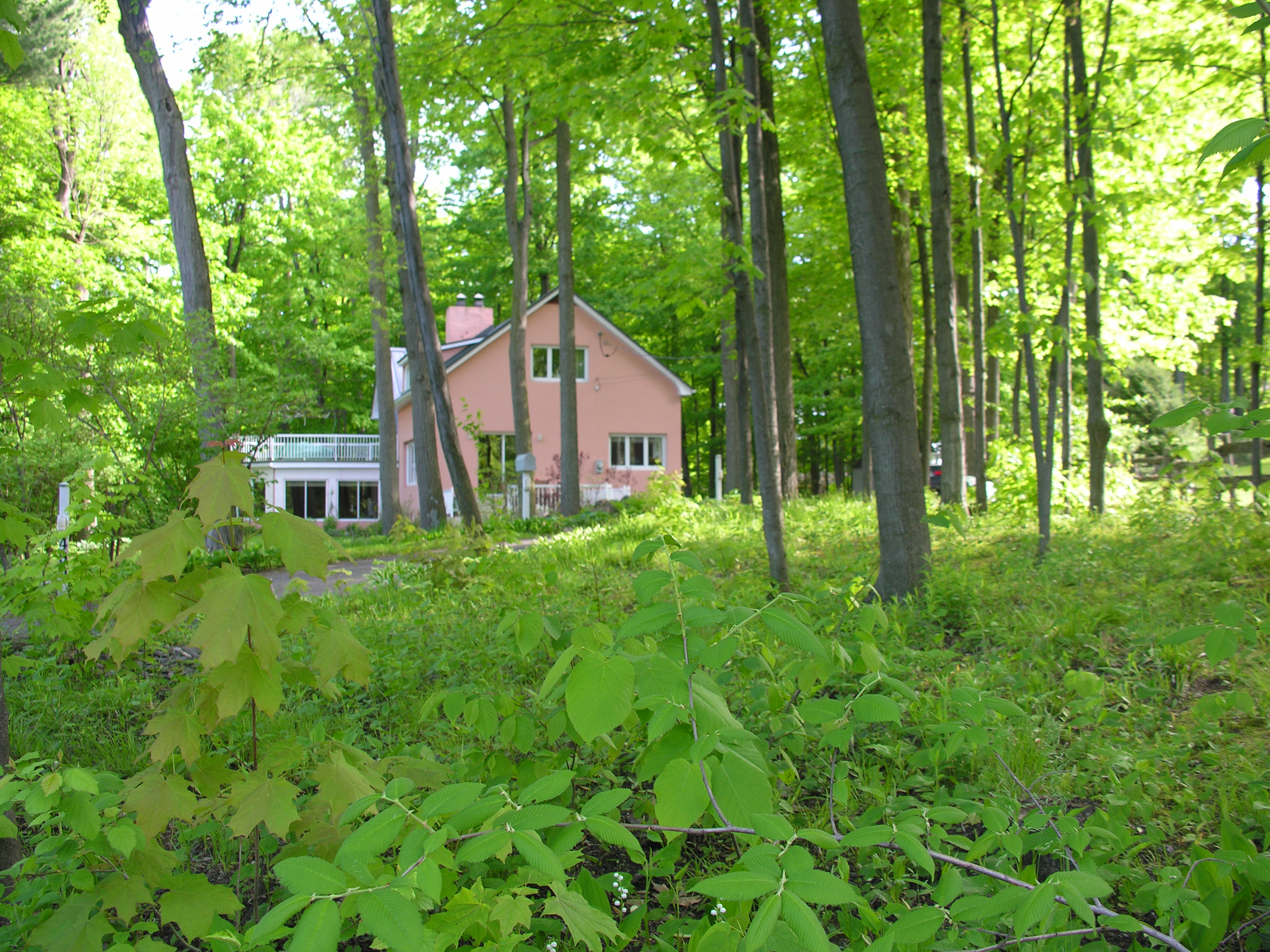
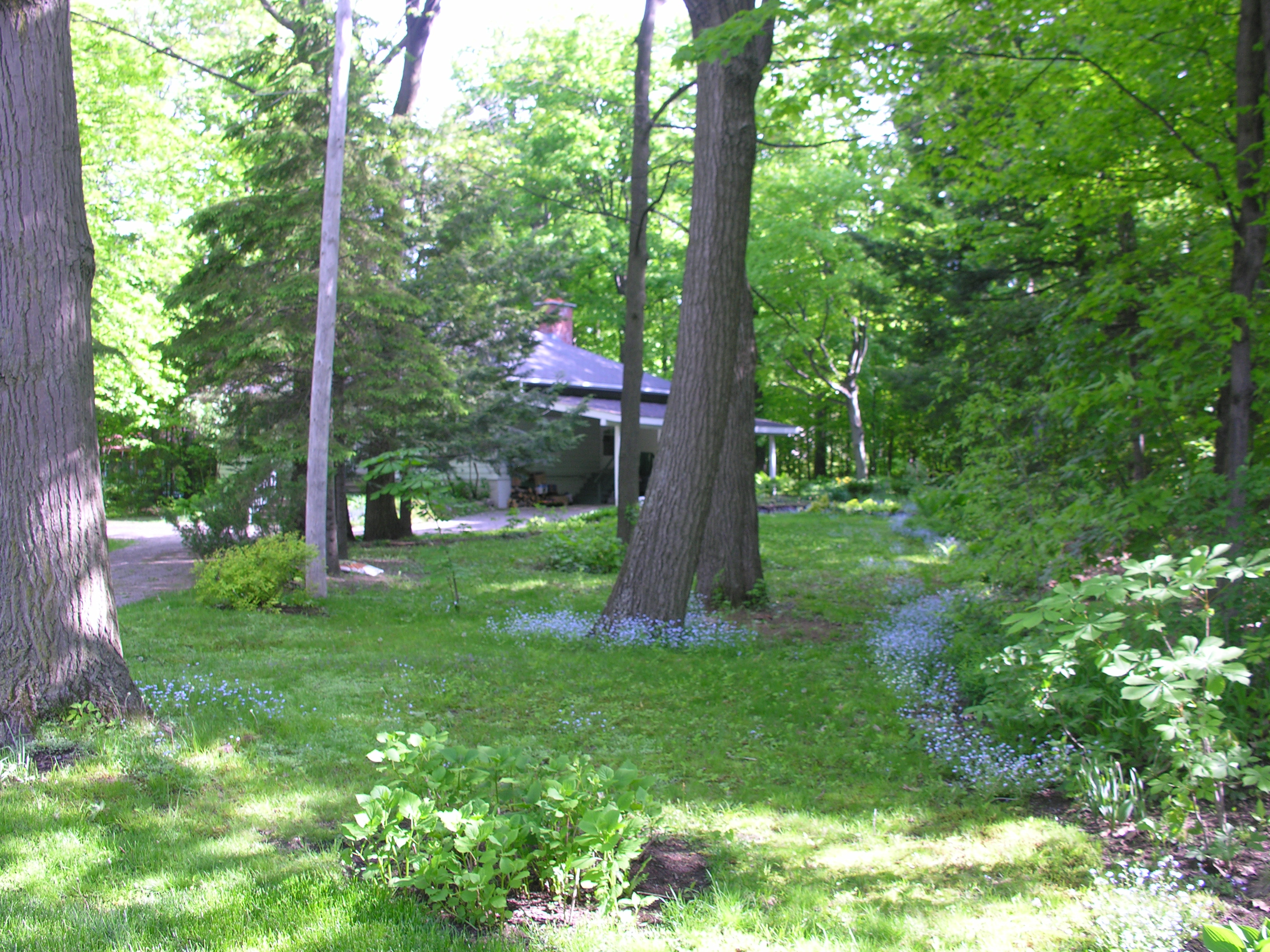
I liked how this house, while pink, was comfortably nestled in the woods, and looked like it belonged there. I also like the natural plantings instead of a lawn.

Another house, made more charming by the forget-me-nots growing with the trees.

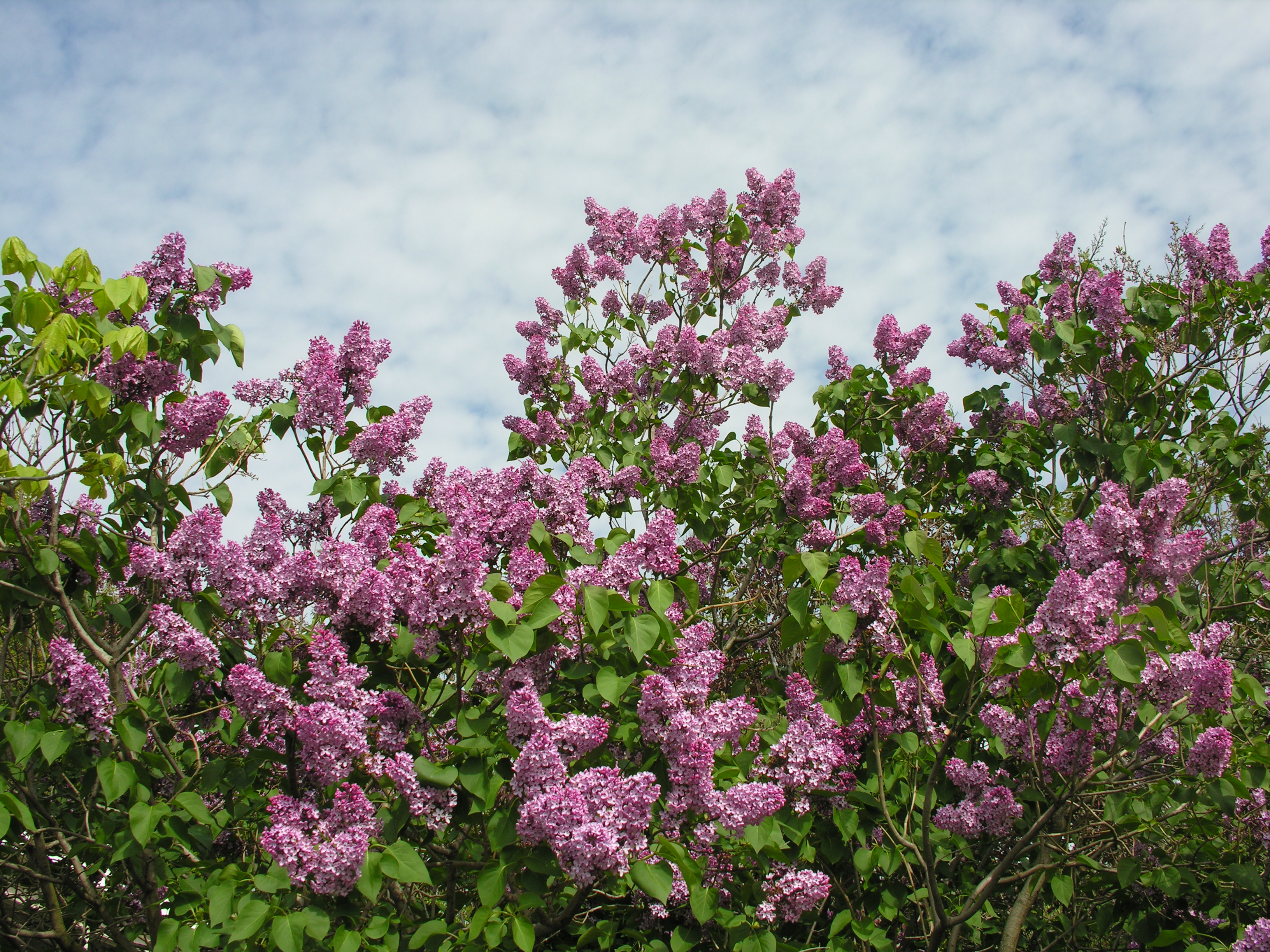
The lilacs are done here in RI, but they were peaking in Quebec, and the scent was wonderful.

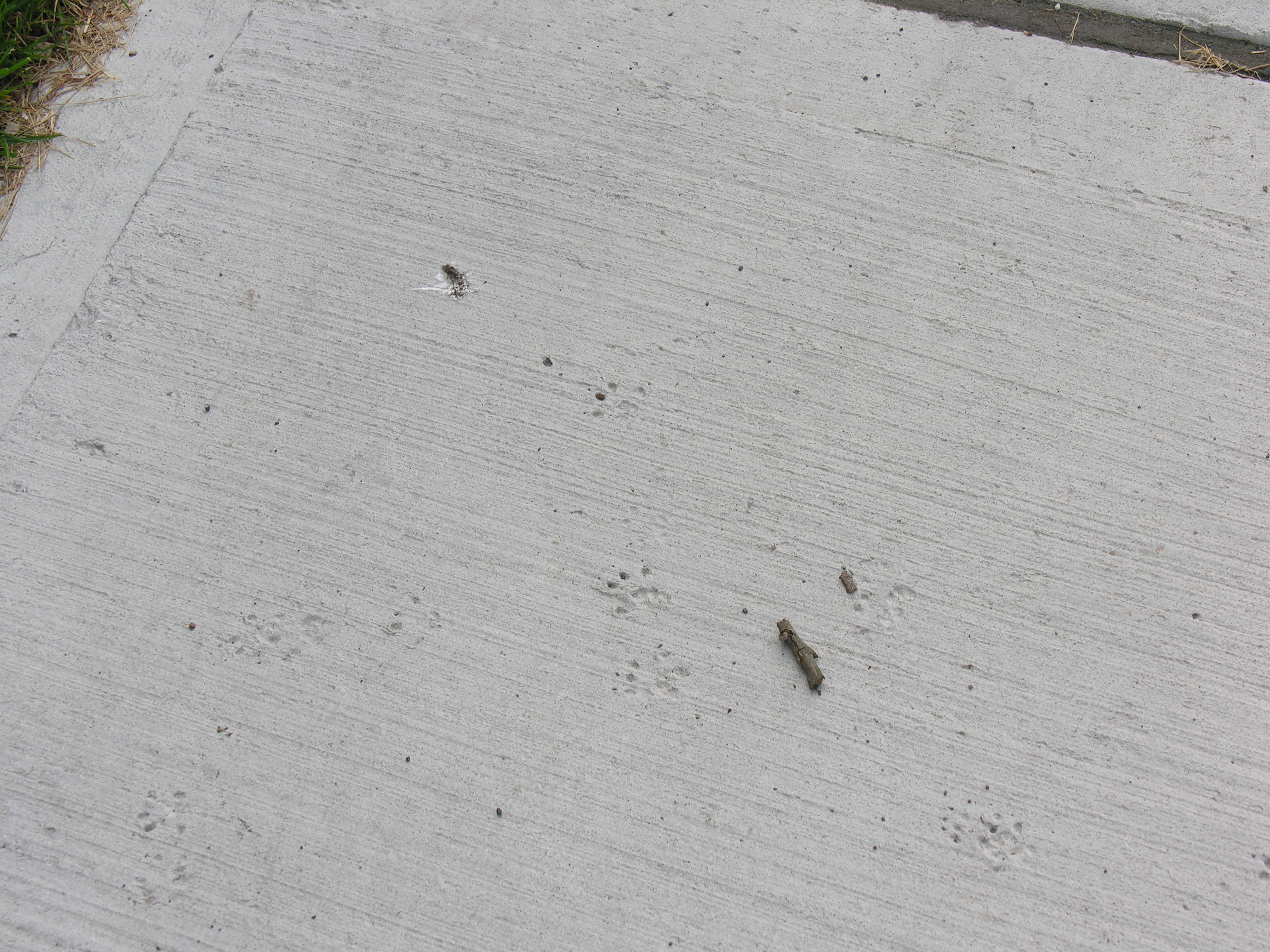
They had recently built new sidewalks, but a  squirrel had managed to make its mark. Right on, my rodent friend. Immortality is yours.

Posted in Uncategorized | 7 Comments

Back to Canada

I have just returned from another trip to Quebec. I stayed for a couple of days with my aunt and uncle in Mont St. Hilaire, southeast of the city.

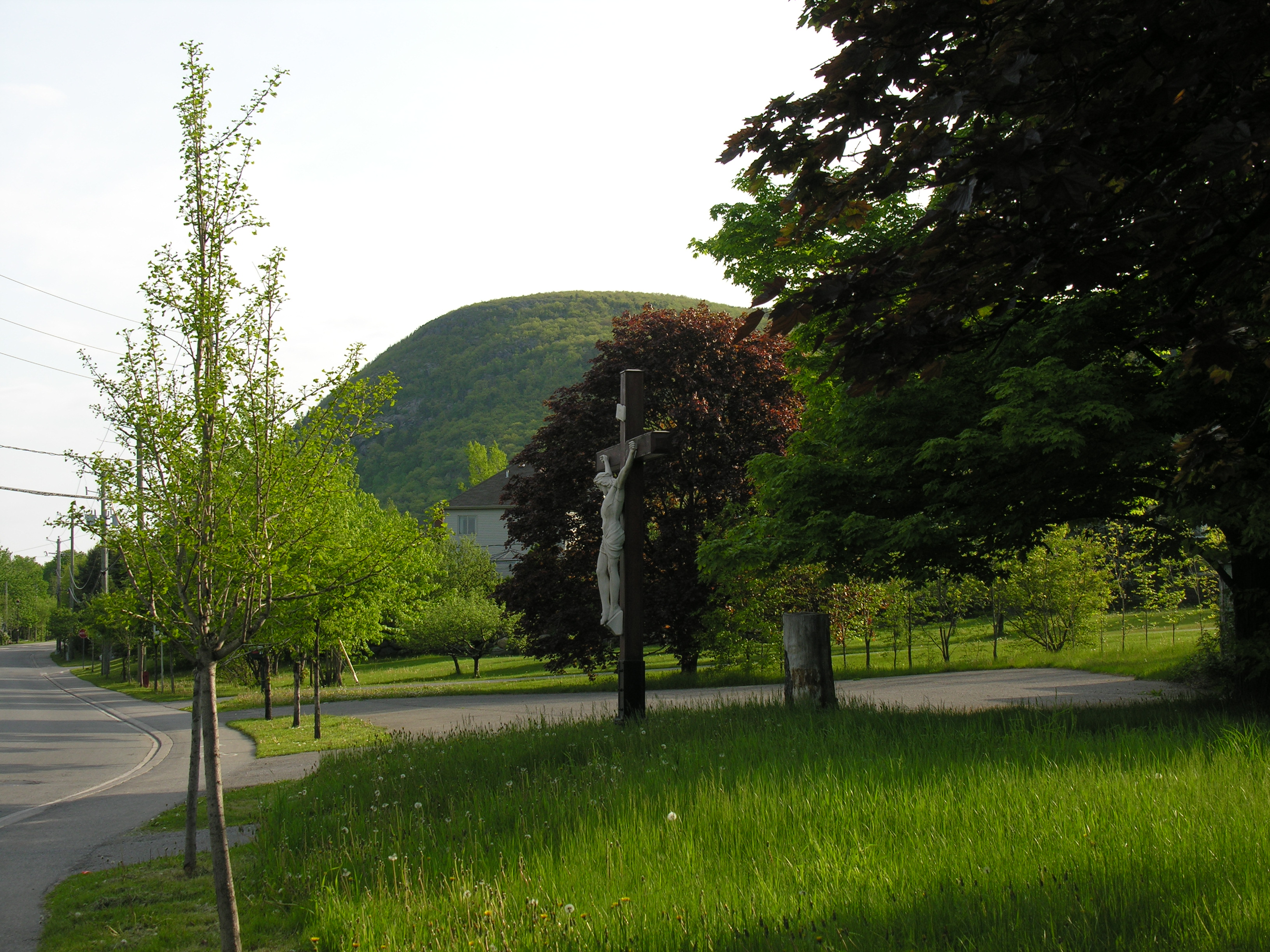
The crucifix is a common site on roads throughout Quebec, which, until recently, was a thoroughly Catholic province, more or less run by the church. It’s much more secular now, but the religious symbols remain. Check out the mountain in the background.

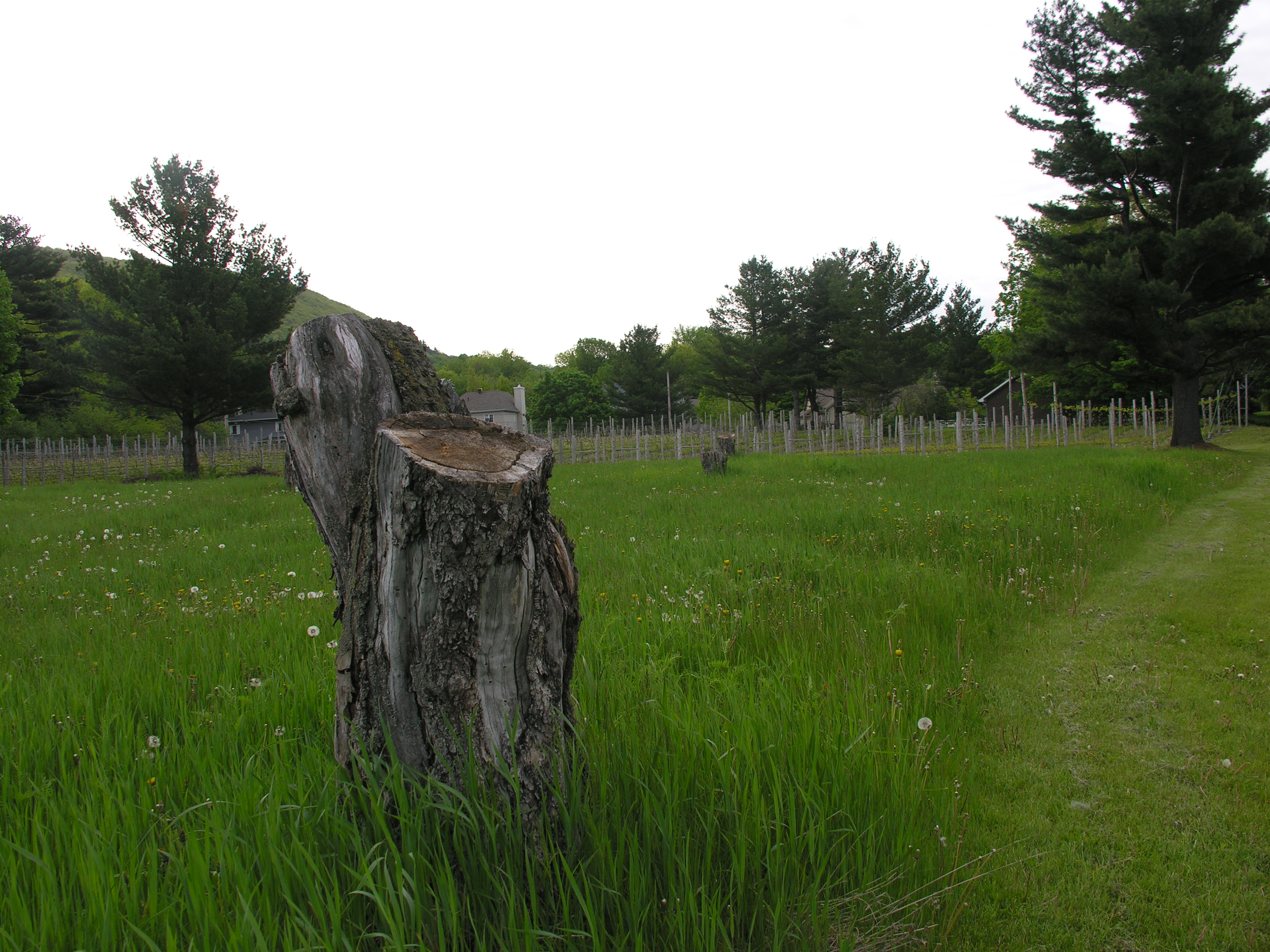
This area used to be famous for its apple orchards, but most of them have been cut down for tacky housing developments. This one, though, has been replaced by a vineyard.

Dandelions are seen everywhere, because people do not spray their lawns here.

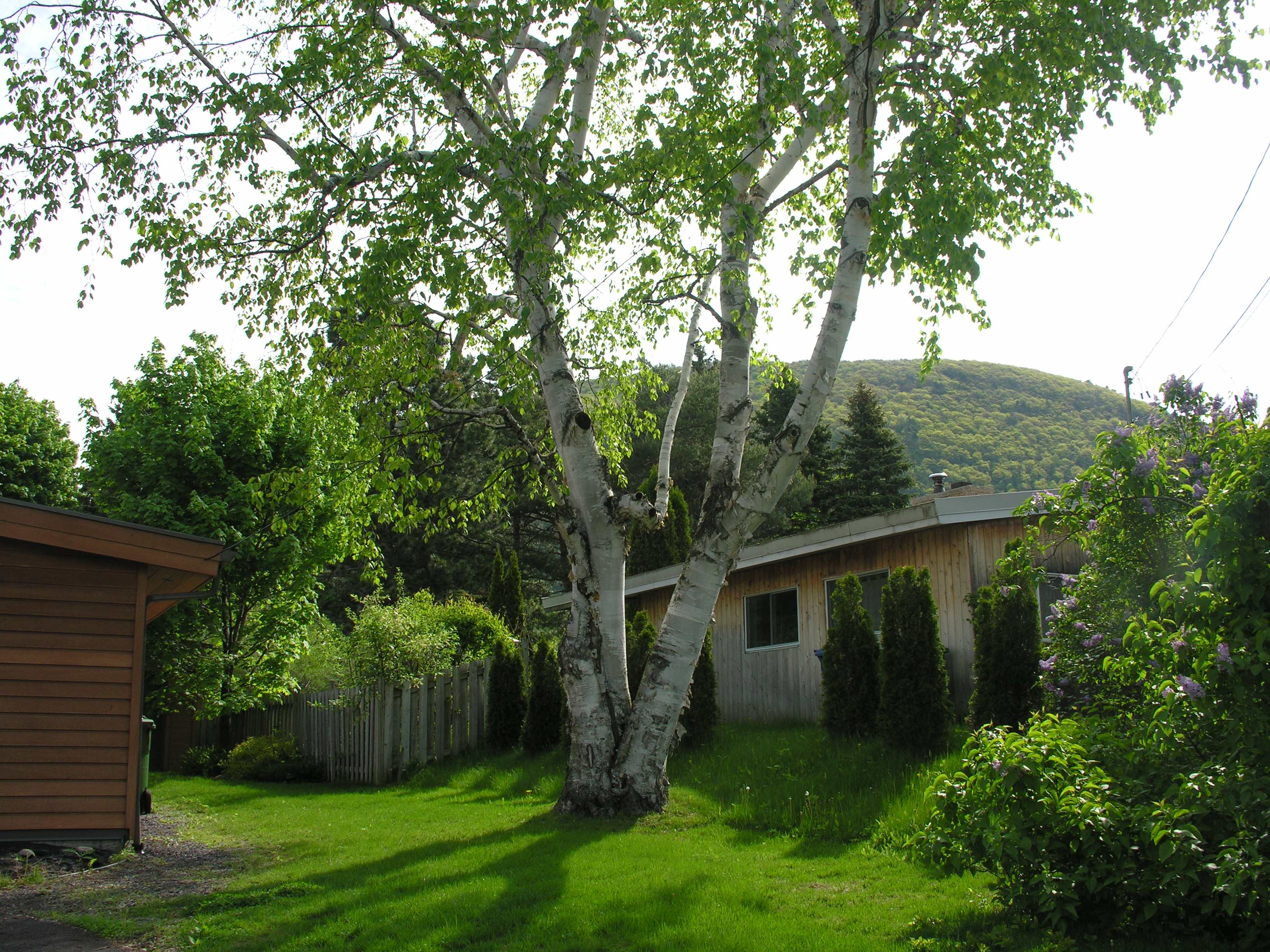
White birches still do well in Quebec. In Rhode island, it’s become too warm for them to thrive, and people are planting river birches instead. I do love the white ones, though.

More in the next dispatch from my former homeland!

Posted in Uncategorized | 2 Comments