Problem Solved

This is how dachshunds really dig in the garden.

In my last post, I ranted about my new Dell computer and the trouble I was having sending photos using Picasa and Windows Live Mail.

I am happy to report that I have solved the problem – no thanks to the so-called “tech support” at Dell (a total joke).

With help from my husband, I found another email program, Mozilla Thunderbird, which is completely compatible with Picasa, and free! I wanted to continue using Picasa because it automatically sizes the photos for emailing them. I don’t need fancy photo editing software, so Picasa works just fine for me.

So all of you pulling out your hair over Windows 7, just use Thunderbird for emailing your photos. Needless to say, Windows Live Mail is no longer my default email program.

There’s just one thing I fail to understand: why should any of this have happened in the first place? Why do we have to figure out ways AROUND crappy software? Shouldn’t it just be intuitive and simple to use in the first place? And the fact that Dell wanted to charge me for software tech support on a brand new computer (Microsoft sent me to Dell) is disgusting. Really disgusting.

PS. I know the blog looks different these days. The cute worm and bee mysteriously disappeared and it seems I have to cough up more money for a new custom header. Stay tuned for a new look coming soon. In the meantime, I will continue to post as usual, and as always, thanks for reading and for your support!
Posted in Uncategorized | 10 Comments

Gritting My Teeth

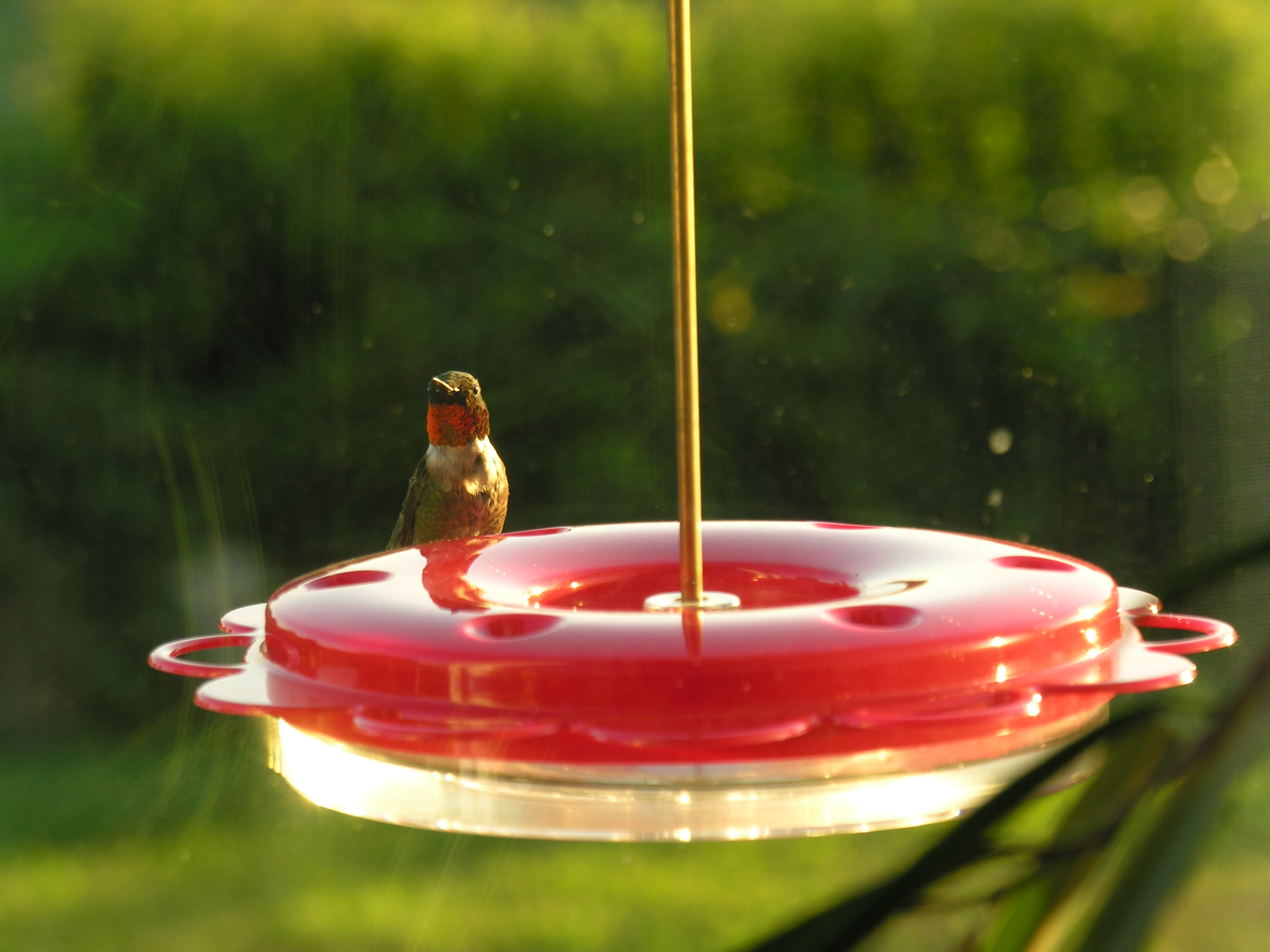
Hummingbirds make me happy. Computers, not so much.

Fair warning: this post is not about plants or gardening, and it’s a rant. (The hummer’s a real cutie, though, right?)

Anyway, I just have to vent about my new computer – the one I use for writing this blog and for my other job as a journalist.

Our old laptop was getting old, and I thought it was time to upgrade. We got a good deal on a Dell Inspiron 15. Like just about everyone else, I really wanted a Mac but this was about a third of the price.

First off, I was amazed at the poor quality of the keyboard. It’s made of a flimsy plastic, and it bends and rattles loudly with every touch. But that’s the least of my problems.

I can no longer email photos using my beloved Picasa software, because it is not compatible with Windows 7. I have tried emailing them  manually, inserting them as attachments. They end up languishing in my outbox.

So like everyone else, I go online, and of course there are scores of posts on this very topic. It seems that everyone is having this problem, but I can’t find a solution in any of the forums. Next, I go to the Microsoft website without success – gee what a surprise.

Finally I resort to the dreaded Dell customer service. I wait on hold for 10 minutes. Then I get an operator and give her the service tag etc and explain the problem. Then I wait for another 10 minutes or so. A guy comes on, I explain my problem and he tells me he’s a hardware tech person and not a software tech. So they transfer me again and I get a woman to whom I explain the problem yet again. She tells me that she too is a hardware tech and that I would have to PAY for software support. After wasting nearly 45 minutes on this, I hung up.

So I go back to the Microsoft site and guess what? They offer free tech support for Windows 7 purchased separately, but for pre-installed software guess where they directed me? Why Dell, of course.

After posting this, I am going to shut down this computer and go outside for a while.

Posted in Uncategorized | 13 Comments

My Black Velvet Isn’t So Black Anymore

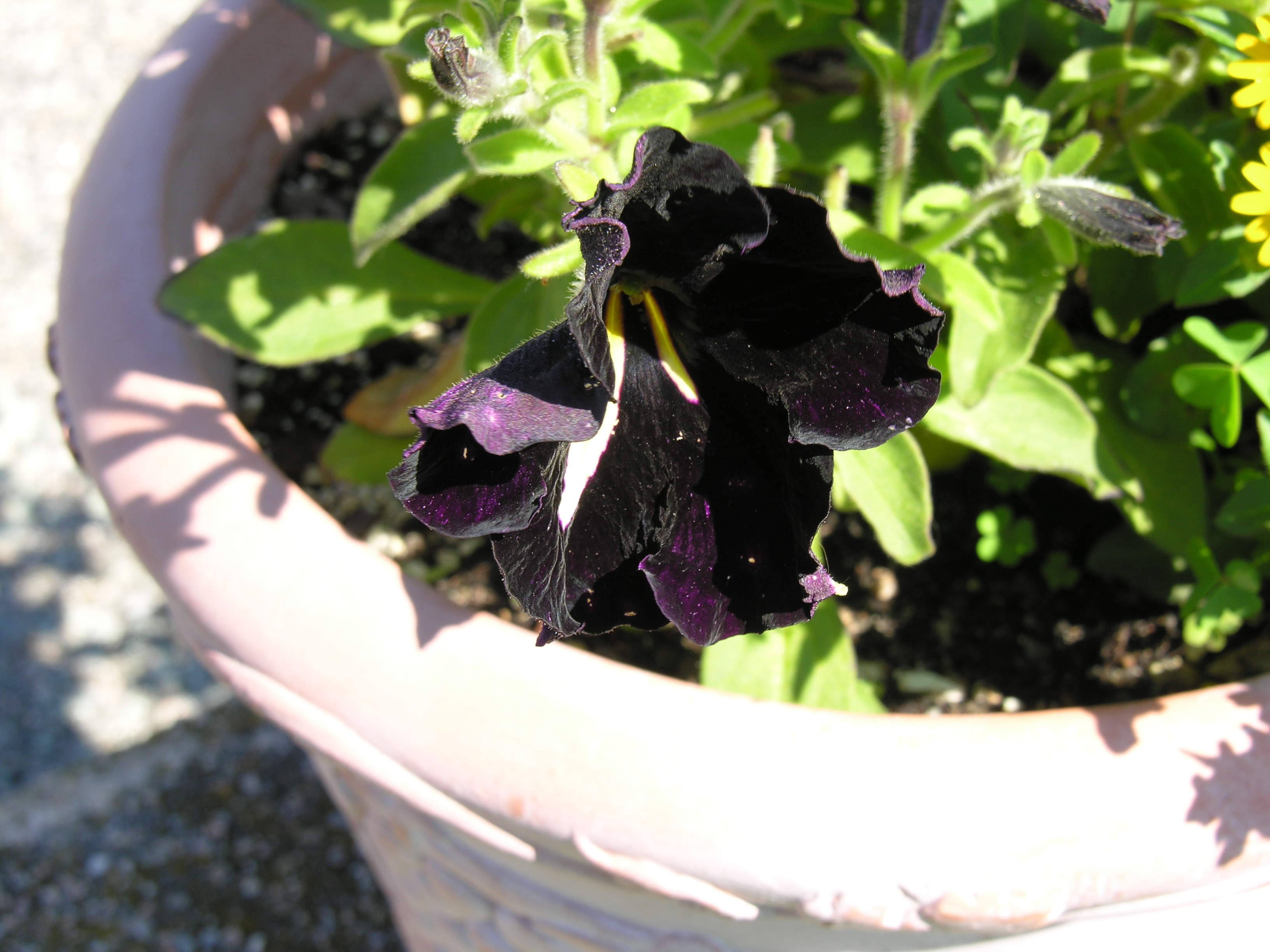
Note bold yellow stripes where there shouldn't be any.

A while back, I wrote about the new black petunias and how popular I thought they’d be this season. I was right. They popped up everywhere, and my favorite nursery had plenty. Of course, I had to buy some, and they were very black and very “velvety” –until now.

All of a sudden, they are showing some yellow stripes. This is definitely not what I had in mind when I bought them. I did a little research, and lo and behold, I am not alone. It seems that under certain conditions such as “stress” (like what – sun and fresh air and water, maybe?) these plants revert to black with yellow stripes – the cultivars “Phantom” or “Pinstripe” or whatever.

I know that these reversions are common in highly hybridized and new introductions. I just didn’t think it would be that fast.

Posted in Uncategorized | 9 Comments

La Vie en Rose

The RI Rose Show

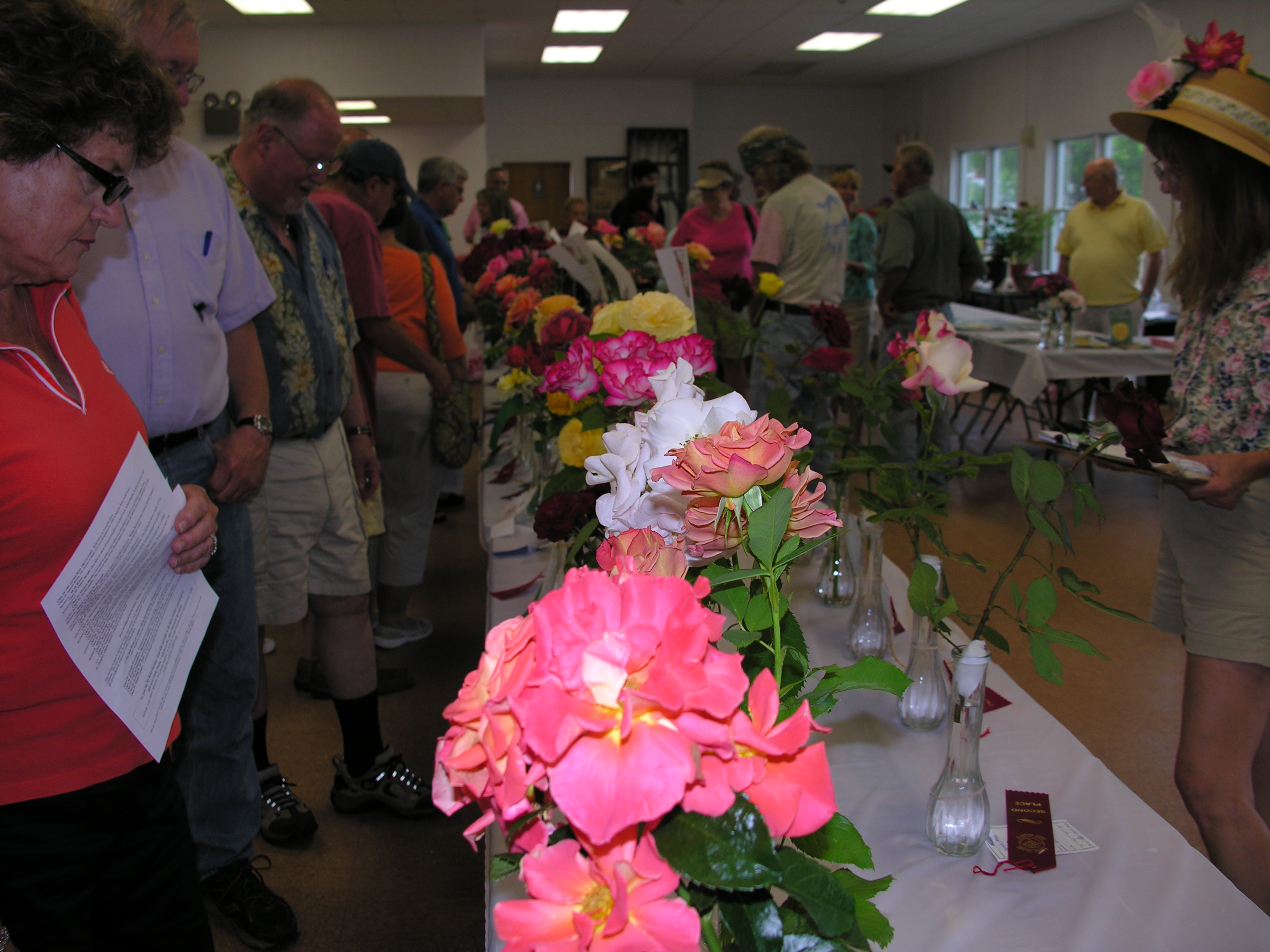
The Rhode Island Rose Society held its 13th annual rose show recently, and I dropped by with a couple of gardening friends. This year’s theme was “La Vie en Rose,” and as you can imagine, the show had a decidedly French accent, honoring contributions made by French rosarians. The “Theme Class” called for roses with French names.

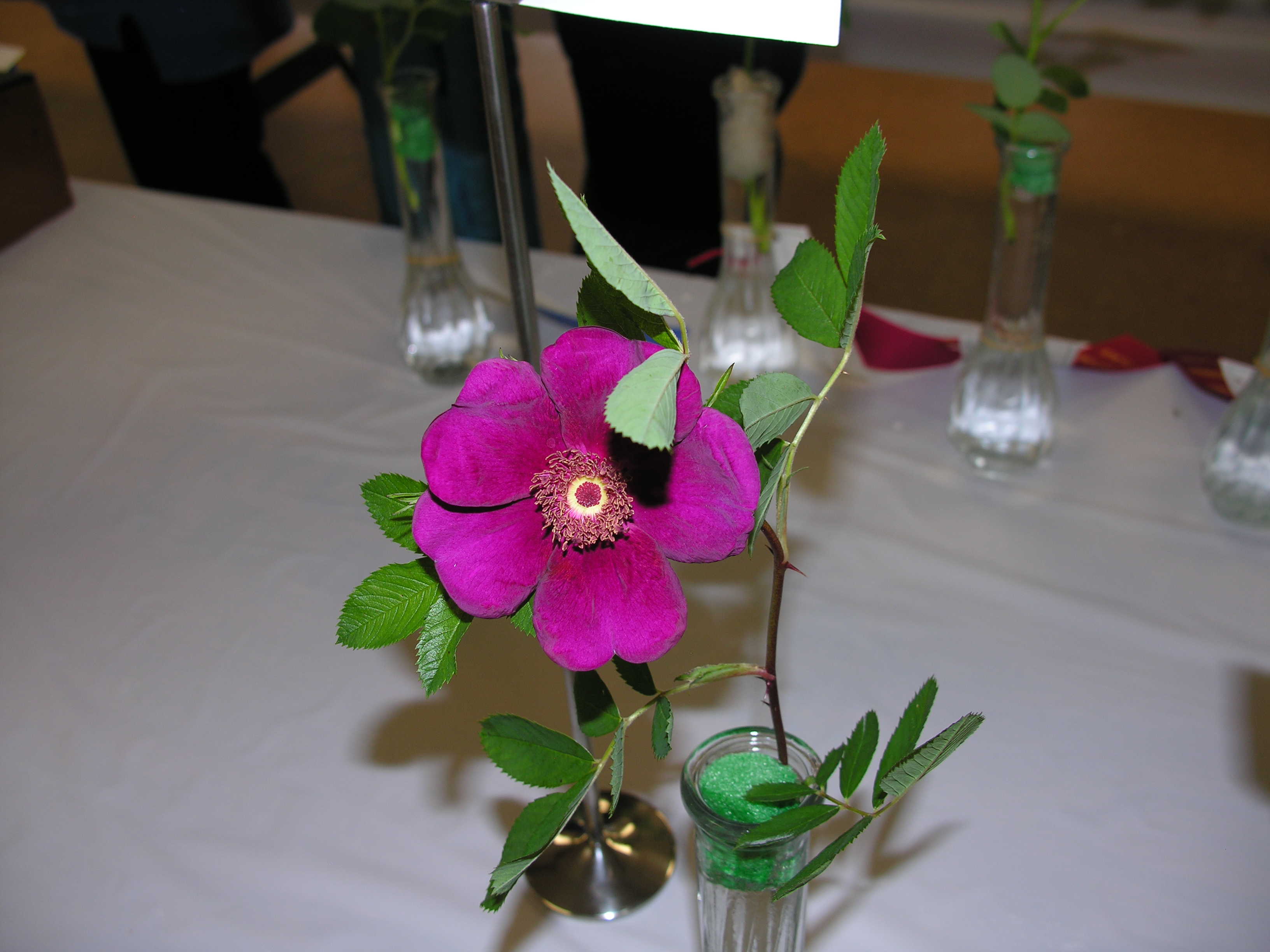
There were some pretty spectacular blooms to ogle, some of which, like “Paul McCartney” also had amazing perfumes. I have a bias against roses without perfumes. They just don’t seem right to me somehow.

Insert nose, breathe deeply

There were speakers and experts, one of whom recommended window cleaner with ammonia to get rid of Japanese beetles. That sounds like a very sensible solution to me, although I must confess that I don’t plant anything that attracts Japanese beetles. Too much of a hassle.

Loved this one - didn't get the name.

But, as we gardeners know, most roses are not sustainable plants, and require a great deal of food, water and chemical intervention. I listened as one speaker described in detail how her husband suited up before spraying their roses with what she referred to as the “toxic” stuff. Hey, if you have to protect yourself that thoroughly, maybe you should consider what that chemical is doing to the things it’s being sprayed ON!

Sigh.

Posted in Uncategorized | 3 Comments

Natives, Again!

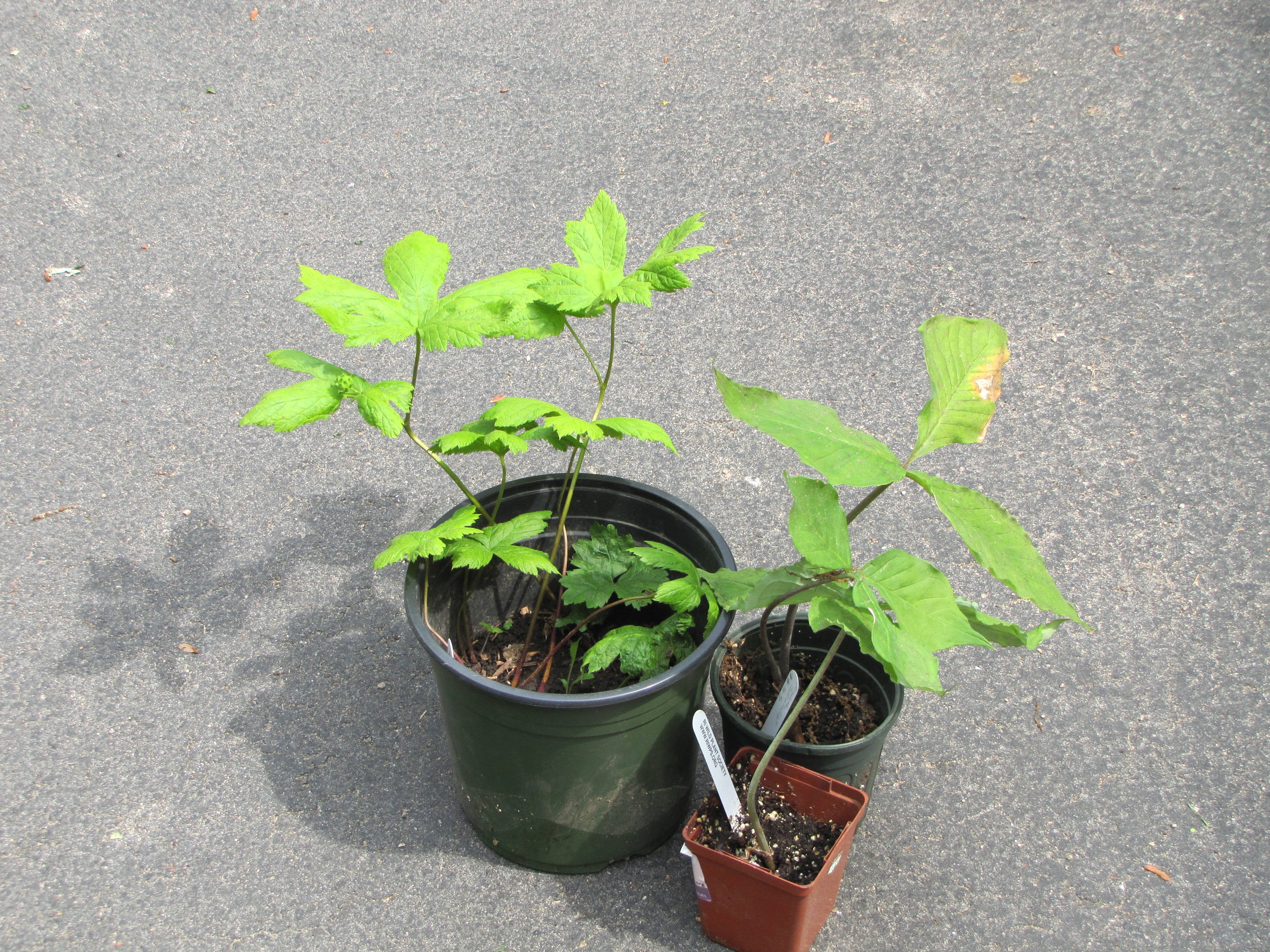
Jack-in-the-Pulpit (3 leaves) and Goldenseal

HerbDoc just can’t resist the annual native plant sale!

Recently I attended a sale of native and/or rare perennials sponsored by the RI Wild Plant Society.  I hadn’t realized just how many of the plants on my wooded property are natives, but I coveted Goldenseal (Hydrastis canadensis), Jack-in-the- Pulpit (Arisaema triphyllum) and Bloodroot (Sanguinaria Canadensis).  I felt fortunate to pick up the first two, but an entire section of table devoted to Bloodroot was sold out.

Interestingly there were plants for sale which I couldn’t imagine folks buying…goldenrod, celandine, plantain…plants only a true aficionado could love.  Truthfully don’t most gardeners just weed these out of their gardens?

I’ll admit to keeping a couple of celandines as it’s considered to be an herb, but some of those offered for sale are not very pretty and can cause allergic reactions in susceptible people.

I also managed to confuse myself when my brain began to mull these questions.  Is it a native, a wildflower, or an herb?  Could it be all three?

And exactly what distinguishes a weed from a wildflower?  My books on wildflowers and weed charts didn’t help me very much as some plants were listed in both.  Of course many wildflowers and weeds had their beginnings as valued herbs.

In the end I’d say the terminology applied to these plants would be in their value to the collector.  I plan on continuing to add plants that I like to my property even if others consider them to be weeds!

Posted in Uncategorized | 14 Comments

Chemical Warfare: The Formal Complaint

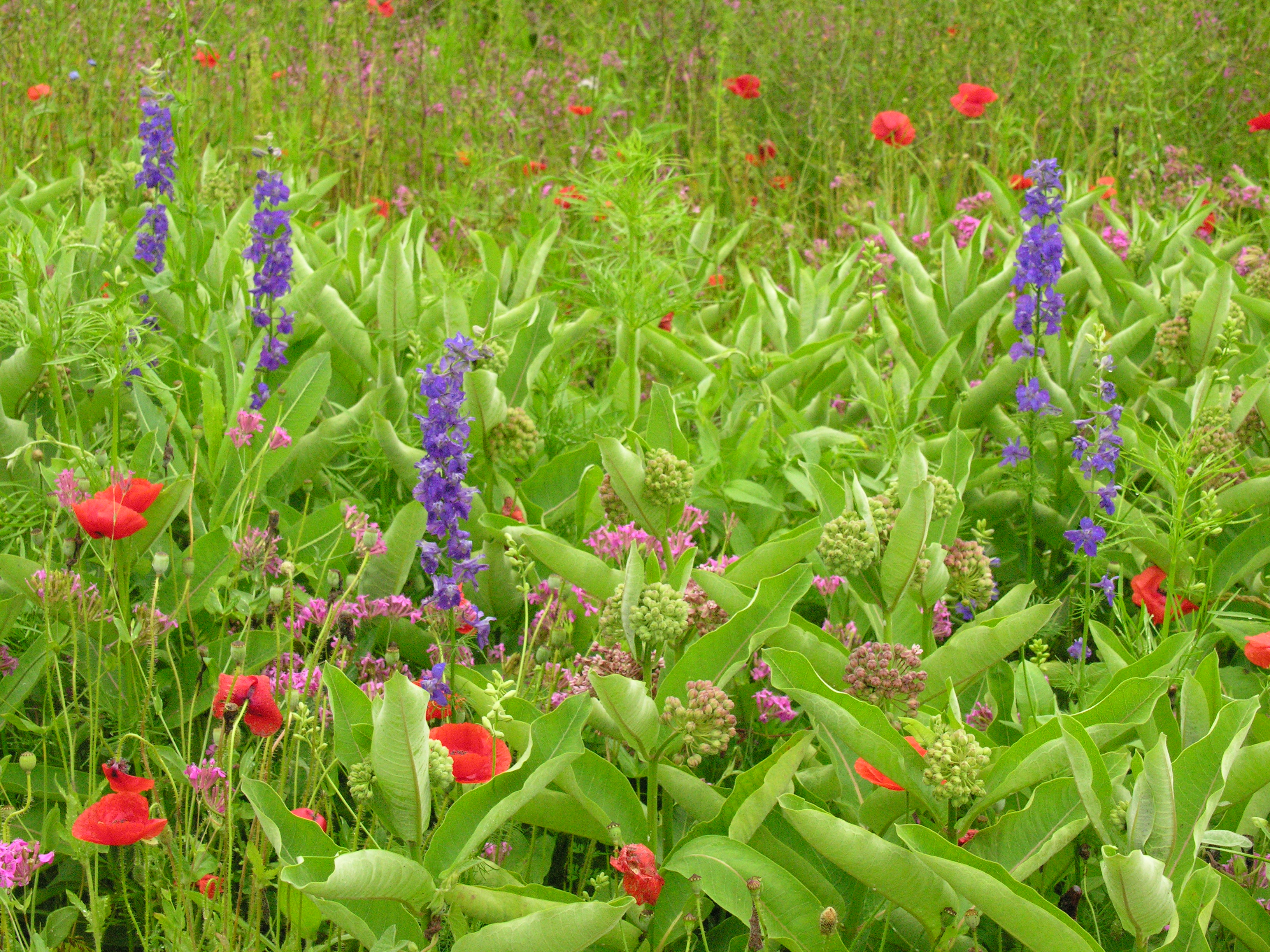
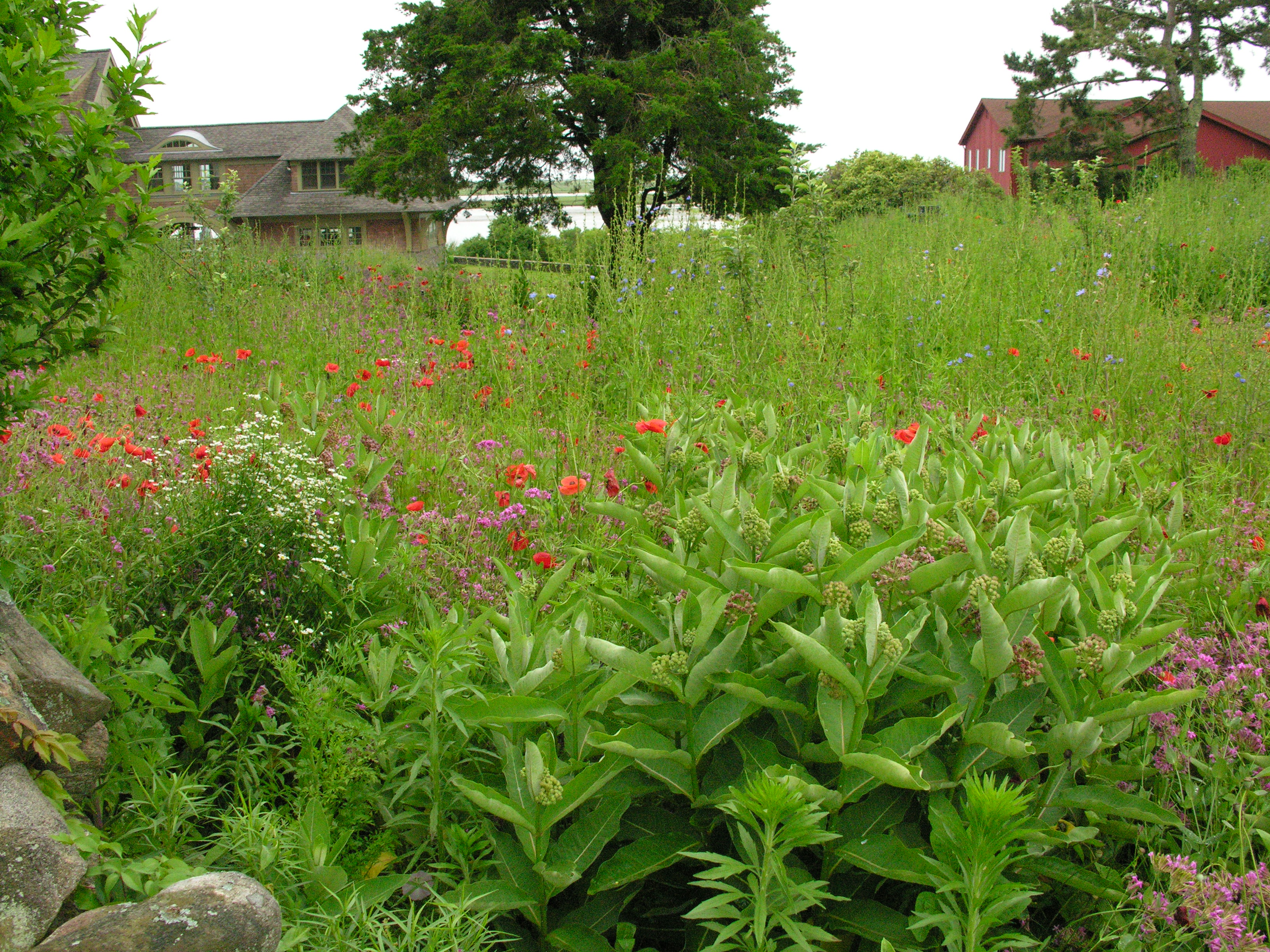
The meadow this morning. Note milkweed about to flower.

This is the second installment in my continuing saga of a pesticide application gone wrong. The incident involved a tree care company spraying my neighbor’s apple trees in a strong wind, and the chemical or chemicals (I still don’t know what he was applying) being carried by the wind into my yard, vegetable garden, bird bath and even into my house. You can read the whole sordid tale here.

I decided to make a formal complaint. This is the first time I have done this, and I was interested in seeing how seriously the state took me and how the  process worked.

I started with a phone call to the RI Department of Environmental Management (DEM). I left a message on Saturday afternoon with someone in the pesticide section of the Division of Agriculture.

On Monday I received a call from a senior plant pathologist, who told me she would come and take my statement. She arrived yesterday, and the process took longer than I had anticipated.

First, I recounted what had happened and she wrote it all out by hand, using carbon paper so I would have a copy. Then, we went out to my back yard and she took samples of hibiscus, potato, tomato and bean plants. These will be tested for chemical residue. The process was quite lengthy, because everything needed to be  bagged, labeled and sealed – twice.

She took photos of the wildflower meadow and of my yard and garden. Finally, she drew a diagram of the entire area.

The meadow, another view.

I am not expecting much to be found on the plant samples. It has been six days since the spraying, and we’ve had a lot of rain. However, the pathologist told me that what’s most important are the precautions written on the label of the pesticide they were using, and the wind speed at the time of the spraying. Some insecticides clearly warn the applicator not to spray when pollinators are active. These chemicals should be used only early in the morning of later in the day, when the bees have all gone to bed. She will find out what was being applied when she speaks with the tree care company.

As for wind speed, I checked that myself right after the incident, and it was blowing 14 knots. The pathologist told me that spraying is not supposed to be done in winds greater than 5 mph.

I also asked her if she thought it was wrong of this man to have planted a wildflower meadow to attract pollinators and then spray the heck out of them. She agreed that indeed it was.

So now, I wait. The lab work will take a while, apparently, but she will probably talk to the tree care people before long. I’ll keep you  posted.

Posted in Uncategorized | 8 Comments

“Green Prints:” Another Garden Magazine

HerbDoc has discovered another garden mag:

About two months ago I came across a reply card in one of my herbal magazines, urging me to try a publication called “Green Prints, the Weeder’s Digest”.  Intrigued I put the card in the mail.

This small magazine is published four times a year and is full of charming stories illustrated with black and white art work.  It has been in existence for almost two decades now, but this was my first experience with it.

The stories range from humorous to heartwarming, and a good dose of gardening information is sprinkled throughout.  I was delighted with my first issue and a “special issue” containing sixteen of the editor’s favorite stories.

Each one can be read in ten or fifteen minutes, and I found it to be great way to relax with a cup of tea after spending the afternoon in the garden.

Posted in Uncategorized | 3 Comments

Chemical Warfare

The meadow - this week

You may remember my recent post about our neighbor who built a big expensive house and put in a wildflower meadow. The meadow is still there, and it’s still gorgeous, but I am livid.

You see, the owner of the meadow has also planted several apple trees there. (They are supposed to dwarf cultivars – and they had better be or they’ll block our view.) So now the wildflowers are attracting all kinds of pollinators including hummingbirds, and what does the guy do? He hires a company to come and spray chemicals on the apple trees!

I just happened to look out my back door this morning and there was a man from Bartlett Tree Experts  spraying with an onshore wind of about 14 knots, blowing the chemicals into my birdbath, onto my vegetable garden and right through the screens into my living room! I yelled at him to stop and told him it was much too windy to be spraying and that it was drifting onto my property. He had the sense to put down his hose, probably realizing that I was an incensed woman who meant business.

I have lodged a complaint with the state’s Department of Environmental Management and I’ll follow up with a phone call.

I  sick, sick, sick of all the chemicals being used so freely without regard for beneficial insects, wildlife, pets or people. How can you plant a wildflower meadow, attract all kinds of wonderful insects and birds, and then spray the whole thing with poison?

And while I am on the subject, is your lawn really more important to you than the environment?  (The neighbor sprays his lawn, too.) What’s up with the obsession with getting rid of something as innocent as clover?  I also love watching homeowners, in shorts and sandals, casually spraying glyphosate (Roundup) on every little weed they see. This is a toxic chemical, people. If you’re going to be using it, you should at least be protecting your skin. And if you have to protect your skin, how healthy do you think it is for the environment – or do you even care?

It just makes me crazy.

Posted in Uncategorized | 16 Comments

The Case of the (Always) Empty Birdbath

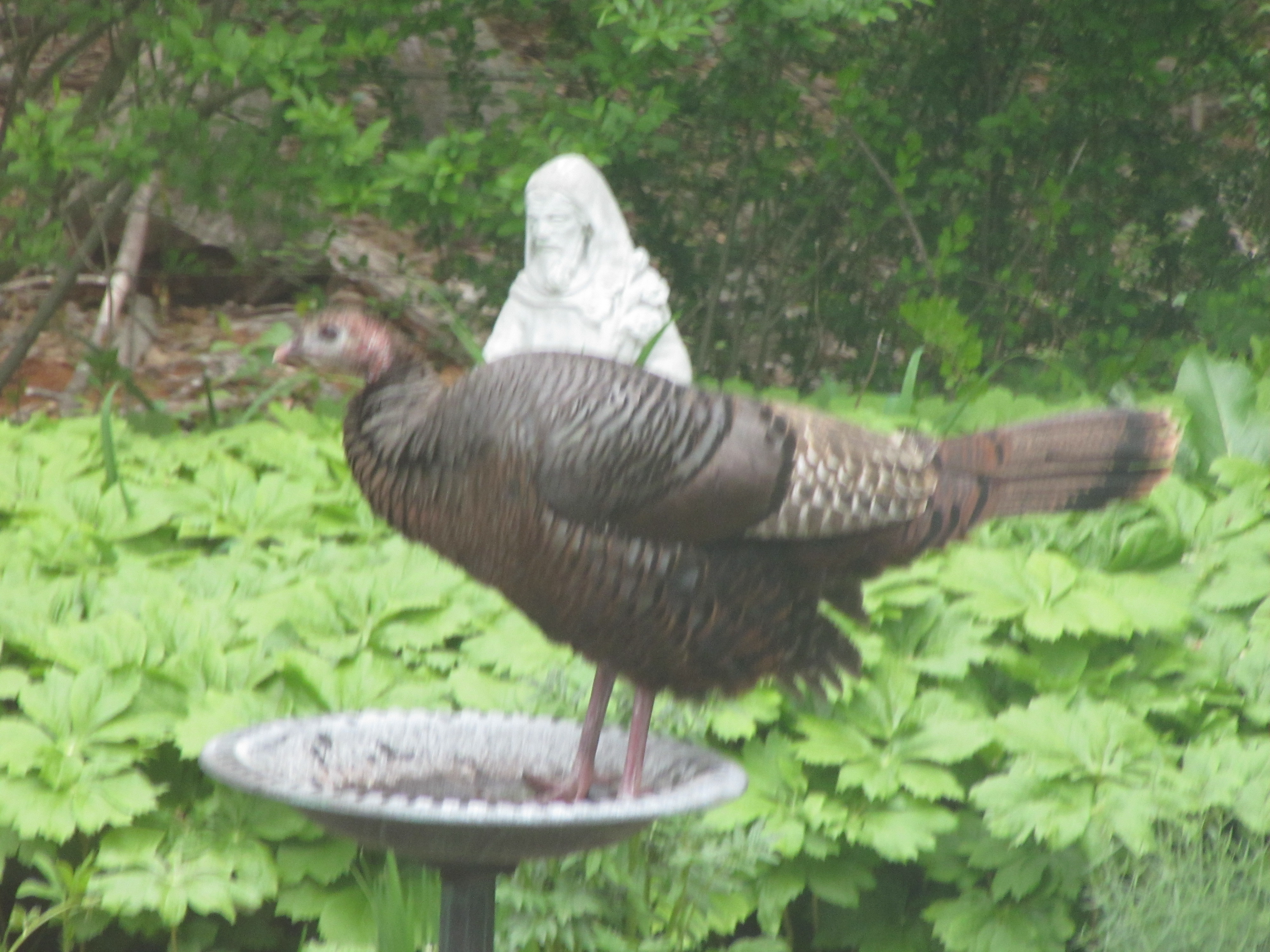
A little blurry, but unmistakable!

I just received a news release from the RI Department of Environmental Management (DEM), asking us all to keep our eyes peeled for wild turkey broods. The public responded to the same request last year, reporting 685 sightings. Biologists are measuring what they call the “brood index” which shows how successfully the turkeys are reproducing. Apparently, 2010 was a very good year with high poult survival rates.

Wild turkeys were re-introduced to RI in 1980 as part of a turkey restoration project. As HerbDoc reports in her post below, it seems to be working – at least at her house!

Most birds find a well-maintained water source irresistible, and since I enjoy watching them, I do my level best to provide cover, feeders and a variety of watering/bathing stations for them.  This includes two heavy metal birdbaths on pedestals where the water is changed at least every other day to rid them of the food particles, feathers and droppings left behind.

Up until a few months ago, my routine worked like a charm.  There was always some remaining water in both the herb and perennial garden birdbaths.  I’d dump it out every other day and replace with clean water.  Once a week or so, I’d add some white vinegar, and scrub and rinse them well before refilling.  Then came the day when I found the herb garden bath totally empty and bone dry; this continued for weeks.

I went through the usual list of suspects…the happy little gang of sparrows that seemed to arrive and leave together; the splashing robins; the cardinal who liked his 4 pmsolitary baths, etc.  I even added the rambunctious raccoon and the curious baby squirrel to the mix.

Finally the perpetrator was spotted!  She flew to the edge of the bath, daintily dipped a toe or two and then proceeded to flail around soaking her feathers and madly preening!  Our discovery was a lone hen turkey that is now tending her young somewhere in the woods.  We’re hoping she’ll decide to bring her babies to the yard for a bath soon!

Posted in Uncategorized | 12 Comments

Two Years Already!

photo: wisconsinhistory.org

Digging RI is two years old! It’s been an interesting journey, and while I still can’t figure out the ups and downs of our blog stats, I think I am getting to understand what readers are interested in.

I know you folks are not usually particularly enthralled by  my bouts of introspection, but I think that one is called for on an anniversary such as this, so please bear with me.

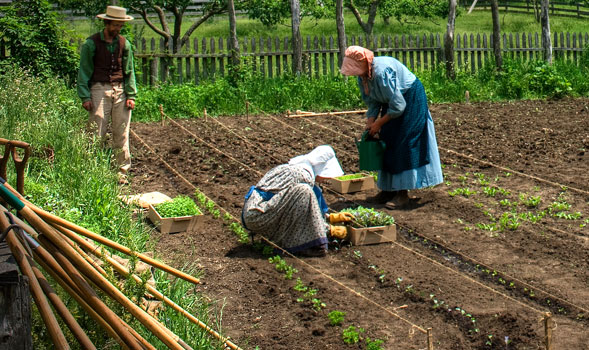
I was working in my vegetable garden, weeding the pole beans, and as usual, my mind began to wander. (cue science fiction music and blurry images) I thought about  pioneer women and how they had tended their gardens much the same way I was doing at that moment. I wondered whether their minds wandered like mine while they were engaged in these tasks or if they were so focused or worried about attacks by wild animals that they didn’t have that luxury.

Gardening - in long skirts! photo: wisconsinhistory.org

For the settlers, the vegetable garden was truly a life or death undertaking. They brought their treasured seeds with them over hundreds of miles, and they didn’t have time for experimentation or whimsies such as purple lettuce. They  traded with Native Americans, who introduced them to corn, beans, squash, melons and certain fruit trees. They planted what they knew produced well for their families, and their children were taught how to help at a very early age. (Makes me wonder what they’d think of the “Disney Garden”!)

Of course there were no freezers back then, so every woman knew how to preserve,  pickle or otherwise store her harvest. In years when the harvest was poor, the family usually went hungry. Can you imagine what it would be like if your bean or potato crop was that important?

Potatoes and turnips for year-long storage. photo:wisconsinhistory.org

I have to thank my frequent blogging pal, HerbDoc for her interesting and useful posts. Thanks also to Auntie Beak for her technical expertise and occasional contributions, and to Elderberry for her contributions as well.

Thanks most of all to  you for reading these musings, for your comments (I LOVE reading the comments!) and for generally supporting the blog.  You gardeners are the best!

Posted in Uncategorized | 11 Comments