A Special Native

Mayapple

HerbDoc has some thoughts on one of her favorite natives:

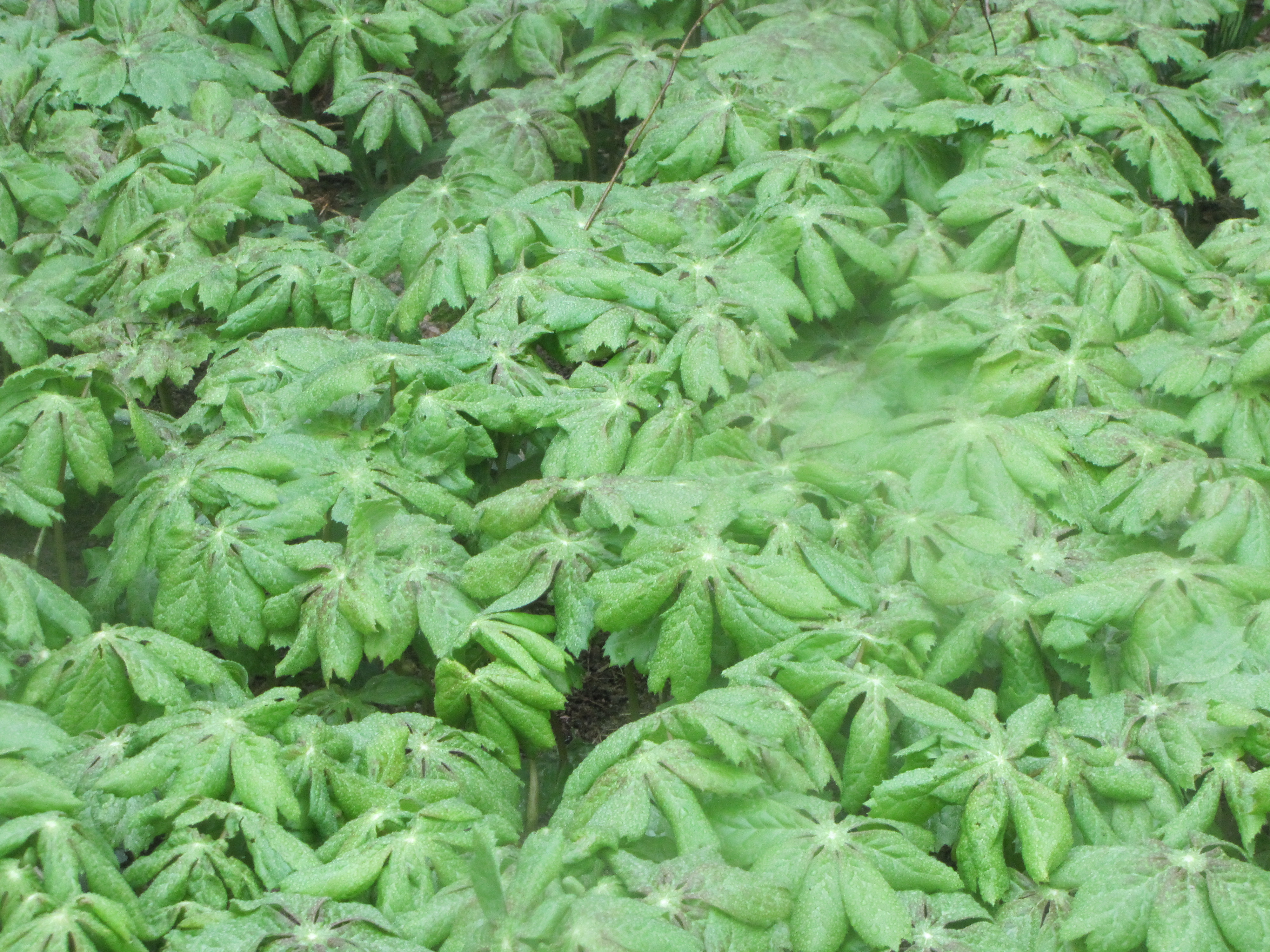
My favorite native plant, Mayapple (Podophyllum peltatum) has fully opened its leaves and carpeted the rear of the herb garden.  Two weeks ago the plants resembled tiny furled umbrellas, and they will soon be in bloom.  Each mayapple has a single white flower, which is followed by a small red fruit.

Although some people use the mature fruit to prepare jellies and juices, the entire plant, including roots, seeds, leaves and raw fruit is quite toxic.  When my children were small I kept them away from the plants by telling them that leprechauns lived under the green umbrellas and could be frightened away by a lot of movement.  It had the added advantage of keeping the boys quiet as they were always trying to sneak up and catch a glimpse of the elusive leprechauns!

Early records show that Native Americans often used the entire plant to prepare insecticides, and early American ethnic groups drank a remedy from the dehydrated rhizomes as a laxative and to cure intestinal worms.

Interestingly the main ingredient in “Carter’s Little Liver Pills” was also the mayapple.

More recently researchers have found that podophyllotoxin, the fatal ingredient in the herb, stops cell division, and the FDA has approved two drugs for use with various types of cancer.

All of this aside, it is a beautiful little ground cover which always signals spring to me.  It is very easy to grow and since it is native to the woodlands, likes some shade and a moist, well-drained soil.  It has rhizomes that are pencil thin but can travel about six feet in good soil.  Its only disadvantage is that it tends to die back when the weather becomes really hot in late summer.

Posted in Uncategorized | 7 Comments

Announcing…Our New Website!

I’ll get straight to the point: here’s a link to our brand spanking new website, GardeningRI.

This has been a long time coming, and a labor of love for our Webmaster and occasional blog contributor, Elderberry, with input from myself (Dirtynailz), HerbDoc and Auntie Beak. It’s the culmination of years of gardening experience and extensive training as Master Gardeners. Yes, we do garden in Rhode Island, but the information applies to most of  the northeastern US, and much of it is universal.

Does the world need yet another gardening website? We think it does. We combed the Web for a site with advice only, and we didn’t find one for our region (although it’s always possible there’s one out there somewhere in cyberspace…who knows?). And that’s the point of our website: practical gardening information that’s straightforward, easy to find and easy to follow.

So if you need help choosing plants, starting a garden (veggie or ornamental) keeping your dog out of the flowers, composting, tree pruning, lawn care or anything else pertaining to gardens and even houseplants, you’ve come to the right place. We emphasize sustainable gardening practices and  proven techniques, and we hope you’ll bookmark us and return whenever you need help.

We’re so new that Google hasn’t listed us yet, so bookmark the above link. We’re also happy to  hear your comments on the site, so feel free to send your comments to this blog.

Now go and check it out…please!

Posted in Uncategorized | 5 Comments

More Beautiful Blue

Photo: Arcanewizard

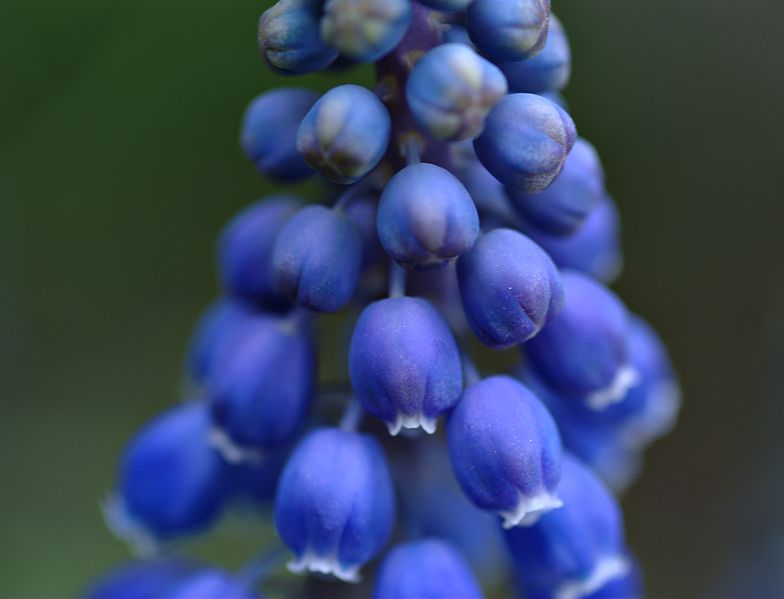
Just when you were gazing at your narcissus and early tulips and wishing the blue of scilla siberica would last longer, along comes muscari armeniacum, or Grape Hyacinth.  The  name “Muscari” is derived from the Latin word “muscus.” The flowers are supposed to smell musky, although I have never thought so.

I love this unassuming little bulb for many reasons.

Like scilla it’s both hardy and inexpensive. It blooms  in mid-spring,  just when you need a strong blue foil for your other spring flowering bulbs. It makes a very nice cut flower if you have a diminuitive vase or two, and it naturalizes well. I found a brave pioneer in the grass out by my driveway this morning, and it’s welcome to stay and multiply there.

M. Armeniacum hails from Eurasia. It grows to about eight inches tall, although the ones I see around here are more like four to six. It grows in zones 3-9, and like other bulbs, needs sun and above all, good drainage.

There are other cultivars and other colors and shades of blue, but this one is definitely my favorite.

Posted in Uncategorized | Leave a comment

Hug A Tree: Arbor Day in Rhode Island

I recently received an email from the Rhode Island Tree Council about celebrating Arbor Day. To mark the occasion, volunteers will plant 100 trees which will eventually form a welcome green canopy at the entrance to Ninigret Park. The event is being sponsored by the local power company, which I think is great.

Arbor Day was first celebrated in Nebraska in 1872, but Rhode Island didn’t start observing it until 1891. World War II put an end to Arbor Day festivities in RI, and it wasn’t until the 1990s that the RI Tree Council revived the tradition.

Anything that gets people to show more love and respect for trees gets my vote. In addition to planting trees, I think we could also honor them by pruning them properly – NEVER topping, planting them in the right places to they can reach their gorgeous potential without interfering with power lines and buildings, and by keeping that horrendously overused mulch AWAY from the trunk and making sure the root flare in exposed to the air so the poor tree can breathe already!

Official Arbor Day is May 7, but here in RI, it will be celebrated on April 29.

Posted in Uncategorized | 2 Comments

Fighting a Giant

There has been an interesting development in the continuing saga of small growers and the chemical giant, Monsanto.

Please read this carefully, because it has to be fully understood to be believed:

Monsanto has been suing farmers in the United States and Canada for allegedly violating its patents, when Monsanto’s seeds have accidentally ended up in neighboring farmers’ fields. Now as gardeners, we all know how easily seeds can be transported – by the wind, water,  birds or humans. So the seeds end up next door in another farmer’s crop field, and the next thing he knows, the farmer’s defending himself against a patent violation lawsuit.

This whole thing sounds pretty crazy, right? But it’s true

Monsanto’s army of predatory lawyers has been able to convince the courts that this actually constitutes a violation of its patent protection, and the company has already successfully prosecuted over 147 farmers and 39 small businesses. To read about one of those cases, click here.

Canadian farmer, Percy Schmeiser, was sued by Monsanto

Now, the growers are fighting back. On March 29th, 60 of them launched a lawsuit against the company, claiming that Monsanto’s genetically engineered crops could destroy their businesses. The suit, filed by the Public Patent Foundation advocacy group, attempts to protect the growers from legal action should their fields become contaminated by cross-pollination with Monsanto’s GM seeds.

I am shaking my head in disbelief that the growers have to do this in order to protect themselves, but  apparently they do.

To read more about this story, click here.

If you’d like to find out more about a group fighting Monsanto, click here.

Posted in Uncategorized | 7 Comments

Forsythia: Pruned or Natural?

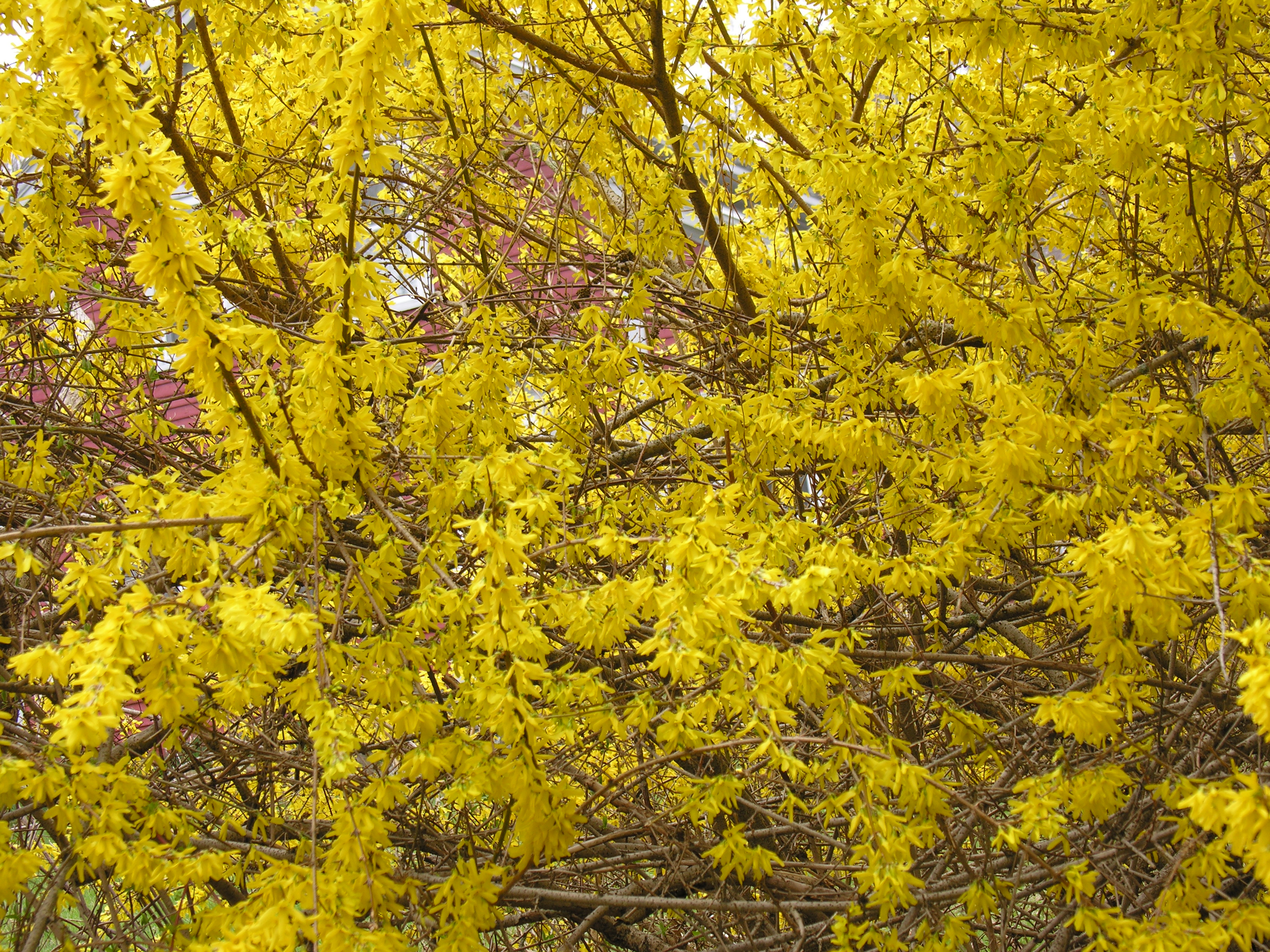
The forsythia is in bloom here now, and it seems to be a good year for this shrub. Most of the ones I am seeing are looking healthy and in-your-face YELLOW.

Forsythia is a member of the Oleaceae, or olive family. It usually grows to about 9 feet, and it flowers before its leaves emerge.

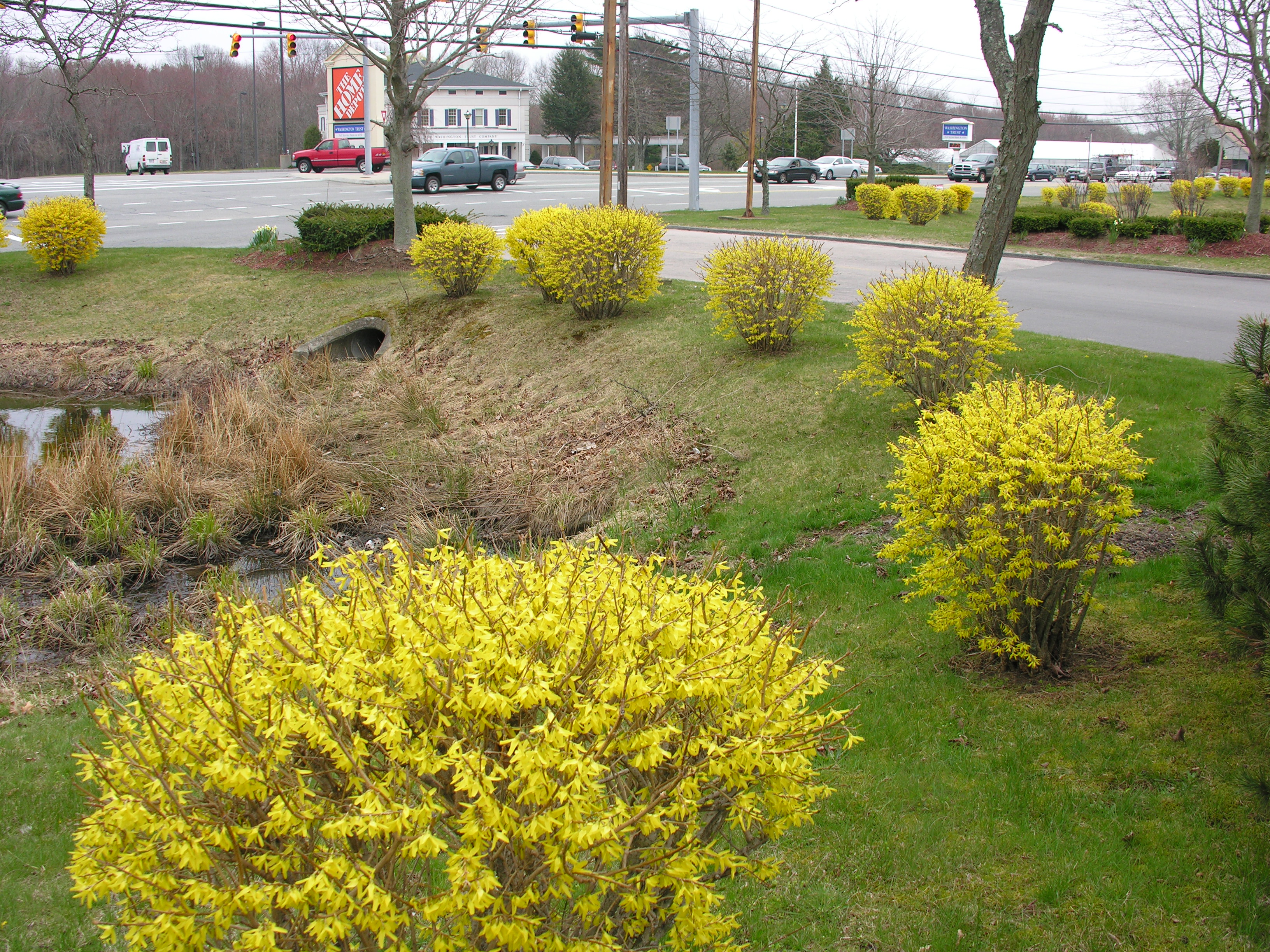
Now the big question is, should they be pruned or not?  Personally, I don’t think there is a question. It’s fine to cut them back to keep them under control (after they flower, of course) but it’s not fine to turn them into the tortured little balls pictured below.

Yuck!

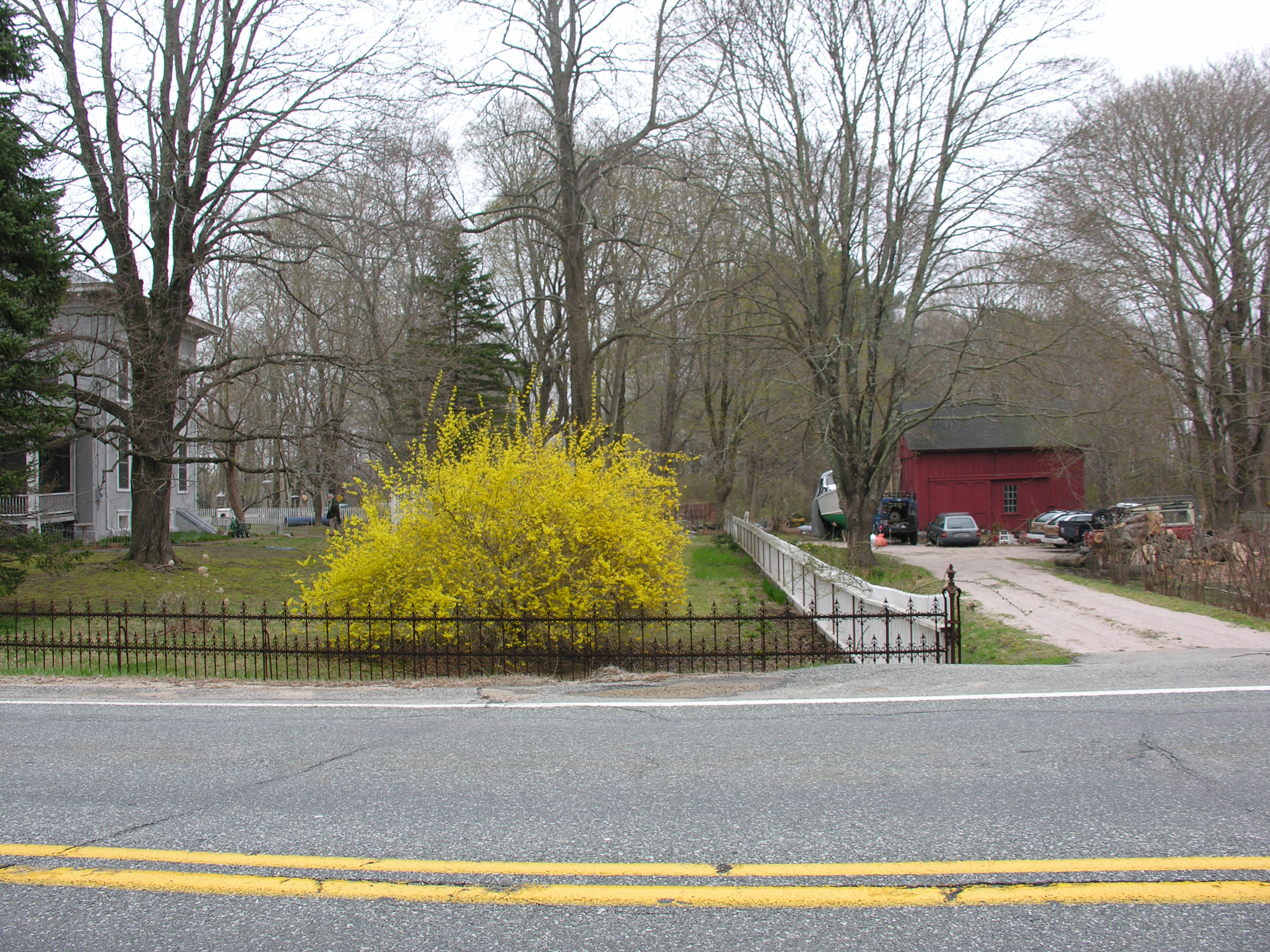
I love to see forsythia blooming flamboyantly and naturally, with plenty of space to show off.

Much better

Posted in Uncategorized | 8 Comments

Beautiful Blue

Scilla Siberica at its best

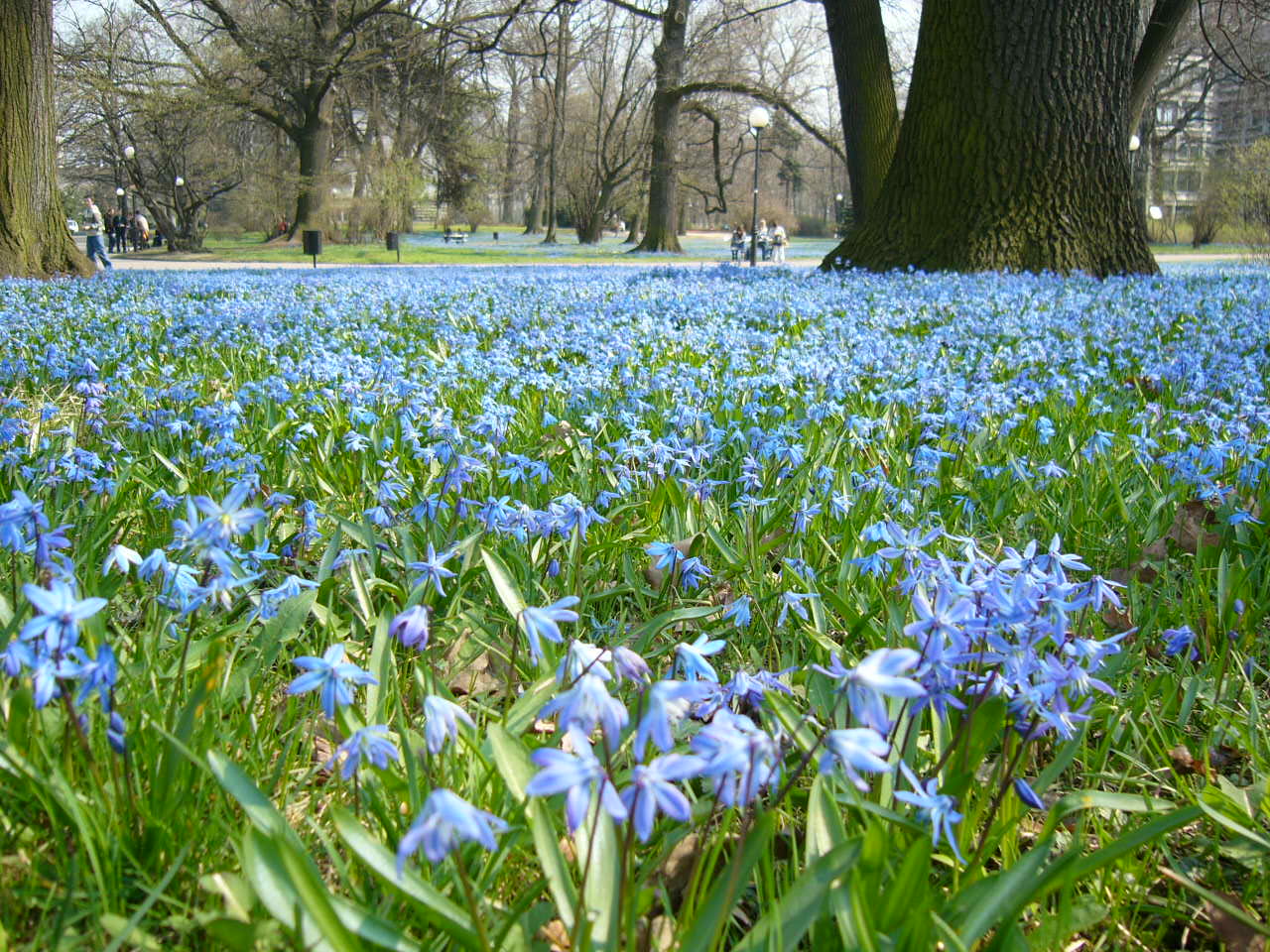
The scilla siberica is in bloom here in RI right now. It’s such a fleeting show – over by May – but so welcome. When I lived in Montreal, people in my neighborhood planted it extensively, and it would form vast carpets of the most intense blue. It doesn’t seem to be as popular here, but I did drive by a lovely carpet of it recently, which inspired me to write this post.

Scilla also goes by the names of “Squill” and “Spring Beauty.” It’s easy to plant in the fall, and I think it is best appreciated in large drifts. Being so small, the bulbs aren’t expensive, so plant lots. Just make sure they have good drainage, and you will be amply rewarded come spring.

Scilla are members of the Hyacinthaceae family. They are tough as nails, tolerating the coldest winters, however they are not from Siberia, as their name implies. (They originated in Russia, Turkey and the Caucasus.)

Here’s one more nice thing about scilla: once the plants have produced seeds, they die back and disappear, just in time for the first lawn mowing of the season.

Posted in Uncategorized | 6 Comments

Herb of the Year

Horseradish growing in a pot. photo: net-efekt

HerbDoc has some useful tips on growing one of my favorite herbs:

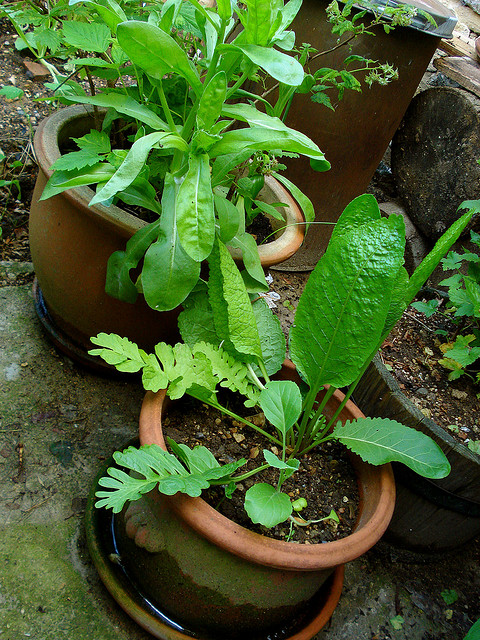
Horseradish (Amoracia rusticana) has been named the 2011 Herb of the Year by the International Herb Association.  The usable part of the horseradish is the white root of the plant.  Once planted the gardener will have a perennial supply of it!  Even when I’m positive that I’ve relocated an entire plant, some tiny root will volunteer a new plant in its former location.  If you choose to have it in your garden, put it in the back corner and harvest early and often for the most tender roots.

Plant straight young roots 8-9 inches long and ½ inch wide with the crown about 5 inches under the soil line.  These roots grow deep and love compost and manure.  Although the literature notes that horseradish may be subject to pests and diseases, I have never had a problem.

Harvesting can be done in spring or fall.  If you plan to grate the roots, do it outdoors as the fumes are very, very potent.  I clearly remember my great uncle sitting outside at his picnic table grating horseradish with tears running down his face.  Today we can use a food processor with a grating blade, but it is still best to do it outdoors or in a very well ventilated location.

Grated horseradish is wonderful with roast beef and is a staple ingredient in cocktail sauce for seafood.  The Oracle at Delphi told Apollo that horseradish was worth its weight and gold, and American folklore says that it should be planted next to potatoes to protect them from disease.

Posted in Uncategorized | 4 Comments

Not So Lemony – but Nice

Aerangis citrata flowers

Check out my aerangis citrata, in full bloom. Last year, it produced two spikes, and this year it graced me with three.

These small orchids, native to Madagascar, are supposed to  do much better when mounted on a tree fern or cork bark, and not so well in a pot. They are also said to prefer shade to sun. Well, mine has been in a pot since I bought it, and it seems very happy. I also keep it in a sunny window, although I do move it to a shadier spot when the sun is very strong in the summer. The keys to success appear to be bright light, cooler temperatures, high humidity and good air circulation – with air circulation being key. I water mine weekly and set the pot on gravel in a tray, but I don’t keep the gravel wet.

It just proves once again that certain cultural “rules” can be broken, depending on the circumstances – and, of course, whether your orchid is happy.  My plant does not have the lemon scent these are known for, but I think it’s happy  anyway.

Posted in Uncategorized | Leave a comment

Do You Inoculate?

Pole Beans. Photo: David Owen

Last year was the first season for my new vegetable garden, and in the rush to prepare the soil and order and start my seeds, I neglected to inoculate my pole beans and my peas. The crops were OK, but not more than that, and I think  they might have been better if I had inoculated the seeds.

Beans and peas are known as “nitrogen fixers,” which means they add nitrogen to the soil. After the plants die, the nitrogen in the nodules on their roots remains.  This means you don’t have to fertilize as much, and if you rotate your crops, as you should, you are spreading this important nutrient around your entire garden.

Inoculant in the Cook's Garden catalog

But it’s not quite as simple as that: in order to fix nitrogen, these plants need soil bacteria called “rhizobia,” which live in the plants’ roots and extract nitrogen from the air. Most healthy garden soils already contain these bacteria, but it doesn’t hurt to add some in dormant form that you just mix with the dampened soil when you plant the seeds. (Moisture helps the inoculant adhere to the seeds.)

Click here for a more detailed article on inoculating.

I bought my inoculant, and I will actually remember add it at planting time. I’ll also compare my crops to last year’s and let you know if it made a difference.

Posted in Uncategorized | 4 Comments