My Potatoes Arrived. Wow!

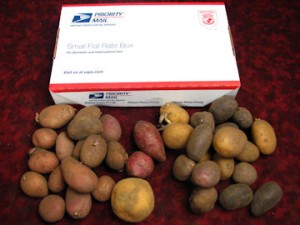
The $15 potato sampler, as pictured on Tom's website

I was not dissatisfied with last year’s potato crop, but now I’m ready for something different. It seems that everyone is selling “Yellow Finn” and “All Blue” and “Red Pearl,” and they are all fine cultivars. But I like to experiment, because I find it’s a good way to learn something new from my garden and because it’s fun. I began my quest for unusual seed potatoes about two months ago. I finally found “New World Seeds and Tubers,” a website run by Tom and Rob Wagner.

It didn’t take much research to realize that I had stumbled on THE Tom Wagner, who is probably the preeminent potato guy – otherwise known as the “Tater Mater.” Wagner is primarily a researcher. One of his best-known tomatoes is the famous “Green Zebra,” which I  – and probably many of you – have grown and enjoyed. Now, thanks to Rob, Tom’s cultivars can  be bought online, through his new website. He also offers a selection of tomatoes and cereal grains.

I decided to take a chance and buy the 1-pound potato sampler. It’s a box crammed with as many seed potatoes as Tom can get in, and you don’t choose them – Tom does. I asked that it be delivered in April, and sure enough it arrived right on time. When I opened the box, it was indeed crammed with potatoes, with the cultivar names written right on the skins. There were 18 of them in there and I had only heard of a couple.  I’m going to need a lot of markers, so I can keep track of the different varieties once they’re in the ground.

Now for the best part: inside my box, along with the printed  list of cultivars, was a receipt on which was a handwritten note from Tom himself! He actually apologized for the lateness of my order (it wasn’t) and ended with: “I did, however, send you a very special collection of varieties to play around with. Thanks… Tom”

No. thank YOU, Tom! I can’t wait to start playing.
Posted in Uncategorized | 12 Comments

Friendly Pollinators

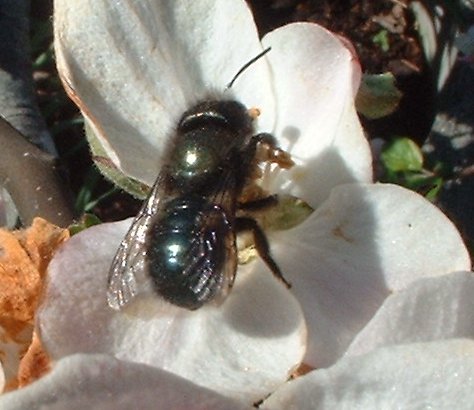
Mason Bee

HerbDoc just loves her mason bees:

I’ve always wanted to keep bees and even went so far as to take the beekeeping course two years ago.  Unfortunately my husband is highly allergic to beestings, and I was never able to go very far in my quest. Recently I decided to try to attract the Orchard Mason Bee (Osmia lignaria) instead.

These tiny blue black bees are very gentle and are termed “nonsocial” because they don’t live in hives.  Although many may be present in the same location, they don’t share nests or help to provide for or protect each other’s young.  In nature they nest in hollow stems, insect holes and woodpecker drillings.  Luckily for gardeners, they will also nest in holes drilled in untreated wooden blocks.  Holes should be 5/16” in diameter and 4-8 inches deep.  Smaller or shallower holes encourage a higher production of male bees which reduces the reproductive potential of the overall population.

A female mason bee forms a small ball of pollen and nectar in the back of the nesting tube and lays an egg in the ball.  She then collects mud, makes a cell partition, and repeats the process until she reaches the opening of the tube.  The entire tube is then capped with a mud plug.  These overwinter with the males emerging first right around the time the redbud blooms.  Females emerge, mate and begin the process of finding new nests.

Many pre-made mason bee “homes” are available from gardening supply companies.  These range in price from around $16 to more than $60. I ordered the bamboo house from Gardeners Supply.  Suggested siting is against a tree or a wall where the home will receive morning sun.  It should also be within 100 yards of the garden to be pollinated.

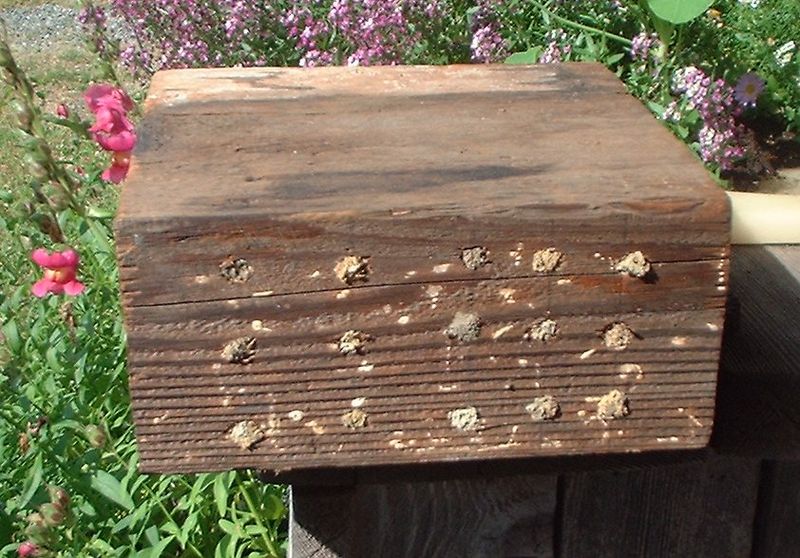
A home made mason bee house, fully occupied!

It is said that these little bees visit as many as 1000 blooms per day – that’s 20 times more than a honeybee!  Since they don’t produce honey and are non aggressive, they seem to be the perfect choice for my garden.

Posted in Uncategorized | 4 Comments

Organic Bedding Plants: Should We Care?

"Freefall Yellow" pansies. photo: National Garden Bureau

Recently, I came across a thought-provoking piece in the latest “Organic Gardening” magazine. The article explores the ornamental plant growing industry and the chemicals used to produce those perfect little plants we see in flats at nurseries.

It seems that only a very few growers – and they are smaller ones – offer organic plants. For the large companies, apparently, the switch to organic would be prohibitive financially, at least for now. The recession and the ailing housing market have seriously affected the growers, who continue to rely heavily on  synthetic fertilizers, growth inhibitors and insecticides. They say that organic fertilizers are more expensive, and hand weeding is not an option. So, until the economy improves,  it’ll be business as usual.

And what about gardeners? What do we expect when we look at flats of ornamentals? Don’t we reflexively choose the most perfect-looking plants and discard flats containing plants with spotted leaves or other “defects?” I know I do, and while I adhere to organic practices in my vegetable garden, I don’t deliberately seek out organically-grown ornamentals. To be embarrassingly honest,  it never  occurred to me.

Maybe it’s time we asked for organic plants. I don’t know about you, but I’m not comfortable with the idea of indirectly supporting chemical run-off into our soil and water. That is exactly what we are doing, unless we press for change.

Posted in Uncategorized | 5 Comments

More Gardening Apps – for Trees

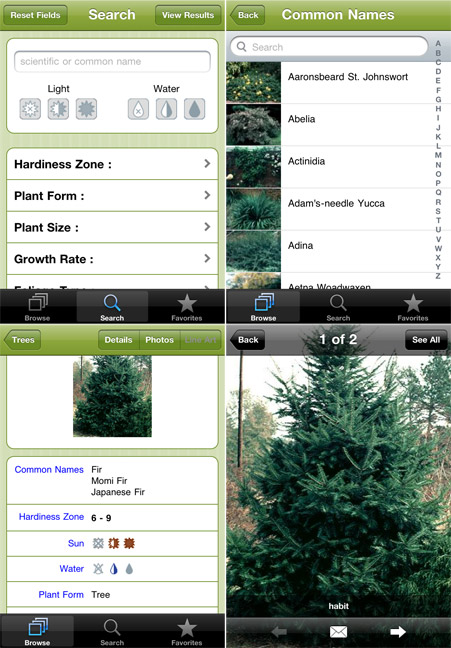
Four sample pages of the Dirr app

With new apps coming out every day, I thought I would take a look at a couple of new offerings that pertain to trees.

The one everyone’s talking about right now is “Dirr’s Tree and Shrub Finder.” It costs $14.99. and if you read the reviews, it is worth every penny.

This app is based on University of Georgia horticulture professor Michael Dirr’s “Manual of Woody Landscape Plants.” Dirr, an icon in the hort world, is also the author of “Dirr’s Hardy Trees and Shrubs” which is a must-have reference for any gardener’s library.

Anyway, back to the app: with 1,670 species and 7,800 cultivars, it’s certainly comprehensive. I have not bought it yet because my device does not have enough memory to support it (major bummer) but the photographs seem to be very high quality. This app allows you to search using 72 (!) different criteria such as growth habit, fall color and growing requirements. I think this is a most useful app for both home and professional gardeners, and as soon as I get a device with sufficient memory, I will gleefully download it.

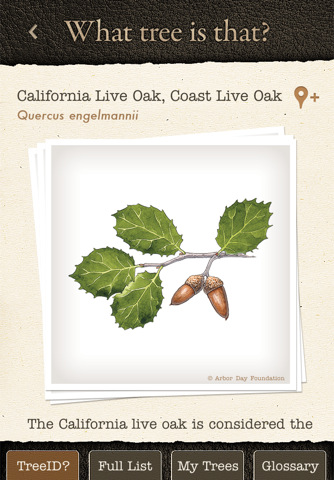
The "What tree is that" app


The second app is called “What tree is that?” after the Arbor Day Foundation’s well-loved tree identification guide. I have used the paper version since I became a tree steward several years ago. It uses a process of elimination to finally lead you to the correct ID. There are 250 trees in this app, and they are accompanied by illustrations and descriptions. I love the original field guide, but the reviews of this app, so far at least, are negative. One reviewer says it is overpriced at $4.99, and another person complained that the app didn’t include any trees from Florida. I guess the jury is still out on this one, but if you don’t already have the paper field guide, by all means get yourself one here. It’s a terrific tool.

Posted in Uncategorized | Leave a comment

Carrot Surprise

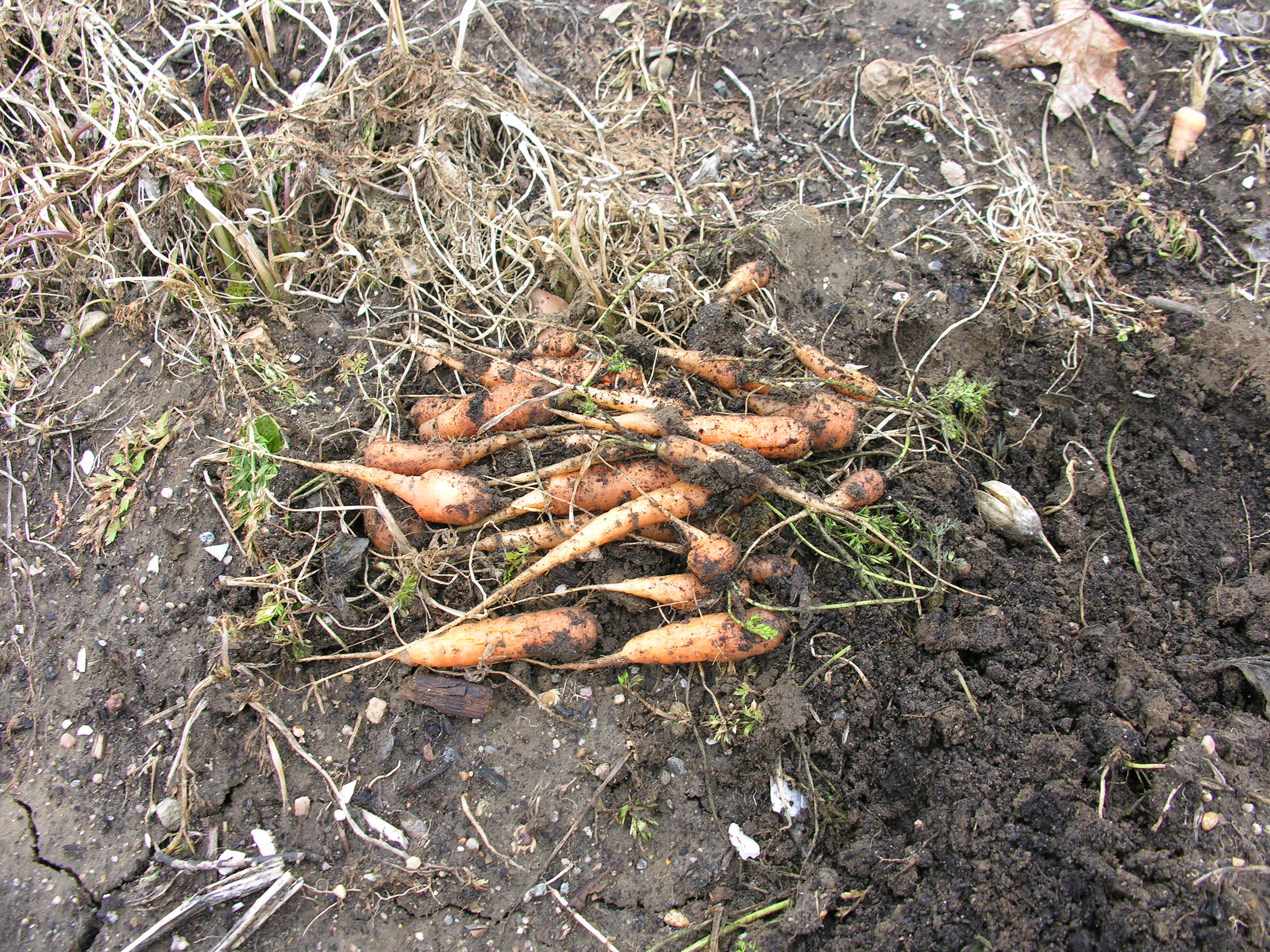
My overwintered carrots

We gardeners plot and scheme and plan how best to manipulate nature so we can grow our vegetables, and nature often throws us curve balls such as cold temperatures and drought. But sometimes, the surprises are pleasant ones.

Take my carrots: last year’s crop was fantastic, and I continued to harvest right up until Christmas. Then, as happens in winter here in RI, (duh)  everything froze solid and I couldn’t get them out of the ground. “Oh well,” I thought to myself, “that’s it for the carrots. They had a good run, after all.” I figured I would just dig up their rotting little roots in the spring.

Fast forward to March, and I casually sidle up to the carrot bed. The ground has thawed. The tops are dead, of course, but something prompts me to pull a few – just to see. There were a few mushy – shouldered ones because I had not had the foresight to mulch, but most of them were just as I had left them in the fall – crunchy and delicious.

Next fall, I will definitely try to remember to mulch.

Posted in Uncategorized | 2 Comments

Re-thinking Invasives

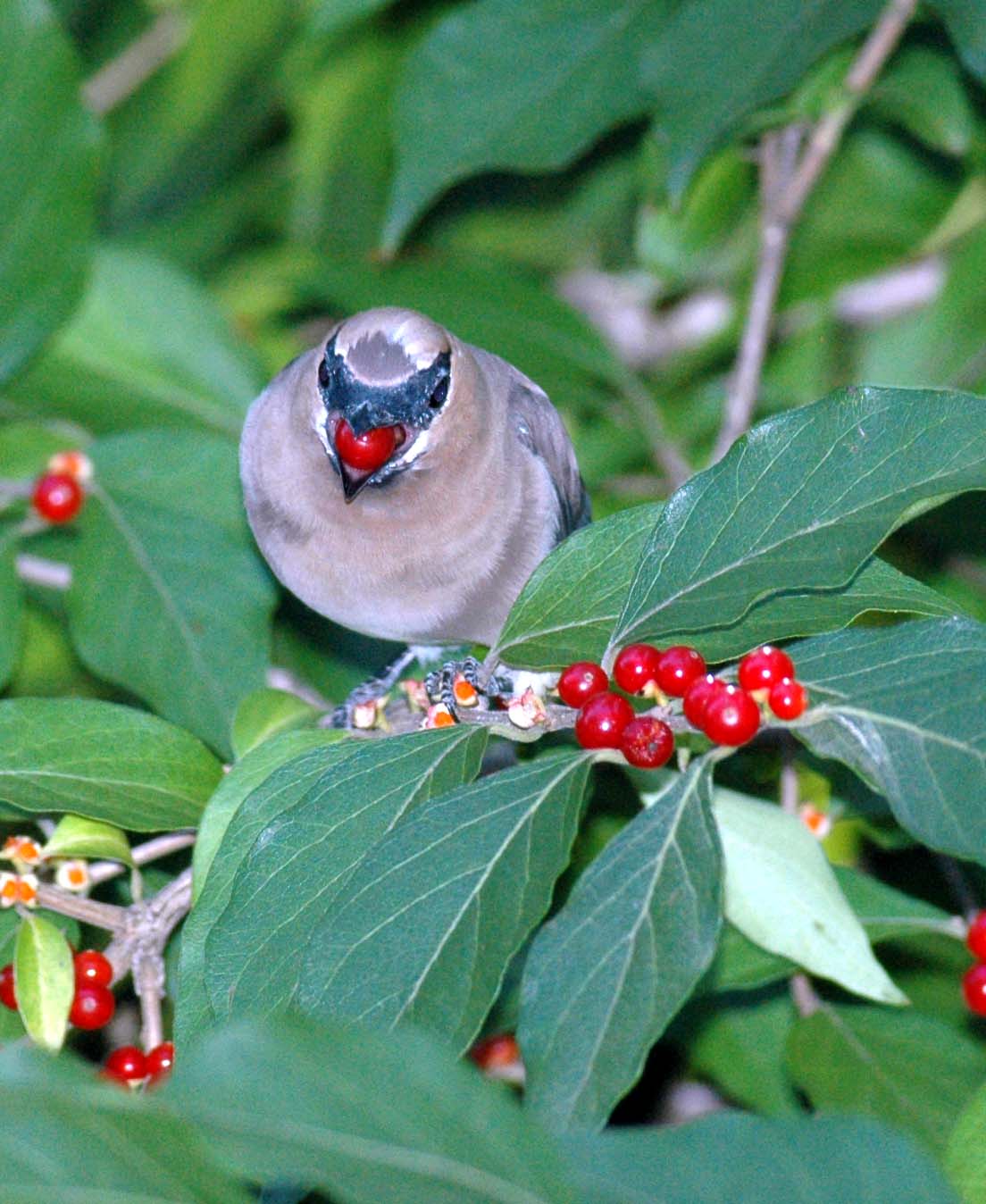
Cedar Waxwing in honeysuckle. Photo: Tomas Carlo

Throughout my Master Gardener  training, and later, in a more focused advanced course on weeds and invasives, the mantra of every instructor was “seek and destroy.” I don’t know how much money is spent by state and federal governments on programs aimed at eradicating species considered to be invasive, but I am sure it’s a lot. Is it effective? Not really, especially when some local nurseries continue to sell some of the plants we are trying so hard to get rid of.

Throughout all the training, in the back of my mind, there was always this nagging thought: we know that  invasive species crowd out the natives and that some, like oriental bittersweet and kudzu, are particularly noxious and destructive. These thugs were introduced to North America by humans, but so were sparrows and house finches and even honey bees. Isn’t  having to adapt to these new arrivals  part of a much bigger process called evolution?

One scientist is looking at invasives in an interesting way. Tomas Carlo, an assistant professor of biology at Penn State, has published a fascinating paper entitled: “Invasive Plants Can Create Positive Ecological Change.” Dr. Carlo and a graduate student looked at whether Lonicera, or honeysuckle, an established invasive fruiting tree, had affected the surrounding ecosystem in a positive or negative way.

Carlo explains: “We wondered: Are we sometimes doing more harm than good when we eradicate plants that, despite being introduced recently, have formed positive relationships with native animals?” “The fundamental goal is to return a natural area to its original, pristine state, with the native species occupying the dominant position in the community. But the problem is that most native communities already have been changed beyond recognition by humans, and many native species are now rare.”

Photo: Tomas Carlo

Focusing on an area of Pennsylvania, the researchers assessed the impact of honeysuckle not only on bird populations but other fruiting plants. They found that more honeysuckle resulted in  greater and more diverse  bird and native fruiting plant populations.

“The abundance of fruit-eating birds in the Happy Valley region is linked to the abundance of honeysuckle,” Carlo explained. “Honeysuckle comprises more than half of all the fruits available in the landscape, and it benefits birds by providing them with a source of food in the fall. Meanwhile, birds benefit honeysuckle by dispersing the plant’s seeds across a wider geographical area, helping the species to occupy more and more territory in areas already affected by human activities.” Carlo takes it one step further, warning that eliminating honeysuckle from the area would also remove an important food source for migrating birds – in other words, do much more harm than good.

To read more of this intriguing study, including honeysuckle’s unexpected benefits to native fruiting plants, go here.

Note: All quotes and photos in this blog have been used with written permission from Dr. Carlo.

Posted in Uncategorized | 2 Comments

Groundhog Love

photo: qmnonic

I remember during my Master Gardener core training course, when the mere mention of groundhogs, (or “woodchucks” here in RI) would send my classmates into a frenzied discussion of how to get rid of them. I heard people who I had previously considered to be civilized talking about shooting and trapping and drowning and other “control” methods, all of which appeared to be not only cruel but ineffective, since they kept having problems with the animals year after year. How can you trap a wild animal and deliberately drown it just because it’s an inconvenience? Doesn’t that bother you just a wee bit?

I have had groundhog predation in my vegetable garden, and yes, I lost an entire crop of snap peas to one animal that was about twice the size of my standard dachshund. But I decided to chill out and hope the same thing didn’t happen the next season. It’s been three years and I haven’t had a problem since.

It was great to discover Lynne Russell’s website , “Hoghaven,” and know that I was not alone. I have been linking to it practically since the inception of this blog, so I thought I would contact Lynne and get some of her thoughts on these animals, and her unusual relationship with them:

Dirtynailz:  Have you always loved groundhogs?

Lynne:  “Since my first groundhog in 1998. ‘Duchess’ took up residence under my shed and posed for pictures in return for food. At the time I was learning HTML and decided to make her the subject of my first web site, ‘Groundhogs at Hoghaven.’  The following year she returned with a litter of cubs and this further fueled my groundhog passion.”

DN: You have been observing them and living surrounded by them for years, and you seem to understand the nuances of their behavior. Are they more interesting and complex than most people think?

Lynne: “Absolutely.  I learned quite a bit from personal observation and from others with whom I’ve had contact through Hoghaven, including wildlife rehabilitators and individuals who have raised them as pets.  Some of the stories I’ve heard and pictures I’ve seen are truly amazing.”

DN:  Do you have one or two cool/funny/touching stories about your interactions with them?

Lynne: “Yes. By the second generation the cubs would recognize me and come running up to me.  They always expected food and always got it.  They would take food by hand and sniff me.  I never attempted to pick them up because they were wild.  They ate the petunias and lilies in my flowerbed, so I began planting silk flowers.  They never ate my flowers again!”

photo: April King

DN: Do you think it’s unfair the way groundhogs are persecuted by farmers and gardeners? Are they really as destructive as people say?

Lynne: “I think it’s a shame that people make such a fuss, especially over their gardens.  Once I fell in love with the groundhogs, the flowers and gardens seemed so unimportant.  In fact, I planted extra beans and tomatoes just for the hogs.  The joy they brought me every day of the summer overshadowed the holes in the yard.  Each winter I was anxiously awaiting their return in the spring.   Unfortunately, because of over-development, these poor creatures and many others have lost their homes.   The least we can do is to learn to live among them and put up with a few inconveniences.”

DN: What would you like people to know about them?

Lynne: “That there is no reason to fear them.  They are not dangerous to children, cats or dogs.  They run and hide from their predators. They are vegetarians, and it doesn’t take much to earn their trust, especially with treats!”

So there you have it – another perspective on an animal reviled by farmers and gardeners alike.

Thanks to Lynne Russell for standing up for these animals. Be sure to check out her quirky and interesting website.

Posted in Uncategorized | 4 Comments

Little Sunny

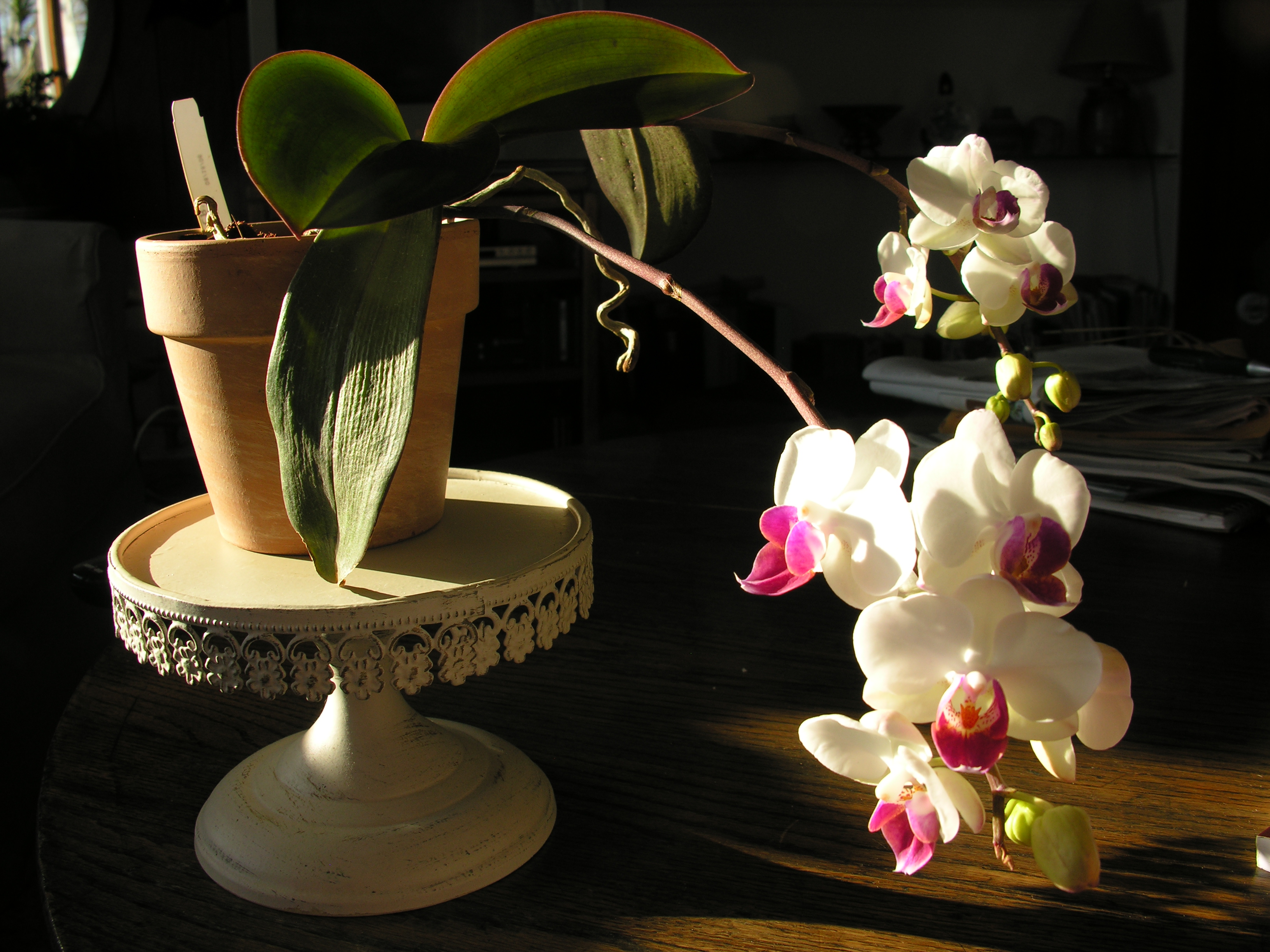
"Little Sunny" in the sun

The above orchid is Phalaenopsis “Little Sunny.” It was a door prize at an orchid club meeting, and when I won it, it had two healthy-looking leaves, but not much else. I had no idea what the flowers would look like until it bloomed.

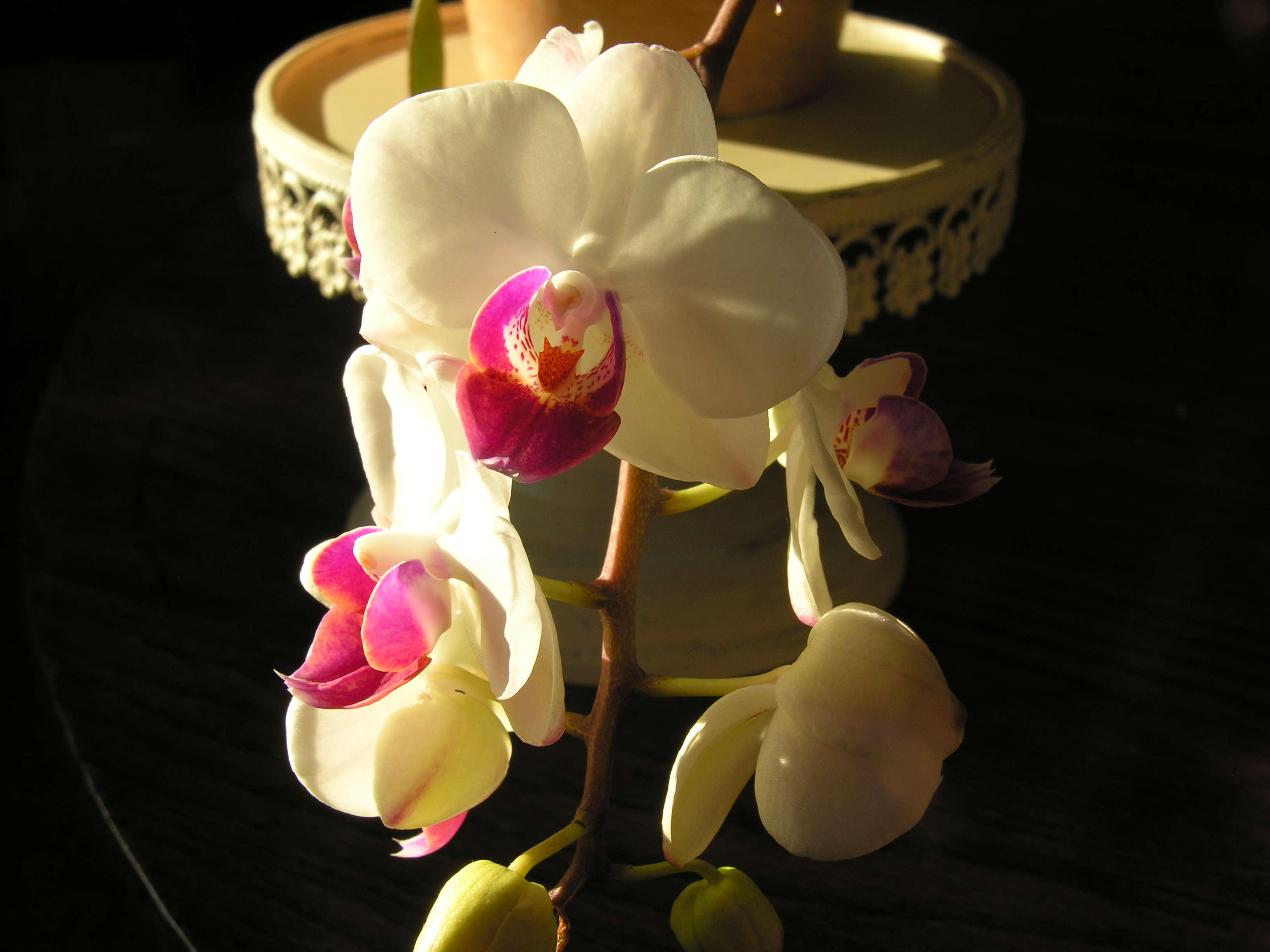
This is a spectacular plant. It has many blooms on multiple spikes, and they are a lovely, waxy, tropical white with interesting pink centers. I display it on a small cake plate to keep the flowers off the table.

I have had this plant for two years and it has been a reliable bloomer so far – another undemanding phal that gives you great bang for your buck – or in my case, no buck!

Here’s a close-up of  the luscious blooms, of which there are many:

Posted in Uncategorized | 4 Comments

A New Cucumber

photo: Mariuszjbie

HerbDoc is all in a tizzy over a new cuke:

I love fresh cucumbers, especially the pickling varieties, but since we have high humidity here due to the proximity of the ocean, I’m often plagued by powdery mildew.  Weekly spraying with a baking soda preventive sometimes works.  The “recipe” is to mix one tablespoon of baking soda and ½ teaspoon of liquid dishwashing soap into a gallon of water.  Water the plants well before applying the mix to the upper and lower surfaces of the leaves.  This should be done out of the sun, and the remaining mixture shouldn’t be stored.  As with all home remedies, sometimes it works and sometimes it doesn’t.

Enter Johnny’s Seeds!  A new “Salt and Pepper” cuke is being offered this year, and it’s said to be powdery mildew resistant!  It’s a white skinned pickler with black spines that “replaces Miniature White…and has improved flavor and is disease resistant.”

Salt and Pepper cucumber. photo: Johnny's Seeds

I’m adding it to my order and plan to grow it in a new Earth Box on the upper deck.  I’ll let you know how it fares!

Posted in Uncategorized | 2 Comments

Danger in the Herb and Spice Isle: Beware!

HerbDoc has a warning for you, our dear readers:

A very disturbing report aired on our local news recently.  Apparently the Price Rite grocery store in Cranston, RI,  was carrying quarter ounce bags of the flower heads of Arnica right in the aisle with culinary herbs and spices.

Arnica is related to the perennial herbs of the family Asteraceae and has orange-yellow daisy like flowers.  It is used in homeopathic medicine as an external tincture or ointment to relieve the pain associated with bruises, sprains and aches.  Taken internally it can be very toxic, causing nausea, dizziness, vomiting and heart irregularities, including high blood pressure!  In high doses, it can be fatal.

Arnica latifolia

Just a friendly word of caution…if you come across an “herb” or a “spice” which is unknown to you, don’t purchase or use it until you research it carefully.  Be aware that there is a wealth of misinformation out there and that an herb isn’t necessarily safe because it’s touted as a natural product.

In this case the packages were incorrectly labeled by the manufacturer/distributor and could have caused real problems for consumers.  Fortunately these have been recalled and no illnesses have yet been reported, but in my humble opinion, there is no way they should have found themselves in the culinary herb and spice section in the first place!

Posted in Uncategorized | 6 Comments