My Determinants

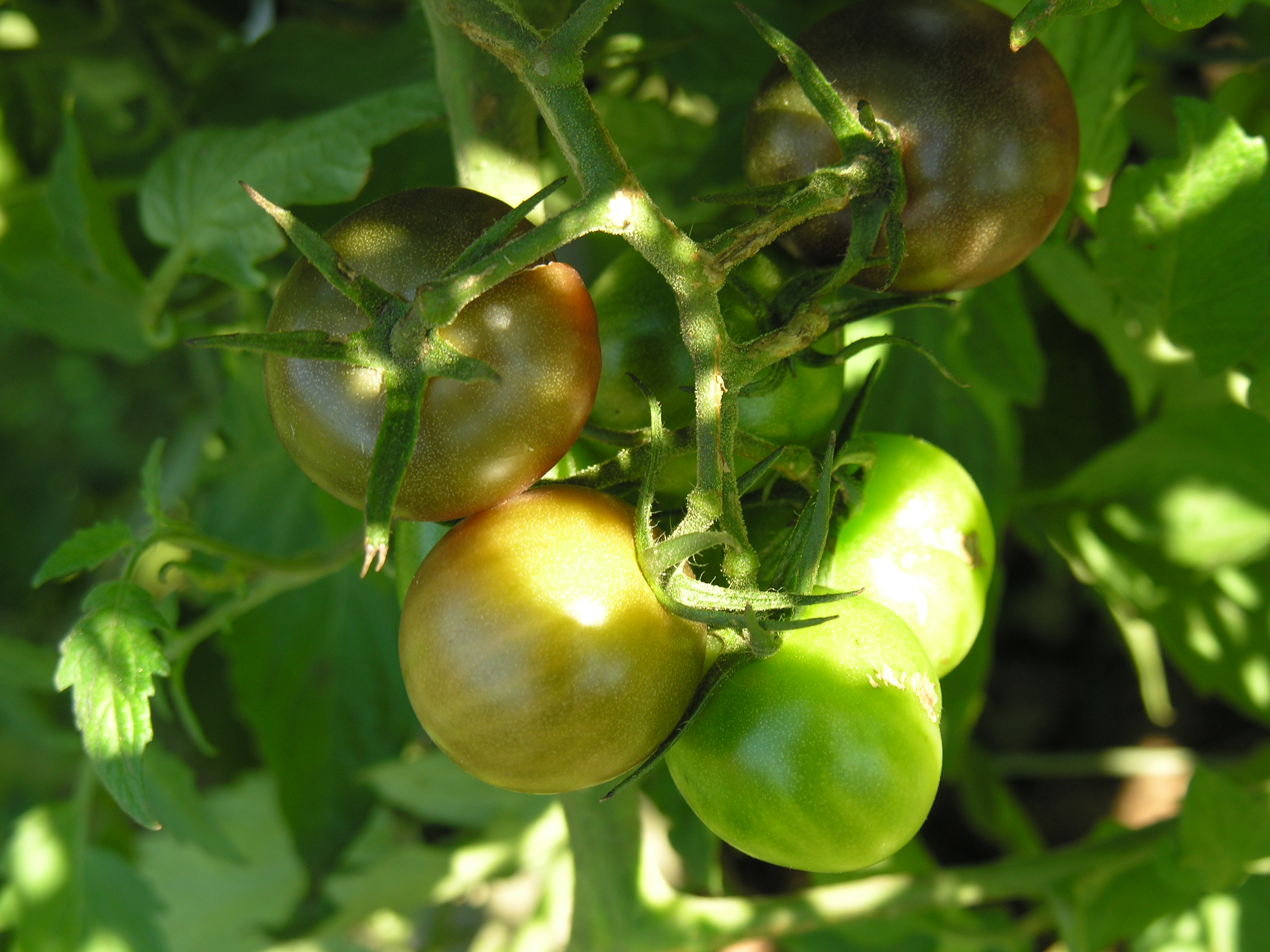
Roma tomatoes

While we’re starting our seeds and fantasizing about our first harvests, HerbDoc has some kind words for determinate tomatoes:

Tomatoes are definitely the most popular home garden crop, and although I’ve heard many negative comments about determinants, these are among my favorites to grow.

On the positive side, determinants only grow to a certain height.  This makes them perfect candidates for small garden spaces where one can’t deal with the sprawl and staking of the indeterminate varieties.  In the past few years I’ve grown my determinants on Earth Boxes (two to a box) on a second floor deck to prevent the deer from eating them.  Two years ago I harvested 60 plus pounds of Romas from 6 plants!

The only problem with determinants is that they set a certain number of flowers, and the fruit will all come in in a week or two!  This requires a frenzy of “putting by” after which no more tomatoes will appear unlike the indeterminants which will produce until frost.

I’m definitely growing the Roma variety again this year and am tempted to try Johnny’s new determinant, Defiant PhR even though I haven’t had a problem with late blight.Others on my list include the indeterminate cherry tomato, Husky Cherry Red which I bought at a local big box store last year.  It provided a heavy yield of salad tomatoes all summer long.  Another dynamite cherry is Black Pearl, sold by Burpee. Right off the vine it has a wonderful tomato taste but if refrigerated (which I frown upon for most tomatoes), it has a delicious, sweet, Concord grape flavor.

Posted in Uncategorized | 2 Comments

Dogscaping

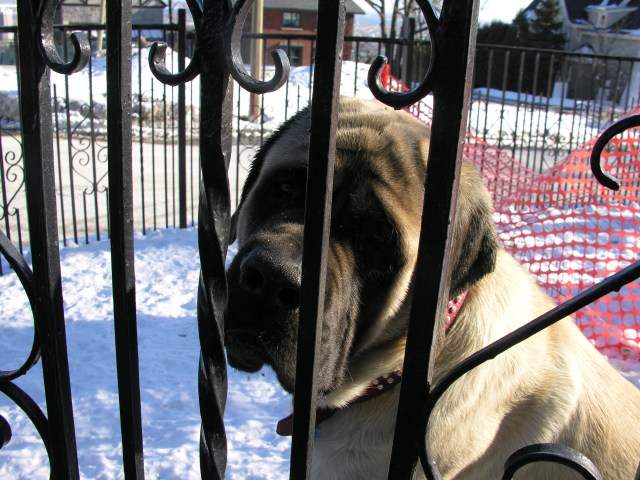
Good fences make good gardens. "Hubble" the mastiff protects his domain - well, sort of.

I can’t tell you how many times I have heard homeowners lamenting the damage their dogs have done to their yards. The sad part is, it doesn’t have to be that way. In taking the time to consider how your dog actually uses the back yard, you can accommodate his or her behaviors while indulging your love for beautiful flowers, trees and shrubs.

Caruso the borzoi, enjoying his yard

As is the case for any garden design, the first step is planning. Gardener, dog behaviorist, and trainer, Cheryl S. Smith, has written a helpful book entitled “Dog Friendly Gardens, Garden Friendly Dogs” (Dogwise Publishing, 2004). As the title implies, she eases you into the world of creating a garden with the family dog in mind.

Dog-friendly garden elements include a shady spot for relaxing, a play area, paths that make it easy for the dog to get around without tracking mud into the house or trampling flowers, a digging pit, and a place to “go.” These areas should be close to the action, so the dog (a social animal, after all) can see what’s going on and be part of everything.

Geneva "supervises" all gardening projects

One of the first considerations is the type of dog you have. Is he/she a hard – playing, Frisbee-catching, charging- around- the- yard maniac? Or maybe you have one of the digging or hunting breeds, like a dachshund or a terrier, or a champion chewer that will gnaw on anything.  These factors are as important as your soil type, or how much sun your beds receive at different times of the day.

Smith says; “The big mistake dog owners make is not taking the dog into account when they are designing the gardens. It’s important to keep your dog’s tendencies in mind because you can avoid a lot of stress and damage that way”…”I give the example of guarding-type breeds patrolling fence lines. So if you plant your beds up against the fence, the dog is likely to run through the back of them. If you leave space back there, then the dog can still patrol, the path will be hidden by your plants, and everyone can be happy.”
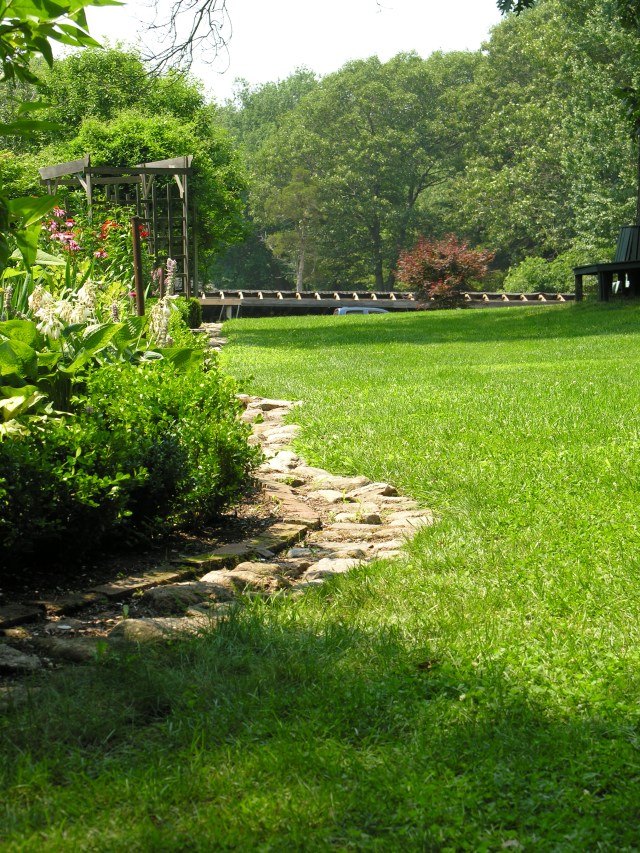
Use plants and hardscaping to keep dogs out of garden beds

Go outside with your dog and walk around your entire property. Try to see it with new eyes. Notice any areas where the dog seems interested in sniffing, digging or rolling? You might not want to plant delicate perennials in those places, or if you do, you may have to take measures to protect them. Those measures include things such as paths, edging or low fencing that will discourage most (but not all) dogs from entering the area.

Smith favors physical barriers: “Dogs can be trained not to cross boundaries, and I talk about that in the book, but I’ve found that often people aren’t very good about following through on training. So barriers work well. You could start with temporary fencing that actually bars the dog from the area, then switch to lower and more attractive fencing, and end up with the foot-high or less decorative edging type fencing and still have a dog who stays out of the area.”
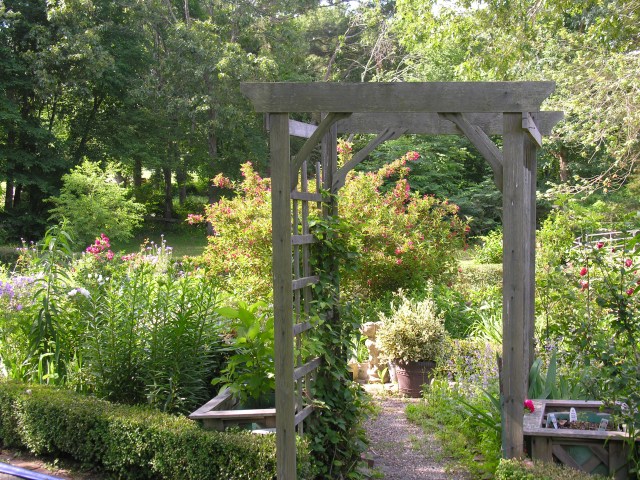
Pathways direct animal (and human) traffic where you want it

Armed with your human and canine wish lists, you can now begin planning in earnest. Think about fences. The important thing is to keep your dog safely enclosed, and other animals out.  Fences with gaps between the boards can be dangerous, because the dog can get his head wedged in there, and nasty people can poke things through from the outside. Also consider your hard surfaces, some of which can get slippery and invite injury. Does your dog like to be up high, above it all, to survey his territory? Is there a spot where he can do that? A deck often serves this purpose.

If you are going to have a swimming pool or a water feature, think again about the type of dog you have. Is he a water dog, like a Lab, who will jump right into your lovely new koi pond? Is there a safe exit from the swimming pool and does your dog know how to use it? Make sure he knows where the pool stairs are, and if there are no stairs, add a safety exit ramp that provides all animals that might fall in (including wildlife) a safe way to get out. Train your dog so he’s comfortable using it. Panicked animals, like humans, can end up drowning.

Water features are pretty, but can be dangerous to pets

Will you be using outdoor lighting?  Plan this from the beginning of the design process, and make sure all low voltage lines are buried so the dog won’t chew them. If, like most serious gardeners you compost, find a way to keep the dog out of the bins. The easiest way to do this is to have an enclosed bin with a good lid on it. Garden tools and ornaments with sharp edges can also present hazards, as can hoses, which can be irresistible to hardcore chewers.

Raised beds help deliniate and protect planted areas

Now look at trees and shrubs. If you are planting new ones, get larger specimens that will be less prone to dog damage, or protect small ones with fencing until they’re stronger. Remember that freshly dug soil is enticing to a dog, so satisfy that urge by providing him with a designated digging area that he has been trained to use.

What about the lawn? There is a common myth that female dog urine creates the brown spots in the grass. This is untrue. Females just tend to go in the same area, so it builds up. Creating a designated potty area in the yard will solve this problem. How much of a perfectionist are you?  Try to avoid using chemicals and if you must, spot treat problem areas. Insecticides, herbicides and granular fertilizers are toxic to dogs, and they can also track them to other areas of the yard and into the house.

Dogs have died after eating traditional metaldehyde slug and snail bait. Smith recommends a product called “Sluggo,” which takes care of the problem and is harmless to dogs, cats and birds. Most gardeners already know that certain plants, if eaten, can also harm animals. Check the ASPCA’s plant list before choosing your annuals and perennials.

Dogs love a shady spot

Mulches are increasingly popular in gardens, (sometimes too popular, in my opinion) but having a dog can restrict your choice of mulch material. Think about whether you would want the mulch inside your house, because chances are the dog will roll in it at some point and bring some in on his fur. Many mulches contain artificial dyes, and some have sharp edges. Then there is cocoa hull mulch, which is said to be toxic to dogs. Steer clear of this one.

Thoughtful planning is essential to creating a landscape that everyone will love, but training is also important. Your dog needs to learn proper garden behavior, which includes knowing which areas are off limits and which are OK for digging and playing. Teach these behaviors by rewarding the dog for using areas for their designated purposes.
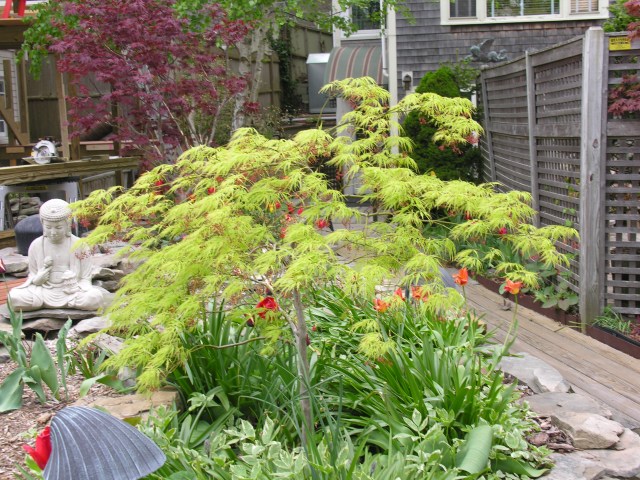
Raising the bed keeps plants in and dogs out (most of the time)


If you are patient, consistent and attentive, it shouldn’t be long before your dog gets the idea, but even experts like Smith can be surprised by their own dogs’ behaviors: “People don’t realize that a lot of terriers can actually climb wire fences (I’ve watched them do it).  Our own relatively new dog, Teddy, a long-bodied, short legged mixed breed, kept getting out of the totally fenced yard into the larger yard. I couldn’t figure it out until I hid and watched him and saw him jump through the less than a foot square opening in the decorative part of the fencing, nearly three feet off the ground.”
Posted in Uncategorized | Leave a comment

Are You Resilient? Is Your Garden?

Carol Deppe has written a thought-provoking and very useful book entitled: “The Resilient Gardener: Food Production and Self-Reliance in Uncertain Times.” (Chelsea Green, 2010)

I thought this was a  timely topic, so I bought it and soon found myself underlining and bookmarking and making notes. This is not destined for my burgeoning “garden book pile.” It is  one of those books that I will keep close at hand for quick reference.

Deppe is not a wacky survivalist living in a compound somewhere in the mountains. She is a middle- aged woman, gardening in Oregon. She integrates growing information with the latest on health and wellness, and then takes everything to the next level by describing which crops we should be growing in order to survive and even how to process and store them. (Deppe’s top five crops are: potatoes, corn, beans squash and eggs – preferably duck eggs.)

She’s not talking about the end of the world here – just the unpredictability of our growing climates, which are expected to become increasingly volatile in the years to come, and maybe a natural disaster or two. Of course, there are other calamities that can befall the garden, such as a serious illness or injury to the gardener, or maybe just a bad back, which Deppe suffers from.

Among the many things I liked about Deppe’s approach was her selection of sustainable cultivars. This is just common sense, when you consider that in many parts of the country, summers are dry and there is not enough water to irrigate.

The book also provides detailed information on different varieties. I have been growing “All Blue” potatoes for several years, but Deppe recommends a couple of better blues, including her favorite, “Azul Toro”  which is earlier than “All Blue” with smaller vines. I intend to grow them this year – if I can get my hands on some.

I think this is one of the most important gardening books of the year. Deppe’s description of gardening as “an essential survival skill” might be a little ominous for some people, but I think she has a point. It never hurts to be prepared. It never hurts to learn some new gardening skills, either.

Posted in Uncategorized | 2 Comments

A “Lasagna” Question

Can these coexist happily with potatoes?

To “lasagna” or not? HerbDoc is torn:

I recently read an article by a local garden guru who proposed growing potatoes and tomatoes in a “lasagna” type vegetable garden.  Has anyone tried this and what were the results?

I currently rely on my grandmother’s wisdom which always separated the potatoes from the other crops for two reasons.  Potatoes tend to like a lower pH (5.3 – 6.0) than tomatoes (6.0 – 6.8), and potatoes will produce lots of leaves and few quality tubers if over fertilized.  Grandma also worried about scab which tended to occur if potatoes were grown in higher soil pHs.  Of course today we can buy scab resistant potato varieties, but I wondered if gardeners who tried the dual method saw any chlorosis because iron was bound up at the higher alkalinity levels.  On the other hand would the tomatoes grown at a lower pH exhibit a lack of chlorophyll and carbohydrate production due to low magnesium, resulting in pale green plants?

If you have any experience with this method, or  some thoughts on it, we’d love to hear from you.

Posted in Uncategorized | Leave a comment

The Christmas Amaryllis

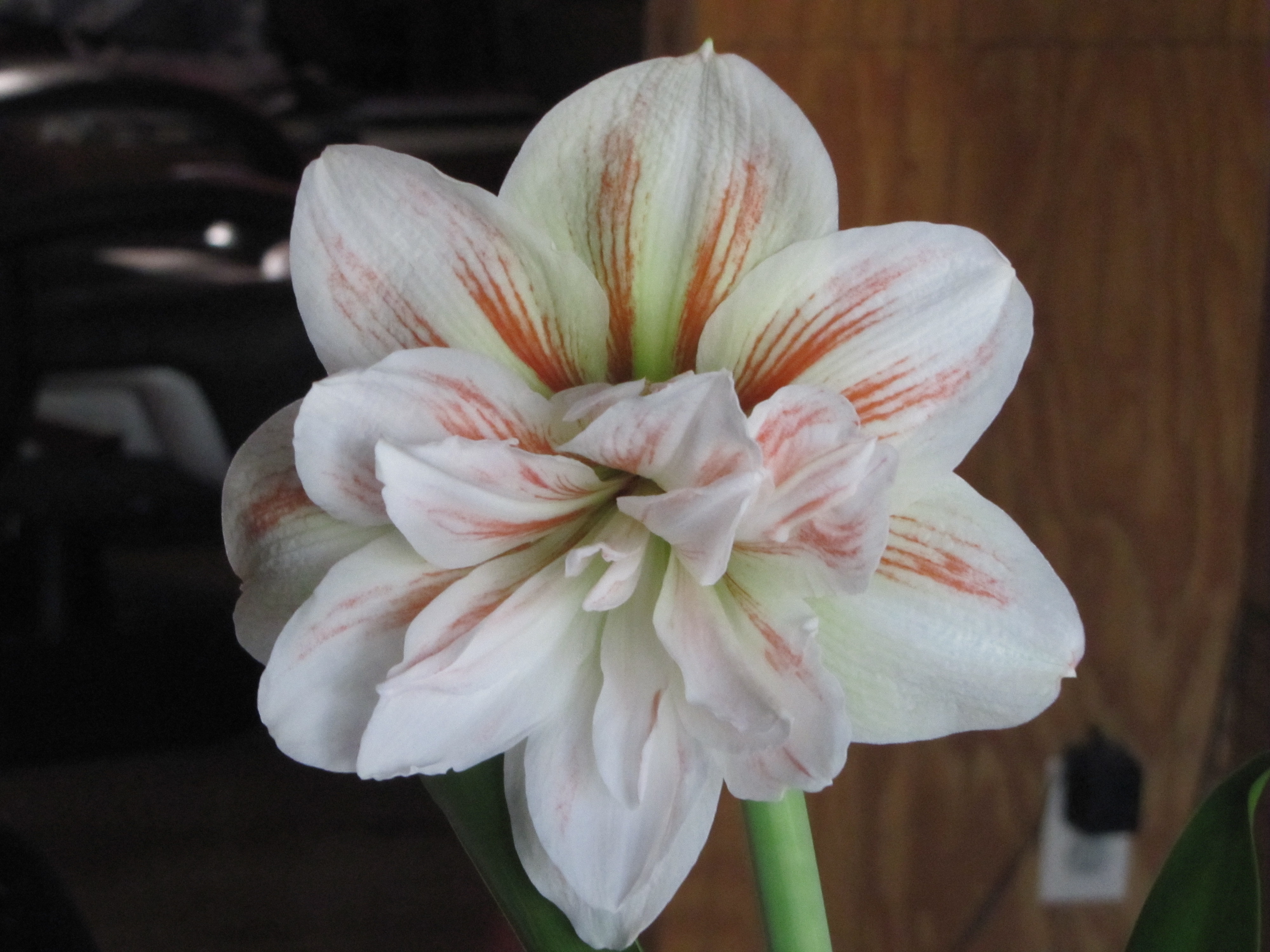
HerbDoc’s amaryllis is blooming now. Better late than never!

Every year or two someone who knows my love for all growing things gives me an amaryllis bulb for Christmas.  This year one came advertised are pure white, but when the green flower spath emerged, color could be seen through it.  It opened two days ago and is reminiscent of peppermints with its deep pink stripes on white flowers.

HerbDoc's amaryllis

Even though they are sold as amaryllis, they are actually Hippeastrum.  The bulbs are very tender and should not be exposed to cold.  Three years ago a relative in North Carolina had one shipped to me at Christmas, and by the time it arrived in the back of a frigid UPS truck, it was beyond hope.

I love these bulbs that brighten the winter months and give huge rewards with very little effort.  After blooming I treat them as houseplants, keeping the soil moist and giving them a dose of fertilizer every two weeks.  Cut off the flower stems right above the bulb nose and move them outside for the summer, bringing them back indoors in September.  Then stop watering and put in a cool, dry place (around 55- 60 degrees) for 10 to 12 weeks.  After that period, remove the bulb from its pot and clean off the old foliage.  Re-pot in fresh soil, leaving about one third of the bulb exposed.  Water sparingly until new growth emerges.  Once it does, water regularly and start the fertilizer regimen.  Voila!  The amaryllis should re-bloom approximately 8 weeks after the first watering.

Posted in Uncategorized | 19 Comments

Blog Fatigue

Killer sunset, seen from my back window

First, let me assure you that I have no intention of shutting down our blog. I have just been thinking about what it takes to produce interesting material on a regular basis, and how lately, it seems that so many of my fellow bloggers have either taken sabbaticals or stopped blogging entirely.

Every once in a while, I check our blogroll, and sometimes I find one that has languished for months. I feel I have a duty to our readers to keep all our material current, and that includes the links. So I regretfully delete those blogs that have not been refreshed for a month or so.

It takes time to decide what to write about, research the topic and take and edit the photographs. I try to put myself in the place of a reader who finds us, and then returns a week later only to see the same stale old post. I assume that he or she will simply move on. After all, the Internet offers a galaxy of sites to visit, and everyone is always in such a hurry.

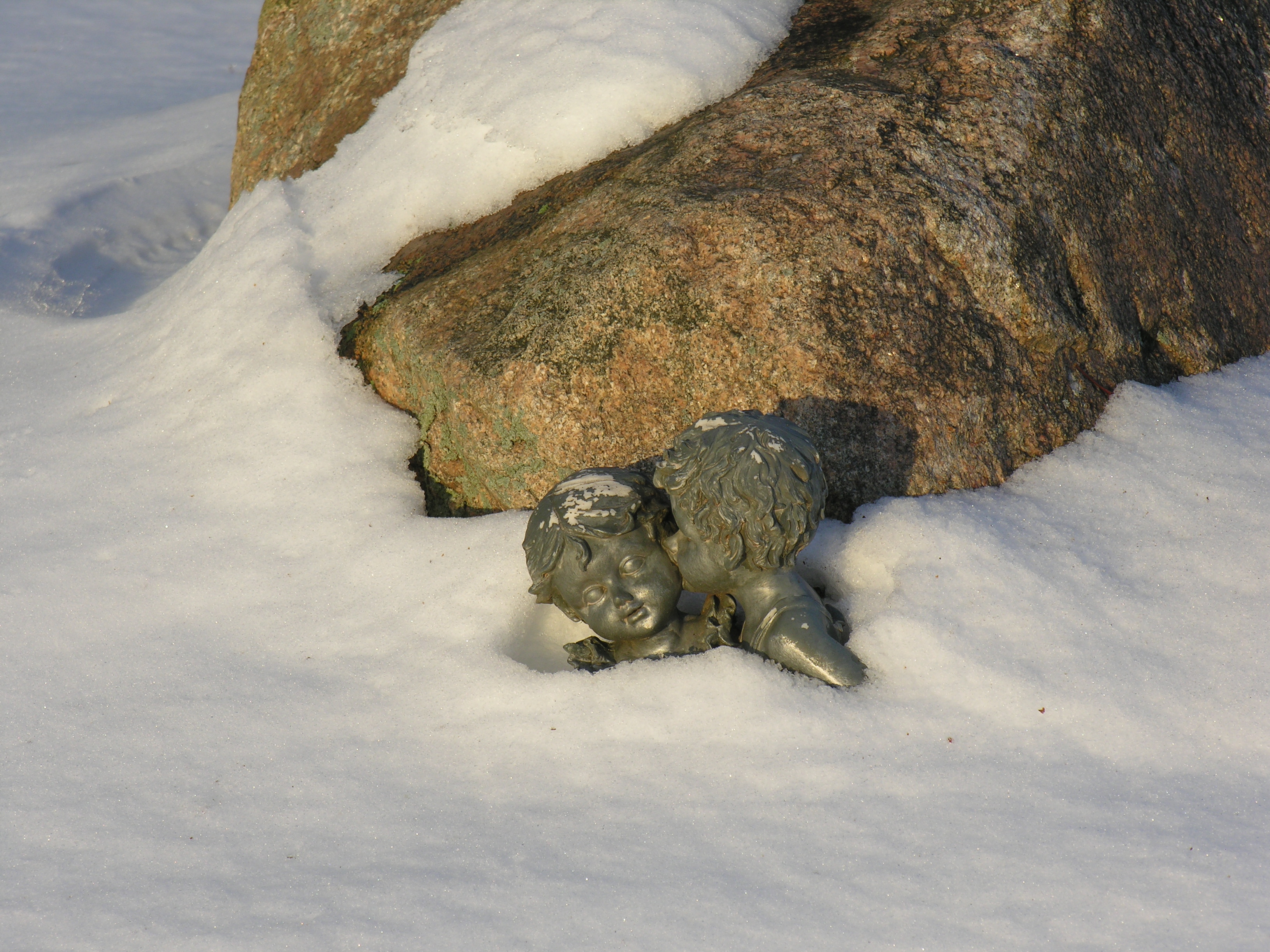
I've been waiting for a chance to use this photo. I call it "Love Conquers All"

Sometimes, you wonder if anyone is reading your stuff. You can see the stats showing how many people clicked on your site, but where are the comments?

All whining aside, there are great rewards to blogging. I get to express my opinions, and write about things that are important to ME. I have knowledgeable Master Gardener friends who blog here occasionally, adding depth and perspective. It’s also so encouraging and just plain fun to hear from fellow garden bloggers – and gardeners from around the world. The other day, I had a comment from a blogger in the Philippines! I love that. Blogging also encourages me to be a more conscious and thoughtful gardener, and to always be thinking of new topics to write about.  Believe me, I am always thinking of things to write about.

The rewards of blogging are many, and certainly enough to motivate me to keep at it. So far, anyway, I have yet to succumb to blog fatigue.

Posted in Uncategorized | 13 Comments

Another Orchid Joins the Family

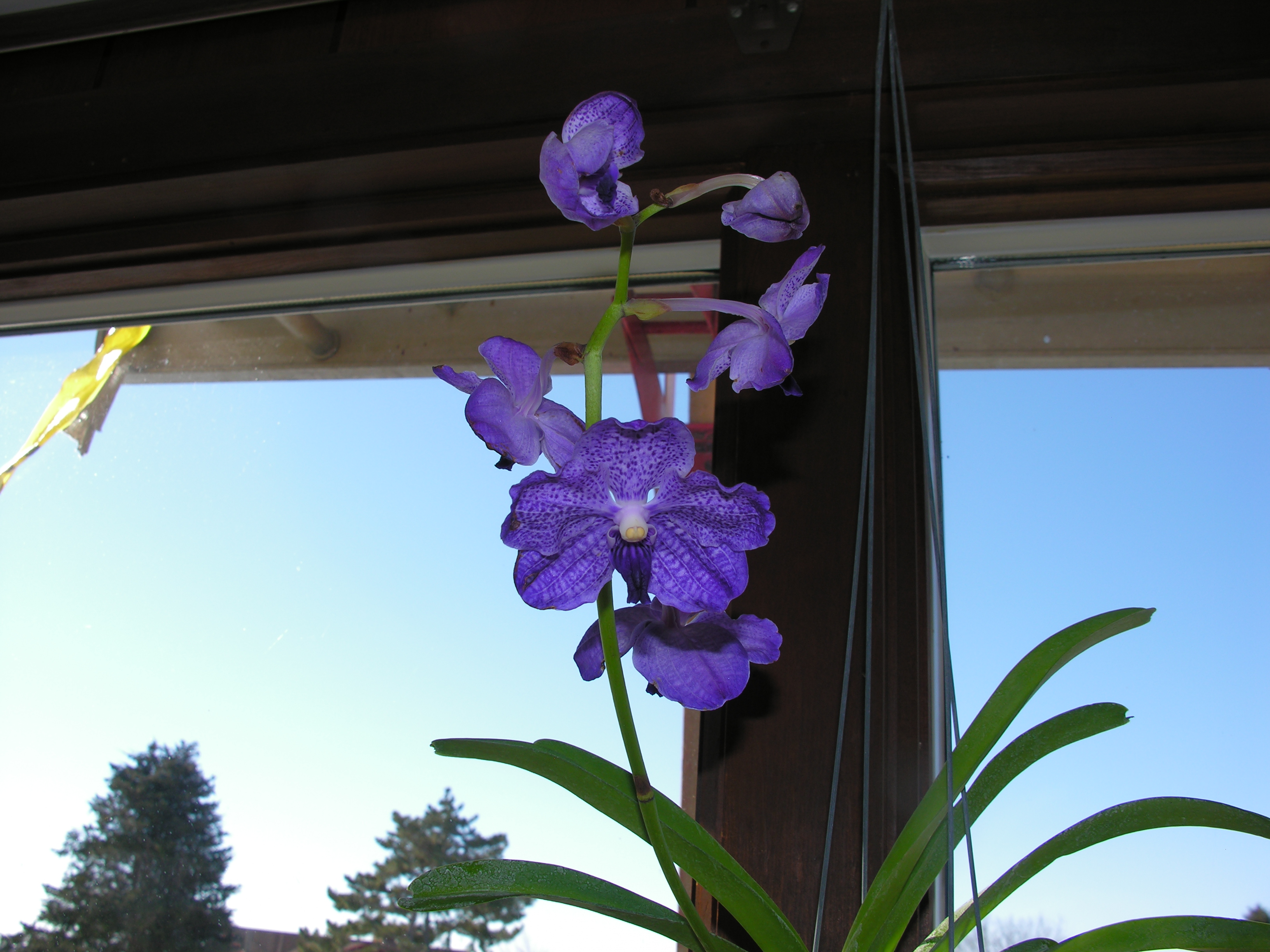
The new vanda

I stopped by a big box store the other day, because I’d been told they had recently received a shipment of interesting orchids. I was disappointed to see that many of them were phalaenopsis from the “Just Add Ice” people. I’m sorry, but if you are too lazy to bring your phal to the sink and water it properly once a week or so, then you probably shouldn’t buy one.

The Just Add Ice orchids require: (and this is from the company’s website) “ 3 ice cubes per week. It’s that simple!” Well, it’s not that simple. Those three little cubes will not produce nearly enough water to properly soak the roots. And that water is ice cold, which orchids hate. Anyway, I have ranted about this in another post, so I will stop now.

There were other orchids to be had this day, including dendrobiums, other, more interesting phals, and even a few vandas. I snapped up the last vanda, and took it home with a bit of trepidation, because they are difficult to grow well in a home environment. Vandas need moisture and mine was just panting for a good drink after hanging in a dry store environment. I now have it hanging in a window that gets sun just about all day, and I am coddling it with mistings and root soakings. I must say it appears to be considerably happier now than when I first saw it.

Paphiopedilum Makulii "Green Machine" x "Maudiae Classic" - in bloom now

Of course, anyone can bring home a plant in bloom. The challenge is getting it to bloom again. Many people buy orchids and just toss them when they finish flowering, treating them almost like cut flowers. I admit they don’t look very interesting when they aren’t in bloom, but that’s why I have diverse cultivars – so I can have something flowering all year long. I just move the ones that are “resting” to the table with the other resting plants, and show off the blooming ones in another part of the room.

So my challenge now is to make my new vanda happy, and ultimately to get it to re-bloom. I love a challenge.

Posted in Uncategorized | 4 Comments

Winter Weather Predictions: How Accurate Were They?

It was last November that I ruminated on the various predictions for this winter’s weather. In my unrelenting quest for fairness, I looked at everything from scientific models to wooly bear caterpillars. So far, our winter here in the northeast could be called “interesting,” although I have heard Rhode Islanders using other choice words to describe it. We’ve had more or less weekly storms, some with snow, and others with freezing rain and rain. We had to wear crampons on our boots for more than a week just to walk our dog.

So what’s responsible for these weather events? It seems convenient to blame La Nina, so I will. After all, climate scientists say La Nina is responsible for the horrific floods and the cyclone in Australia. It’s also to blame for the winter storms in Europe, the blizzards that rolled across the U.S. and for the below freezing temperatures in places like New Mexico.

This has been a strong La Nina year, but it is supposed to weaken right about now. The Farmer’s Almanac is predicting a few more snow days in February, with average to slightly below average temperatures. March will see some warming, but isn’t March ALWAYS  warmer?

Around here, the cardinals started singing their spring song about a week ago. That’s a good enough prediction for me.

Posted in Uncategorized | 3 Comments

Basic Black – With Leaves

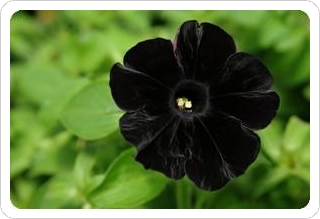
Petunia "Black Velvet" photo: Ballhort

I was perusing my latest “Fine Gardening” magazine (April 2011) when I came across a blurb on black petunias.

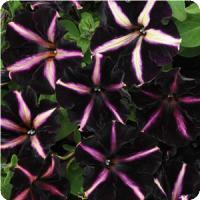
Developed by the Ball Horticultural Company, (who brought us the “Wave” petunias) the  three varieties of black petunias are “Pinstripe” “Black Velvet” and “Phantom.” I can see these paired beautifully with very pale pink, yellow, white or chartreuse plants – or gold or silver or whatever strikes the gardener’s fancy.

Petunia "Phantom" photo: Ballhort

I like the intriguing creative possibilities that these offer, and I will be anxious to get my hands on some. The Black Velvet is especially appealing to me because the petals look so soft, and almost beg to be touched.

I did some reading on black flowered plants, and it appears that gardeners either love them or detest them. It’ll be interesting to see how the public welcomes the new black petunias. My guess is they’ll sell like crazy.

Petunia "Pinstripe" photo: Ballhort

I don’t know who’s going to be offering these plants. I expect Ball is doing a pretty good job selling growers on them right now. Hopefully we’ll be seeing them in our local nurseries at planting time. Oh, and these are also being marketed as cool plants for Halloween, so don’t be surprised if you see them for sale in the fall, too.

"Black Velvet" again. photo: Ballhort

Posted in Uncategorized | 10 Comments

The Worm Adventure Continues: It’s Harvest Time!

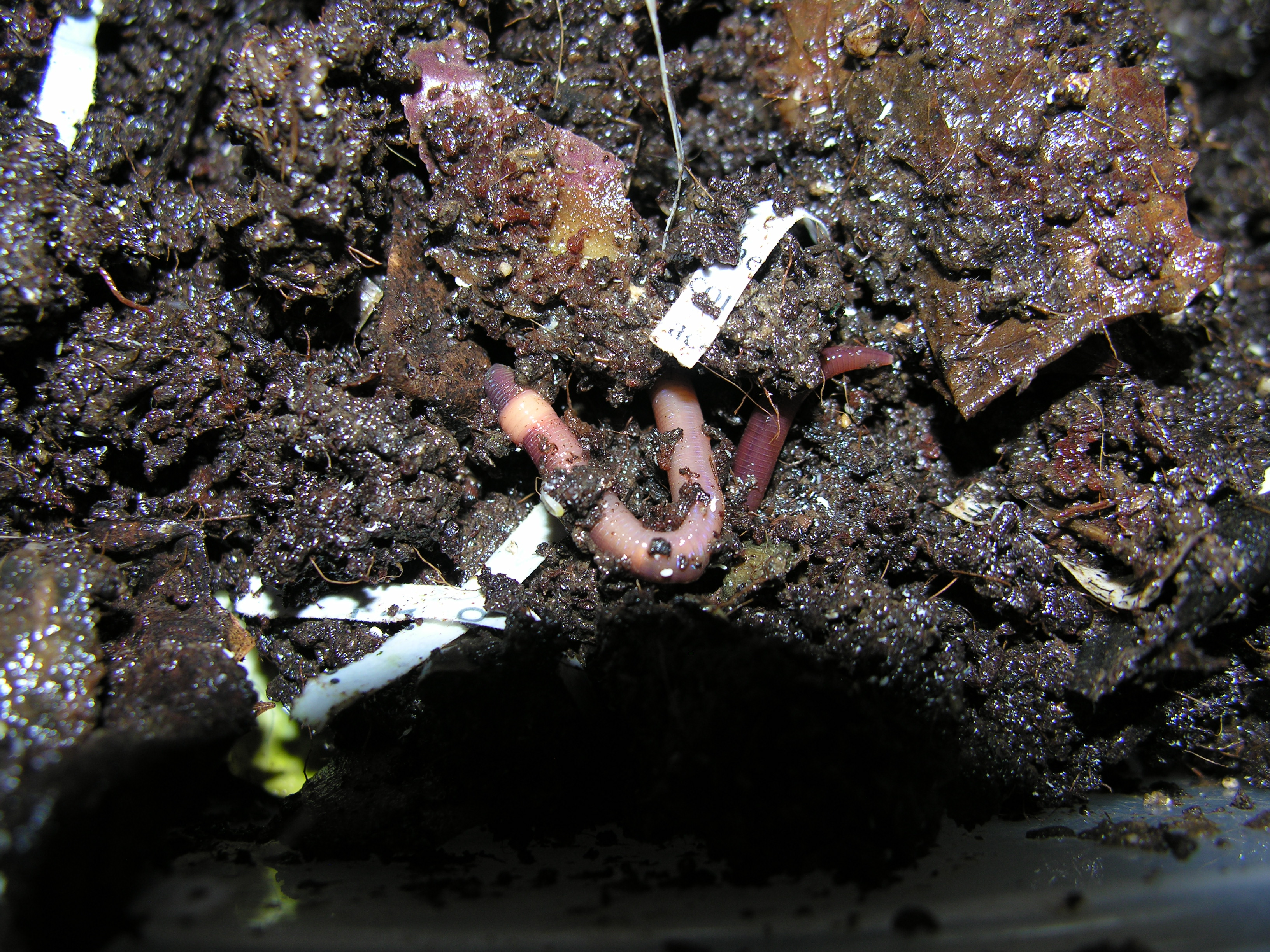
An adult worm, trying to escape the light.

In a previous post, I wrote about my new worm bin and the the fun I had setting it up. Recently, I took another leap of faith and harvested my first castings.

Harvesting requires the following: gloves (preferably several pairs of the thin kind) a receptacle for the castings, a temporary bin for the displaced worms, and a large work space. I brought the worm bin up from the cellar and got to work.

I took off the lid and began gently lifting out the uneaten vegetable scraps and any worms I could find. There were lots, thank goodness, tiny white threadlike babies, rebellious adolescents just acquiring their pink color, (an assumption, but aren’t they all?) and large adults.

As layers of castings and veggies were lifted away, the worms, which avoid the light, burrowed down to escape it. At the end, I was left with the worms at the bottom. These I placed in the temporary bin.

I carefully sifted through the castings and put those in a plastic bag. I kept noticing tiny worm babies in them, and I didn’t want them to end up in the castings bag where they’d eventually die. So I kept sifting through them in a semi hypnotic state, until I realized that my back was in spasm and that if I didn’t stop soon my eyes would be permanently crossed.

Back in their home, with yummy fresh shredded credit card offers!

I carefully put the worm families and their incumbent scraps back into the bin, added some shredded paper because the bin was a bit wet, and brought it back downstairs, along with the bag of castings. Of course I couldn’t resist taking another peek inside the castings bag  just in case, and yes, there was a teeny wormlet crying for its mother. I returned it to its proper home, threw out my gloves, and counted the  procedure a success.

Posted in Uncategorized | 2 Comments