A Mixed Bag

As our growing season winds down, I am still evaluating the performances of this year’s ornamentals and vegetables. Here are two more results from my garden.

Asters:


This is small - just a 6-inch pot


I had some single aster seeds hanging around and tossed them into a little pot. I was so cavalier about it that I didn’t even save the seed packet, so I cannot tell you which cultivar I planted. I watered them along with all my other “deck plants” throughout the hot, dry summer, but all I could see were small green stems and a few leaves. Then, in September, one flower opened, followed by more. This is the final result, which I think is very pretty and sweet. I have the pot on the coffee table in our living room where the flowers have been blooming for weeks! Too bad I don’t have that darn seed packet! I would love to repeat these next year.

Melons:


Crop failure


This was an experiment for me. I have never grown melons before, but I bought seeds of cultivars that are supposed to do well in short growing seasons – “Collective Farm Woman” from Russia  and “Oka” from Montreal, Canada. I watered them dutifully, (without getting the leaves wet) and we sure had plenty of sun and heat, so I don’t know what went wrong. The leaves are mostly brown and shriveled, and I have a measly 2 little golf ball sized fruits. Pathetic. I will not try this again.

Posted in Uncategorized | 8 Comments

Adventures With Okra

Here’s another guest post from our friend and fellow Master Gardener, Denise:

I consider myself fortunate to have had the opportunity to live in a number of regions of the United States. I love Rhode Island, but honestly, I am a girl of the south. Warm sunny days, green grass and flowers by the end of February – now that is living!

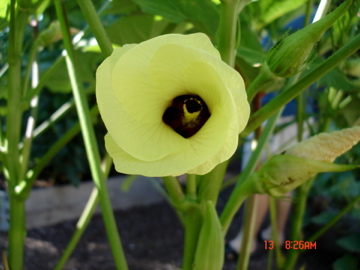
Okra flower

Of course I cannot forget southern food either, so this year, I decided to plant okra. I knew it would grow in the garden, but that is about all I knew. I planted the seeds, diligently watered and kept the okra bed clean. By mid-July there was not too much action, other then tall stalks and lots of green leaves. I thought the heat of July would spur the plants into production, but that was not the case. I did get some okra pods but they did not mature.

I was about to pull the plants out and plant something else, when I noticed the beautiful okra flowers on the plant stalks. To me, okra is not a pretty vegetable. It can’t compare to the beauty of a shiny deep purple “Black Beauty” eggplant or  a big  red “Brandywine” tomato. Okra pods are ridged, and a matte, nondescript green color, but the flower is absolutely beautiful. The soft, pale yellow color of the petals provides a spectacular off-set to the deep maroon color inside the flower, which is spectacular. What I found really amazing is that when the flower falls off the plant, a fully formed and almost full-sized okra pod remains in place, waiting to be picked.

The plants are almost done for the season. They stand about 5 to 6 feet in height, and are stretching for the sinking sun and getting leggy. I just may plant them along my driveway next year so I can enjoy the flowers a bit more.

Posted in Uncategorized | Leave a comment

Going South: Part 1

When Rhode Island Master Gardener, Paula Bartnick, announced that she and her husband were moving to Florida, I asked her to let me know what the gardening was like there, and how she was adapting to her new and MUCH warmer USDA zone.

Here’s her first installment:

We all took the Master Gardener course because we wanted to learn how to better our gardens, and because we love to play in the dirt. It did little to prepare me for my move to Florida. The first thing I was told was to forget everything that I learned up north. So I find myself starting fresh, a rather scary place to be.
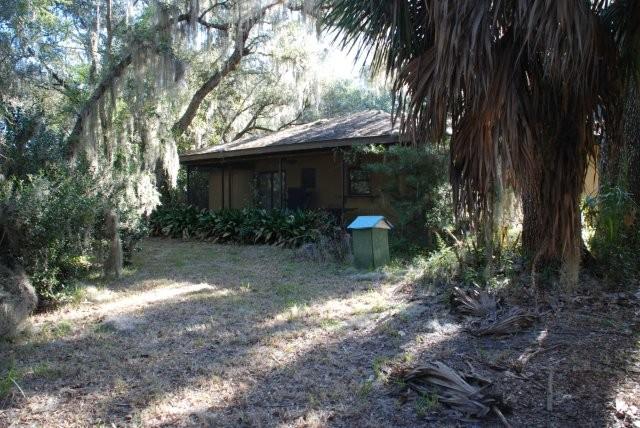
The house and garden as we found them

I was not prepared for the mess I would find on this property. The former owner, Bill, was an avid gardener. He lovingly cared for this property and the neighbors recount how it was park-like in nature. They say his citrus crops were second to none. Now, there are vines growing on everything, and the saw palmetto has overtaken most of the yard. Bill passed away 4 years ago, his wife a year later. This land has had no attention in four years.

The first chore was to hire an arborist to help us with the huge oak trees that were hanging over the house. Many of them were diseased and had to be cut down. Once that was done, it was quick work to lighten up the remaining trees and trim off dead branches. The difference was astounding. More sunlight, but still ample shade. A host of plants that had been starved for sunlight came to life. Liriope, oxalis, canna, and scores of other plants sprang to life. Spiderwort and wild poinsettias made their appearance, but they are considered weeds here! Imagine!

Up north, we did battle with poison ivy and bittersweet, the “vine from hell.”.Here in Florida, there is poison ivy, but add to that Virginia creeper, American wisteria, campsis vine, muscadine grape, and kudzu, and in four years’ time you have a jungle, literally. I’m sure that we will be busy for many months just trying to uncover some of these trees.

The most disheartening thing was watching the internet installer dig a post hole for the satellite dish. The sand he was digging up he called “sugar sand”, and it quite literally looks like sugar! How do you grow anything in that? Amend, amend, amend and amend again is what I’m told. The recommendation is six inches of compost/humus twice per year. I’ll be needing a bigger compost bin! I’m glad I brought my worms with me, I’ll be needing them!

Recently, I started the Master Gardener course at the Marion County Cooperative Extension in conjunction with the University of Florida. I was fortunate enough to get into the class, since they only take 22 students per year. There were 34 of us wanting to get in. They interviewed each and every one of us and decided who would make the best students.

In addition to a four inch binder, we have a 3 volume handbook that is approximately 8 inches thick. The course is held on Wednesdays from 9 AM until 4 PM. Upon completion, we are expected to give back 85 hours per year. That will be easy. However, the first year, they have a specified amount of hours for different volunteer tasks. There is the greenhouse, the gardens, propagation, education, and the telephone service. They want to be sure that we try everything. After the first year we are free to put in our hours any way we choose.

Each week, we are required to hand in an assignment of 8-10 “plant IDs,” sheets on which we document everything about a plant from common name to seed production to soil and light requirements of  the assigned plants for the week. We are also given a written assignment( this week’s assignment was signs and symptoms of macro/micronutrient deficiency). All that and reading 10-12 articles in our handbooks. 12 hours it took me to complete my work for the week. I’m not complaining. I need all the help I can get.

There are two growing seasons here, the cool season (October through April) and the warm season (May through September). I won’t get into pruning schedules, I don’t know enough about it yet. Suffice to say that I don’t touch anything until I research it.
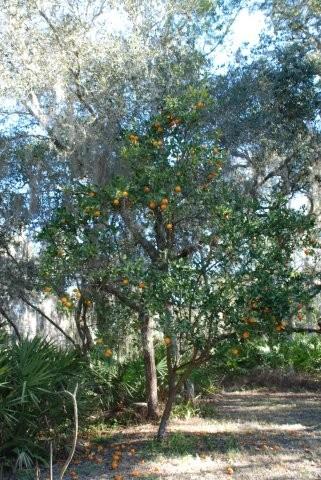
A few of the citrus trees

We have been gifted with many citrus trees, all lush with fruit that was set in the spring and won’t be ready until November or December. It boggles the mind. That’s also when the camellias bloom. How wonderful to have flowers all year long! How wonderful to be able to work in the yard 12 months out of the year instead of 6 or 7. It is just too dangerously hot to work outside much after 11 AM during the summer months.

I hope I haven’t bored you too much. I will stop here and write more as my experience progresses!
Posted in Uncategorized | 2 Comments

Planting Fields

Every mansion needs a gargoyle

Recently, I spent a glorious September Saturday visiting Planting Fields, a 400-acre estate on the North Shore of Long Island, NY. The house and grounds are excellent examples of what is known as the “Gold Coast era.” In other words, money was no object, and materials and landscapes were beyond lavish.

The estate got its name from the Matinecock Indians, who had cultivated crops there. As New York City grew increasingly congested in the 1800s, those who could afford it took advantage of the  bridges and escaped to the Long Island countryside.

The Atlas Cedar tunnel

Planting Fields was built in 1904, but it was William Coe and his wife who transformed  the house and grounds when they purchased it in 1913. The famous Olmsted brothers oversaw many of the projects, which included the construction of several greenhouses. The Camelia House boasts the largest indoor camellia collection in North America.

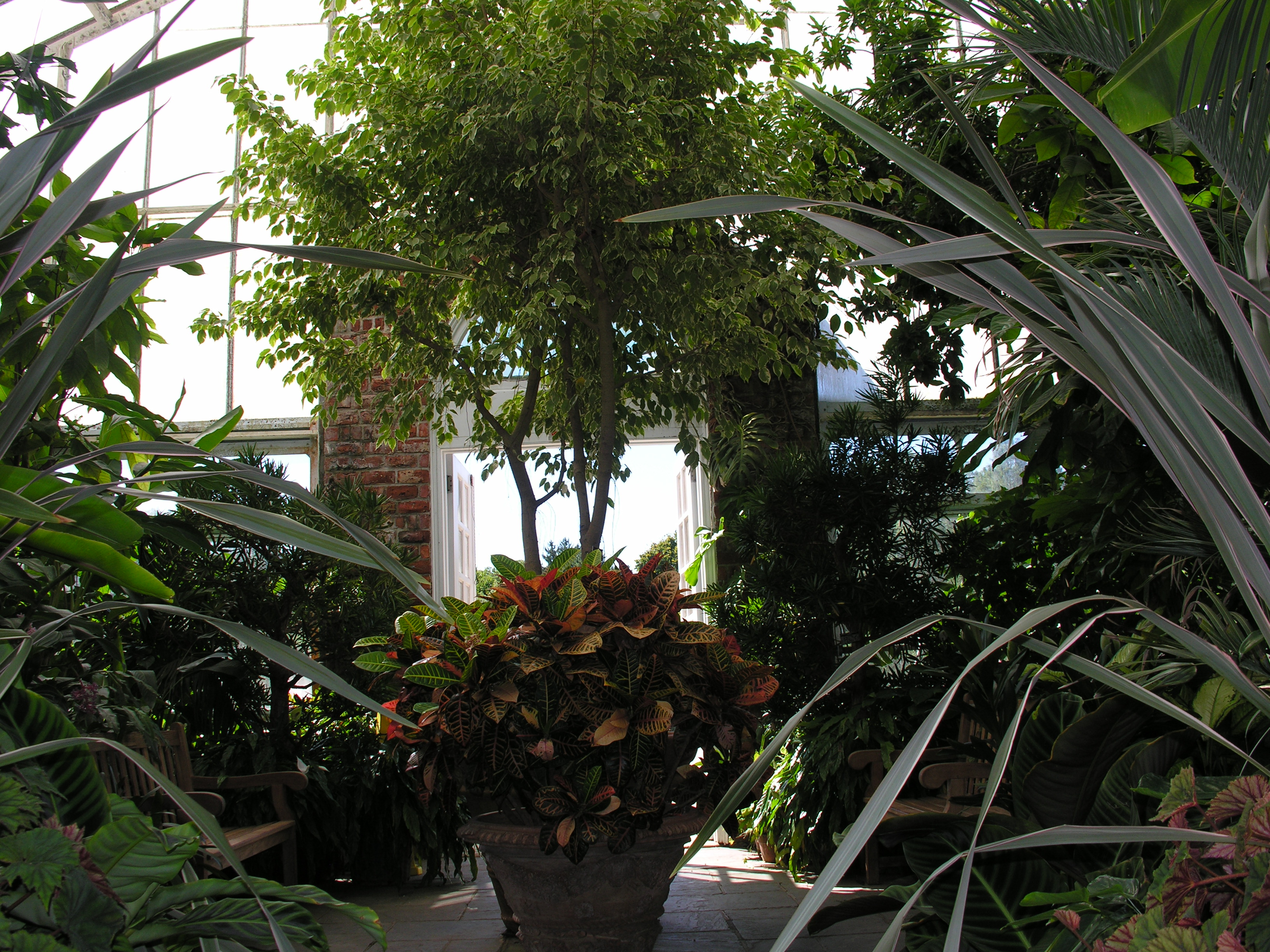
One of the greenhouse displays

I was thrilled to see many ancient and immense specimen trees, which had reached their full potential because they had been planted with enough room to grow.

A giant tulip poplar

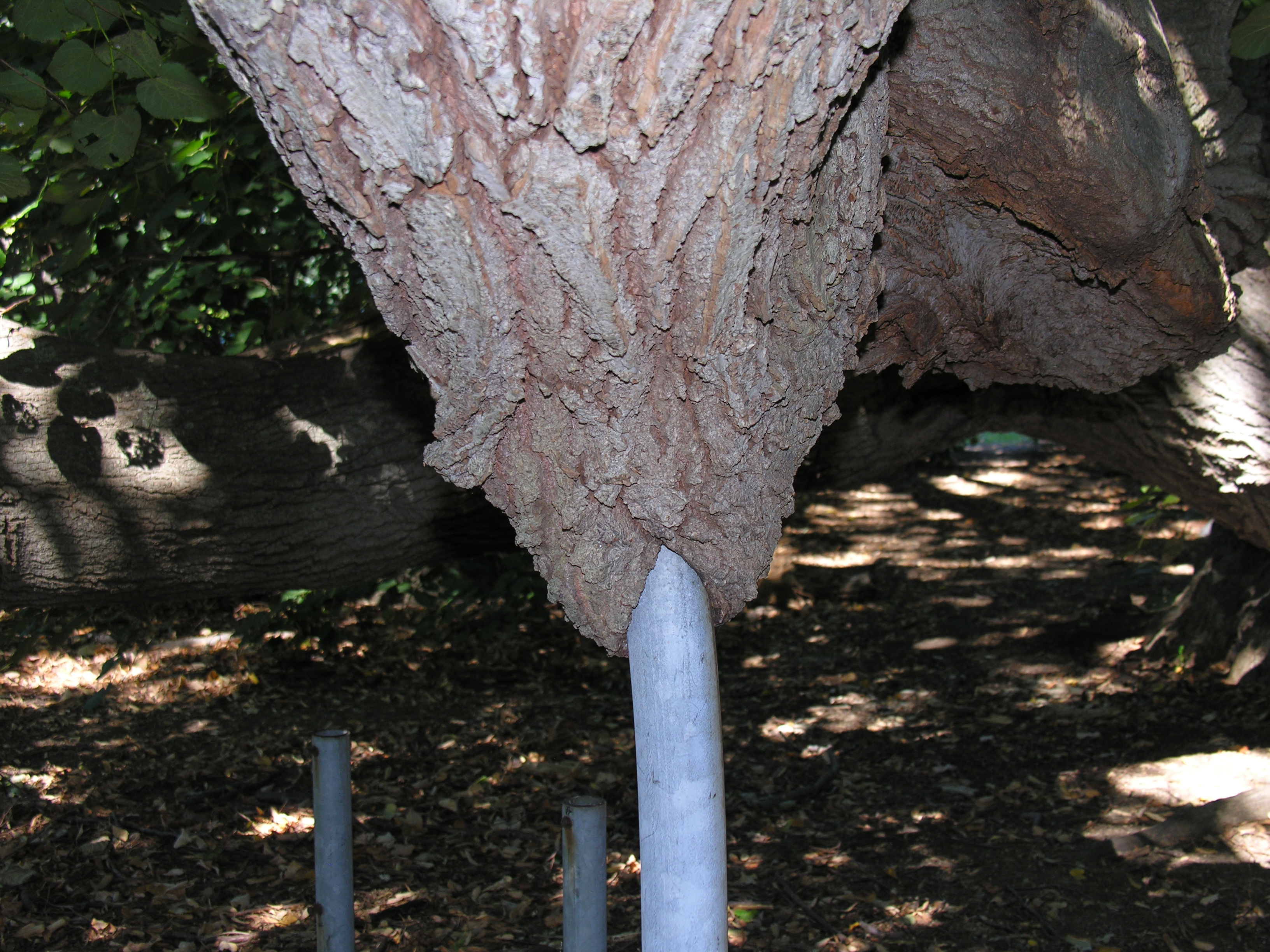
The weeping silver linden took my breath away. When you walk under it, you can see how its branches have grown into, and in some cases, enveloped their metal supports.

A linden branch devouring its metal support

Other plantings are not particularly interesting or special. There’s a dahlia garden, a rose garden which features mainly “Knockouts” and numerous common perennials, many of which surround the Italian Blue Pool garden.  The State owns and manages the property now, and I suppose it makes ecological and economic sense to use sustainable plants, considering how much it must cost to maintain the house and grounds.

The Italian Blue Pool garden

Speaking of the house, it is called “Coe Hall” and boasts 65 rooms, all predictably grand. This stuff doesn’t particularly excite me, but I did enjoy the antique furniture and stained glass from Europe, which dated back to the 15th century!

One of many priceless and ancient stained glass windows

For more information on Planting Fields, click here.

Posted in Uncategorized | Leave a comment

It’s All About Lunch

This is the best of times and the worst of times for my tomato plants. The worst of times because the clever new system I decided to use this summer to hold up my plants, the “Florida Weave,” was a disaster. Instead of getting some good nylon-coated wire, I went with cheap hemp twine, and it gave out sometime in July. So now my plants are all over the ground, getting early blight and slugs. But the best of times? Lunch!

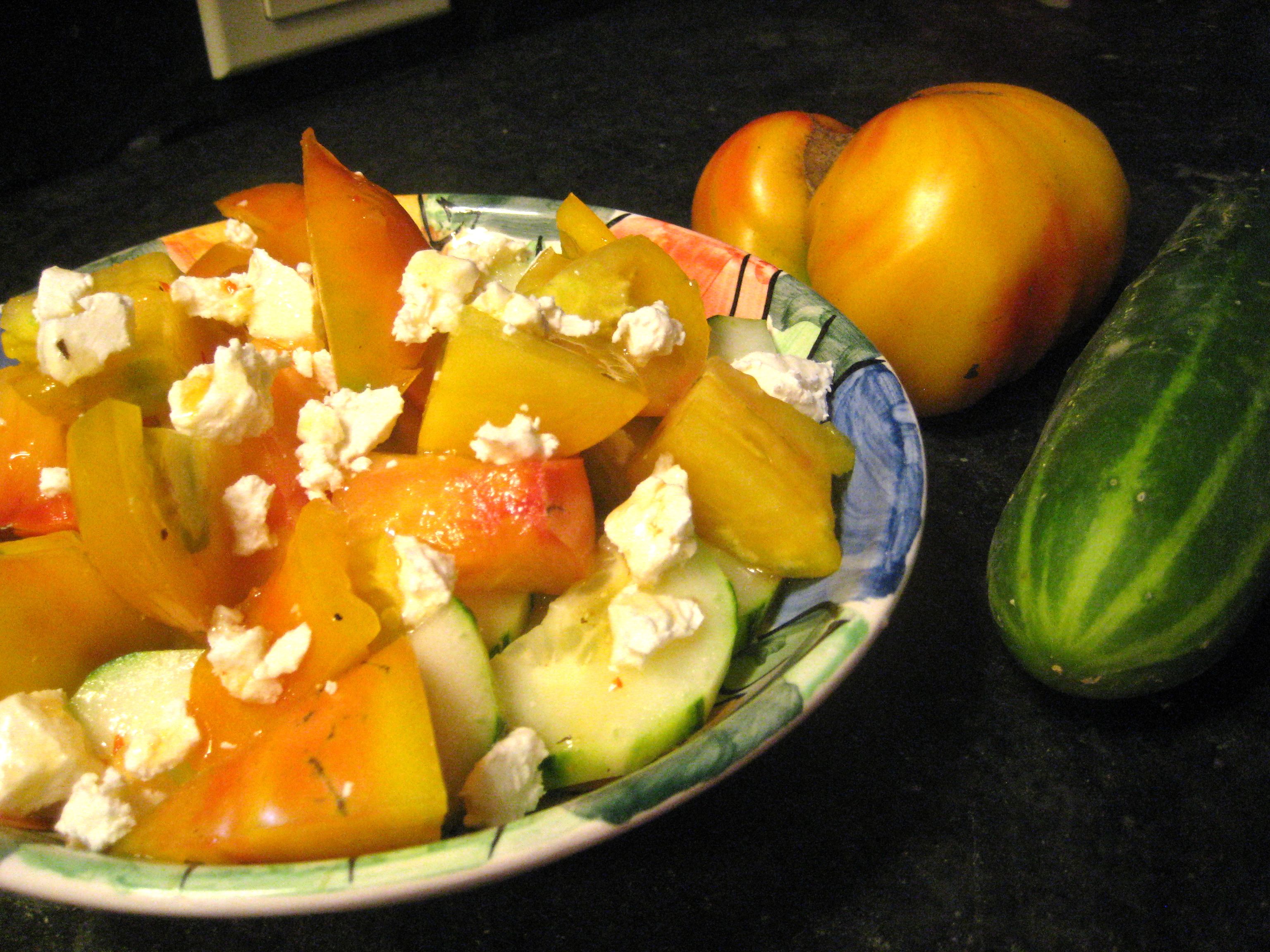
Today’s offering is a big bowl of sliced cucumber and a gorgeous Pineapple heirloom tomato, with a little Italian salad dressing and some crumbled goat cheese. MMMMMMMM!

Posted in Uncategorized | 1 Comment

Unexpected Guests

It seems that whenever we start talking – or writing – about wildlife in and around the garden, our fellow gardeners always have their own stories to tell. Here’s a guest post from our good friend and Master Gardener, Denise, who has also had some wild encounters recently:

It has been a number of years since I had a real veggie garden. I decided 2010 was my summer and got to planning. Before I put a seed into the soil, I decided the garden would be organic. I spent a good part of the growing season fretting about tomato blight and hand- picking Mexican Bean Beetle larva and a few adults. Then I found it –  the dreaded Tomato Hornworm, Manduca quinquemaculata, munching on and pooping all over my beautiful tomato plants. I’m sorry, but these worms are absolutely revolting.

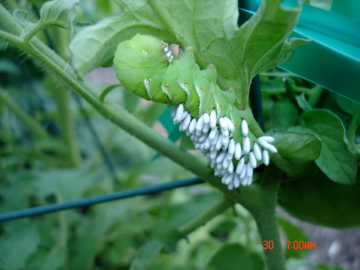
This hornworm is doomed!

I find it amazing how they clutch for dear life to tomato leaves and vines. Everyday I would go into the garden and pull them off my plants. With every plunk into my container of soapy water I smiled, ah what joy. Then I saw it. At first I thought what the heck… what kind of fungus is this? Then I realized this was no fungus. I was looking at a  hornworm covered with Braconid Wasp cocoons on its back. Talk about joy – and I didn’t have to pay for it. I left the worm on the leaf and continued my bug hunting. Every day I found at least one more worm on another tomato plant doing nature’s work. I don’t know where the wasps came from but I hope they come back next year. So for me, an uninvited guest became a wonderful garden host. Too bad I can’t say the same for the woodchuck!

The woodchuck, about to depart

Posted in Uncategorized | 5 Comments

Oh, Deer!

In keeping with this week’s unintended theme of wild things, here’s HerbDoc with a rant about deer:

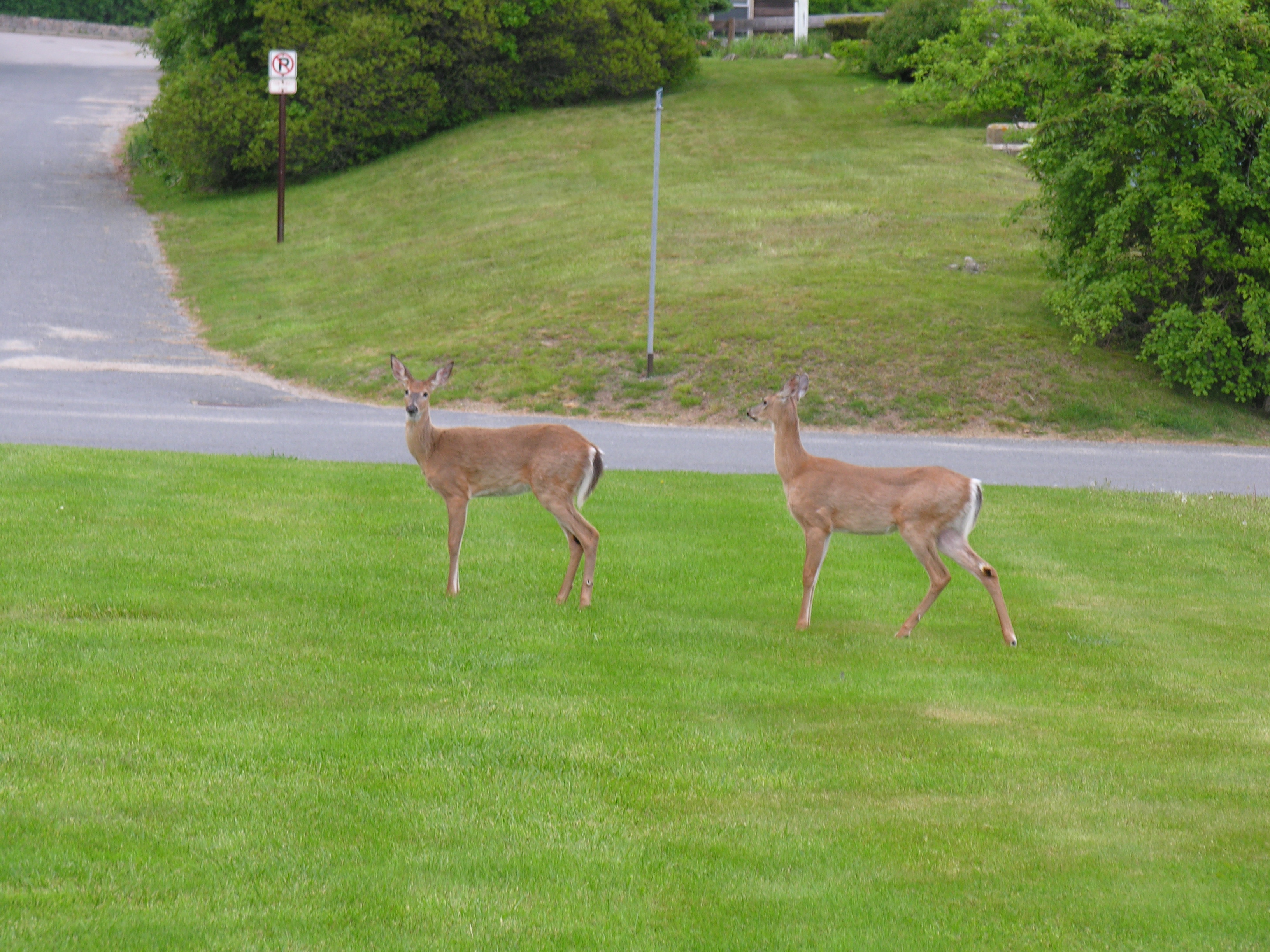
As someone who lives not far from the Great Swamp, a state- protected area in southern Rhode Island, I’m constantly invaded by deer.  When we first moved here and spotted occasional animals, I thought they were quite beautiful.  Now my opinion is that they are overgrown, destructive rodents!

I have tried every method known to man to deter them, including homemade repellents like human hair, Irish Spring soap, and red pepper and garlic sprays.  Lots of dollars went into commercial repellents such as Deer Away, Deer Off, predator urines, milorganite and fencing.  Fish and Wildlife recommends products that contain Thiram, but a quick check indicated that this is a fungicide which can be harmful to children and pets.  Everything works for a while but because of overpopulation and extreme hunger, they return to browse and taste.

We go out of our way to purchase “deer-resistant” plants and shrubs, but there is really no such thing.  Not only will they eat almost anything when they’re hungry, they will browse foods they don’t care for.  For example I bought ten, five foot Naylor’s Blue Leyland Cypress for my lot line, and they chewed every one of them and spit the pieces on the ground.  Just nasty!

Now for the good news!  About three years ago, I purchased a two- bottle product through American Deer Proofing in West Kingston RI. This actually works!  The base of the Liquid Guard is rotten eggs which repel them, and a second bottle contains a waterproofing agent which is added to the mix.  A spraying lasts 3-4 months; no running out after every rainstorm to reapply!  At first glance, the 2 bottle product seems a bit pricey (about $65 for 32 oz. concentrate and waterproofer), but mine lasted about 2 years with selective spraying.  The site notes that the 32 Oz. system will treat 400-500 shrubs.

This product definitely gets two thumbs up from me!  Check it out  here.

Posted in Uncategorized | 4 Comments

Scary Wildlife!

Ok, so maybe not so scary, unless you get up real close, but I found this wandering around in my driveway this morning.

Auugh! It’s a teeny tiny lobster! But it’s really a crayfish. Most crayfish species breed this time of year, so I’m assuming this little beauty is a male off looking for love. I live on a weedy pond, so I’m  that’guessings where he came from. He’s not as scary as this lady…

Notice I didn’t get close enough to put a ruler down? That’s because she is the size of small laundry basket, and I’m assuming she’d as soon bite a ruler in half as look at it. We get visited by these monster snapping turtles every spring, although I can’t imagine how they reproduce. These poor ladies lay their eggs one day and by the next morning, skunks have dug up and eaten all the eggs. Now that’s scary!

Posted in Uncategorized | 8 Comments

Just Add Ice?

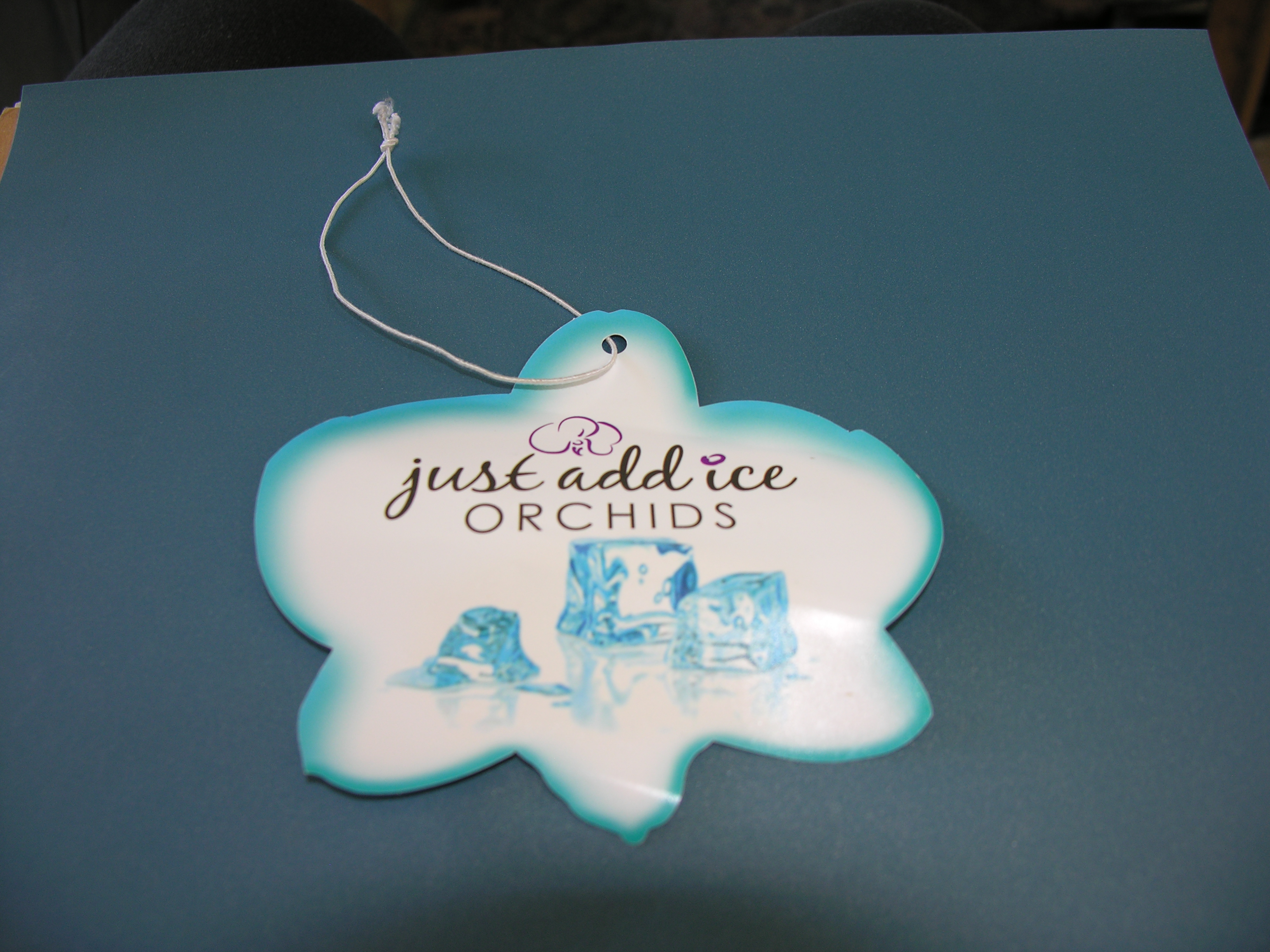
I was eating lunch at a local seafood shack the other day, and noticed an orchid languishing on the window ledge. Orchid lover that I am, I picked up the pot to take a closer look. There were two brown, dead spikes, and the plant, a Phalaenopsis, was very, very dry.

I mentioned to the owner that if she wanted to keep this plant alive, she would have to give it a lot more water, and she replied that she had been following the directions on the tag that came with the plant. These instructions were for a “Just Add Ice” orchid, and they called for placing three ice cubes per week on the potting medium and letting them melt, thereby watering the plant. In the case of this Phal, it was obvious that three ice cubes per week were nowhere near enough. The leaves were starting to shrivel, and the pot was light as a feather. And, like all houseplants, orchids HATE ice cold water.

Having never heard of “Just Add Ice” orchids, I got on the Internet and found the company’s website. There was plenty of information on how to grow the plants, and even a forum where “Just Add Ice” owners would write in with their questions. I must say that most of the questions I read involved bud and flower drop – probably involving  plants that were extremely thirsty!

The best way to water a Phalaenopsis is to bring it to the sink and water it well, allowing the excess to run out through the bottom of the pot. The plant should never sit IN water, because the roots will rot. I usually water mine about once a week unless it is very hot, in which case I water more often.

I suggested to the Phal owner in the restaurant that she water it well in the sink, and she did so immediately. It seems that like so many of today’s gardening techniques, “ice watering” is more about convenience than proper  culture.

Posted in Uncategorized | 8 Comments

Not-So-Sweet Autumn Clematis

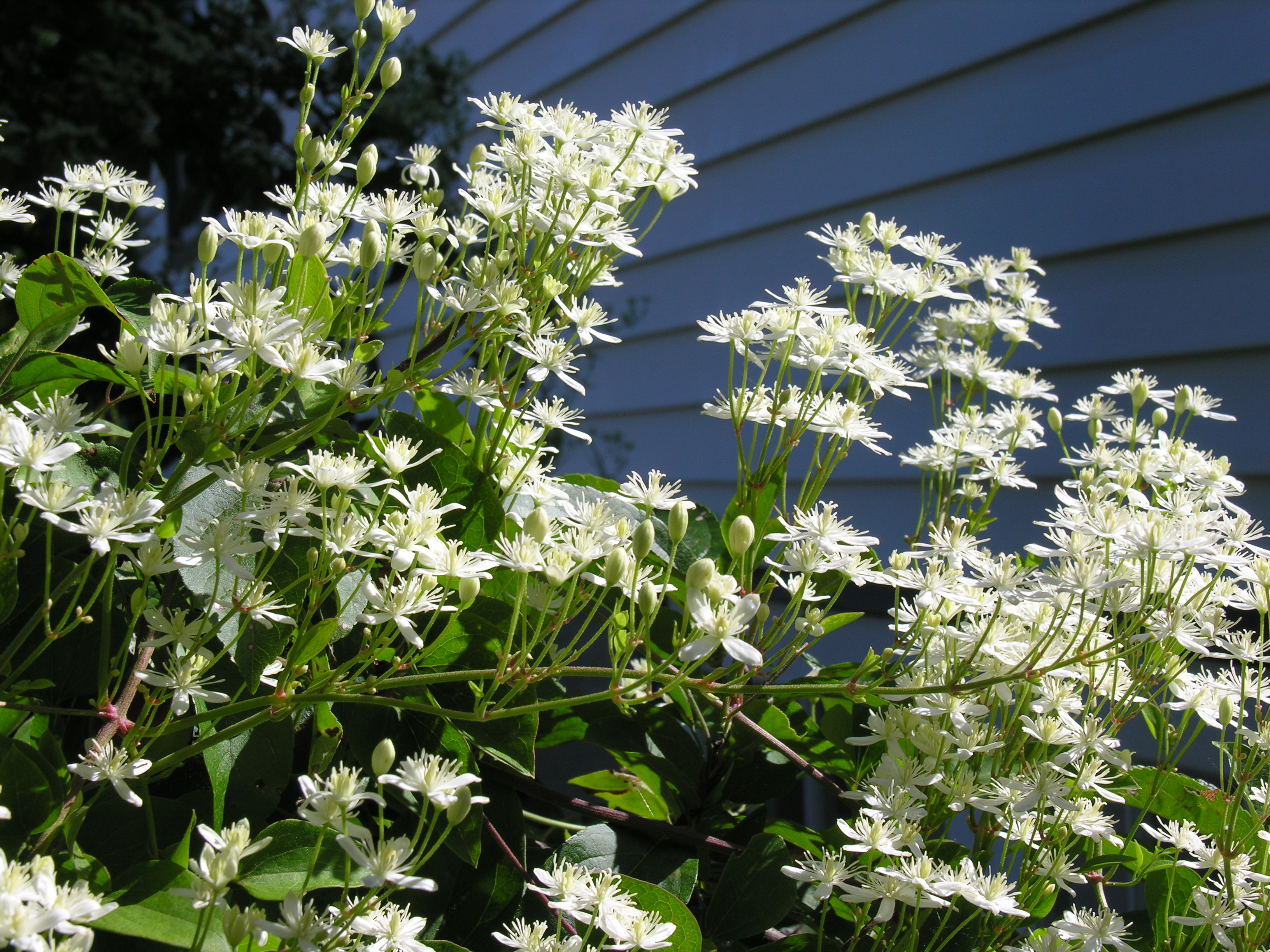
Clematis is one of the plants that adds vertical elegance to any small garden or to a small perennial bed.  And, since there are various types of clematis that bloom at different times these plants can also add color to the garden in spring, summer, and fall.  So, when I designed my garden a number of years ago it seemed like a no-brainer to plant sweet autumn clematis since it blooms in September.  If you’ve never seen one in bloom you can’t imagine how beautiful it looks growing on a trellis, an arbor, or a porch railing.  It is soft and it falls in cascades of small white flowers that have a lovely fragrance.  Well, folks, it turns out I planted a relative of Audrey, the man-eating plant in Little Shop of Horrors!

Three years ago, I decided that the sweet autumn clematis was getting much too large in its location (it keeps sending up new shoots so even pruning doesn’t solve the problem) on the corner of my porch so I dug it up.  I did this very carefully and, I thought, very thoroughly because leaving even a snippet of root in the soil will result in propagation of a new plant.

There was not a sign of my Audrey again until this year.  New plants appeared in three locations along the side porch rail – at the three trellises where I had planted other clematis plants!  Is that amazing.  Not only did this plant reconstitute itself but it selected exactly the locations where it could grow undetected until it was in bloom (full size and six feet tall).  Now, after tearing the three of them down I will still have an annual battle unless I dig up all of the clematis plants and other plants in the bed in order to destroy the root (ha ha).

Not only that, but when I cleaned out another nearby bed I found sweet autumn clematis shoots here and there…about five of them.  Now I was even more than upset and I wanted to know how this was happening so I asked a fellow master gardener.  Apparently, it propagates by seeds driven by the wind and I can expect to find them anywhere in the yard!  The only way to control this “reseeding” is to deadhead every spent flower.

My advice to you: never plant an invasive plant in your garden.

Posted in Uncategorized | Leave a comment