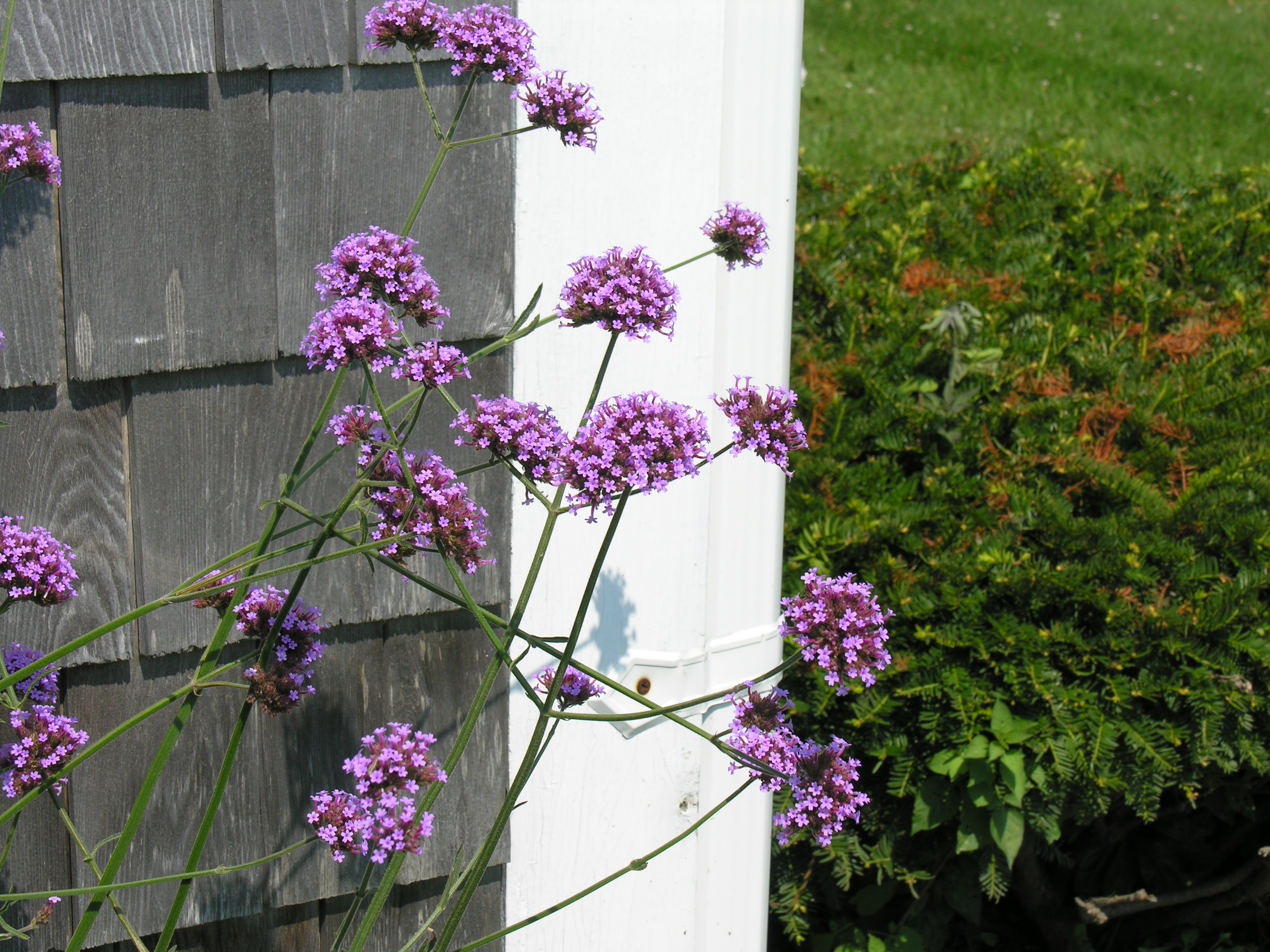
My Obligatory Verbena Bonariensis Post

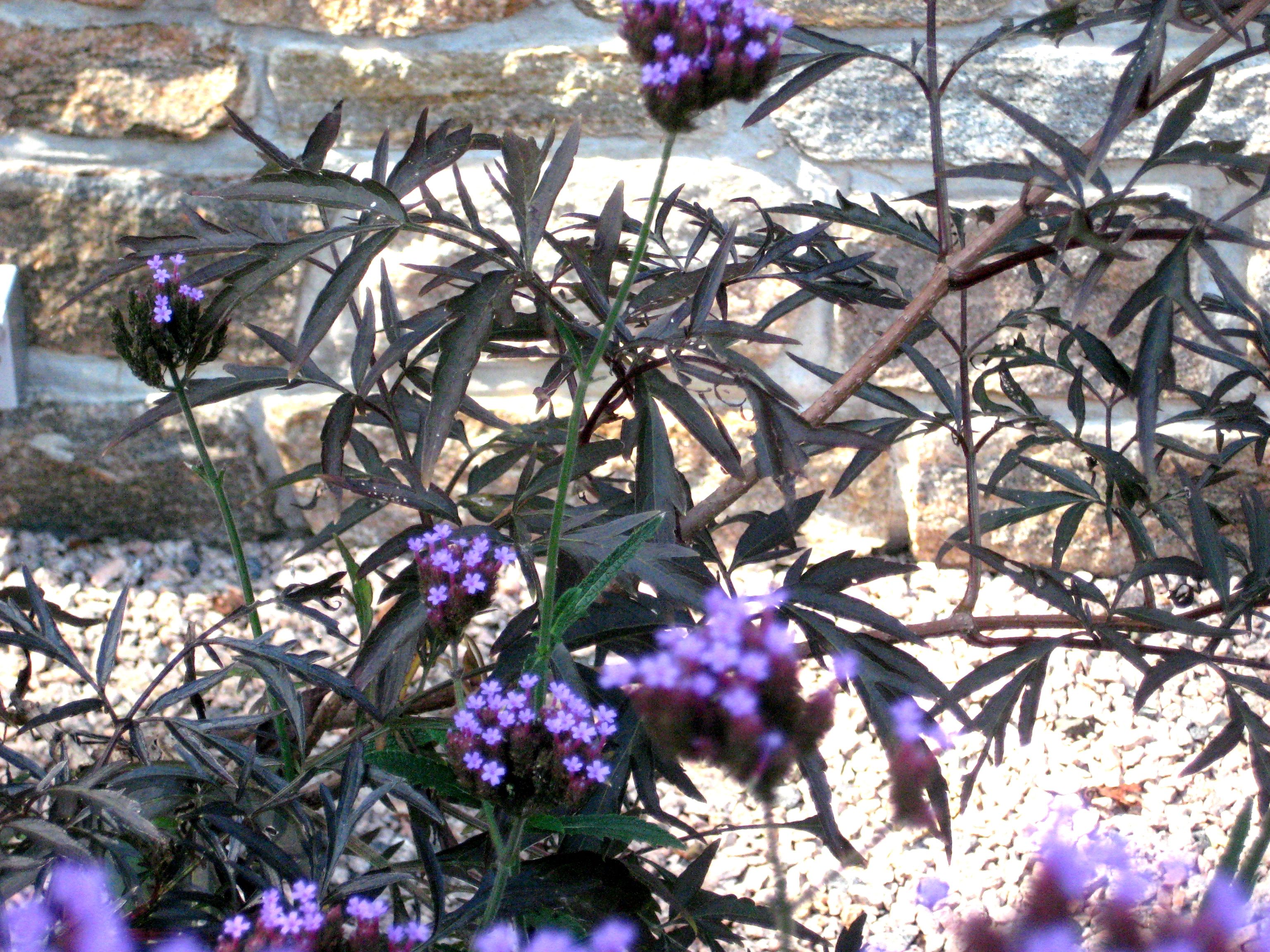
I couldn’t resist chiming in on the Verbena Bonariensis lovefest here on DiggingRI. I too love this plant. It blooms all summer, it’s drought tolerant, and it’s just lovely. I have it in and around my Black Lace Elderberry, and I love the way it picks up and echos the violet tones of the foliage.

Best of all, it self-sows! So I don’t ever have to buy it again. Yay!

Posted in Uncategorized | 2 Comments

A Great Garden Performer

Verbena Bonariensis

In a recent post, Herbdoc mentioned how her Purpletop Verbena (Verbena Bonariensis) attracts butterflies. I’ve been touting the virtues of this plant for years.

These include:

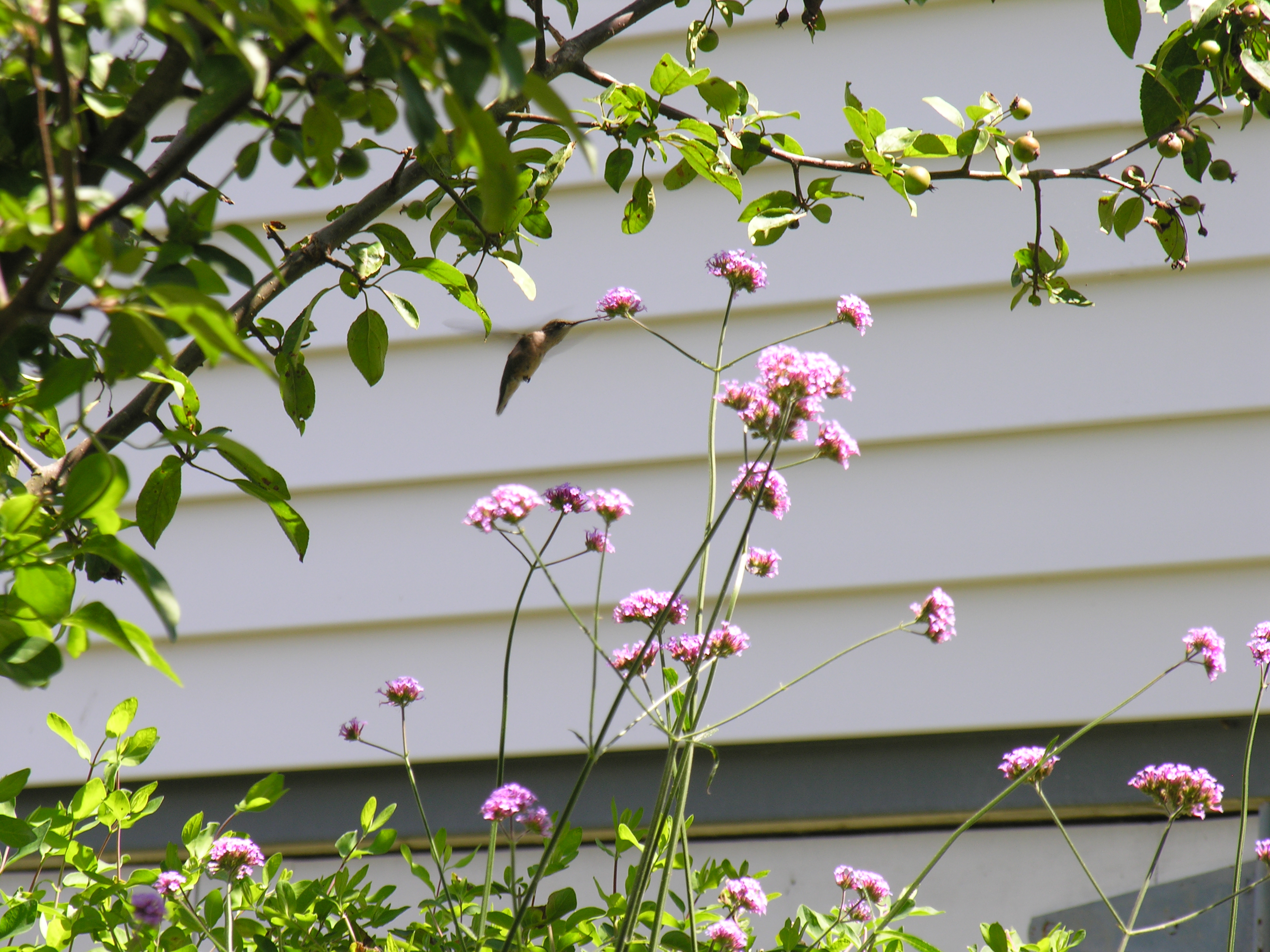
  • It’s a pollinator magnet – loved by bees, butterflies and hummingbirds
  • It’s tallish, but airy, so it can go almost anywhere
  • It does well in dry conditions
  • Its strong stems don’t require staking
  • It self-seeds reliably, but is also easy to control *
  • It makes a good cut flower – a nice accent in bouquets

Hummingbirds love it

I started mine from seeds that my aunt sent me in the mail. Do yourself a favor and just buy some plants. It’s much easier and if you leave the seedlings every spring, you’ll have the plant forever. I often wait until the seedlings are about four inches tall, and then I move them where I want them to grow. They transplant well.

*A word of caution: this plant is not as easy to control in southern climates, and is considered invasive in California and Texas.

Posted in Uncategorized | 2 Comments

Ouch!

HerbDoc has been doing battle with yellow jackets:

I reluctantly took the hummingbird feeder in about ten days ago.  It hangs under the eaves on my second floor deck and had been invaded by some very aggressive yellow jackets.  They couldn’t actually get into the glass jar since the stems of the flowers are very small, but they were congregating at the joints where they were apparently getting nectar.

I thought about covering the stems with Vaseline, but due to the extremely aggressive nature of these insects, I opted to take the feeder down.  They were chasing the hummingbirds away from their claimed property.  When I swatted a couple of wasps in frustration, some ants came to carry the bodies away, and the remaining yellow jackets stung the ants!  The final straw came several days later when I was out watering plants on the deck, and they stung me!  Long after the feeder was gone; if someone opened the door, the yellow jackets magically appeared.

I know they’re in a ground nest out in the woods, but I don’t plan on looking for them anytime soon.  As with all wasps, the nest would have to be located during the day and then eliminated after dark to prevent them from chasing/stinging me.

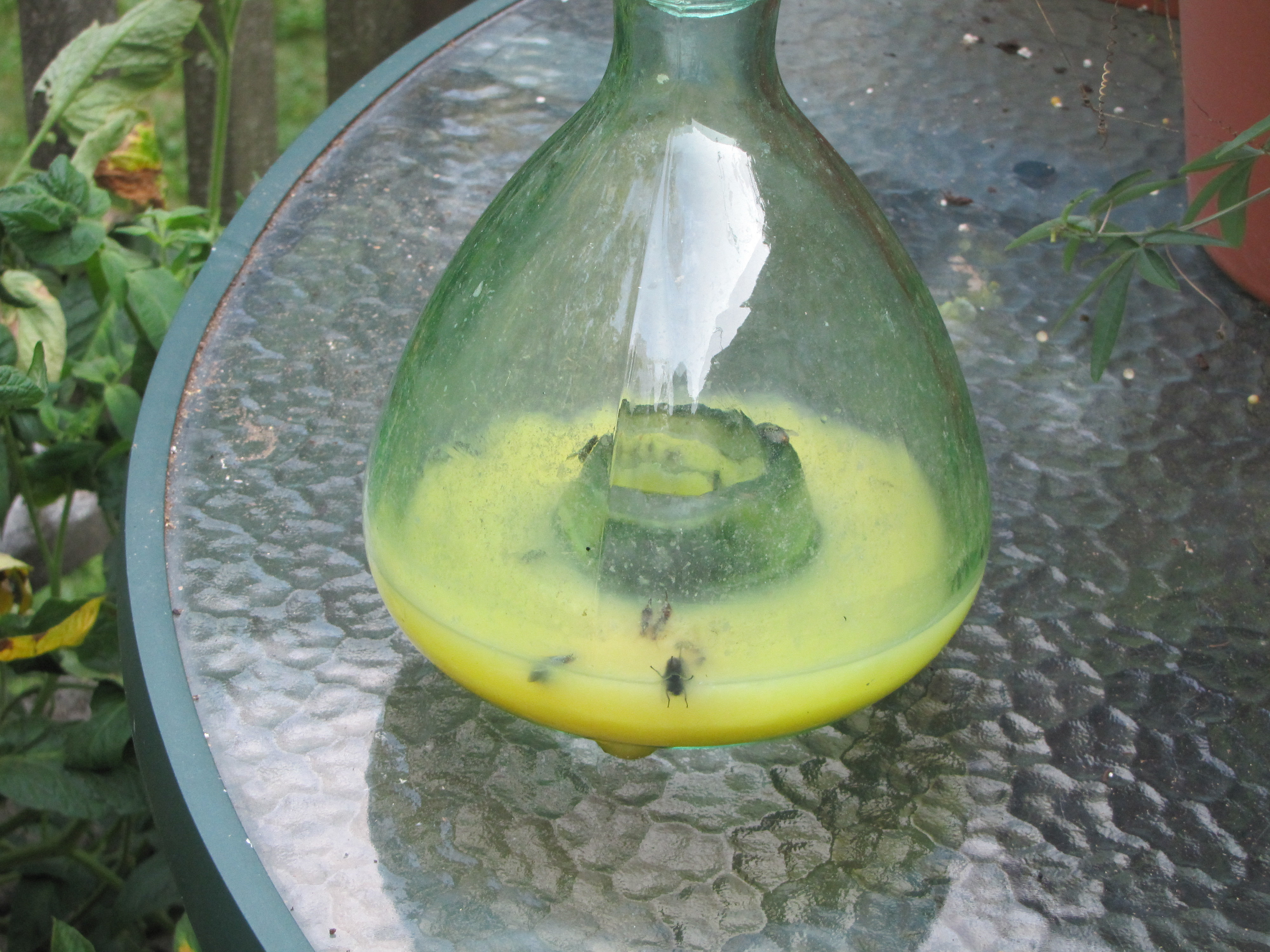
My trusty wasp trap

I’ve resorted to putting out my old-fashioned wasp/fly trap filled with sugar and juice on the deck away from the door.  It has caught a number of wasps and flies to date and happily I didn’t meet up with any yellow jackets when I brought some of my plants in prior to Hurricane Earl.

Posted in Uncategorized | 5 Comments

I Got Hosed

I like using soaker hoses in my vegetable garden. They deliver the water where it’s needed with minimal waste, and they don’t splash water on the leaves – an invitation to disease.  When we moved about a year ago, I brought my old soaker hoses with me, but alas, they were full of unwanted holes and I had to replace them. (I find these hoses break down in just a season or two. It must be the UV light.)

I set off to buy new soakers in the spring, but I guess I left it a bit late, because all any of our local stores had left were the flat, ribbon type hoses.

The Object of My Annoyance

These looked great to me, so I grabbed one and brought it home. I hoped it would lie flatter than my old round soaker, and be easier to place. I hate wrestling with the hose! So I began unraveling and installing the new soaker, and something terrible began to happen. As I flattened each section to the earth and held it down with a garden staple, the remaining hose began twisting and curling back on itself – like an annoying serpent. The more I tried to flatten it, the more it writhed. Once I finally got the last section all nice and flat, I would look up and the first part would be all twisted.

I ended up having to lay the entire thing  three times, and when at last I was done and had unclenched my jaw, I turned on the water to reap the rewards of my labor. The first section seemed to work fine, but the lower parts were not soaking at all, because, as I discovered, there were tiny kinks in the hose. The darned thing never did work properly, and I ended up using a watering wand instead. So if you see these in the store and they look tempting, my advice is to grab an old fashioned round soaker hose and run away! The flat ones – at least this one – will drive you crazy.

Posted in Uncategorized | 4 Comments

More Tomato Talk

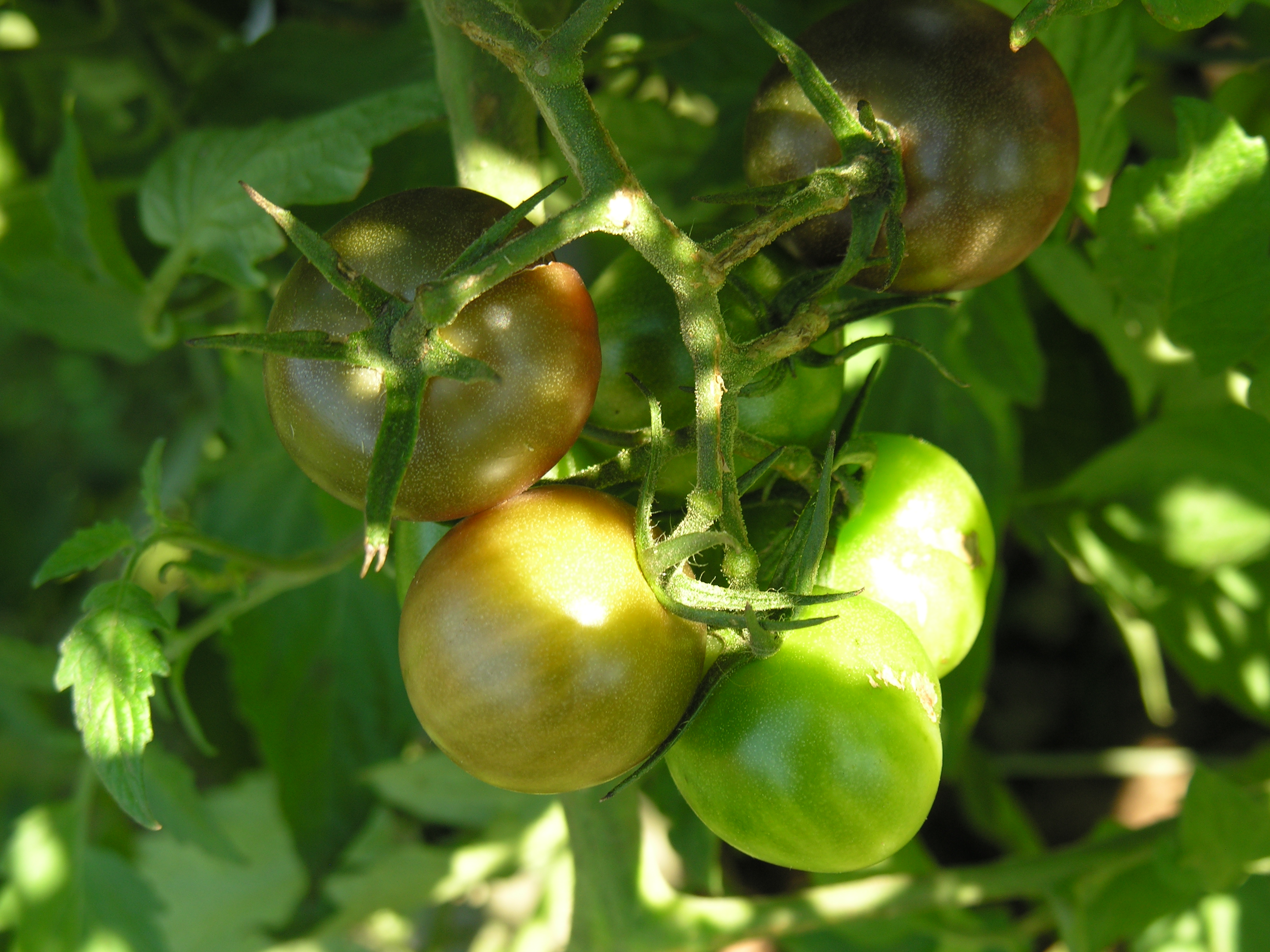
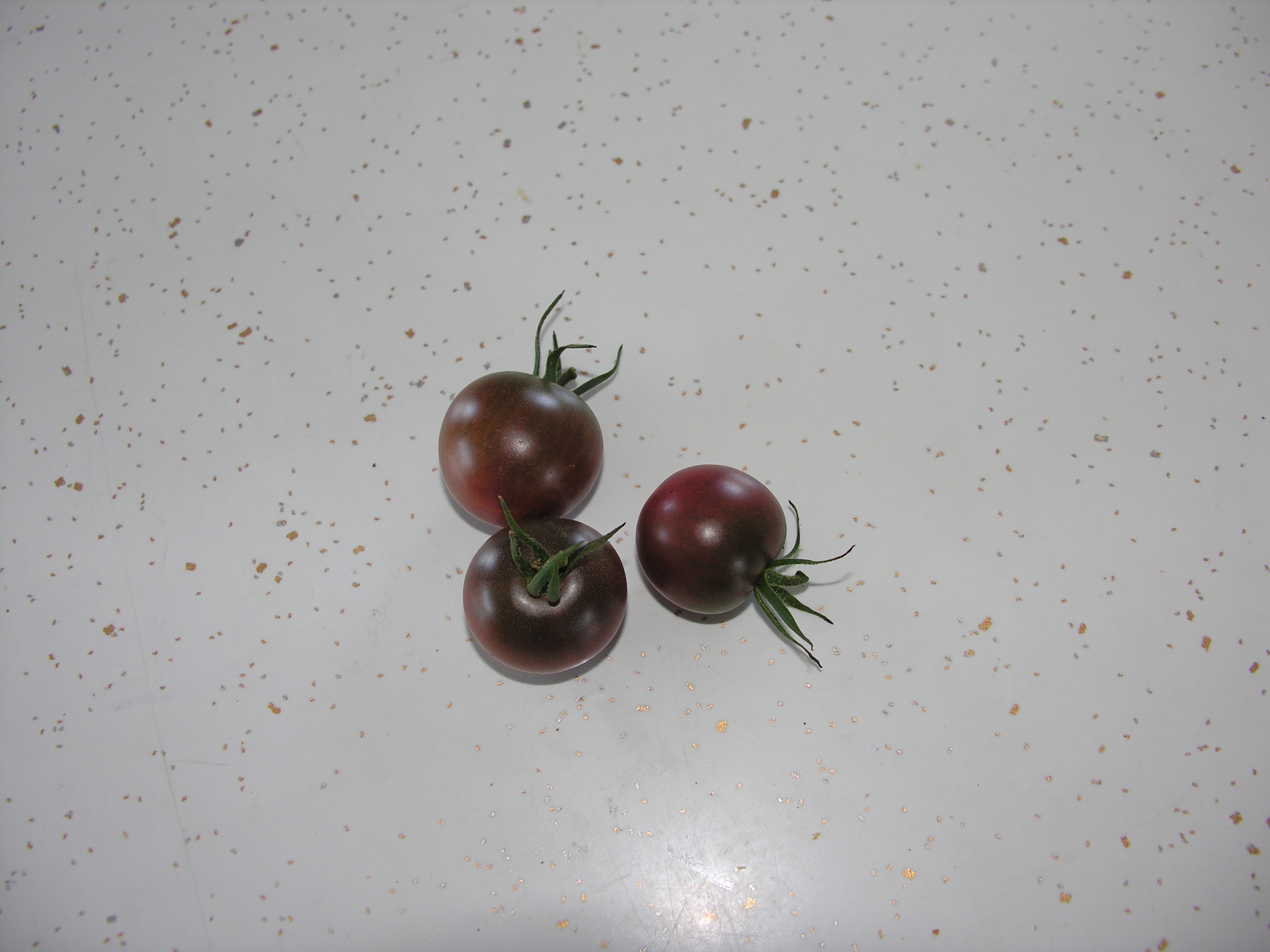
Chocolate Cherry on the vine

I am evaluating the tomatoes I grew this year, and having already gushed about “Orange Russian” in a previous post, I will now turn my critical eye toward two more cultivars. Both of these are new to my garden. One is performing magnificently and the other is a disappointment. The cultural conditions are the same for both, in fact, they are growing next to each other.

Chocolate Cherry:


This is a well-known heirloom, and I am happily surprised by its vigor and the proliferation and taste of the fruits. Of course, they do not taste like actual chocolate cherries, but they are definitely dark and sweet. They are also quite a bit larger than other cherry types I have grown – about 1 inch or even more in diameter. All in all, I found this to be a productive and trouble free tomato – and the fruits are delicious.

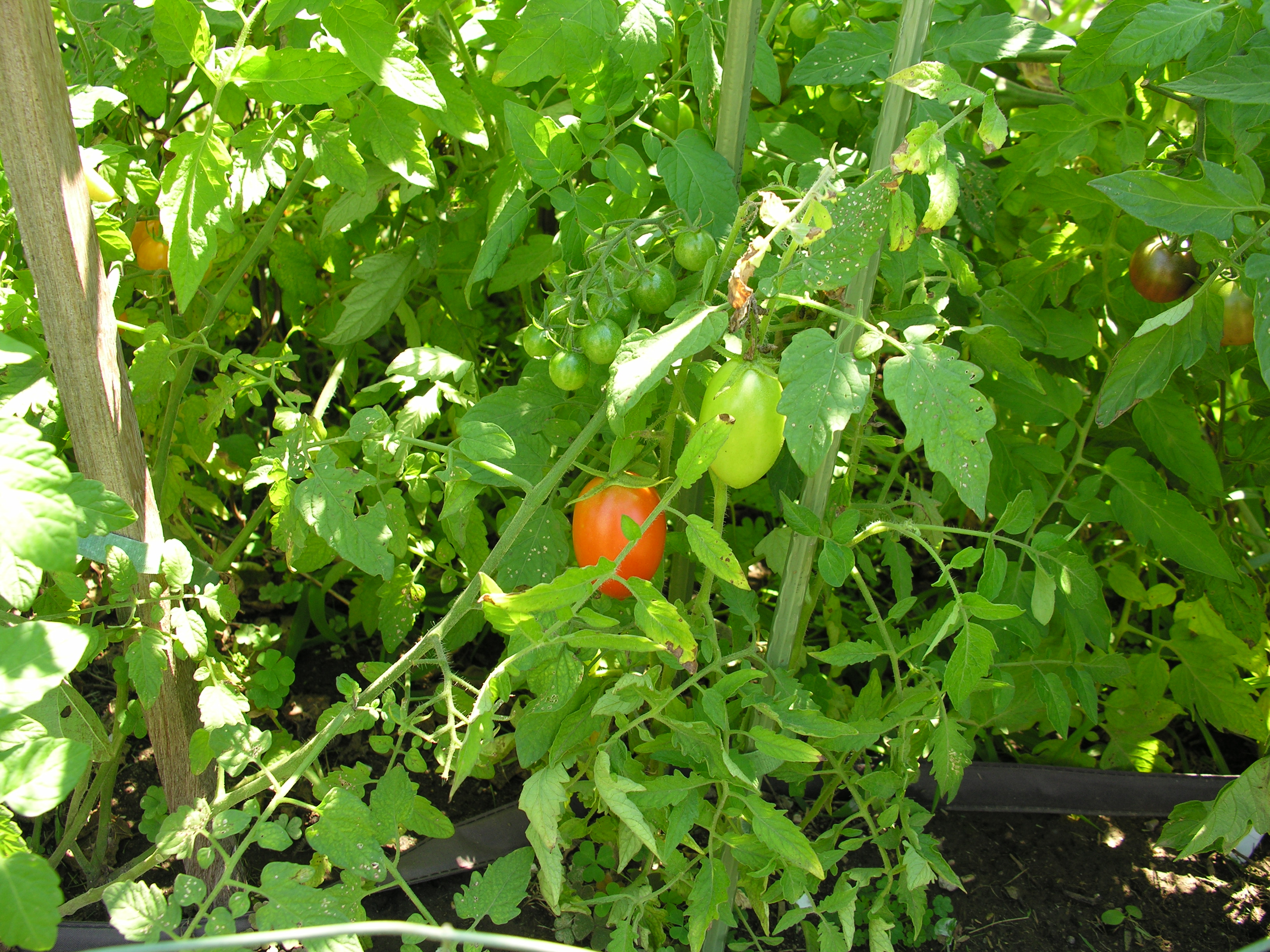
Milano:


I decided to try this plum type tomato after reading a glowing review in a seed catalog – one I trust. The seed is imported from Italy, and the fruits are supposed to be ideal for sauces and sun drying. I am also growing San Marzanos and I have already harvested two batches and made sauce. The Milanos, on the other hand, are sort of languishing. I haven’t picked a single one yet. Maybe I’m doing something wrong with these, but all the others are doing great, so I don’t think that’s the problem. I won’t bother growing these next year.

Posted in Uncategorized | 2 Comments

Superthrive

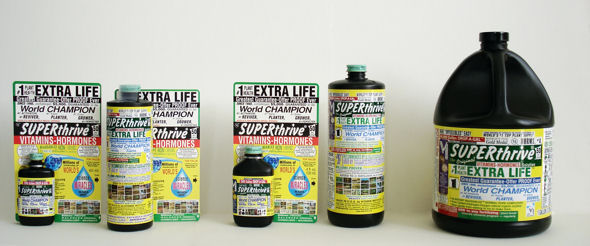
I was wondering whether any of you has used a product called “Superthrive.” (And no, I am not working for the company that makes it!)

I’ve been using it for several years, and have been getting good results. It’s not a fertilizer, rather a kind of supplement that provides plants with micronutrients. I first heard about it when I was volunteering in a greenhouse, and the team leader used it to revive some wilted plugs. Then I heard more while attending a class on orchid culture. The instructor told us that she alternated “Superthrive” with her regular orchid fertilizer.

So, I bought one of those  little bottles with the miniscule text and teeny tiny photos. If you want to actually read that tiny text, here’s a link to it on the “Superthrive” website. I think it’s kind of  funny how they try and cram all that information onto a small label. But whatever the bottle looks like, I find the product useful, especially when I’m transplanting, or putting new plants in. They seem less traumatized if  I add it to the water. I also use it on my orchids, alternating with orchid fertilizer.

I would love to hear your comments and/or experiences with this stuff, or any other products for that matter!

Posted in Uncategorized | 14 Comments

Not So Good and Great: A Couple of Plant Reviews

This summer, I have been experimenting with new cultivars – both ornamental and vegetable.  Below are my reviews of one of each:

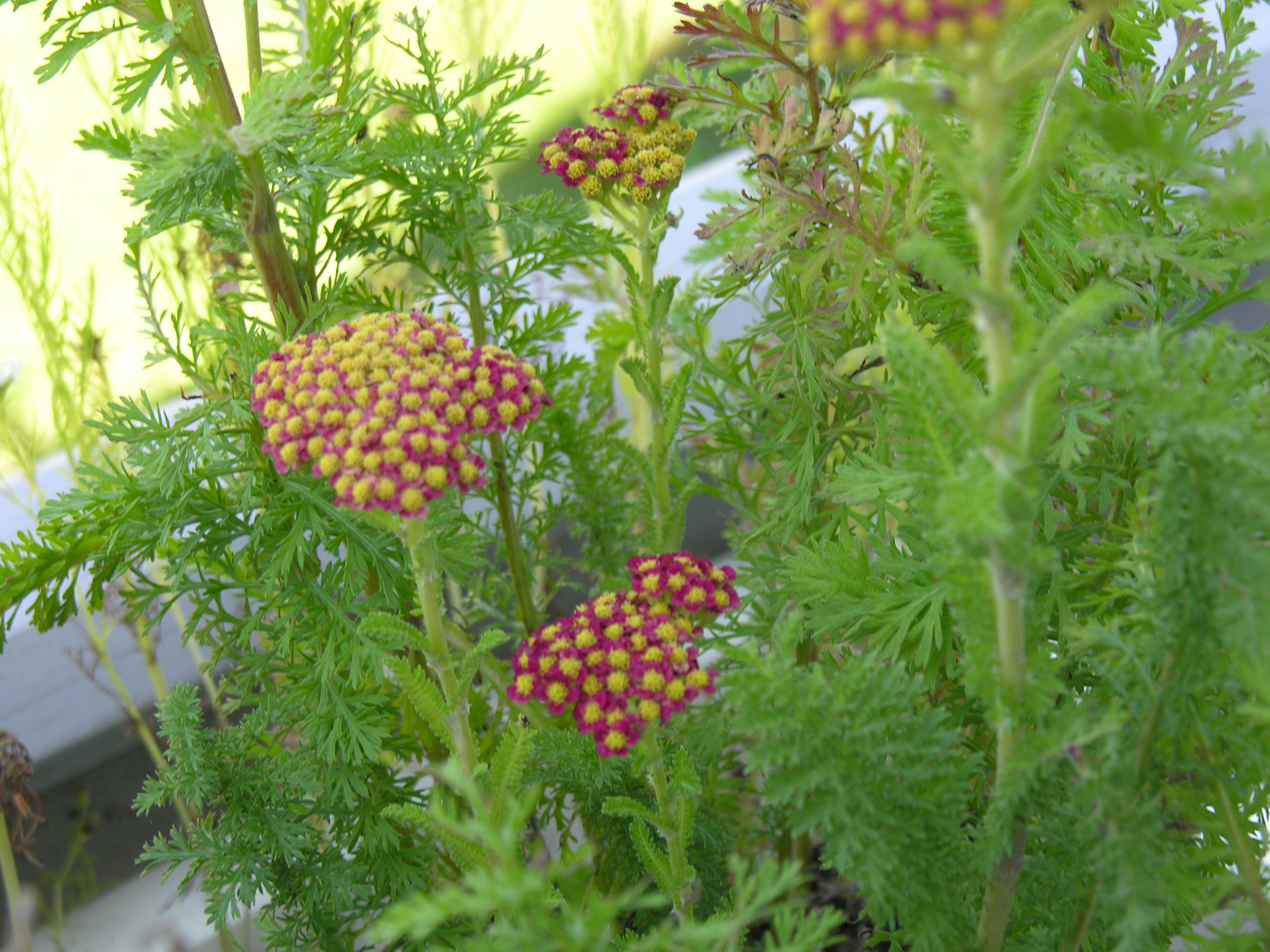
Achillea Paprika:

Paprika. Nice and red.

This was purchased to attract hummingbirds. I planted it in a large, tall planter on our deck, along with some dwarf white cosmos and a new salvia cultivar, which I will review in another post.

The descriptions I read before buying it were enticing ( aren’t they all?): “large clusters of bright red flowers”  “ruby red flowers”   ” irresistible to butterflies.”  At first, the color was indeed bright red. Finally, a yarrow that wasn’t muddy!

Paprika, one month later. Not so red anymore.

But alas, as the summer progressed, even with regular deadheading the flowers went from red to rust – a shade I am definitely not fond of. So in the fall, I will move it to the perennial bed at the side of the house. Maybe it will be redder there.

Tomato Orange Russian:

Orange Russian: big, beautiful and tasty!

I bought this plant at a spring plant sale. As I said, I do love experimenting, and I have found most of the Russian cultivars I have tried in the past to be both interesting and absolutely delicious. I harvested the first fruit a couple of weeks ago, and is it ever different-looking! It’s large and orange and heart-shaped, with red radiating from the tip up toward the stem. The flesh is mostly orangey-yellow, and it is meaty, juicy and succulent. I am only able to eat half of one for lunch at a time. That’s how big and heavy these tomatoes are. I like this plant a lot, and might even grow it again next year, if I can get my hands on it.

Posted in Uncategorized | 6 Comments

Garden Jewels

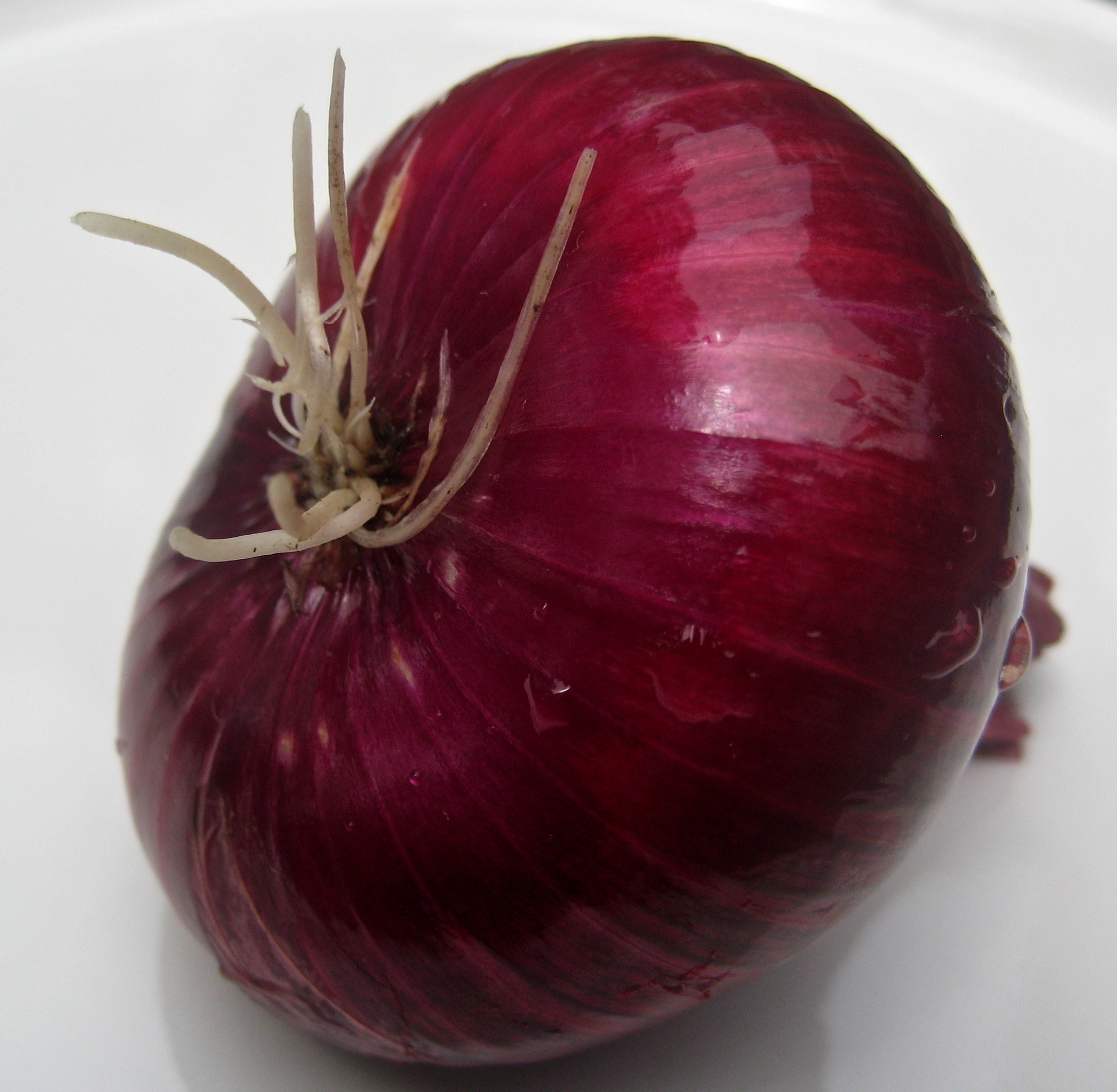
I dug up some of my onions recently, and I’d honestly forgotten I’d planted cipollini onions. But these are so beautiful, I had to share.

Red Marble Cipollini Onion

Red Marble Cipollini Onion

The color is just jewel-like. These small, flat onions are Italian in origin, and this variety is called Red Marble. I got the seed from Johnny’s Seeds in Maine. More later when I find some good ways to cook these. For now, I’m just enjoying the sight of them.

Posted in Uncategorized | 3 Comments

The State of the Bees

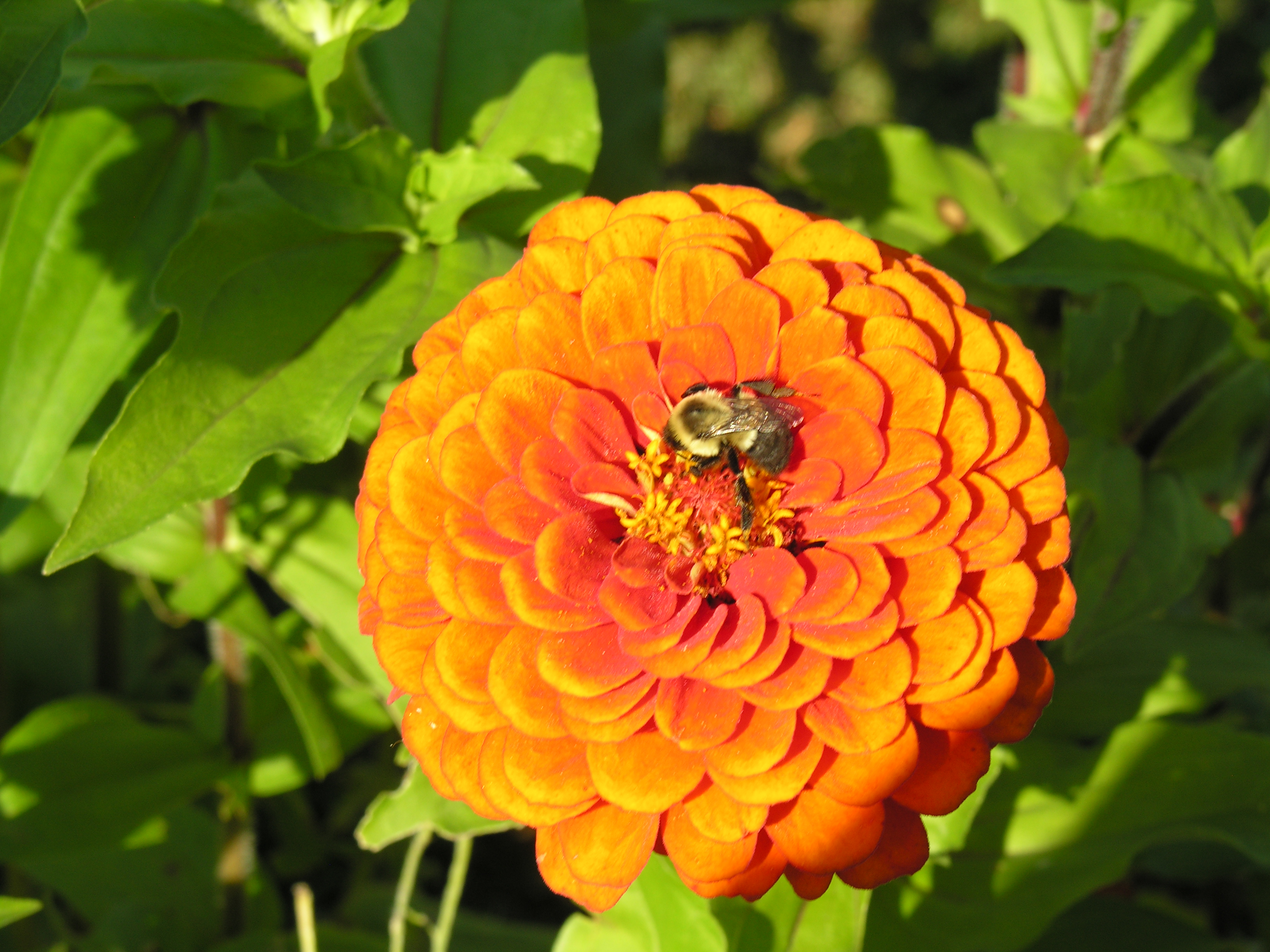
I was outside a few days ago working in my vegetable garden, and bumble bees were hovering nearby.  Those bees  got me thinking about honeybees, and I realized that I hadn’t seen many honeybees this season. Then I read in our local paper  that Colony Collapse Disorder, or “CCD” has been attributed to more disastrous bee die-offs over last winter. The USDA estimates that 1/3 of all the colonies were lost!
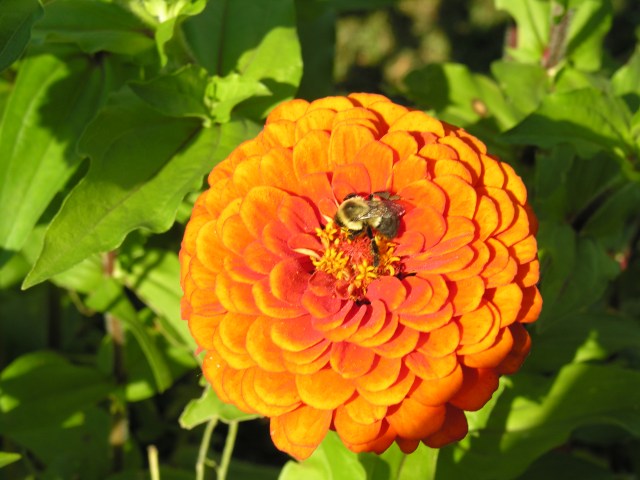
Bumble, not honey

We should remember that our honeybees are not native to North America. They were brought here by European settlers, and displaced many of our indigenous wild pollinators. But rely on them we most certainly do, for pollinating crops from apples to broccoli.

Here in Rhode Island, beekeepers have also suffered major losses. CCD continues to affect colonies across the United States and Canada, and the scary thing is no one has been able to pinpoint a single cause of this disease. Researchers suspect a combination of pathogens, pesticides, malnutrition and parasites such as the varroa mite, but the bottom line is, they still don’t know why honeybees suddenly desert their colonies and disappear forever. One French study says that bees stay healthier if they can collect pollen from many different sources. Makes sense, doesn’t it? Unfortunately, today’s agriculture usually involves the mass production of single crops.
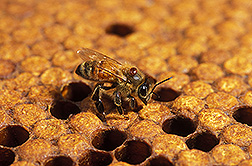
Bee with varroa mite - photo: USDA

Those who are studying  CCD  agree on one thing: there isn’t nearly enough funding for research into this problem, especially considering what is at stake. Dennis vanEngelsdorp, the Pennsylvania state apiarist argues that if one of every three cows was dying “they’d call out the National Guard.”

As fellow gardeners, I’m sure you are already aware of the importance of bees as pollinators – in our own gardens, and in the pollination of important food crops. While there’s not much we can do about CCD other than stay informed, we can help bees where we live. If you haven’t done so already, add some plants to your garden that are superior nectar sources. These include: Monarda (Bee Balm), and Eupatorium, (Joe-Pye Weed). Plant in clusters, or drifts – not isolated single plantings. Buy local honey. This supports your local beekeepers and the bees. Finally, if you absolutely must spray pesticides, (and the bees wish you wouldn’t) please don’t spray at mid-day, when the bees are out foraging.
Posted in Uncategorized | Leave a comment

The Good Mother

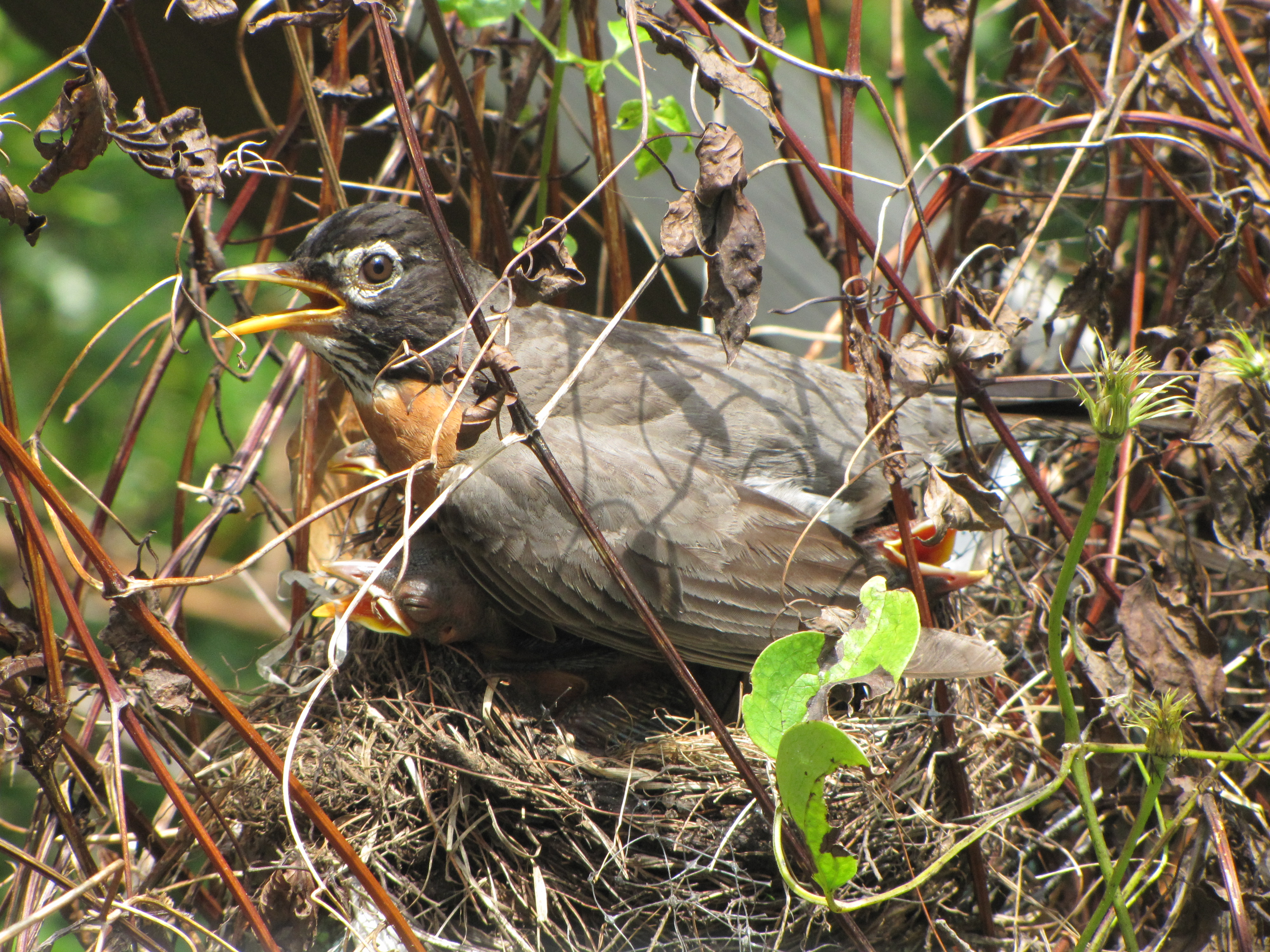
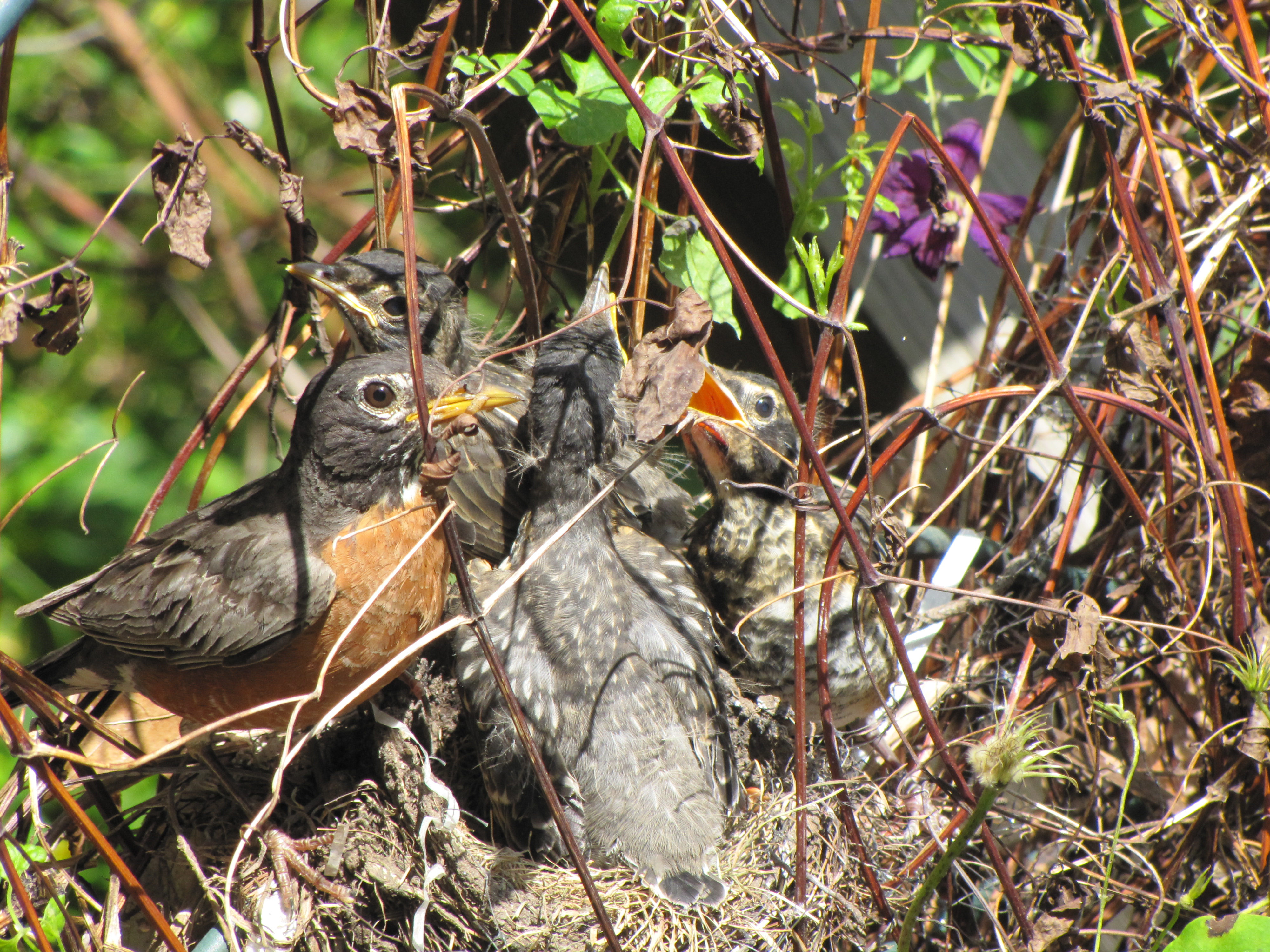
HerbDoc plays host to a robin family!

It was only a common robin (Turdus migratorius) that built her nest in my clematis trellis, but I learned so much about bird behavior from her.  About five weeks ago, I noticed a pair on robins flying under my deck and from an upstairs window, finally spotted the 5 inch round nest taking shape.

Patiently they added twigs, paper, feathers and coarse grass to their nest, lining the outside with mud and the inside with soft grass clippings.

About four weeks ago she laid three blue eggs which took 10 days to hatch.  The nestlings were naked and blind and received constant care from their mother.  I watched as she fed them soft caterpillars, grubs and worms.

When it was very hot, she would take a trip to the bird bath in my herb garden and submerge herself in the cooling water for several minutes.

Then she would return to the nest, sitting on top of the trellis with her nest a few inches below and spread her wings.  Amazing!  She was shading and cooling the tiny nestlings from the intense sun and summer heat.

They have developed quickly and are now covered with feathers and are almost as large as their mother.  They’re pretty crammed into that little space, and movement has to be restricted or a sibling might fall out.  Their mother only visits to feed them and spend the night.  She’s not ever far away, however, as she swoops and chases any bird or animal in the vicinity that she feels is a threat.

I understand it only takes two weeks from hatch for them to be able to fly and leave the nest.  Even though my clematis has suffered from the constant comings and goings of Mom Robin, I will miss watching this little family group.

Posted in Uncategorized | 5 Comments