October in Bloom

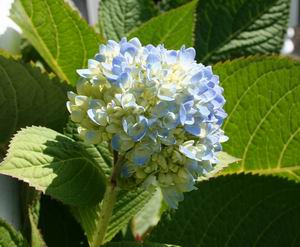
Hydrangea Blossom
One of the goals in planting a perennial garden – besides sustainability – is to have plants that bloom for every month, from spring through fall. I thought about this as I walked around the garden yesterday trying to find fall chores but realizing the plants just weren’t ready yet. And, many plants are still blooming! Here are some ideas for fall-blooming plants you may want to add to your garden…in Zone 6:

New England Aster

New England Aster

The New England aster (Aster novae – angliae) is a stout, leafy plant with showy, daisy-like flowers that will attract butterflies. It  is in the peak of bloom in October.

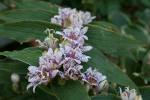
The toad lily (Tricyrtis), is one of my favorites. It is a very hardy herbaceous perennial that sends up small, orchid-like blooms along the stem in late September and early October. The flowers are usually spotted in different shades of purple. This is a shade plant and looks wonderful with hostas and astilbes.
Toad Lilies

Toad Lilies

Spirea (Spirea x bumalda) has a few cultivars, but I recommend ‘Anthony Waterer’ and ‘Goldflame.’ Tiny pink flowers, in flat-topped clusters, cover these shrubs in late spring to mid-summer and are attractive to butterflies. The beauty of these plants is that if you deadhead them before the flowers turn brown they will bloom again and again…literally, three bloom cycles and the last one is late September into October.

Hostas generally bloom in the summer but I found a cultivar that blooms in October. It is called ‘Red October.’ It is a shade perennial with red stems and only grows to about 20 inches wide.

Then you might also consider hydrangeas, roses, and dahlias (not a perennial, of course). While these plants first set blooms in the summer, they are continuous bloomers and will keep producing flowers into November.
Posted in Uncategorized | 1 Comment

Time to Plant Garlic

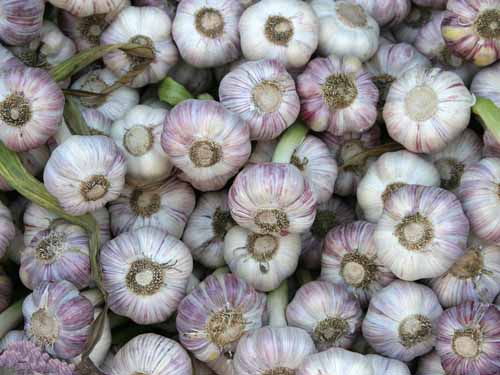
lotsofgarlic

Here’s HerbDoc with yet another timely (and tasty) post:

Garlic grows in zones 5-10 and prefers full sun although it will grow in partial shade.  Soil should be humusy, deep and well drained with a pH suitable for vegetables.  I always buy my bulbs from a grower as the supermarket bulbs tend to produce poor results.

Growers will offer two types of bulbs for sale:  softneck garlic (Allium sativum var. sativum) and hardneck garlic (Allium sativum var. ophioscorodon).  Softneck garlic is easier to grow, keeps longer than hardneck garlic, and is recognized by its white papery skin and a large number of cloves in layers around a central core.  It also has a flexible stalk which allows it to be braided.  Hardneck garlic has a coiling scape.  They have fewer, larger cloves and less outer skin which reduces their shelf life.

Gently separate the individual cloves from the bulb immediately before planting.  Plant, root down, in October for harvesting the following summer.  Cloves should be planted 2 inches deep and 6 inches apart.  Keep the area well weeded and mulch with 3-4 inches of shredded leaves or straw after the ground freezes.  This will prevent them from heaving out of the ground during winter thaws.  In the spring, side dress with compost (never fresh manure).

garlic

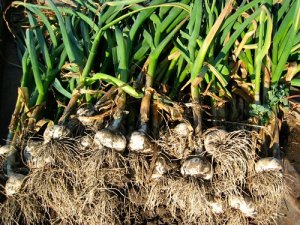
Each clove will grow to a height of 2 feet with foliage that resembles that of an onion.  They will bloom in early summer with small white to pink blooms atop a tall, central stalk.  I always remove the flower stalks in early summer; this produces larger bulbs.  When the tops die down, dig the bulbs promptly before the bulb skins begin to decay.  Leave them in a single layer in a shady spot to dry; then cut away the tops leaving 2 inches of stem or braid together the tops of freshly dug plants.  Hang the braids or loose bulbs in nets from the ceiling in a cool, humid, dark place.

Posted in Uncategorized | 1 Comment

Putting the Garden to Bed for Winter

As I look around the garden, seeing some of it still in bloom, it is hard to believe fall is here and it is time to start putting the garden to bed for winter. I like to use a check list so I don’t forget anything, but even though there is a routine to follow I let the weather and the garden dictate whether and when to do each task. For example, seed heads and foliage that’s coloring up can be beautiful, and the seeds provide food for migrating birds so I just cut back plants that are diseased and those looking past their prime and leave the rest until spring.

I just finished cleaning out the veggie garden. Everything that wasn’t diseased with fungus went into the compost pile. There are no hardy vegetables in my garden but they could be left beyond the first frost. (As a special treat I uncovered an “enormous” orange slug which was still hanging around!) Since I like to prepare soil in the fall for spring planting, I dug the beds with a fork and put down and raked in dehydrated manure.  Now the veggie garden is ready for spring planting…I will add compost then.

This giant slug was "working" my veggie garden!

This giant slug was "working" my veggie garden!

One of the most important things in preparing for winter is to water evergreens deeply because they are susceptible to dehydration by cold winter wind. The reason for this is that when the ground is frozen in winter evergreen plants can’t take up water to replace what has been taken out of their leaves by the wind. By hydrating them in the fall you can protect them by giving them an extra reserve of water for their leaves.

Cleaning up fallen leaves and plant debris (and I put everything in the compost pile except diseased leaves) is an ongoing chore because I usually wait for the plants to pass their prime before removing them from the garden. Of course, with our extended fall and late winter conditions my gardening tasks have been continuing until January!

This year I added some new plants to the garden so these have been mulched to protect their roots. You need to do this for transplants also.

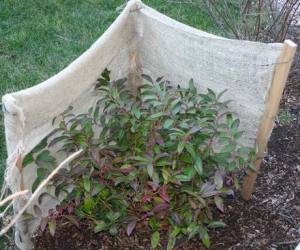
Windbreaks are very effective in protecting evergreens and other plants from dehydrating.

Windbreaks are very effective in protecting evergreens and other plants from dehydrating.

Then, by the end of the month, as an additional protection for my evergreens against the wind, I will put up windbreaks using burlap attached to rods. The most effective windbreaks are permeable, to allow some air to pass through and diffuse. Windbreaks will effectively reduce the force of wind for a distance that is about six times the height of the windbreak. The force of the wind is like a wave of water hitting a barrier.

Finally, there are two tasks that require considerable work and time and which will be covered in blogs later in the month, so come back then. I will discuss winterizing roses and preparing new beds for spring planting.

Posted in Uncategorized | 8 Comments

Saving Geraniums

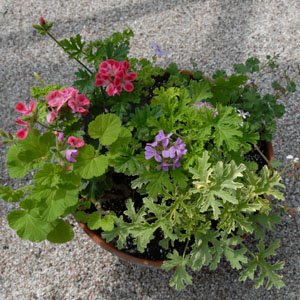
Scented geraniums - still looking good!

Scented geraniums - still looking good!

Here’s more practical gardening advice from our friend and colleague, HerbDoc:

A check of the calendar indicates that October 4th is the date of the Harvest Moon this year.  It always reminds me that frost is imminent and that all of the plants I want to save should be moved indoors.

Keeping geraniums from one year to the next provides color for the house during the winter months and saves money the following spring.  My grandmother always dug up her plants, shook the soil from their roots and hung them from the root cellar rafters.  She then replanted them in pots early in the spring and put them in the bright windows of her barely heated sun porch until they could go out in the spring.  Her geraniums were always immense and had blossoms earlier than any at the local nurseries.

I tried her method several times, but the temperatures in today’s basements tend to be higher than the 50 degrees in the root cellar, and they are definitely too dry.  In order for this method to be successful, I had to take the plants down, soak them for several hours, and then rehang them.  Too much work!

I’ve found that taking cuttings and rooting them before frost is much simpler.  The cuttings, or slips, should be 4-6 inches long with the bottom 2 inches of leaves removed.  Dip the ends in rooting hormone powder and place in damp coarse sand, vermiculite or well drained potting soil.  It takes three or four weeks to root these under my lights, but it is also successful in a bright (not sunny) window.

Another very easy way to keep these plants is to pot them up in 5 or 6 inch containers.  Cut back to about 1/3 of the original height, water well and place in cool, sunny locations or under lights.  This works especially well with those very expensive scented geraniums. I’ll take a few hours now to bring these beauties in and will save money with which to buy different plants next spring!

Posted in Uncategorized | 12 Comments

The Heavy Artillery

So you’re minding your own business, and one day you see little black spots on your house, and on your car. You try washing them off. You try to scrape them off, but they won’t budge.

artillary fungus on siding

artillery fungus on siding

You, my friend, are a victim of Sphaerobolus stellatus , otherwise known as “shotgun” or “artillery” fungus.

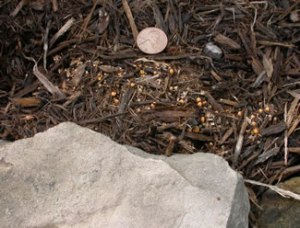
Artillery fungus likes to live in organic matter, such as wood chip mulch, and it has a cunning way of spreading itself around. When enough water accumulates in the specialized cup-shaped cells, they invert, causing other cells to burst and propel the spore packets, or peridioles, up to 18 feet away, (as high as the second floor of a building!) where they immediately stick to new surfaces. Wet, cooler weather, like our rainy early summer, is ideal for spreading the fungus.

Using an incredibly strong natural adhesive, the periodioles stick themselves to brightly lit and/or pale-colored surfaces, such as vinyl siding. They look like small, dark spots. While they don’t cause any serious damage, artillery fungi are nearly impossible to remove without damaging the surface or leaving a stain. If you catch them very early, you may be able to get them off using a pressure washer and very hot water, but if they’ve been there for a while even that won’t work. To add insult to injury, if you decide to throw in the towel and replace your siding, the insurance company may not cover what it considers to be “mold damage.”

artillery fungus growing in wood mulch

artillery fungus growing in wood mulch

If the fungus is a serious problem in your area, you can treat the area with a fungicide, and coat your siding with a material that inhibits the growth of mold and fungus. Even if spores do appear, they will be attached to the coating, not the siding, and, therefore, easier to remove.

But you can save yourself a lot of money by simply avoiding wood mulches – especially those made from ground up pallets – which can harbor the fungi. Switch to composted mulches, stones or gravel instead.

For more information on artillery fungus, click here or here.

Posted in Uncategorized | 4 Comments

Coming in From the Cold

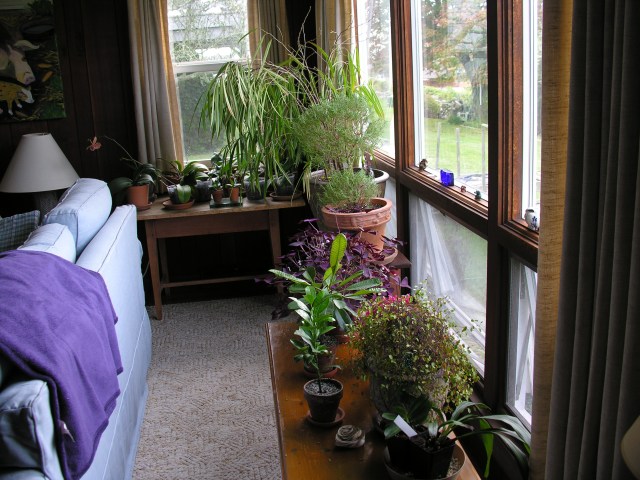
Their winter home

Their winter home

With nighttime temperatures in coastal Rhode Island dipping into the 40s, all but a very few houseplants need to come inside now for the winter. Tropical plants do not grow in 60 degrees or lower and temps in the 40s can damage them. So it’s time to drop whatever you’re doing and deal, or one morning you’ll wake up and it’ll be too late.

But why does it always seem that the houseplants you brought outside for the summer have mysteriously multiplied? Now you have to find good growing places for all of them, where they can happily spend the winter –  hopefully without getting spider mites – or scale – or white flies – or whatever.

We moved recently, and I just plunked many of my houseplants on the deck while I was attending to the chaos inside. Then we had a windstorm that shredded the leaves of my hibiscus.

The tattered hibiscus

The tattered hibiscus

I brought it in this week, and it is sitting as far away from my other plants as possible, in what is probably a pathetically inadequate quarantine. I cut it back quite severely, but I’ll probably cut even more in the coming weeks.

I also brought in my rosemary, a ficus, an ivy, and various other plants. They have the same exposure as they did in our old house, so I am hoping they’ll be happy here. I checked the foliage and soil for any critters that might be lurking there, and pruned damaged leaves and stems.

Experts say we should “gradually” reintroduce our plants to being inside, because sudden changes can be traumatic for them. (Is this the opposite of “hardening off,” sort of like “softening off”?) Anyway, that’s fine if you can easily lift the pot, but my hibiscus is so heavy that it’s all I can do to drag it in and out once per season. It has survived three winters with this heartless treatment, so I’m not going to worry about it.

The only plant that will stay outside a bit longer is my dendrobium orchid. These plants demand a cool period during which the temperature can drop down into the upper 30s. If they do not get this “chill time,” they won’t bloom. I just have to remember to bring it in before the frost!

Posted in Uncategorized | 3 Comments

The Asian Longhorned Beetle Marches On

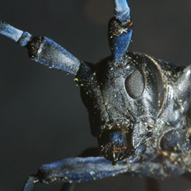
photo_alb closeupThis month, the Asian longhorned beetle was discovered outside the eradication zone in Worcester, Mass. and the surrounding area. A resident found one of the insects in the town of West Boylston, and officials say the beetles have probably been there for about two years.

As I mentioned in my August post, the federal and state government programs to control this pest have already resulted in the destruction of more than 25,000 trees. Now it looks as though despite their best efforts, the ALB is spreading.

In addition to cutting down trees, the USDA has been injecting imidacloprid, a pesticide, into the soil to protect healthy trees from from beetle infestations.

Photo: Rich Dugas - Worcester Telegram

Photo: Rich Dugas - Worcester Telegram

In a new, research-based phase of the program, the government will now expand the pesticide treatments into the fall, to determine whether they can be effective at this time of year. Until now, treatments have been done mainly in the spring. And three additional chemicals will be tested as part of this pilot program: clothianidin, emamectin benzoate and dinotefuran.

Not everyone is happy about this research. The Massachusetts Pesticide Board wants more information on the environmental impact and the monitoring of the effects of imidacloprid. The state is also leery of the USDA’s plan to raise the pesticide’s use to triple the current limit, and it is not alone. Groups such as “Safelawns” warn that imidacloprid could be linked to the collapse of honeybee colonies, and that treating the soil around trees could pollute groundwater and harm wildlife.

Meanwhile, in Worcester, some officials say MORE pesticide treatments are necessary, and that the treatments should be expanded to include a much larger area.

And as the debate continues, the beetle marches on…

Posted in Uncategorized | 2 Comments

Do You Know This Man?

DSCN5118

He’s “The Man in the Red Suspenders,” former host of “The Victory Garden” television show, and former “Horticulture” magazine editor. His name is Roger Swain, and if there are icons in our “hort world” he must  be one of them.

Roger did an advanced education class recently for the URI Master Gardeners, and it always amazes me how much he knows. The talk was about tools – their selection, use and care. You might think the subject is a big yawn, but Roger made it not only interesting but funny, and the time flew by.

So why am I bothering you with this? It’s because I have to get something off my chest. To me, people like Roger Swain represent the true learning side of gardening. I don’t watch “The Victory Garden” anymore, because I don’t find the current host particularly interesting and I don’t learn anything.

And while I’m in rant mode, let me say that I am worried about what’s happening to “Horticulture” magazine, too. Am I the only person who remembers what a class act it was not so long ago? It seems to me that it’s not only thinner, with lesser quality photography, but the information has been diluted, and maybe even dumbed down. I still subscribe, but I don’t look forward to it the way I used to.

I could be way off base here. Maybe things are changing for the better, but the skeptic in me doesn’t think so. It might be a good idea to listen to icons like Roger Swain. They still have a lot to teach us.

Posted in Uncategorized | 7 Comments

Nitrous Oxide Eats Ozone!

Here’s a new issue for us to ponder in our quest for improved sustainability and environmentally-sound gardening and farming practices. It was recently reported by NOAA scientists that nitrous oxide has become the largest ozone-depleting substance emitted by human activities. Yes, nitrous oxide causes destruction of the ozone layer.

Nitrous oxide is emitted from natural sources, such as cow manure, as well as from sewage treatment and some industrial processes. So where is the connection to gardening and farming?

Well, nitrous oxide is a by-product of soil fertilization, specifically nitrogen. Bacteria in the soil and in the oceans break down nitrogen-containing compounds and release nitrous oxide. Nitrous oxide breaks down when it reaches the stratosphere to form nitrogen oxides that trigger ozone-destroying compounds.

As gardeners we have control over this process by limiting the amount of nitrogen fertilizers we use. For example, instead of fertilizing the lawn four times a year (which is simply overkill) apply a good slow-release winter fertilizer in September and maybe do a light fertilizing in early spring. The best way to check the amount of nitrogen in your soil is to do a soil test every three years … and then fertilize accordingly. We CAN protect the ozone layer, so let’s do it.

Posted in Uncategorized | Tagged | Leave a comment

The Worms That Eat Rhode Island

Earthworm CartoonMost of us pay little attention to earthworms, those productive and beneficial animals that play a unique and important role in conditioning the soil. Unfortunately, even though earthworms generally go unnoticed and are not viewed as garden pests they are still being destroyed by the widespread use of chemical pesticides. The consequent reduction in numbers of earthworms is significant because it can have a serious detrimental effect on soil properties.

Earthworm fecal matter, or casts, provides important chemical and structural benefits to soil. The casts enhance soil structure because large particles that are eaten by the worms become smaller granules that enhance the soil chemically by provide nitrogen in a useable form for other organisms. It is interesting to note that by studying the organic matter of earthworm casts scientists have discovered a simple way to determine soil health in agricultural fields.

The really neat thing is that earthworms are active near the soil surface and therefore  they produce more casts in spring and

Earthworm castings are a terrific soil amendment.

Earthworm castings are a terrific soil amendment.

fall when the soil has more moisture. So, think of your compost pile…think about vermicomposting. If you keep the compost moist, as you should, you will see dozens and dozens of earthworms in there doing their thing. That’s why good compost is so loose and so rich in nutrients.

If you don’t see earthworms around your garden think about whether you have been using pesticides. Reducing your pesticide use allows earthworms to thrive and this makes the soil fertile so you can reduce your use of nitrogen fertilizers and thereby protect the Earth’s ozone layer. Wow!

Posted in Uncategorized | Tagged | Leave a comment