Bye Bye Bananas?

photo: Steve Hopson. http://www.stevehopson.com

Here’s one more thing to add to your list of “stuff to worry about:”

I recently read a scary article in The New Yorker magazine about a fungus that is threatening the world’s bananas. You would think that  scientists would have figured out what even beginning gardeners know: growing one type of anything is a dumb idea, because if it succumbs to a disease, you’re finished. What is it with these growers anyway? Do they ever think beyond their wallets? Monoculture  has always resulted in disasters that no amount of poisonous chemicals can repair. Why do they keep repeating the same mistakes? Why? Why? Why?

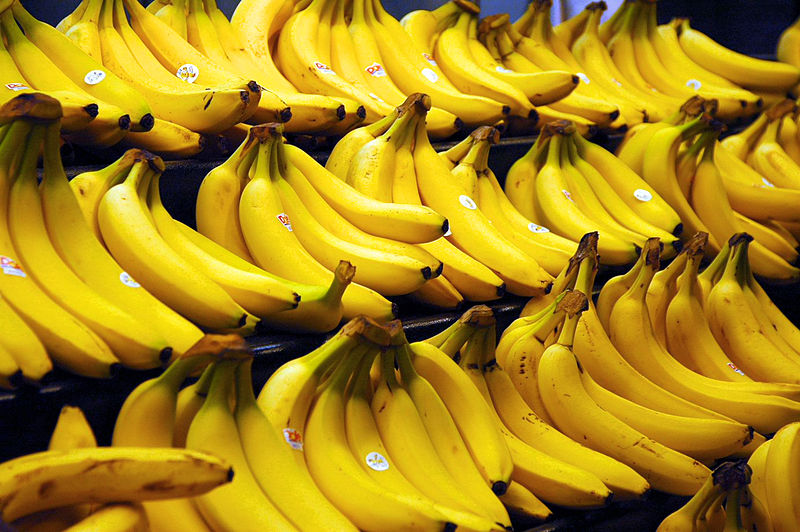
Here in the United States, when we stroll into our local supermarkets, 99% of the time we buy “Cavendish” bananas, all of which have been grown in Latin America. Hardly any other cultivars are grown anymore. Cavendish ships well, doesn’t ripen too quickly and tastes OK, so that’s what we end up with. The problem is that in recent years, “Cavendish” plantations around the world have been attacked by a fungus called “Tropical Race Four.” This fungus affects only bananas, but it is devastating to the plants, rendering them piles of foul-smelling mush. The fungus has already ruined crops in Indonesia, Australia, the Philippines, China and Malaysia. Scientists believe it is only a matter of time before it reaches the Latin American plantations – where not just some, but ALL of our bananas come from.

So now, predictably, researchers are rushing to develop a genetically modified and fungus-resistant “Cavendish”  before it’s too late. Maybe it would be a better idea to just diversify the world’s banana crop. Am I being naïve and simplistic? I don’t think so.
Posted in Uncategorized | Leave a comment

Freeloaders at Work!

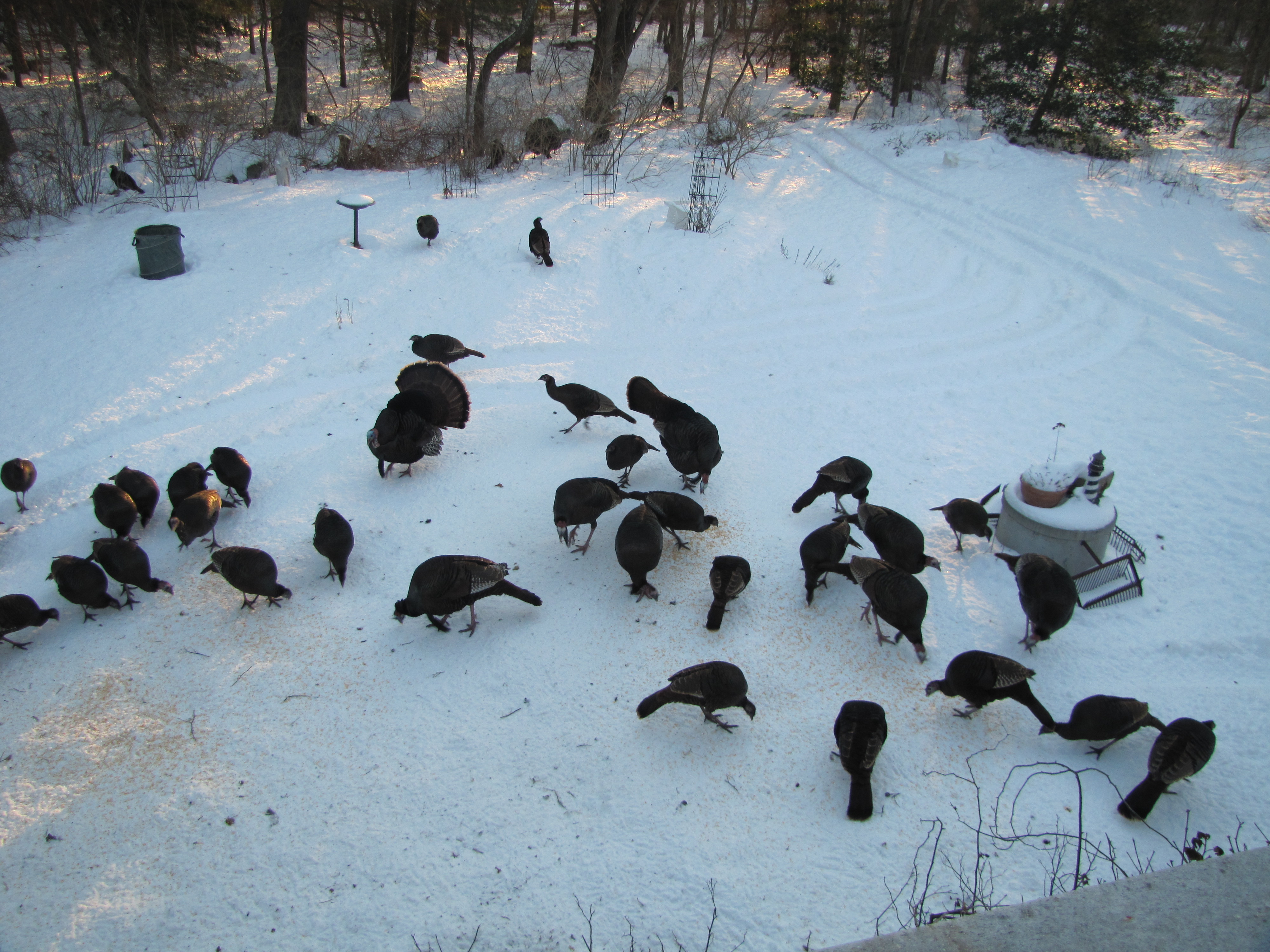
the "herd" at work

HerbDoc has a “turkey tale” to tell: (please forgive the alliteration)

Several years ago I was delighted when a small flock of wild turkeys appeared on my wooded property.  Since we feed songbirds year round, the turkeys eventually found what is thrown for those birds that prefer to feed on the ground.

The small flock has grown into what I like to call a “herd” of somewhere near 100 birds!  It’s impossible to take a picture and capture all of them in one shot.  They will eat almost anything, but particularly love cracked corn and sunflower seeds.  Since the heavy snow arrived here, there’s not a berry left on any bush, and they have taken to eating some of the fat young buds on my spring flowering bushes.

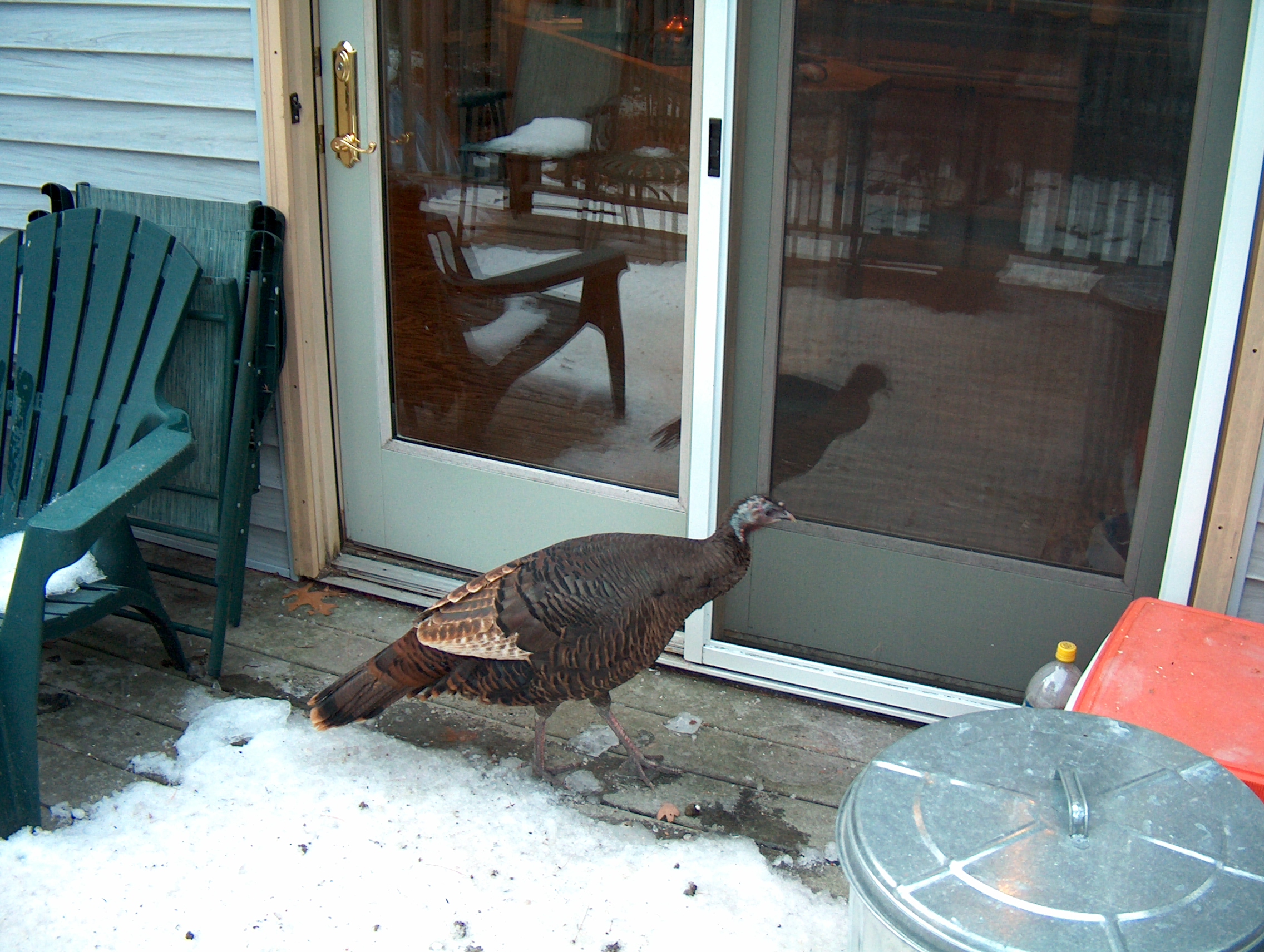
When there isn’t sufficient food to satisfy them, a few will fly up to the second floor deck to tap on the French doors and peer in the dining room windows.  These are my reminders that they’re hungry!  In the meantime I think they’ve notified every turkey in the area that HerbDoc’s yard is the place to go for a free meal!

Hurry up and feed us!

There are several large toms that will gobble when I open the door and speak their language (Gobble! Gobble!).  They’re beginning to get the distinctive red and blue patches on their faces and are busily strutting their stuff and displaying their tail feathers while herding the hens into groups.

Can spring be far behind?

Posted in Uncategorized | 3 Comments

Adventures With Worms

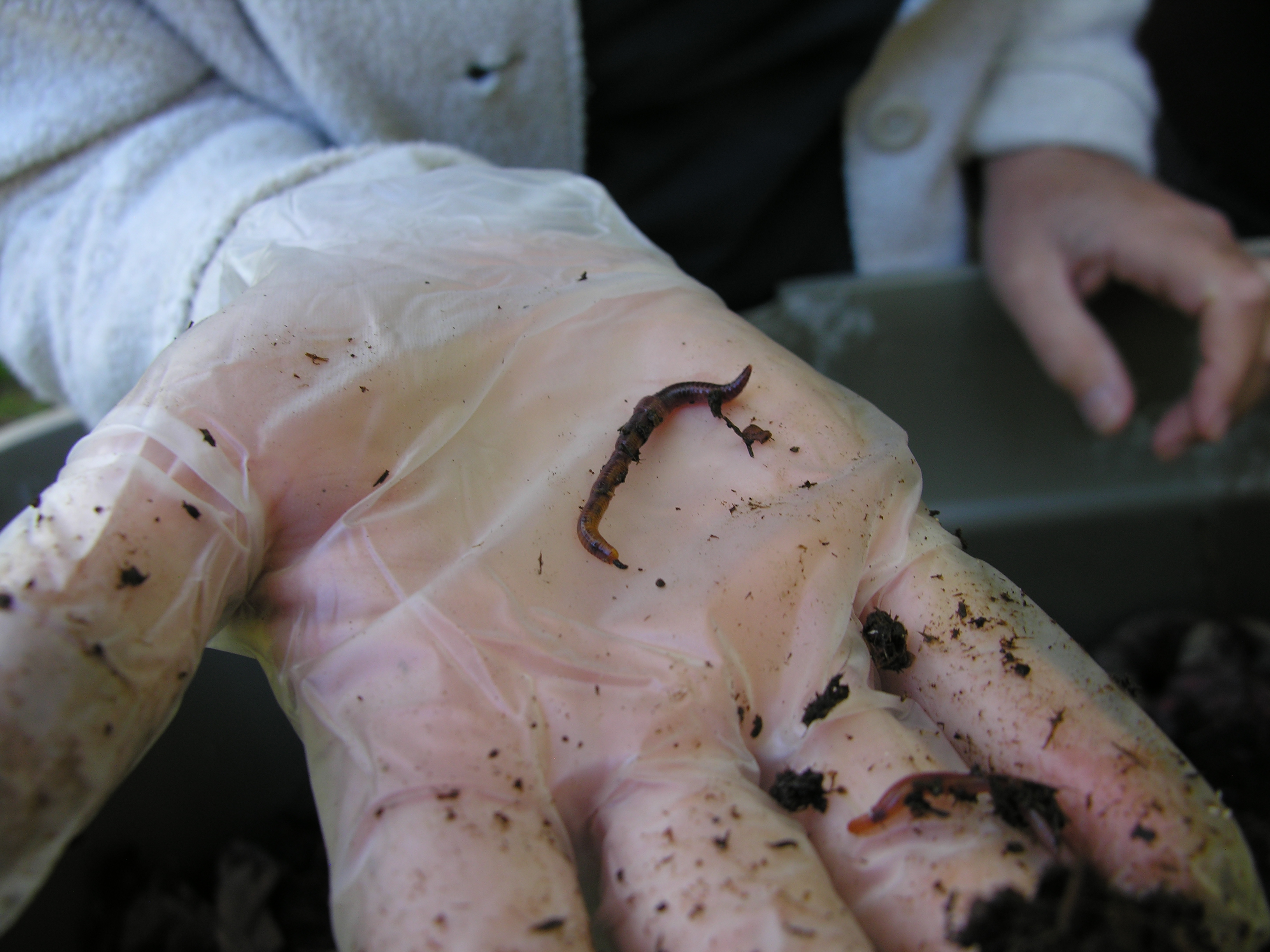
One of my worm friends

For those of you who didn’t know, worm composting- aka vermicomposting – is hot, hot hot! Fearless trend-setter that I am, I took the plunge about three months ago and bought a worm bin and a bag of red wigglers. These Eisenia fetida are the worms of choice, because they do well in bins and consume vast quantities of rotting produce.

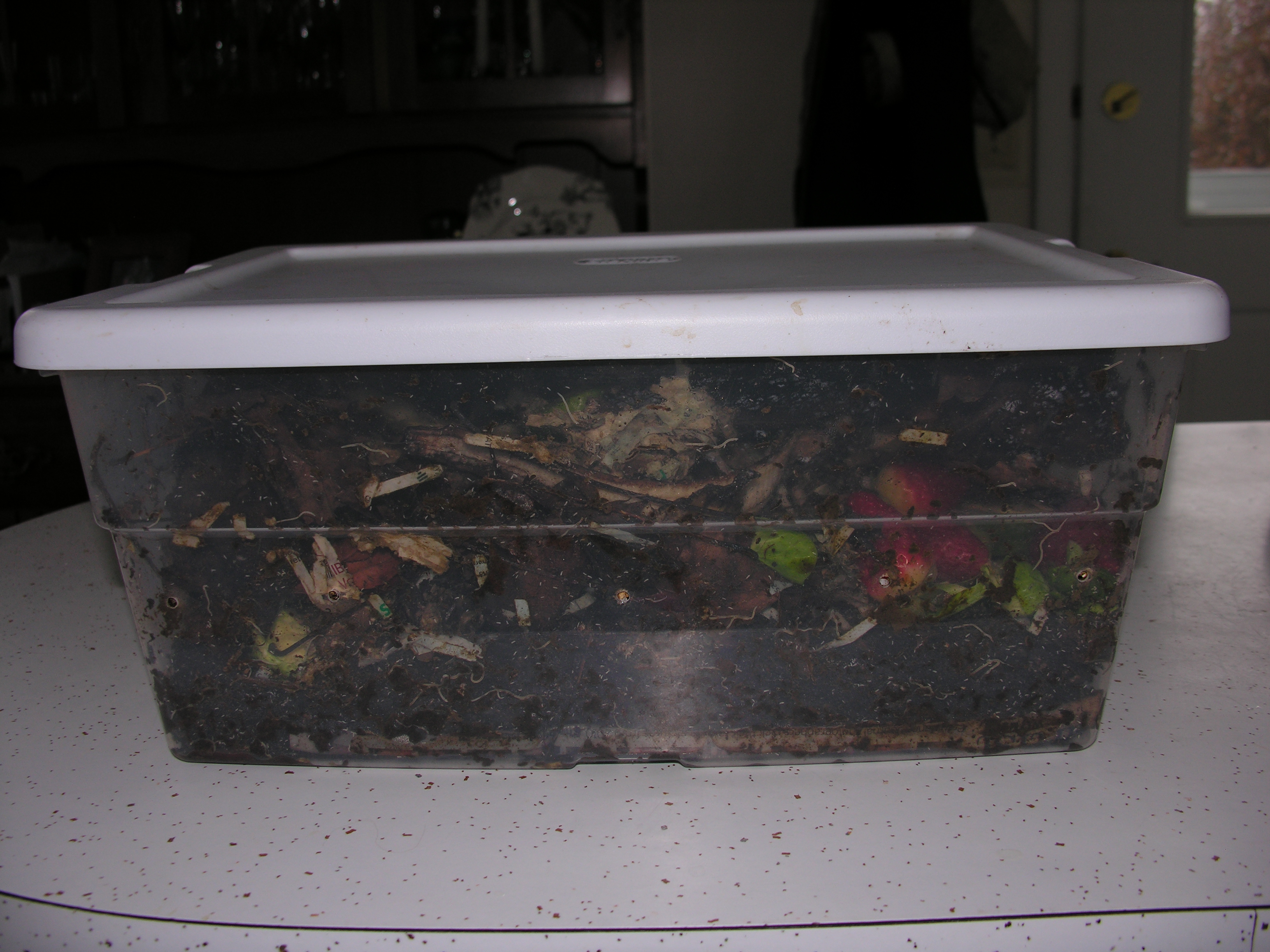
The bin came with some coir for the bottom, and several rotting apples and leaves, courtesy of The Worm Ladies of Charlestown, RI. These women are deep-end “wormophiles” who think the world (or at least Rhode Island) would be a far better place if people composted their vegetable scraps instead of throwing them away. I agree.

So I came home with my new friends and even gathered up some fallen maple leaves and put them in a bag, so I’d have some over the winter. I started adding veggie scraps to the bin, and I gave them other things the Worm Ladies suggested, such as dryer lint, and – this is my favorite – shredded credit card offers!

At first, my bin resided in our guest room, and yes, I was prepared to move it out of there if we had guests. The worms seemed content. Apparently if they’re not, they try to escape, and mine weren’t doing that. I could also see the tiny white threads that are red wiggler babies. So they were reproducing. This was exciting! (Cut to shot of husband rolling eyes.)

My worm bin

Then we started getting fruit flies. Every time I would lift the lid of the bin, clouds of them would come out. They took up residence in every room of the house, and all this happened, of course, just before I was to give a dinner party for 14 people. I moved the worms down to the basement, and began a week-long campaign of fruit fly eradication, which consisted mainly of me running around flailing at them with a dish towel. Finally, the flies went away – where, I don’t know or care.

I left the worms in the basement and continued to keep them supplied with produce remnants. A couple of weeks ago, however, I had a feeling things weren’t too happy in wormland. I know they are “just worms,” but I still feel responsible for their welfare, so I brought the bin back to the Worm Ladies for a check-up. To my great relief, everything was fine – a little on the wet side, but fine. There were lots of plump adults and babies at different stages of development. I was astonished to see that the banana peels I had put in there about a week before had vanished! They really seem to like those. Cabbage – not so much.

Soon I will be harvesting my first worm castings – the big payoff for vermicomposting. They make the best darned fertilizer ever. I’ll keep you posted on my continuing adventure.

Posted in Uncategorized | 9 Comments

Seaside Snow

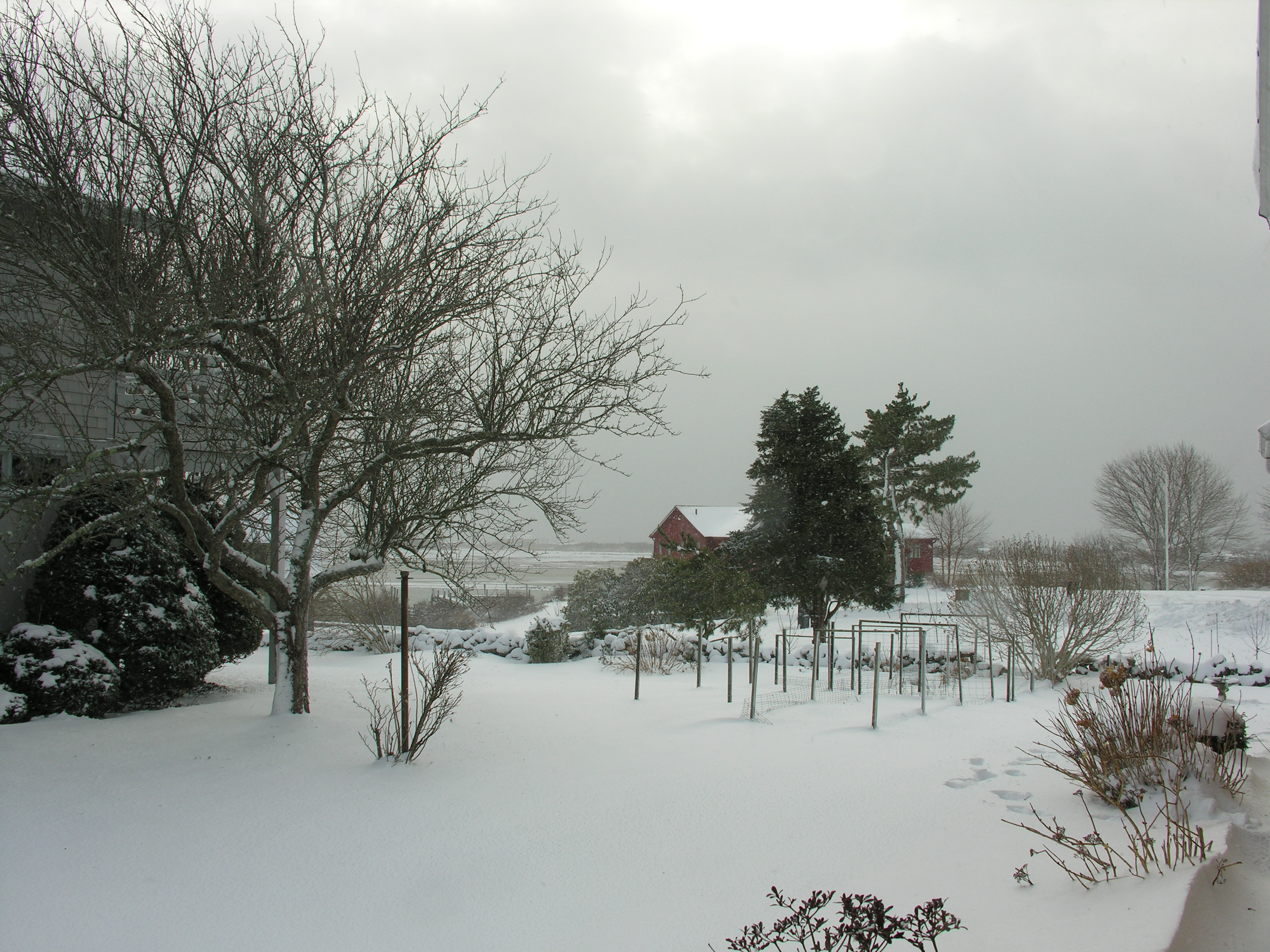
I try to go out with my camera after a big snowfall, especially when the sun comes out. The snow has a different quality here on the coast. Something about the light – or maybe the openness of the sky and the ocean. Anyway, I like it.  Here are some of my images:

The windows provide an icy view of the back yard.

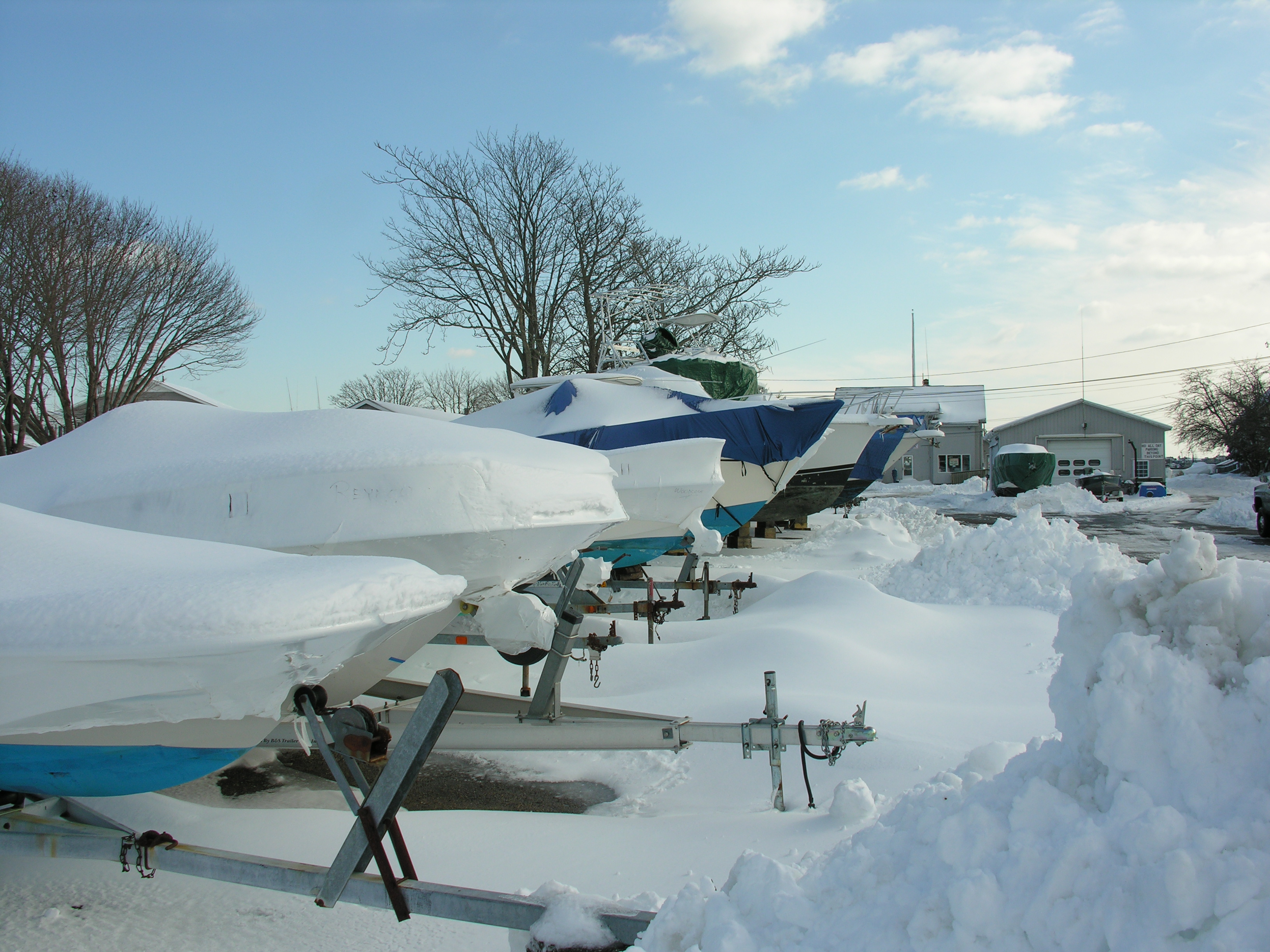
Winterized boats, waiting patiently in an orderly line at the marina. It’s hard to believe they’ll be back in the water in just a couple of months.

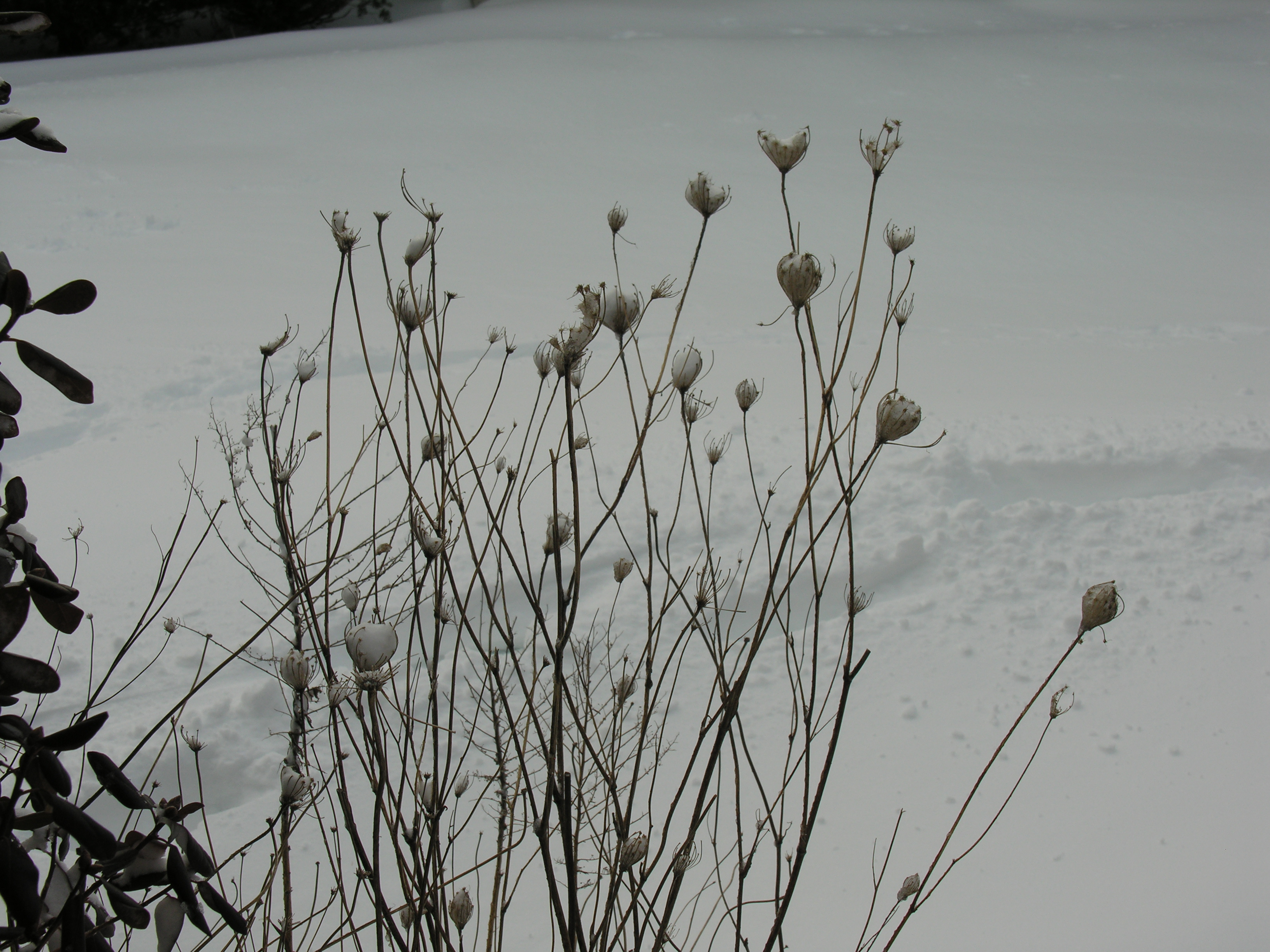
Queen Ann’s Lace captures small cups of snow.

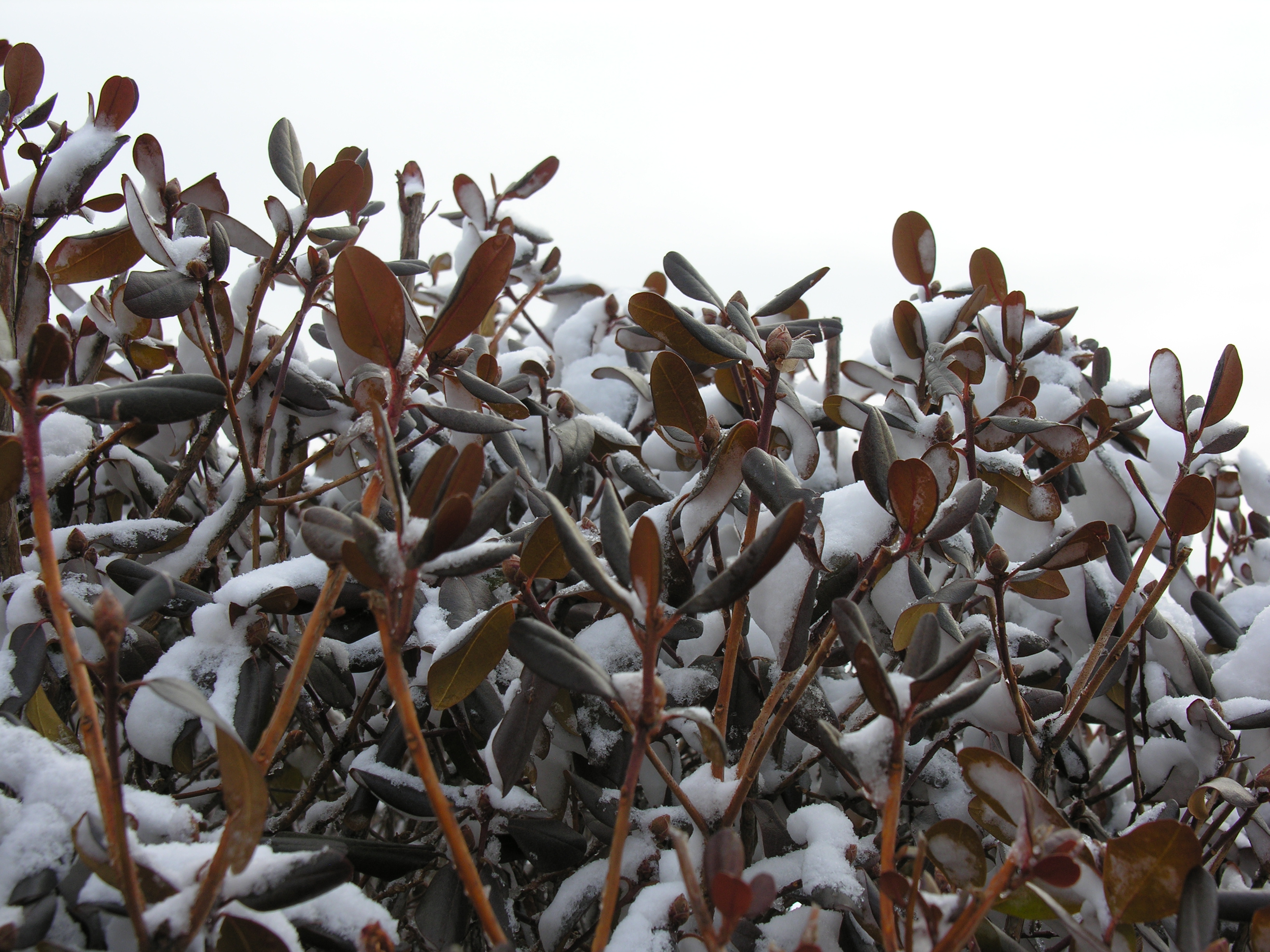
The Rhododendron curls its leaves against the cold.

While inside, on a kitchen window ledge, my miniature phalaenopsis “Timothy Christopher” flaunts its new flowers.

Posted in Uncategorized | 4 Comments

The Year Without a Summer

The snow continues to fall here in Rhode Island. In fact, we’re having another storm right now. If you live in a place that experiences cold, snowy winters, you probably can’t wait for this one to end. I am not one of those people. I know that winter can be depressing and annoying, but I’ll take bright snow and brisk temperatures over muggy and steamy any day.

But I digress.

What if winter just continued, and summer never came? It’s possible, you know. In fact, it has happened in relatively recent history. It all began, as  many weather phenomena do, with a volcanic eruption. In 1815, Mount Tembora, in Indonesia, blew apart, sending tons (literally) of particulate into the stratosphere. This was a cataclysmic seismic event,  the largest in nearly 2,000 years, and one that makes the eruptions of Krakatoa (1883) and Mt. St. Helen’s (1980) look like mere blips on the radar. At the same time, a period of low solar magnetic activity known as the “Dalton Minimum” also kept temperatures cool. The two climate phenomena combined to create a disaster.

The dust cloud from Tambora settled in the stratosphere and for a year,  kept the sun’s warmth from reaching the earth. Many of the early crops failed, and hundreds of thousands of people in Europe and North America starved or froze to death. After enduring killing frosts in July and August, many farmers in northern New England threw up their hands, pulled up stakes and began migrating west. Others went to the coast to seek their fortunes in whaling.

We are now in another Dalton Minimum cycle, which has some people wondering whether this phenomenon could occur again. Of course there are always volcanoes ready to blow their tops. We just can’t be sure of how severe many of those eruptions could be.

If you’d like to explore that frightening scenario, as well as the prospect of not having a summer, go here.

Posted in Uncategorized | 4 Comments

It’s Catalog Time!…Again

These are some of my favorite catalogs. My preferences are based on past experiences with the merchants, and also on their ethical perspectives. I try to buy organic, and I certainly want open pollinated and usually heirloom varieties, so that narrows the field even more. I also like catalogs that are colorful and pleasant to leaf through. Who doesn’t?

I began receiving garden catalogs well before the holidays, but it’s only now that I get down to business and actually read them. Then I circle stuff I like, and finally I make a list, weed out the duplicates, and actually commit to ordering seeds.

Here are my top picks for 2011. Click on the links to be magically transported to the companies’ websites.

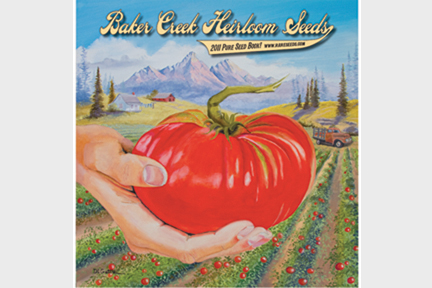
Baker Creek Heirloom Seeds:

The catalog is stunning, and the owner’s position on GMO seeds and crops is firm – firmly against, that is. I ordered beans from them last year, and I will order from Baker again.

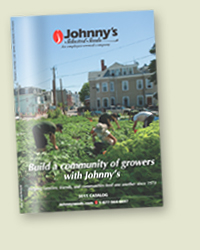
Johnny’s Selected Seeds:

I’ve ordered from this Maine company for years with consistent success. Great zinnia selection.

John Scheeper’s Kitchen Garden Seeds:

From the Scheeper's web site

A good catalog from one of the oldest flower bulb importers. I like their commitment to helping beneficial insects in the garden. I have ordered flower and vegetable seeds from Scheeper’s.

Pinetree Garden Seeds:

Another good Maine company. Their website is less than scintillating, and I couldn’t download the cover of their catalog, but they offer a large selection of vegetable and flower seeds, and are definitely worth checking out.

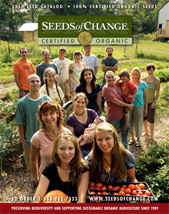
Seeds of Change:

An easy-on-the-eyes catalog that offers only 100% certified organic seeds. These people are very serious about biodiversity and sustainability. I think I will order my potatoes from them this year.

The Cook’s Garden:

This company caters to the deep-end foodie gardener with a terrific variety of vegetable seeds. They have expanded their organic offerings this year, too.

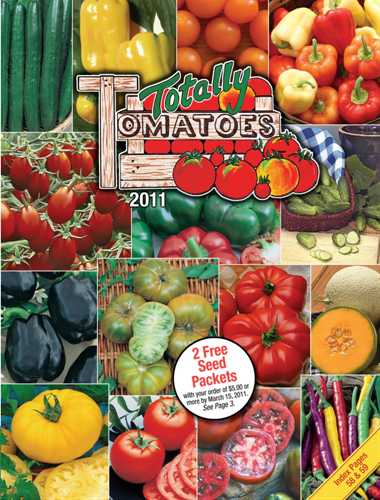
Totally Tomatoes:

As the title implies, this is for the “tomatophiles” out there…and you know who you are.

Whiteflower Farm:

Mostly ornamentals, although they have expanded their vegetable offerings over the years. I have included this catalog because it is such a pleasure to browse. The photographs are spectacular and the phonetic pronunciations of the different cultivars are so useful to have. I like to keep this catalog as a reference in my garden library.

Bluestone Perennials:

This is a great resource for perennials. I have ordered from them often, and the plants always arrive in perfect condition. This is another one of those catalogs that serves as a helpful reference.

So those are the catalogs that are sitting on my bedside table, beside a pad and pencil for serious planning and note-taking. Send me your favorites and I’ll feature them in a special readers’ picks post!

Posted in Uncategorized | 4 Comments

I Couldn’t Resist

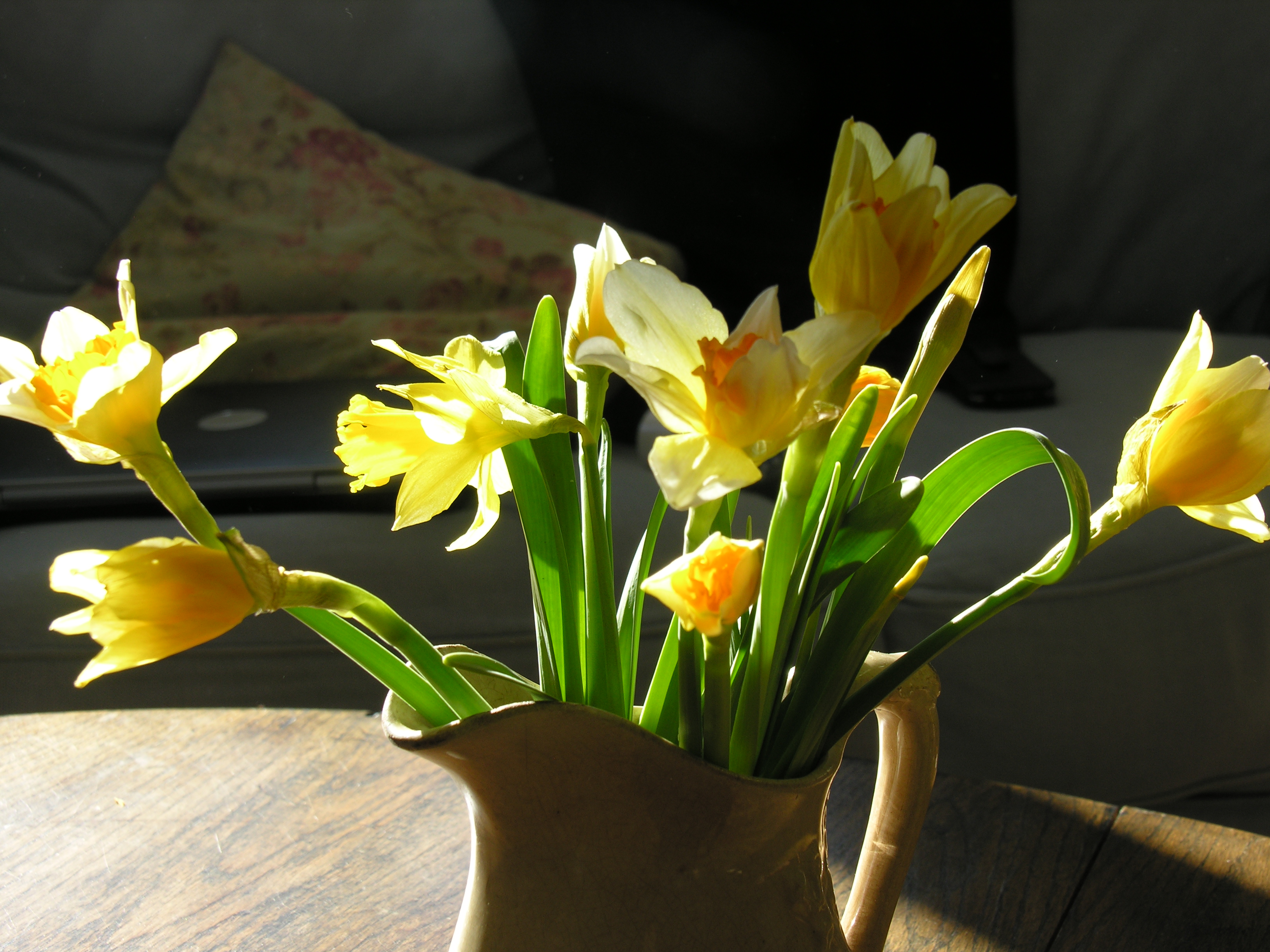
While food shopping the other day, I came across a small, unassuming bouquet of narcissus. Mind you, the flowers were a bit banged up, but they were just opening and, at $4.99, I had to have them.

I know they are out of season and unsustainable and naughty. I have read Amy Stewart’s excellent and revealing book about the cut flower industry (and maybe you should, too). Click here to find out more about it.

I was caught at a moment of weakness. They are gracing my living room in an antique pitcher I bought at a consignment shop for $10, and they give me so much pleasure every time I look at them that I can honestly say that I don’t regret regret having bought them. Not for a second.

Posted in Uncategorized | 6 Comments

A New Tomato: Solanum lycopersicum

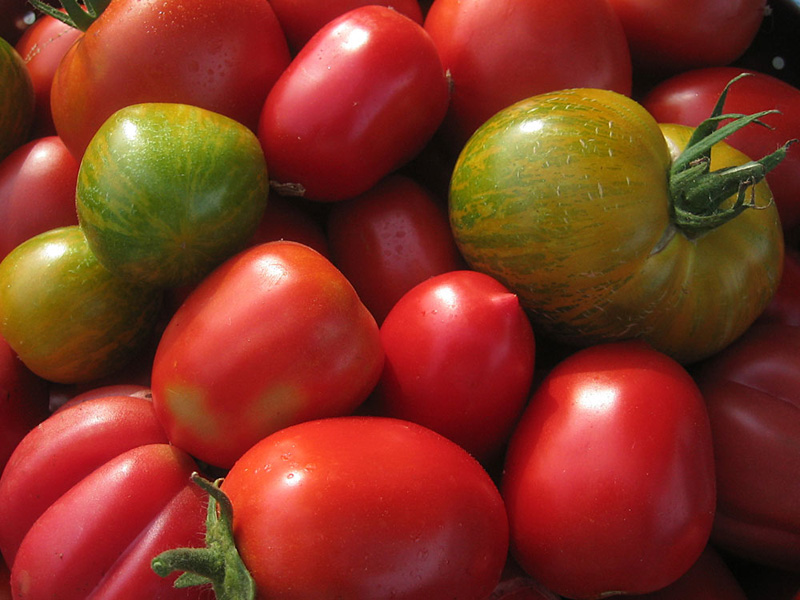
A tomato medley. photo: University of British Columbia

Here’s HerbDoc with exciting news for homegrown tomato lovers. (aren’t we all?)

For all of those gardeners who lost their tomato crops to the late blight (Phytophthora) during the 2009 or 2010 seasons, Johnny’s Seeds has developed “Defiant” PhR (F1).  This tomato was developed in cooperation with North Carolina State University and has high resistance to late blight and intermediate resistance to early blight.

It is said that Defiant is high yielding with 6-8 ounce globe shaped fruit borne on medium determinant vines.  The tomatoes are deep red, medium firm and have good texture.

I didn’t have any problem with blight during the past couple of years, but since I always grow at least one determinant, I’m tempted to order this one. Since it’s a first year offering, I’m sure it will sell out quickly.  The price starts out with a mini package (20 seeds) at $4.95…a bit pricey, but probably worth it if you’ve had the heart break of late blight!

Posted in Uncategorized | Leave a comment

2011: The Year of the Zinnia!

zinnia "Giant Double Mix" photo: National Garden Bureau

Well at last, there’s some long overdue recognition for a great annual, a garden workhorse, and an all around terrific plant. Ladies and gentlemen, the 2011 National Garden Bureau Plant of the Year for 2011 is…the zinnia! Think of the thousands of plants  the zinnia had to beat out to receive this accolade. Totally deserving, I say, and the National Garden Bureau obviously feels the same way.

But the Bureau’s news release explains that zinnias were not always admired: “When the Spanish first saw zinnia species in Mexico, they thought the flower was so unattractive they named it mal de ojos, or “sickness of the eye!” For a detailed history of the zinnia, (perhaps more than you ever wanted to know) click here.

Zinnias are members of the Asteraceae family. There are more than 12 species, but it’s  Zinnia elegans (syn. Z. violacea) that we see most often in gardens. Then there’s the lesser known, small-flowered angustifolia, a low cultivar which I have grown and liked.

zinnia "Crystal White" photo: National Garden Bureau

A great thing about zinnias is how many different types and different growing habits there are. The compact, spreading cultivars like “Profusion”  and “Crystal White” are very popular these days.  I prefer the in-your-face impact of the large, intensely colored cultivars, especially the new “Benary’s Giants” which were introduced last year. These are tall, upright plants, easy to start from seed, that form a wonderful hedge of color, which is very attractive to butterflies and hummingbirds. If you care to read more of my gushing about the Benary’s, go here.

A few other things I like about these plants: they are great for cutting, they don’t need staking, and they are quite low maintenance. At the end of the last season, the Benary’s were showing signs of powdery mildew, but that wasn’t until I was almost ready to yank them, anyway. The best way to prevent this is to avoid getting water on the foliage – impossible, of course in a rainy summer.

I know that some gardeners look upon zinnias with disdain. Too bad for them. To me, a summer garden just isn’t complete without them.

Posted in Uncategorized | 6 Comments

Winter Interest

This is the view from my back window today. We are having another blizzard, and this one is the nastiest yet. I awoke several times in the night and heard rain hitting the windows, but it has turned back to snow.

The birds are seeking out every feeder I have. There’s a new window feeder they haven’t figured out yet, but they probably will today.

It’s not very often that I look out my window and see a world of white. It’s been a snowy winter so far on the Rhode Island coast. All that snow has made me think about garden designer Gordon Hayward and his talk called “The Winter Garden.” In it, he shows you how to keep your garden interesting through the winter months. He shares dazzling photographs of his own magnificent garden, so beautiful at every time of year.

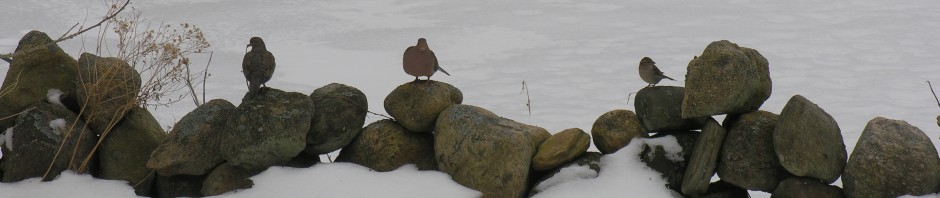
So I look out on my own and I see bird feeders, a stone wall, and three Adirondack chairs, two of them upside down. These “design elements” constitute my winter interest, for now anyway. At least I have the birds.

Posted in Uncategorized | 2 Comments