About Alliums

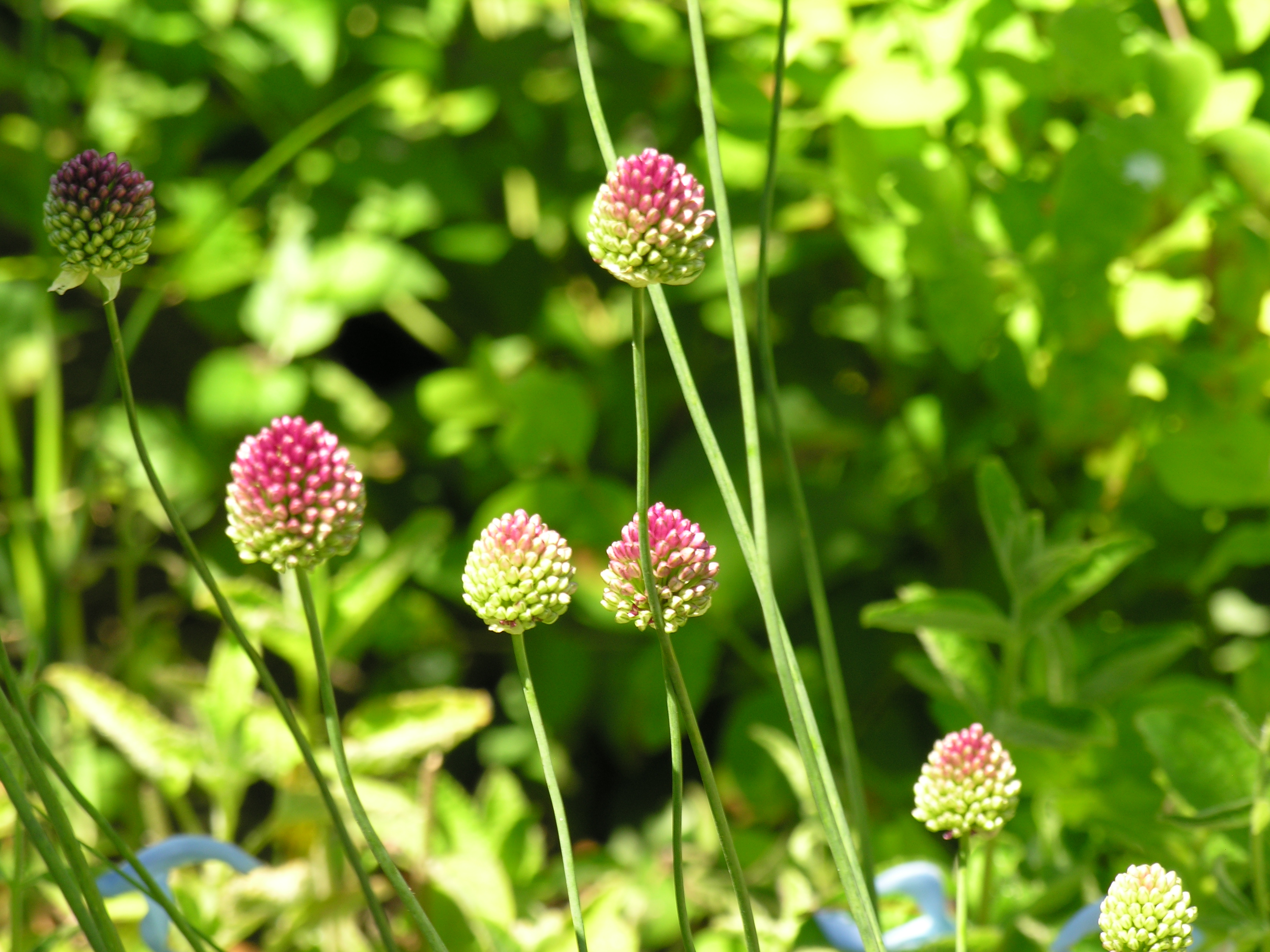
Allium sphaerocephalon - "Drumstick" in my garden

A few years ago, I started experimenting with alliums. They’re perfect plants for that period when the spring bulbs have gone by but the summer plants aren’t blooming yet.

They come in so many variations of color size and form that I would venture to say there must be an allium for just about every garden.

As most gardeners know, alliums are members of the onion family. That’s why deer won’t touch them.  They range from a few inches to five feet tall. All like full sun and good drainage. Plant them in the fall, and here in Rhode Island, most cultivars will be blooming in June.

I like how they poke through the developing foliage in my perennial bed, and make it so much more interesting. Pollinators seem to like them, too. The only cultivar I planted that didn’t make it was the low, yellow-flowered moly “Jeannine.” Maybe the spot where I planted them was too wet. Who knows?

The “Drumstick” allium or sphaerocephalon is a reliable performer, and, because I think they’re weird and funny, I also grow pulchellum or “Hair.”
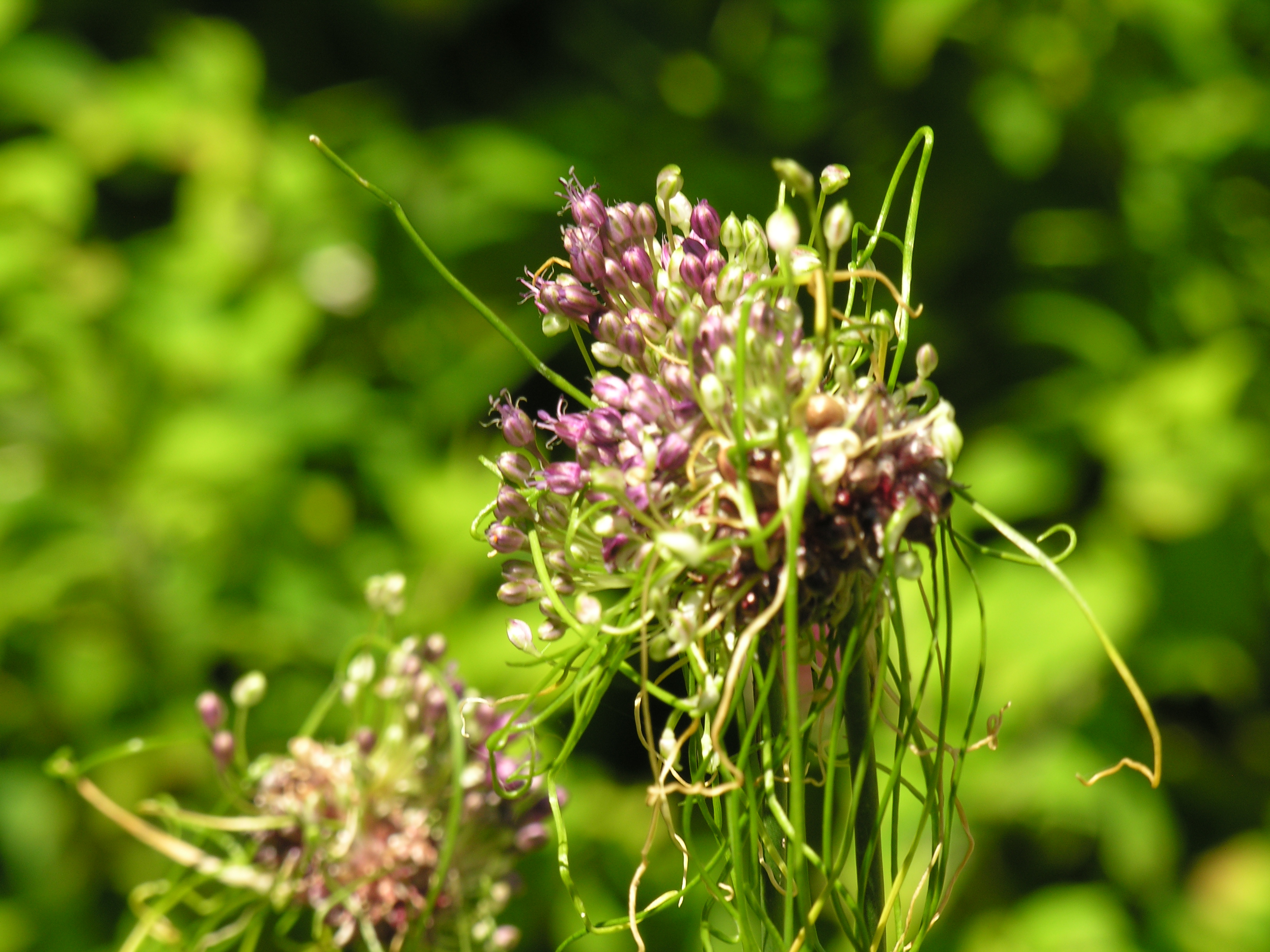
Allium pulchellum - "Hair" in my garden

I think alliums are often forgotten, or at least overlooked when gardeners plant their bulbs in the fall. Whether you’re looking for something big and showy, something whimsical, or a plant that rises to the occasion before your garden gets going in the early summer, maybe you should check them out.

Here’s a  source for allium bulbs. By the way, they’re pretty cheap, too.
Posted in Uncategorized | Leave a comment

Blue-Podded Pea Update

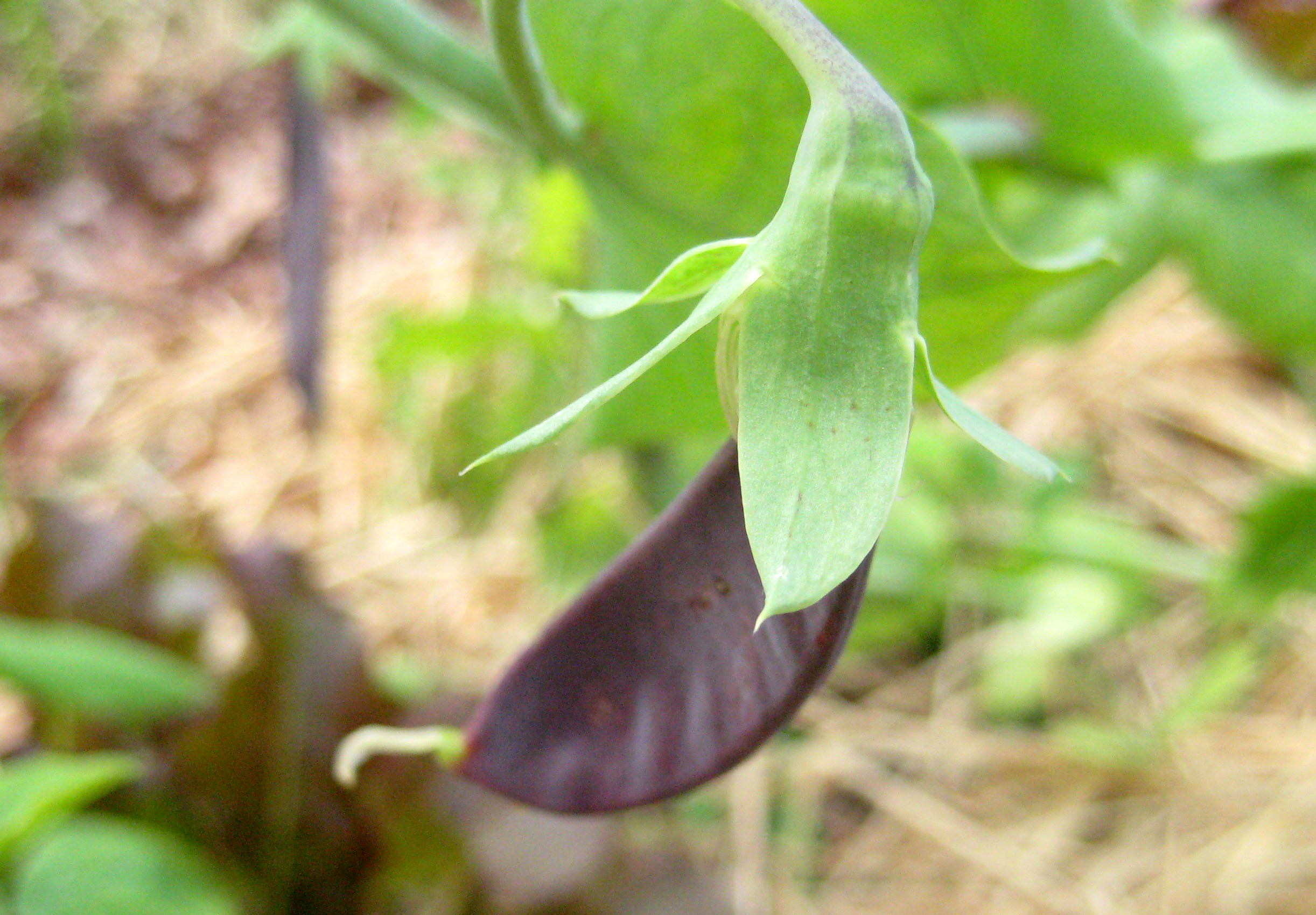
The Capucijners Blue Podded Peas I posted about last March are starting to come in now, and I thought you might like an update. Here they are.

Blue-Podded Pea

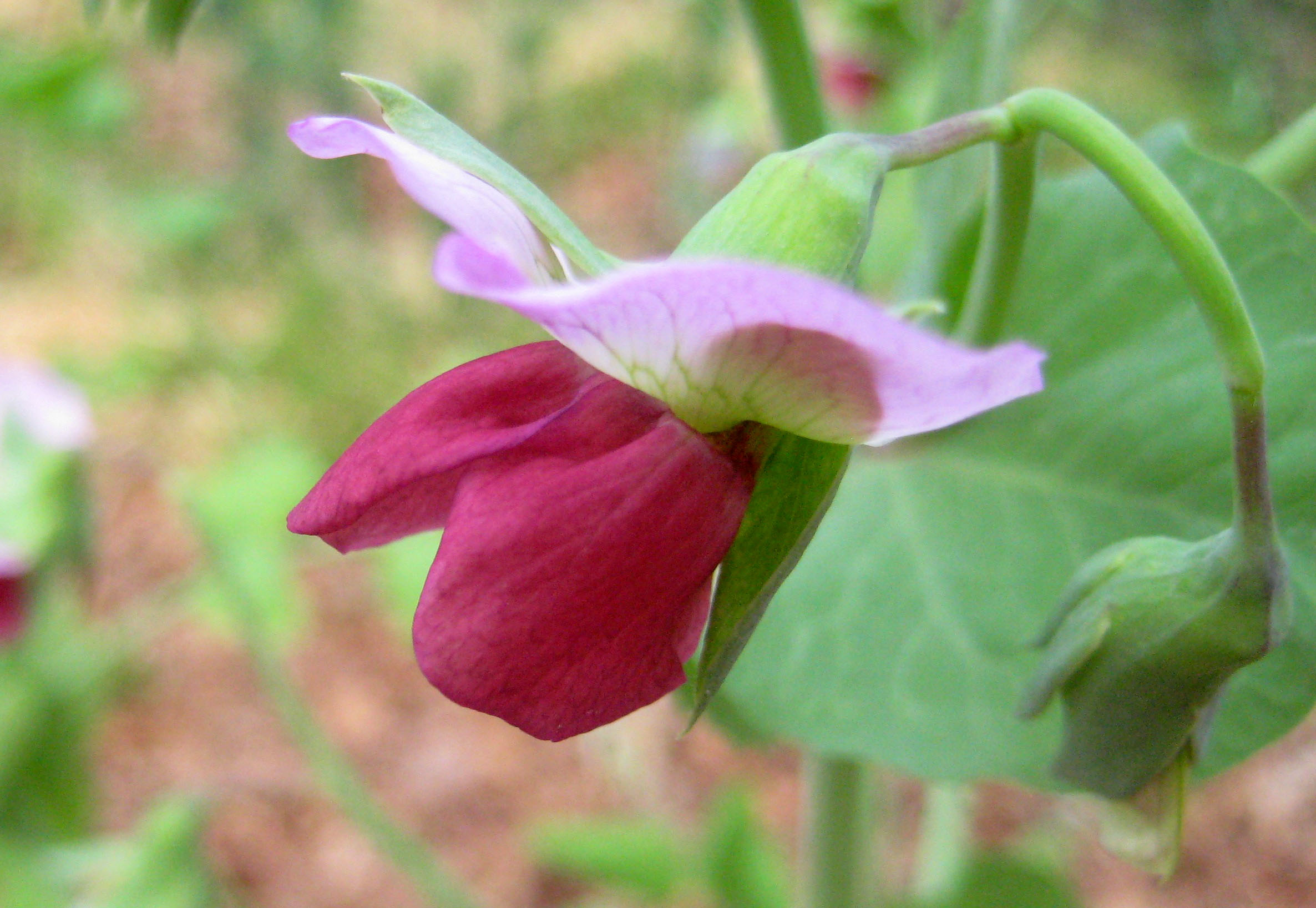
I grabbed this photo before picking them, as they can be eaten either as pods or mature and dried as soup peas. They were great in an Asian Chicken Salad, along with the last of the radishes, a few onion leaves, and a mess of spinach. Somehow I don’t anticipate a lot of mature soup peas. And the flowers are beautiful, too.

Pea Flower

Posted in Uncategorized | Leave a comment

Extreme Vegetable Gardening

Have you ever read something on the Internet and thought to yourself, “Cool. But way too much trouble. On the other hand, I wonder if it works…” That’s what I thought to myself when I first read about the Love Apple Farm tomato-planting method.

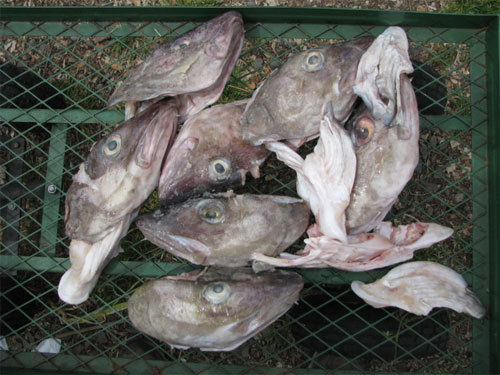
Click through for the details, but I can summarize with one word: “fishheads.” (That is one word, right?)

Fishheads from the Love Apple Farm website

Planting tomatoes with fishheads in the holes sounded pretty darn crazy to me the first time I read it. But I made the mistake of bookmarking the page, and during the dark, cold days of winter, I returned to it while fantasizing about fresh tomatoes. “How hard could it be,” I thought, “to snag some fishheads and give it a try?”

[That’s how Extreme Vegetable Gardening starts, you know. First you’re fantasizing about  fresh summer tomatoes, and the next thing you know, you end up with a garbage bag full of flounder bodies in the freezer. It’s a slippery slope.]

As it turned out, it was a lot harder to find fishheads than I originally imagined. The first place I looked was the local seafood shop. “Fishheads?” replied the perplexed clerk. “We get all our fish as fillets from Boston. No fishheads, sorry.”

Boston? They’re on the ocean in Westerly, RI and they’re getting their fish from Boston?

I then proceeded to make a nuisance of myself with the waitstaff of all my favorite local restaurants. I would ask, and they would all gamely traipse into the kitchen to ask the chef, and they would all came back shaking their heads sadly. I spent a fortune in tips that week.

Then I vaguely remembered that there are few fish wholesalers in Tiverton, and my brother lives there, so I asked him to ask around. That’s when I first heard the term “flounder racks.” This is apparently what is left of the flounders after they get through filleting them. My brother found a guy who would be willing to give me a mess of flounder racks. I sent off an email to the guy immediately. He never replied.

Finally, I remembered that there were a few local fishermen who set up at the Stonington Farmer’s Market, so one fine Saturday morning, off I went. That’s where I found Bob, Captain of the JennyLynn out of Stonington. We set up a date to meet at the dock later that week. Bob came through! I left the dock with a five-gallon bucket of flounder racks!

Of course, it was still two weeks from Memorial Day, the official tomato-planting date. So I spent a lovely hour piling individual flounder carcasses into a garbage bag, separated with sheets of waxed paper, and stuffing the whole stinky mess into the downstairs freezer. Yum.

But I did it. Last Saturday, I planted my tomatoes the Love-Apple Farm way, with a flounder rack in the bottom of the hole. (By the way, it’s darned hard to pry frozen flounder bodies apart, waxed paper or not. I ended up chiseling them apart with a screwdriver and a hammer. Extreme Vegetable Gardening indeed.) I will keep you all apprised.

Posted in Uncategorized | 14 Comments

Do You Know This “Weed”?

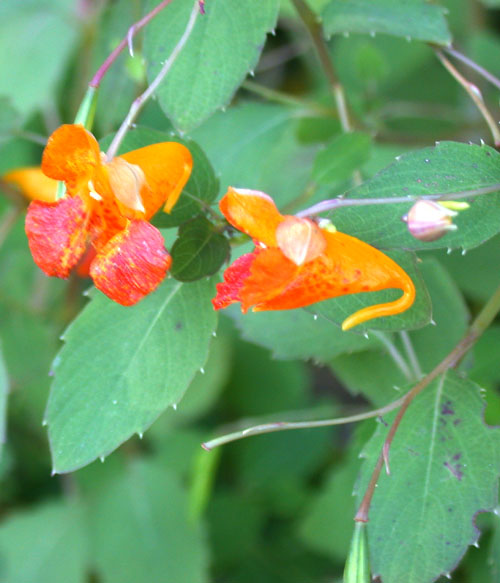
Jewelweed: photo: Brandeis University

Here’s HerbDoc with a  fascinating use for one of our most common wild plants:

Botanically known as Impatiens aurea, Jewelweed is a member of the genus Impatiens and is widely distributed throughout New England.  It’s actually listed as a wildflower and not a weed per se, and the succulent, annual plants are tall and branching with swollen joints. The stems are somewhat translucent, and the leaves are thin, ovate and spring green in color.  The flowers are slipper shaped and orange, and the plants bloom from July to September.  These plants are often called Touch-me-nots because the ripening seed capsules explode upon the slightest touch, and old-timers say that they will be found in damp, rather fertile soil usually in the same area as poison ivy.

This wildflower is said to contain tannin which makes it very useful for application to the skin.  It’s a wonderful preventive and remedy for poison ivy.  Simply cut the entire plant at ground level and roll it back and forth to release the green juice; then rub the juice over the affected skin.  It is said that if you know you’re going to be working where poison ivy is present and if you apply the Jewelweed first, that it will prevent the rash from occurring.  I can only attest to using Jewelweed after the fact; after a few applications, the rash disappears.  When my children were small, I often boiled several plants, let them steep into a tea and froze the juice into ice cubes.  I found this was useful for treating and cooling the itchy poison ivy rashes.

In addition to being a great medicinal herb, Jewelweed is beloved by hummingbirds and offers them a source of nectar when other flowers have disappeared from the garden.

Posted in Uncategorized | 6 Comments

Clematis Crazy

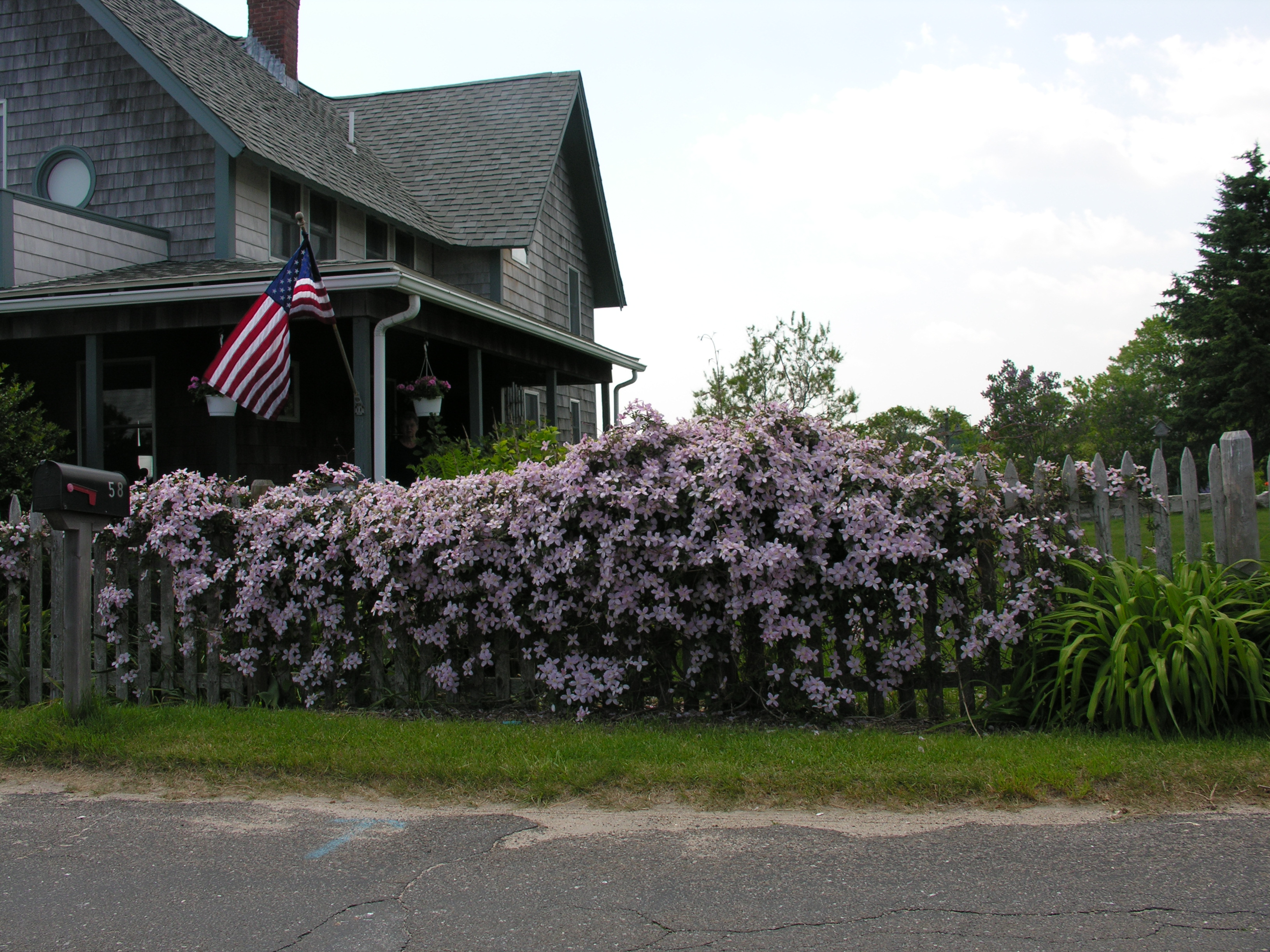
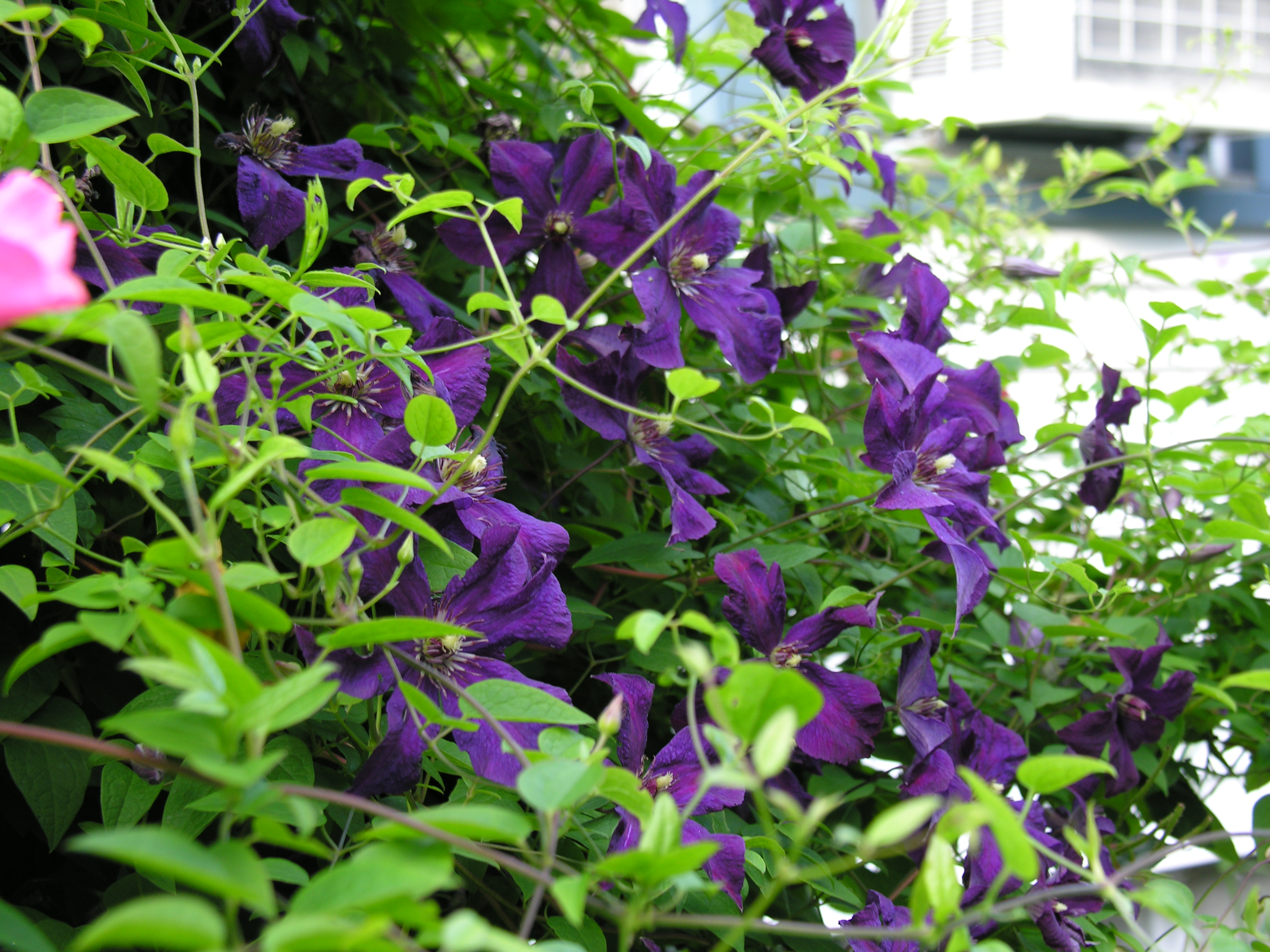
Clematis at its best

Isn’t the above clematis a thing of beauty? It’s one of the Montanas, growing with obvious gusto on a fence not too far from where I live. Whether you say Clem-A-tis or CLEM-a-tis, chances are if you’re a gardener, you grow at least one of these vines. I’m a big fan, because there are just so  many cultivars to choose from.

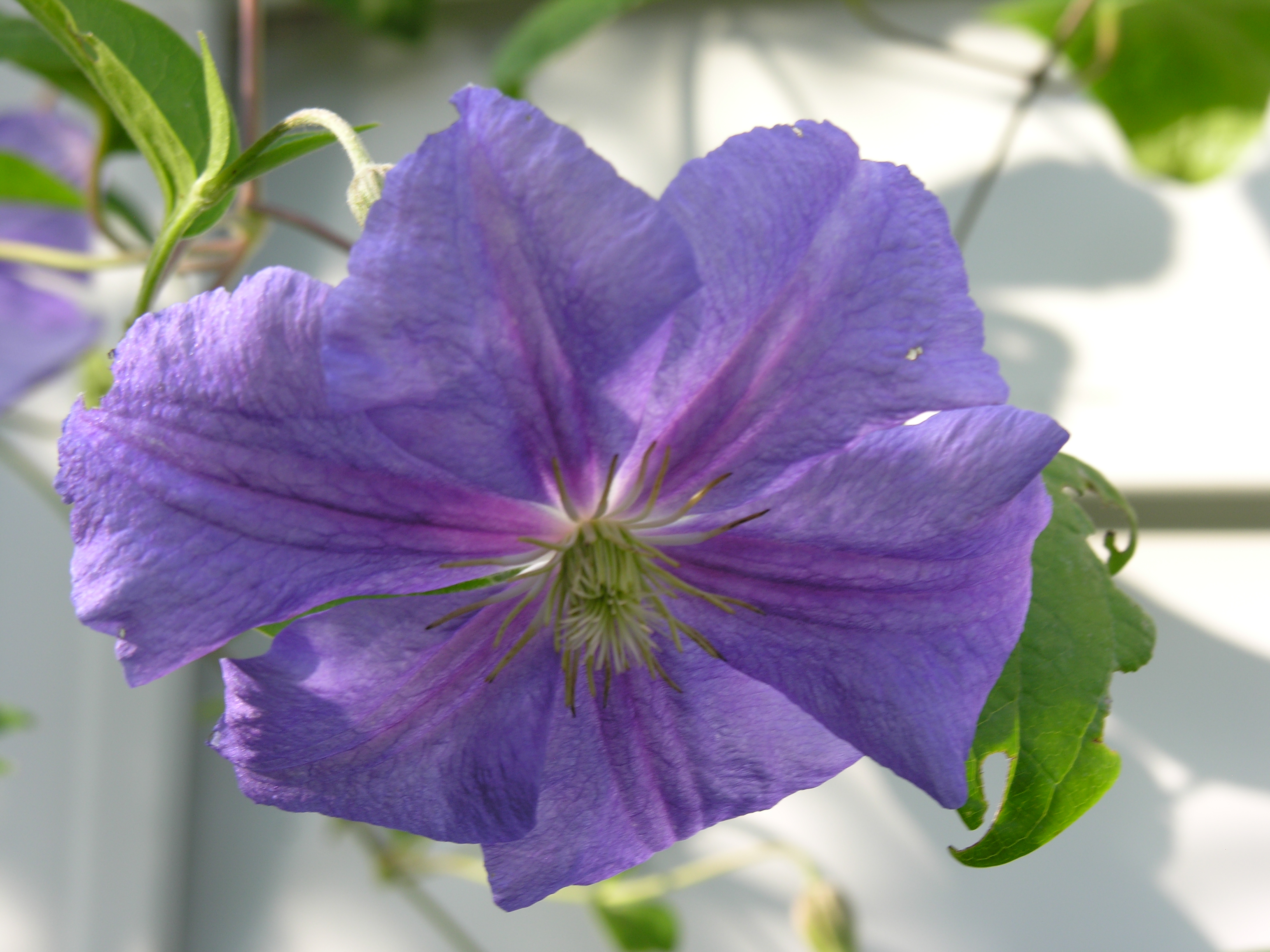
A few years ago, I discovered a terrific clematis nursery on Cape Cod that has a mind-boggling online catalog. I never  imagined there was such variety – so many colors, flower shapes and sizes, growth habits and bloom times! I tend to prefer clematis that bloom throughout the season. I am particularly fond of viticella “Polish Spirit,” which is vigorous and beautiful, especially when clambering through shrub roses. By the way, this is an ideal situation for clematis, most of which like their roots in the shade and their leaves in the sun. It also benefits from the regular feedings I give the roses.

Viticella "Polish Spirit"

These vines have been around for a very long time. We know that they were seen in European gardens in the 1500s. It seems that the dreaded “clematis wilt” began to rear its ugly head in the early 20th century. Then, as now, growers did not have an effective weapon against this disease, which renders plants wilted and moribund, seemingly overnight. Clematis wilt is actually a fungus, Ascochyta clematidina, and is spread by spores. It is more of a problem during wet weather.

The best defense against clematis wilt is to remain vigilant and cut off and dispose of all affected stems. Sometimes you have to bite the bullet, and cut the entire plant down to the ground. The good news is that wilt does not affect the roots, so the plant will likely survive. I had a “Perle d’Azur” that was stricken two summers in a row. I cut it back but no new growth emerged during those two growing seasons. The third year, it came back and was unscathed by the fungus.

My Perle d'Azur - what a comeback!

At this time of year in Rhode Island, the clematis are starting to strut their stuff. When we are driving somewhere, to my husband’s chagrin,  I sometimes  screech to a stop in front of particularly beautiful specimen.  Pausing to simply admire is, in my mind, the right thing to do.

Posted in Uncategorized | 6 Comments

Tomato Madness

You might be interested in a update on the North Stonington (CT) Garden Club’s plant sale, which was held on Saturday, May 8th (yes, same day as the East Farm Festival).

We had, as always, a successful plant sale. But of particular interest to local gardeners, it seemed, were our heirloom tomato plants.

If you missed my earlier post, I raised almost 300 heirloom tomato plants to be sold at the North Stonington Garden Club’s annual plant sale. We held a poll, in which the public was invited to help select the varieties. Ultimately we had 12 different varieties of heirloom tomato plants, including Chocolate Cherry, Amish Paste and Pineapple, to name a few.

Below is a shot of our tomato tables as we set them up for the plant sale. I figure this was taken around 8:45 am, 15 minutes before opening.

Below are the same tables by 9:15 am, only 15 minutes after the sale started.

It was a tomato feeding frenzy. We sold almost 300 plants in about 15 minutes. Color me stunned. I’m thinking next year we’re gonna need a lot more tomatoes!

Posted in Uncategorized | Leave a comment

Rose Thrip Alert

One of my greatest gardening anxieties is caused by waiting to see if thrips have taken over the roses. To me, there is nothing more insidious or disheartening than a thrip infestation. It usually occurs during spring and summer because these insects prefer to feed in rapidly growing tissue, which means new shoots and flower buds. Once you have them, it is discouraging because they are difficult to control. If you don’t realize they are feeding on your roses there may be no blossoms left to enjoy by the time you notice the problem.

Rose bud showing signs of damage by thrips.

My first experience with thrips was three years ago. I am usually very vigilant about my garden, especially the roses, taking a walk through every day looking for problems. Having had little experience at that time with roses I did not get too upset when I noticed some less than perfect rose buds…nature isn’t perfect, is it. After about a week it became clear to me that there was something very wrong. All the plants had buds that looked similar, but it wasn’t a fungus and there was no sign of insect pests so I didn’t have a clue as to how I could solve the problem…or how serious it was. By this time, the damage was done and when the roses bloomed most of the petals looked singed on their edges. Here’s what to look for: check all buds regularly for signs of thrips, because you’ll see the damage before you see any thrips.

If buds have spotty discolorations or browning edges on the petals or withering sepals (green “flaps” covering the bud)…or simply look slightly deformed or not “swollen”…you probably have thrips. Of course, finding thrips will confirm your suspicions, but this is easier said than done because they feed deep inside buds.

You might find some on close inspection or by peeling away some outer bud petals. Adults are tiny, elongated insects measuring only 1/20 of an inch, but they are distinctly recognizable when seen up close…even without a magnifier…as they crawl around.

So what can you do? Well, the answer is, very little. Although thrip damage is unsightly, thrips do not warrant the use of toxic insecticides, especially since they feed deep inside the buds, are very tiny, and have great mobility. Narrow-range oil, neem oil, or pyrethrins combined with piperonyl butoxide can be somewhat effective for temporary reduction of thrip populations, but only if applied when thrips are present and damage first appears. Some folks recommend organic remedies…which you can find on the Internet…but none have been proven to be completely or even significantly effective.

Pruning off infected buds is probably the best control method because all insects in the bud are removed and by the next budding cycle thrips will no longer be active. But for me, the solution was prevention. I use a systemic insecticide containing imidacloprid in early spring and never have I have never seen a thrip again. All is well, although I still hold my breath until I am certain the threat is past.

Posted in Uncategorized | Leave a comment

Unusual Containers

Here’s another post from our favorite herbalist…HerbDoc.

One of my favorite things to do at this time of year is pot up some herbs or shallow rooted veggies in things that aren’t normally considered containers.  These are usually just outside my kitchen on a second floor deck where I can snip as needed.

The herbs do especially well here since they receive sun all day, and the shiny aluminum or enameled colanders are perfect for attracting the sun’s rays.  Don’t spend a fortune on these; look for them at flea markets and yard sales where they can be purchased for as little as fifty cents.

I line the bigger colanders with fiberglass screening to keep the soil in place, but if you’re lucky enough to find an old sieve on legs, like the one in the photo, no screen is needed.  The fiberglass screening is available at any of the big box home improvement stores and is usually inexpensive.

You'll find some interesting containers right in the house.

The sieve is filled with arugula and mixed lettuce while the colander holds basil, thyme, salad burnet and oregano.  Don’t be limited by food items as the pots look terrific with low growing flowers or succulents.

For your food items, fertilize with a low concentration of an organic fertilizer, and pinch those herbs often to retain their shape.  Be aware that your creations can dry out quickly on a hot summer day and may need to be watered more than once.

These make great hostess gifts to bring along to that Memorial Day or Fourth of July barbeque!  Have fun…the sky’s the limit!

Posted in Uncategorized | 2 Comments

Hardening Off is Hard to Do

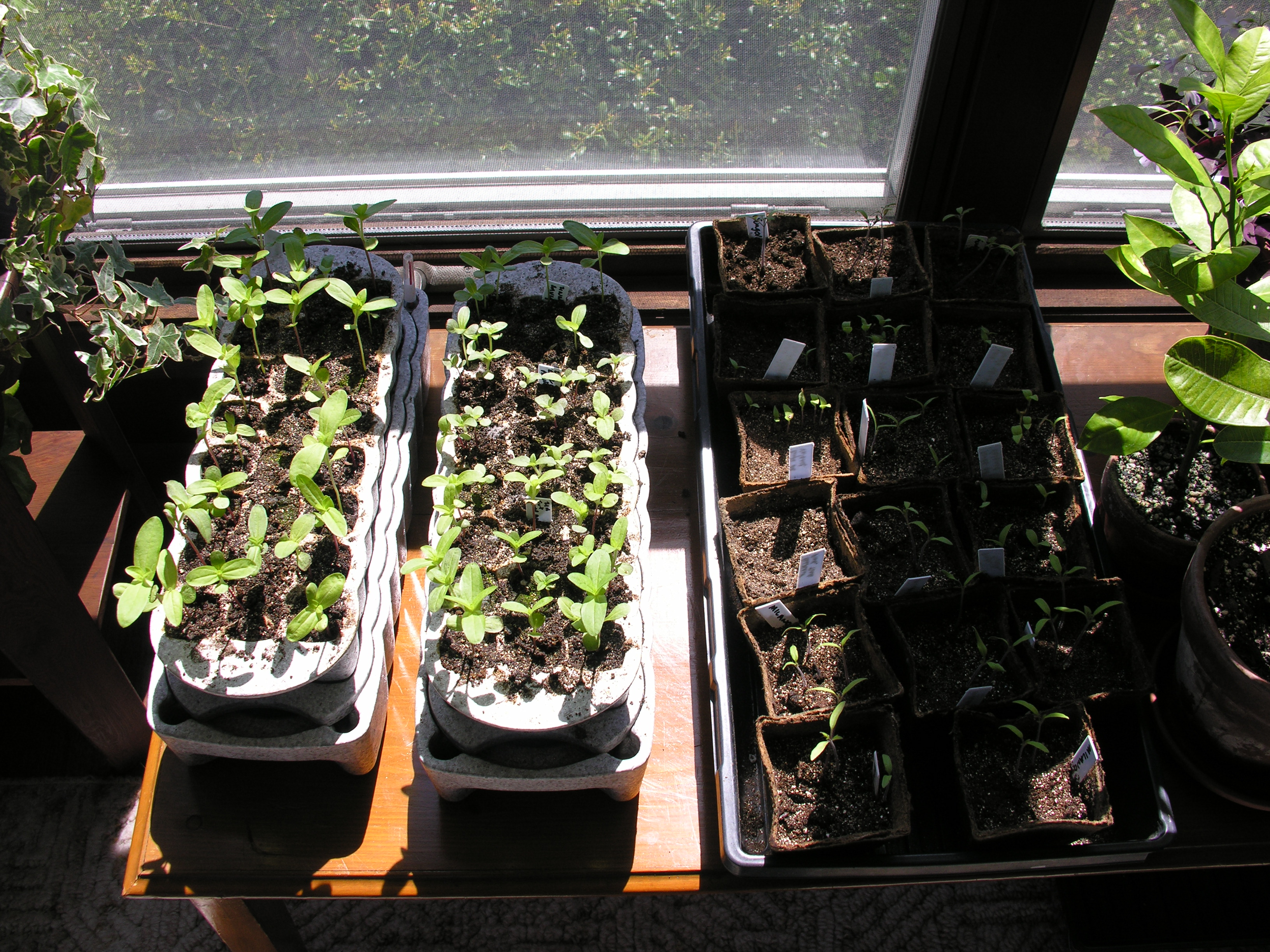
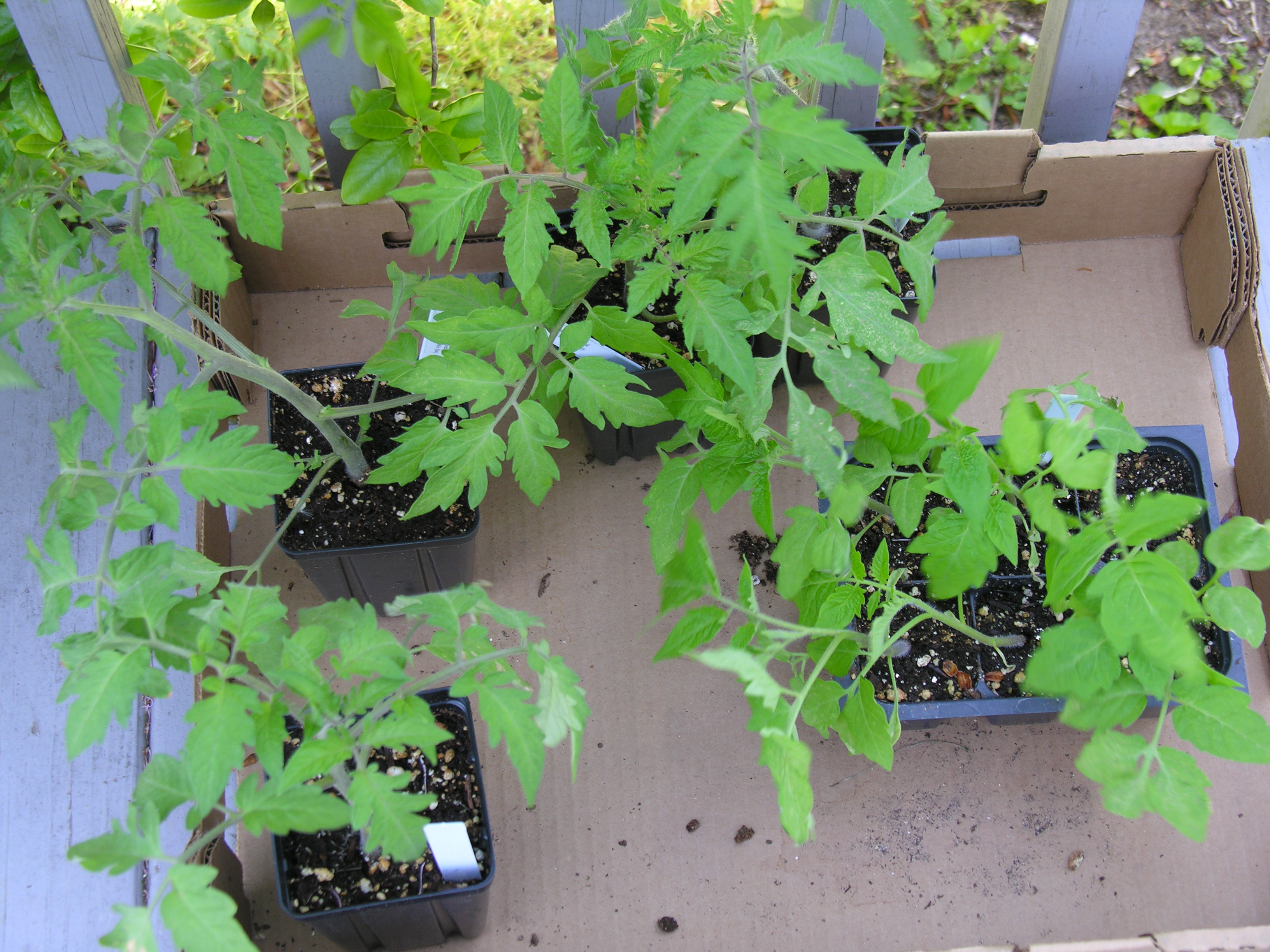
For me, this is a wonderful, but also frustrating time of year. It’s too early here in Rhode Island to plant anything other than cold weather crops like snap peas and lettuce. But I have all these seedlings busily outgrowing their starter pots – seedlings that cannot be planted safely before Memorial Day.

not ready for the outside - yet

Memorial Day is weeks away! And to make matters worse, I bought more vegetables and some ornamental plants at the URI Master Gardener greenhouse sale during the first week of May.  So these new arrivals, and the plants I started from seed, must, of course, be hardened off before I plant them outside.

I find this process annoying in the extreme. Do I put them right in the sun, or in the shade? How many hours of sunlight should they get at first, and how quickly should I increase it? Will it be cold tonight? Can I leave them outside on the deck? Oops, a few are now sunburned because their little cuticles aren’t thick enough yet. Oh, and did I mention the wind, which at this very moment, is blowing so hard it threatened to uproot my precious “Chocolate Cherry” tomato plant in its pot? At this time of year, the wind can suddenly spring up in the afternoon, especially here on the coast. So I can’t simply put out my plants and forget about them.

in the shade and out of the wind

Somehow, I always get through this. But it is a trial, particularly since I have so many flats and pots to move around – and in and out – and into the shade then into the sun – and out of the wind….. And there’s that gap of at least three weeks between purchase and planting. I don’t even dare expose the seedlings I started myself just yet. That wind will finish them off in no time.

For me, hardening off is definitely hard.

Posted in Uncategorized | 1 Comment

Celebrating Spring

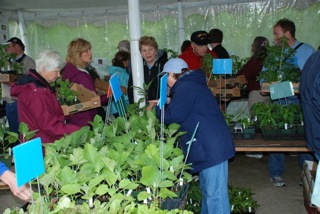
Buying plants. photo: Jim Garman

It’s really kind of amazing. Every year on the Saturday of Mother’s Day weekend, thousand (yes thousands!) of people converge on the University of Rhode Island’s East Farm for the annual Spring Festival.

The main attraction is the chance to purchase beautiful and often unusual ornamental and vegetable plants. These plants are grown and nurtured seven days a week by teams of URI Master Gardeners. It’s our biggest fundraising event of the year, and the culmination of months of hard work. I am a member of the ornamentals team, and I love seeing all the people waiting to snap up the plants!

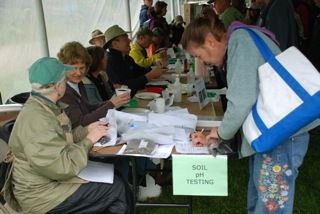
But there are other things going on besides plant sales. You can have your soil’s pH tested,

the soil testing table. photo: Jim Garman

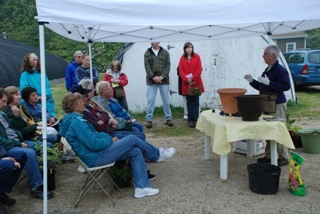
buy a compost bin or a rain barrel, ask gardening questions at the “ask a Master Gardener” kiosk, attend free seminars on subjects such as container gardening

Ann Perkins gives a container gardening class. photo: Jim Garman

meet friendly farm animals

lots of cuteness here! photo: Jim Garman

eat lunch , buy rain a rain barrel or a compost bin, listen to live music, have fun in the children’s tent,…..well you get the idea. There was a lot going on!

a welcome break from the rain. photo: Jim Garman

This year, the weather was volatile. We had several real downpours, but people didn’t seem to care much. They came, they filled their wagons, and they went home happy. And so did the Master Gardeners – tired, but happy.

Posted in Uncategorized | Leave a comment