The Moths of Winter

As if the onslaught of pests throughout the growing season were not enough, now our poor trees have to suffer yet another attack, and this one comes in the winter.
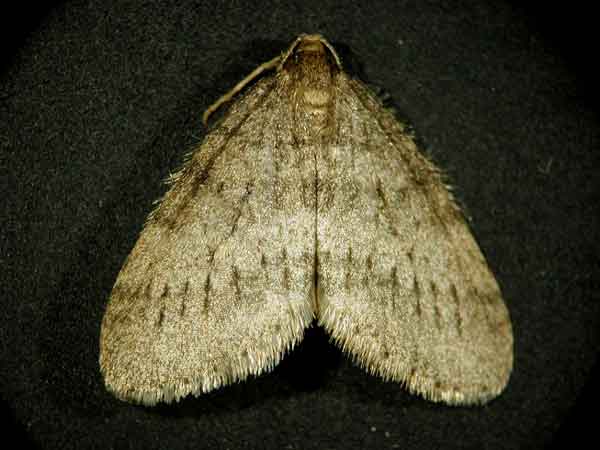
winter moth

This invader hails from Europe, and made its way to New England via Atlantic Canada. It is now found throughout much of New England, including Rhode Island. If you look outside in the late autumn and early winter and see moths fluttering around, (they’re especially attracted to outdoor lights, including car headlights) you’re seeing winter moths, or Operophtera brumata. The moths are most active from November to January. Only the males fly. The females can be found at the bases of trees, where they emit pheromones to attract the males. The eggs overwinter on the trees, and hatch in the spring, when the temperature warms to around 55F.
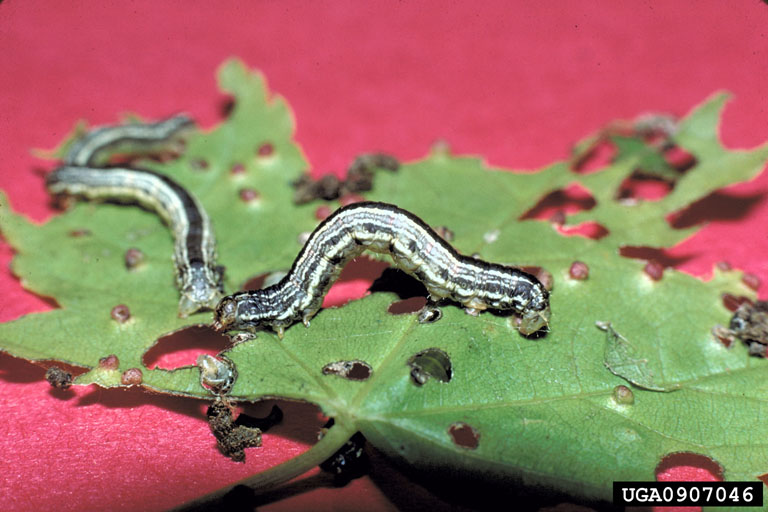
winter moth larvae

Winter moth larvae burrow into buds – especially those of fruit trees like crabapple. Other hosts include oak, maple and white elm. At best, the larvae munch on the buds so that when they finally open, the leaves are tattered and sparse. At worst, they will defoliate entire trees. If the trees suffer repeated attacks and defoliation over even a few years, they will die.

Several natural controls have been used to control battle these pests. These include parasitic flies and wasps, and ground beetles. Dormant oil spray has been quite successful in killing the eggs before they hatch. Good old bacillus thuringiensis, or B.t (kurstaki) kills the larvae when they are not inside the tree buds. Spinosad is a widely used bioinsecticide that is said to work well.

It is important to remember that defoliated trees are severely stressed. Experts suggest making sure they get plenty of water especially during dry spells to encourage the production of a second set of leaves. Here in Rhode Island, we had a very warm autumn, and before we started getting some snow,  I was seeing the moths all over the place. This does not bode well for our trees this coming spring.


Posted in Uncategorized | 2 Comments

Once in a Blue Moon

Herbdoc has some “moon musings:”

I have always been fascinated with the moon, its phases and the myths associated with it.  This month we have a “blue moon” to look forward to on New Year’s Eve.

There are actually two definitions for a blue moon, and the most recent definition is two full moons in the same month.  For this to occur, the first full moon must fall early in the month since the average span between full moons is 29.5 days.  Our last full moon was December 2nd.

The other definition of blue moon was published in early editions of the Maine Farmer’s Almanac. According to this source, a blue moon is the third full moon in a season that has four full moons.  Since moons were named, a fourth moon would upset the balance.  For instance the first full moon of summer is called the early summer moon, the second is the midsummer moon and the last is the late summer moon.  By naming the third full moon in that season, the blue moon, the last moon could continue to be the late summer moon.  Because some years have 13 moons instead of 12, an extra moon would also upset the Christian Ecclesiastical calendar since there were only names for 12.  By naming the 13th moon as the blue moon, the calendar stayed on track.

In folklore, full moons were given names so that people could prepare for weather conditions and crop needs.  Names vary with locale and culture, but most gardeners are familiar with the Harvest Moon in October which warns us to get our crops in prior to damaging frost.  December was called the Full Cold Moon or Full Long Nights Moon because nights are at their longest and darkest.  Next month is the Full Wolf Moon which was named by Indian tribes who would see and hear hungry wolf packs prowling in the snow around their villages.

There will be about 15 blue moons in the next 20 years, but no blue moons of any kind will occur in the years 2011, 2014, and 2017.  Using the Farmer’s Almanac definition, that type of blue moon will next occur on November 21, 2010.

Posted in Uncategorized | 11 Comments

Building a Moss Terrarium

So, in keeping with this week’s terrarium theme, we received the following from our dear friend and tech genius, Auntie Beak. It looks like HerbDoc isn’t the only one to be bitten by the terrarium bug.

hi, guys, it’s your resident garden geek again. i saw this post on a really BASIC terrarium, and couldn’t resist sharing: how to build a moss terrarium.. it sounds like a great gift for the green thumb-challenged!

Moss Terrarium from Lifehacker

Posted in Uncategorized | 3 Comments

True Confessions

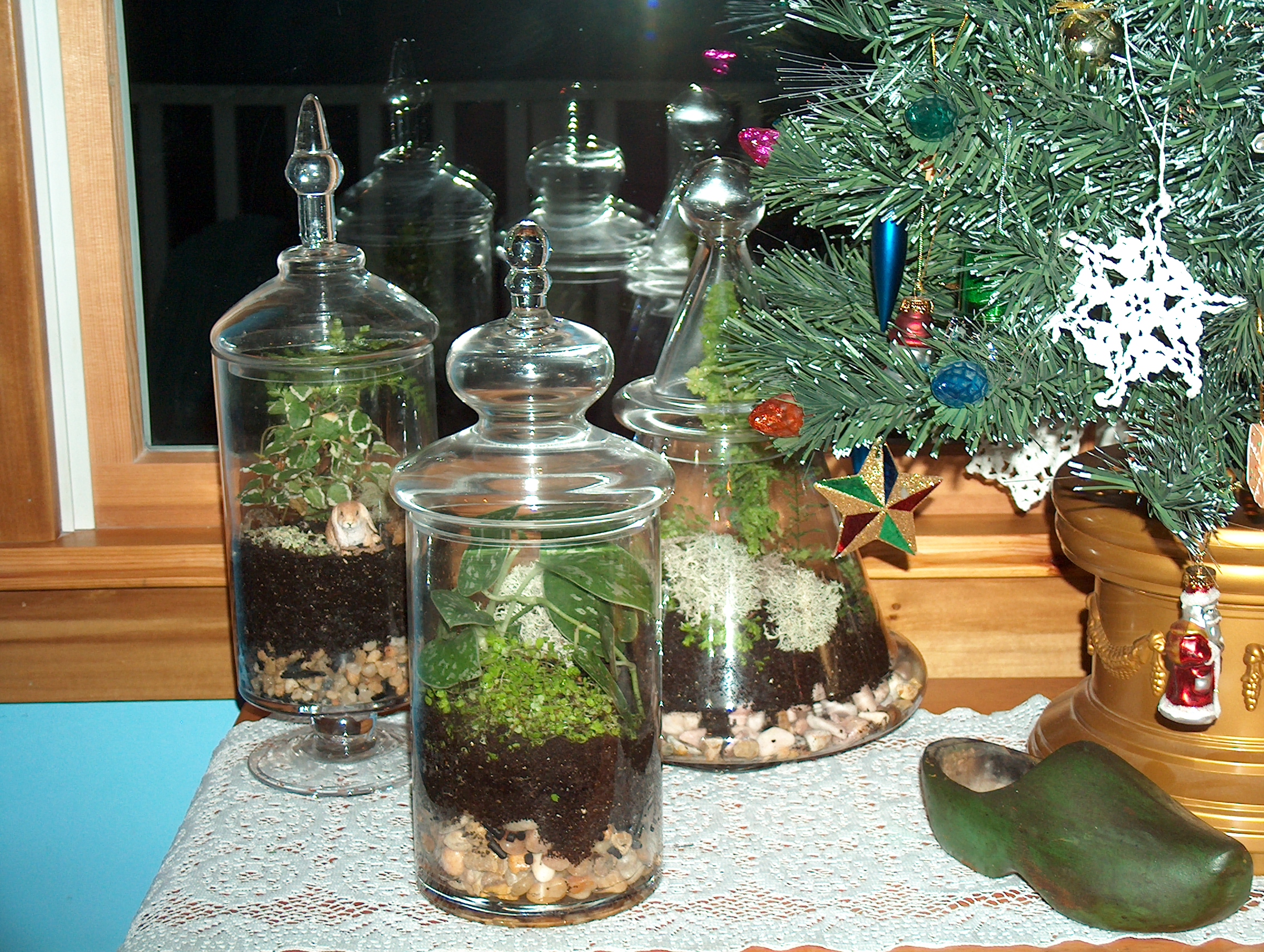
The fruits of my labors

Here’s Herbdoc, with a Christmas confession:

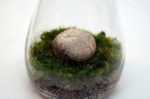
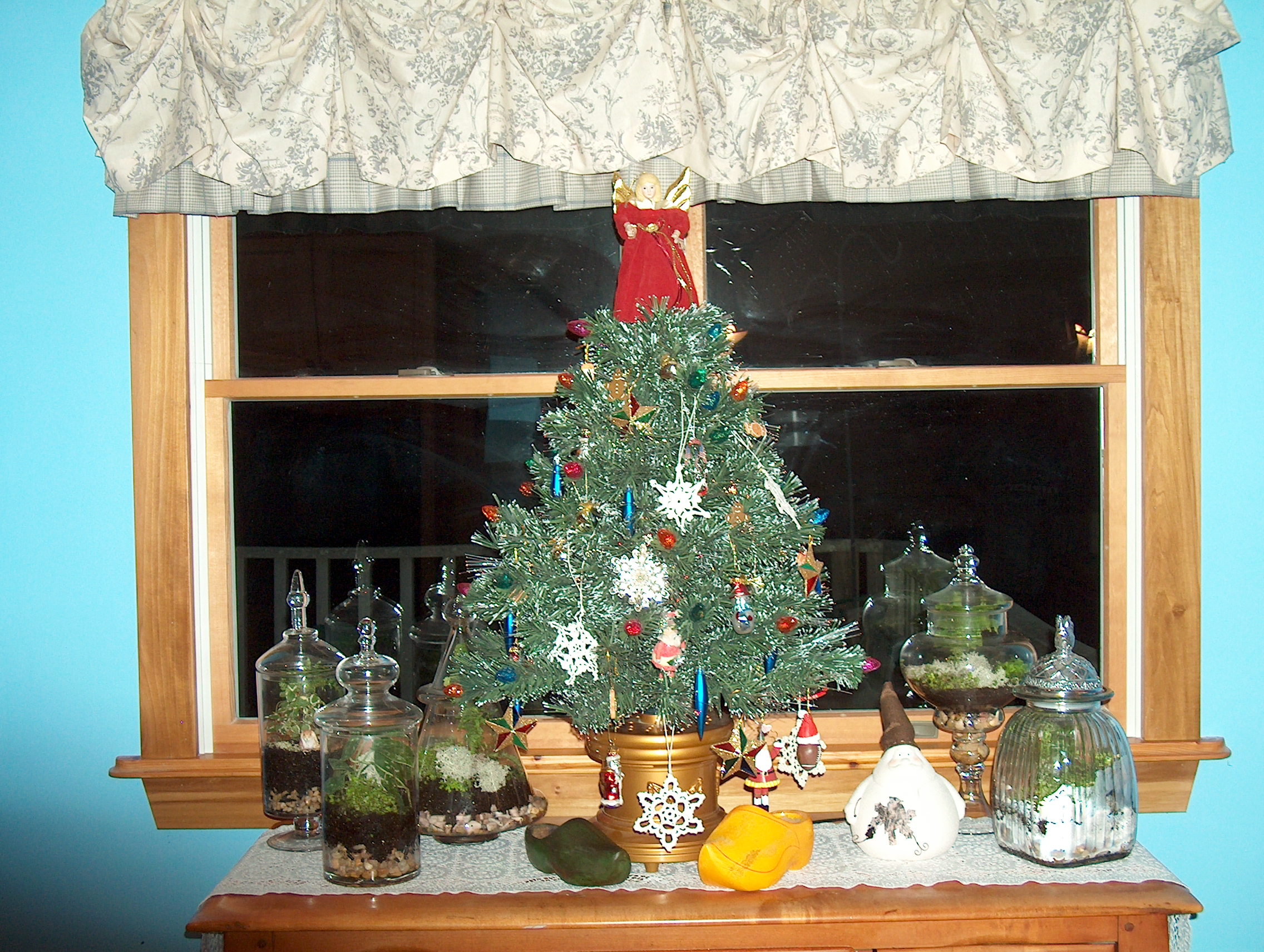
Okay, I’ll admit it, but I’m not taking all of the blame!  Dirtynailz and Tovah Martin need to shoulder some of the responsibility.  Last Thursday I was supposed to be cleaning for the upcoming holidays when I got involved in terrarium making…not one, mind you, but four of them!  It was a pleasant process, and when I was finished, I was so happy that I hadn’t cleaned because my kitchen looked like a dirt devil (and not the vacuum type!) had rolled on through.  Now I have several beautiful Christmas gifts for friends and family, but after enjoying them for a week, it will be hard to let them go.

Here’s some advice for the novice who plans on making these as gifts:

  • Don’t decide three weeks before an event that you want to give terraria (or terrariums) as gifts.  It takes a while to find the perfect container, and I managed to visit a half dozen or more stores before I found the ones I purchased.  The next time I’ll scour flea markets, garage sales, and kitchen and gift aisles in the big box and high end one of a kind stores.  My favorite containers have wide bottoms that taper to a lidded top.
  • You’ll need pebbles, charcoal and good quality houseplant soil.  Since it’s winter and some things are difficult to find, it resulted in more visits to several places to find exactly what I needed.  I ended up a pet store to buy loose charcoal!
  • Miniature plants are not that easy to locate in the winter months!  When Tovah gave the workshop she had tiny potted plants to share.  Although I bought miniatures, they were in much bigger pots forcing me to split them for use.  Since I also “overbought” I now have a dozen extra houseplants to care for!
  • I picked up a few decorative items on my wooded property, but also purchased some small figures at a local gift shop.  Again in the future I’ll check garage sales for these items.
  • Lastly if it’s a gift, give it away quickly!  Something about putting time into creating these small worlds makes it very difficult to part with them.  At least one of my creations has made itself at home in my bedroom and isn’t going to leave anytime soon!

Since I have so many extra materials and I happened upon a very large and beautiful hexagonal glass jar recently, I think I will be crafting another little world shortly after Christmas.  Be warned!  This terrarium making is quite addictive!

ready to brighten someone's home

We at Digging RI would like to wish all our readers and supporters a wonderful holiday and a great 2010. Thanks for reading!

Posted in Uncategorized | 7 Comments

Best and Worst Garden Gifts: Part Five

Does this photo even need a caption?

The final contributor to our garden gift series is horticultural icon and very nice man, Roger Swain.  By the way, these submissions are all in the authors’ own words – not edited by me. As always, your comments on these posts are welcome, whether or not you agree!

Best:

  • A 3-legged Stokes orchard ladder in a length I don’t already have
  • A ball of baling twine ( actually they come in pairs  as so many good things do).
  • Another Dutch hand hoe ( made by  Sneeboer)
  • A 2 and 1/2 gallon (ten liter) Dramm watering can ( in red, for the season)
  • A truckload of finished compost
  • and a plate of Rhode Island calamari ( oh wait, that’s six)

Worst:

  • garden- themed tea-towels
  • wall plaques
  • calendars
  • diaries

I want to thank everyone who went along with my eccentric little theme, and sent in their lists. I am so grateful to count you as friends, colleagues and mentors, and I hope Santa brings you only “bests” this year.

Posted in Uncategorized | Leave a comment

Best and Worst Garden Gifts: Part Four

Tovah Martin: Photo: Susan Johann

Here’s well-known horticulturalist – and lecturer – and writer – and great friend, Tovah Martin, with her best and worst garden gifts.

Remember, we not only welcome your comments, we embrace them!

Best:

  • A massive, lingering bear hug before lecturing from Roger Swain.
  • A friend offered to help move an overgrown shrub and then arrived the following spring to make good on his promise (without even being reminded) when the weather was perfect for the deed.
  • A friend sent a really good photograph of a gorgeous garden I visited the previous summer.
  • Someone left an anonymous gift of Atlas Grip XS gloves on my doorstep, I’ve been addicted ever since – thank you, whoever you are.
  • When I drooled over a double red poppy, the garden owner sent an envelope filled with seeds, progeny from that plant.  Proving again that drooling in public has its rewards.

Worst:

  • Paperwhites – the “scent” is nauseating.
  • Gloves with no fingers. Go figure…
  • Years ago, someone gave me a set of children’s tools.  I confess, I was insulted.  Never got over it.

Posted in Uncategorized | 7 Comments

Best and Worst Garden Gifts: Part Three

C.L. Fornari

C.L. Fornari is a terrific (and funny) garden writer, broadcaster and speaker who lives on Cape Cod. Below are her five most and five least favorite garden gifts. Your input, valued readers, is always welcome!

Best:

  • A gift certificate to a nursery.
  • Cobra Head weeding tool.
  • Several pairs of cool, lightweight but tough gloves such as Sun Grips by garden works.
  • Plant Cam – outdoor, time-release digital camera for recording flowers opening or gardens growing www.wingscapes.com
  • A load of composted manure. Gold for the garden!

Worst:

  • A houseplant – gardeners want to choose their own.
  • Plant labels – They’re never for something you need labeled… we can remember “Basil” and “Thyme” – where are the labels for the ones we forget –  Dicliptera and the like?
  • Landscape fabric – not that anyone would actually give this as a gift, but it’s a product that I think shouldn’t be sold.
  • Poisons – pesticides make lousy gifts.
  • Windchimes – sound, or the desire for the lack of, in the garden is very personal. Unless someone says they want a windchime, leave that one at the store.

Posted in Uncategorized | 2 Comments

Best and Worst Garden Gifts: Part Two

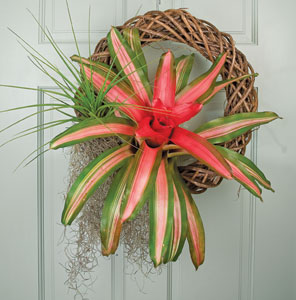
A Bromeliad wreath from the Logee's catalog

My “Garden Aunt,” Edith Ann, humbly submits her five best and five worst gardening gifts. As always, please feel free to heartily agree, vehemently disagree, or add your own.

Best:

  • A wheeled garden cart that you can sit on and store tools in
  • A large plastic tarp with handles – lots of uses!
  • Assorted pretty ceramic houseplant pots
  • A handsome outdoor planter
  • A gardener’s journal with a 10-year span

Worst:

  • Bug zappers. They kill indiscriminately
  • Cutsie bird houses and feeders. I like them to blend in
  • Knee pads. They never stay in place
  • Those glass watering balls for houseplants. I hate the way they look.
  • Garden gnomes.

Posted in Uncategorized | 2 Comments

Best and Worst Garden Gifts: Part One

I’ve been thinking about what to buy my gardening friends for Christmas. That in turn started me thinking about garden gifts in general – which ones I love and which ones end up on a table at a yard sale in the spring.

So, I am offering my best and worst gift ideas below, in cooperation with my fellow Digging RI bloggers, Elderberry and HerbDoc.

I have also asked my “garden aunt” as well as some of my favorite “hort celebs” to tell me their five best and five least liked garden gifts. I’ll be posting theirs one at a time over the next week or so. If you have anything to add to our lists, or if you have an opinion one way or another, please feel free to chime in!

Our best gifts:

  • Felcos and a holster
  • Garden apron or tool belt
  • A good sun hat
  • Lots of garden gloves
  • A garden tool bag
  • Waterproof footwear that’s comfortable
  • A good birdbath heater
  • Subscription to Fine Gardening
  • A garden or seed catalog with a gift card
  • A Leatherman tool
  • Books
  • Plants – only if you know what the recipient likes

Worst:

  • Birdhouses with  big entrance holes that encourage house sparrows and other predators
  • Spiked lawn aeration shoes – completely useless
  • Subscription to Horticulture – used to be great, now, not so much
  • Cheap pruners
  • Those flimsy, painted “women’s” garden tools
  • Metal or ceramic birdbaths – not bird-friendly
  • Gadgets that don’t work

Posted in Uncategorized | Leave a comment

Sugar Scrub

Rough “gardening skin?”  Herbdoc has the cure:

If you’ve been in the market for exfoliating scrubs lately, you know how expensive they can be.  Here’s a simple recipe to make a wonderful exfoliating scrub that will leave sensitive skin smooth and moisturized.  It makes a great gift!

What You’ll Need (to make 1 jar)

1 jar, glass or plastic with lid

1 cup sugar

½ cup vegetable glycerin* (or baby oil or virgin olive oil)

1-2 teaspoons Vitamin E oil (optional)

1-2 drops essential oil (try orange or lavender)

small handful of dried herbs/flowers (Lavender,

chamomile or rosemary are good choices)

1.  Mix the sugar and vegetable glycerin in the container.

2.  Add the essential oil.  (Remember lavender is soothing

and orange is invigorating).

Vitamin E will act as a preservative.  If it isn’t used, your

product will have a limited shelf life (14 – 24 months).

3.  Add and mix the flowers/herbs.

4.  Include a tag with the ingredients and “how to use”:

Place small amount on a washcloth and rub in circles to

exfoliate.  Rinse well.  If the mixture sits for any length of time, it may

need to be stirred before use.

Notes:

1.  Plastic jars may be safer to use in the bathroom.  I saw some cute ones

in the local dollar store this week.

2.  Vegetable glycerin is usually available in the skin care aisles of the

drugstore, but some pharmacies keep it behind the counter.  Ask the

pharmacist.

Posted in Uncategorized | 2 Comments